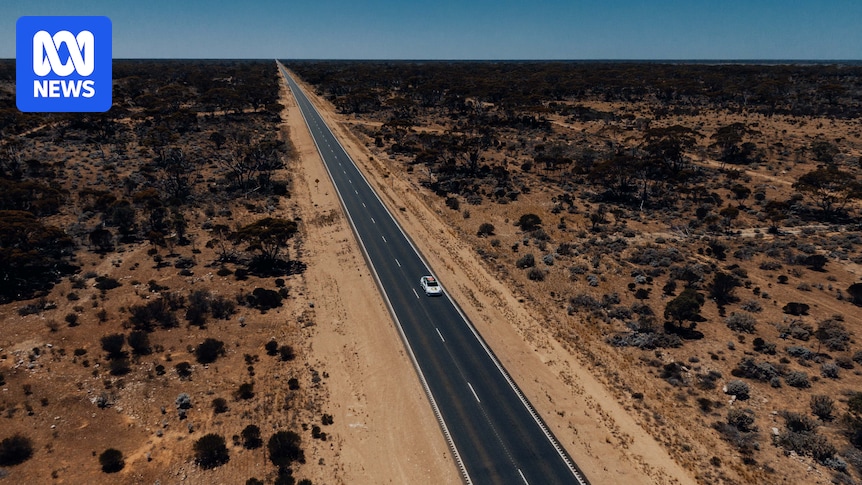
As soaring fuel costs ignite interest in electric vehicles (EVs), there are claims WA’s state government-owned charging network is not fit for purpose.
Automakers and dealerships have reported a spike electric and hybrid vehicle sales in Australia since the outbreak of the Iran war.
The WA EV Network was completed in June 2025, with 110 charging points installed across the state.
It is considered one of the world’s longest “electric highways” and was named by Time Magazine as one of the world’s 100 greatest places to visit in 2024.
But there are complaints that poor infrastructure has caused several chargers to repeatedly malfunction, some chargers can only be used on the slow charge setting, and others have an unreliable power supply.
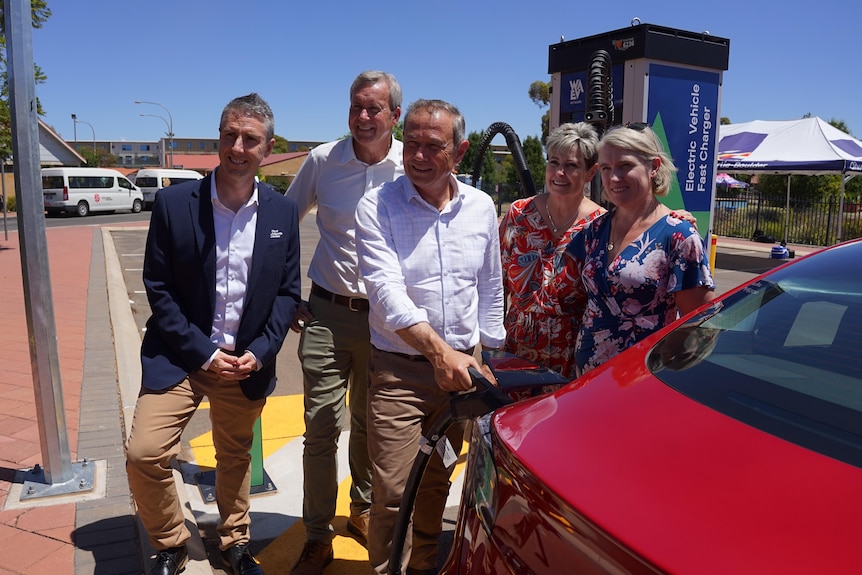
Roger Cook and former Energy Minister Reece Whitby unveil the final EV Network charger in Kalgoorlie. (ABC Goldfields: Robert Koenig-Luck.)
Avoiding fuel prices
Having bought his first EV in 2021, Perth resident Chris Johnson now serves on the committee for the Australian Electric Vehicle Association (AEVA).
Mr Johnson said the response to the network was initially “overwhelmingly positive” among EV drivers.
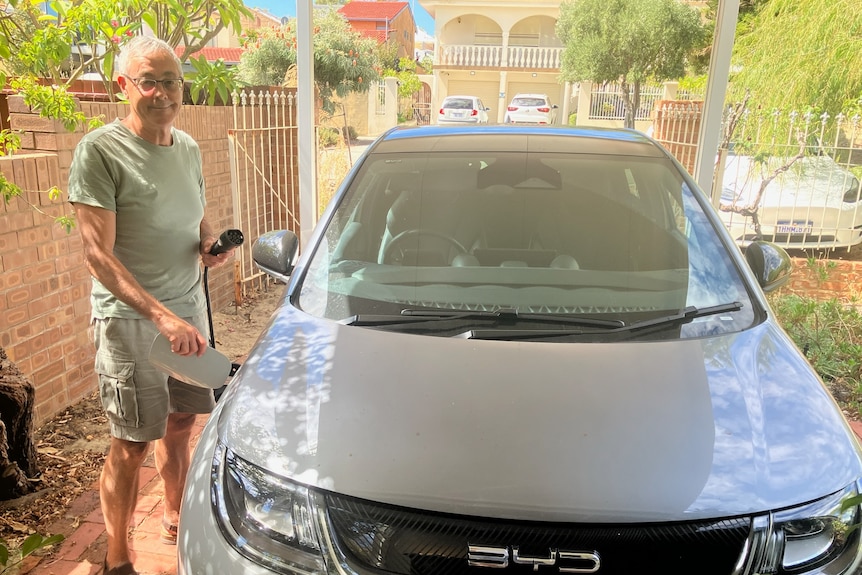
Chris Johnson says he and his family take their electric vehicle everywhere since purchasing it several years ago. (Supplied: Chris Johnson.)
He has driven from Perth to Sydney several times since 2023 — the first time relying on crowdfunded chargers that were in place before the EV Network was expanded to include locations along the Nullarbor.
“It’s an ideal thing for electric vehicles. Fuel prices are really high; if you’re in an EV, you avoid all that,” he said.
But now the anxiety of not knowing whether a charger along the remote route is working has led him to opt for flying rather than driving.
Malfunctioning chargers
The network was jointly delivered by state government-owned enterprises Synergy and Horizon power as part of a $43 million investment in EV-charging infrastructure.
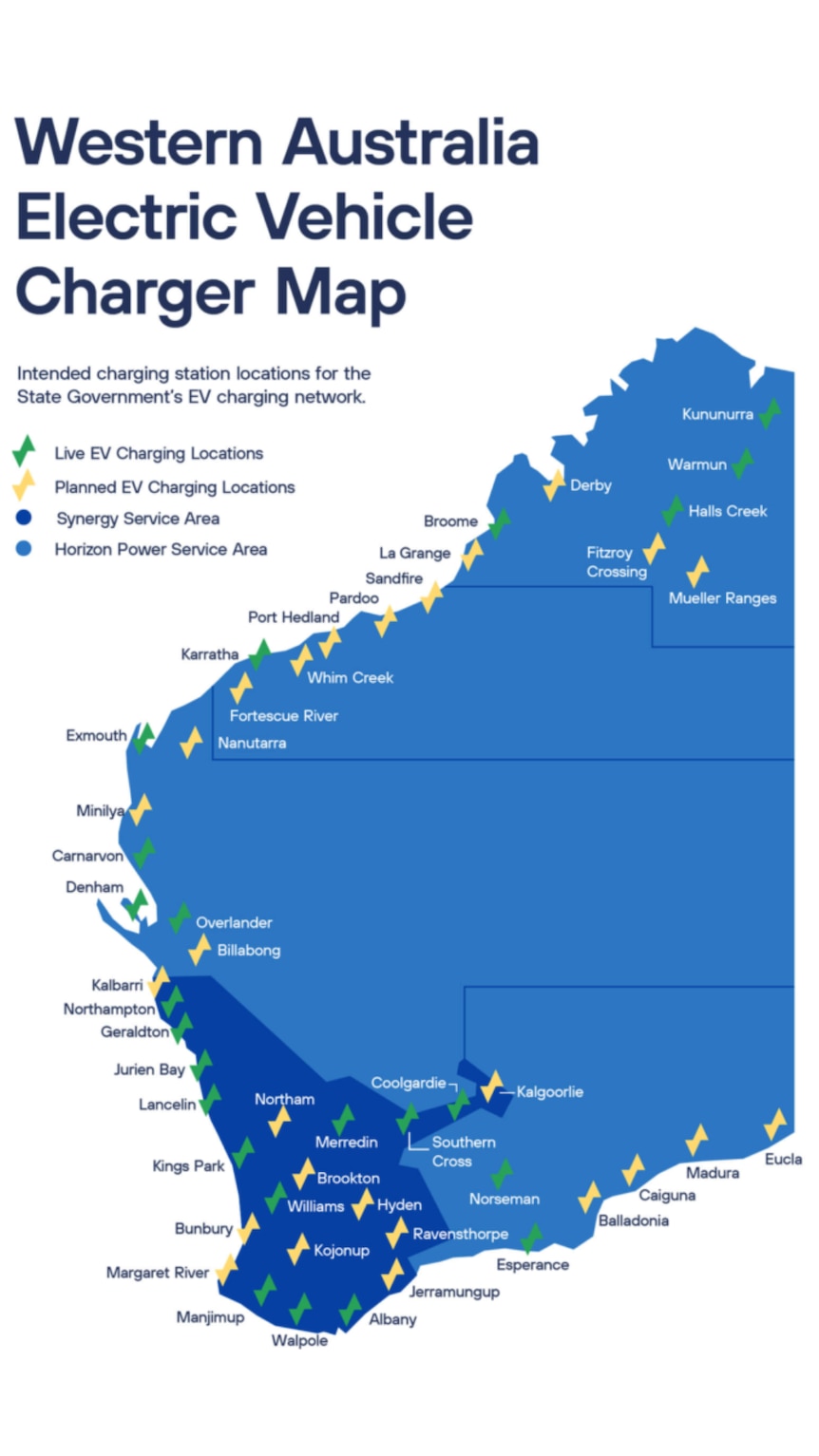
The charging stations are jointly delivered by Horizon Power and Synergy. ((Map: Horizon Power))
Horizon is responsible for some of the more remote charging stations along the Eyre Highway heading towards the South Australian border.
DC chargers along the Eyre Highway should deliver 50 kilowatts per hour, and it should take up to an hour to charge your vehicle, depending on the type, according to Mr Johnson. Slower AC chargers are also available.
Some off-grid chargers rely on standalone power systems or roadhouse generators to function.
Mr Johnson was among the first users of the Madura Pass charging station on the Nullarbor in June last year, but he said it was already malfunctioning, producing only 11 kilowatts an hour instead of 50.
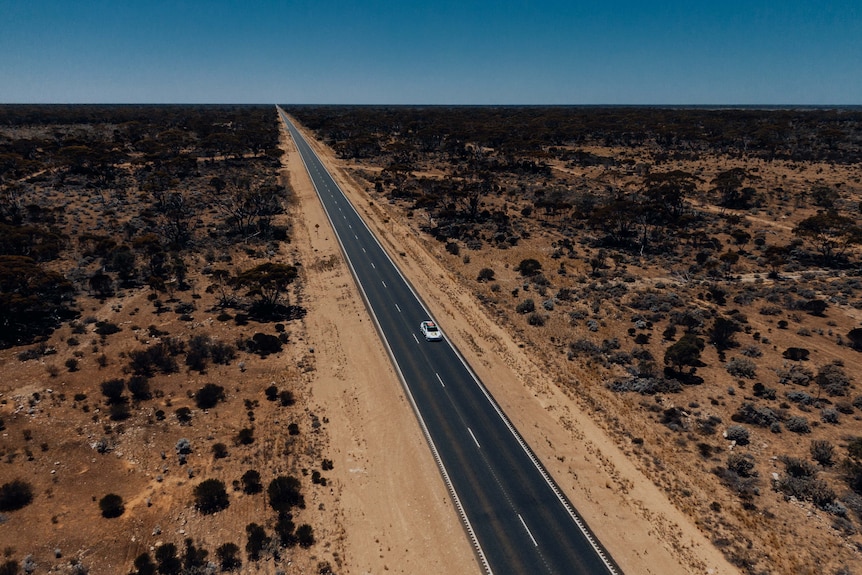
The Eyre Highway stretches 1,600 kilometres from WA to SA, along the Nullarbor. (ABC Goldfields: Jarrod Lucas)
At the next station in Mundrabilla, the charger caused the roadhouse’s generator — the source of its electricity — to blackout, he said.
Several users on the Plugshare EV map website have suggested the same has happened to them, and it is understood EV drivers are encouraged to only use the slow AC charger at Mundrabilla.
Mr Johnson said the slow charging time created unexpected delays for travellers, with one AEVA member taking 14 hours to drive between Eucla and Fraser Range — a drive that should take seven hours.
He is worried EV drivers may be left stranded if a charger along that route is broken.
“That’s a network that is just not fit for purpose,” he said.
Chip oil charger
Before the network was built, retired mechanical engineer Jon Edwards built the first EV charger on the Eyre Highway in 2022, which generated its power using the chip frying oil leftover from Caiguna Roadhouse.
Creating a charger that was completely self-sufficient in terms of power supply was essential for Mr Edwards, given the demands on roadhouse electricity supplies.
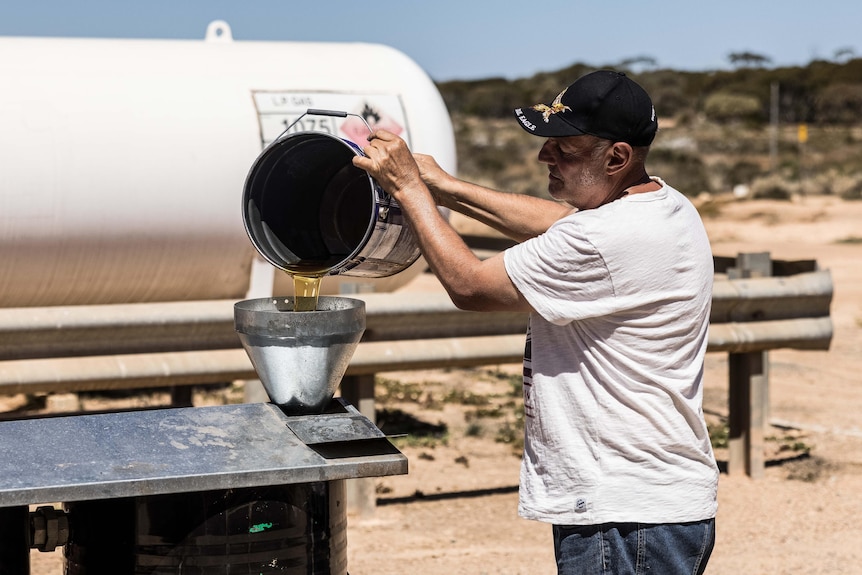
Jon Edwards pours used cooking oil from the Caiguna Roadhouse into the fast-charging system. (ABC Goldfields: Jarrod Lucas)
“The generators are running flat out, all the caravan park air conditioners are going flat out — they’re cooking tea, freezers doors are being opened and closed,” he said.
The unreliability of the WA EV Network’s off-grid chargers — like those across the Eyre Highway — meant many had had their power dialled back to slower charging, Mr Edwards said.
Call for EV network upgrade
WA Greens Leader Brad Pettitt said the network had been a good investment but needed to be maintained and upgraded.
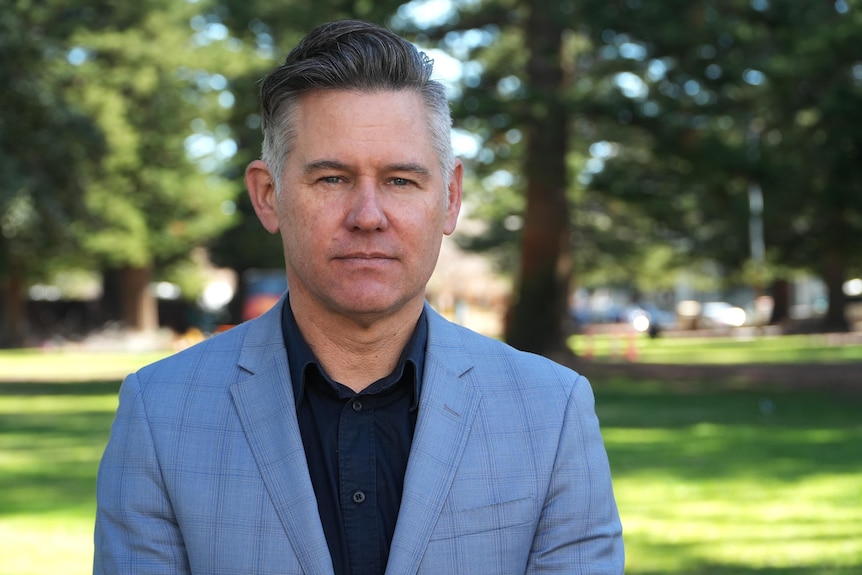
Brad Pettitt says the network needs to be brought up to standard as more people buy EVs. (ABC News: Courtney Withers)
He said EV drivers were being left “stranded, or certainly having very long, slow trips”.
“We do have a really good network but when you’ve got gaps on it, in many ways, the network’s only as good as its weakest point,” Dr Pettitt said.
A Horizon Power spokesperson said the charging infrastructure required “a mix of solutions tailored to local conditions”.
“As with any new infrastructure operating across vast and challenging environments, individual chargers may occasionally require maintenance,” the spokesperson said.
“Horizon Power works with charging operators and site hosts to manage these issues through established monitoring, maintenance and escalation processes, with learnings used to inform ongoing improvements.”
Energy Minister Amber Jade-Sanderson was unable to provide a comment, deferring to Horizon.