Musk has returned to his familiar stomping ground of asking stakeholders to believe in lofty claims, but it isn’t 2015 any more. By Stewart Burnett
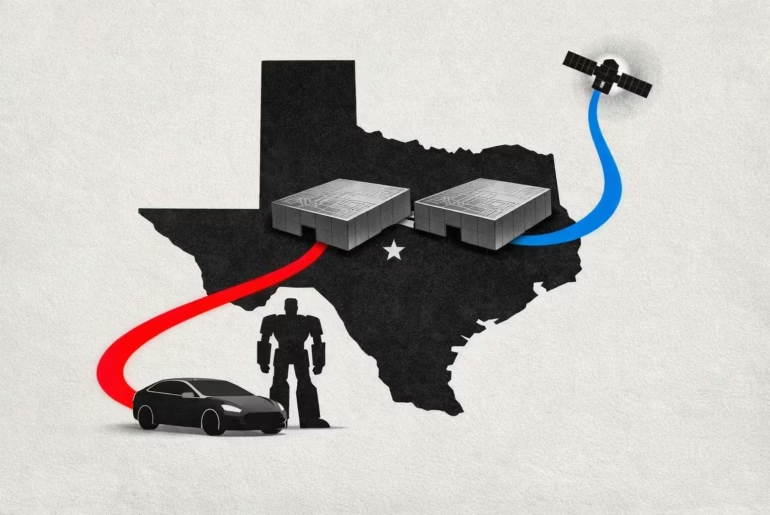
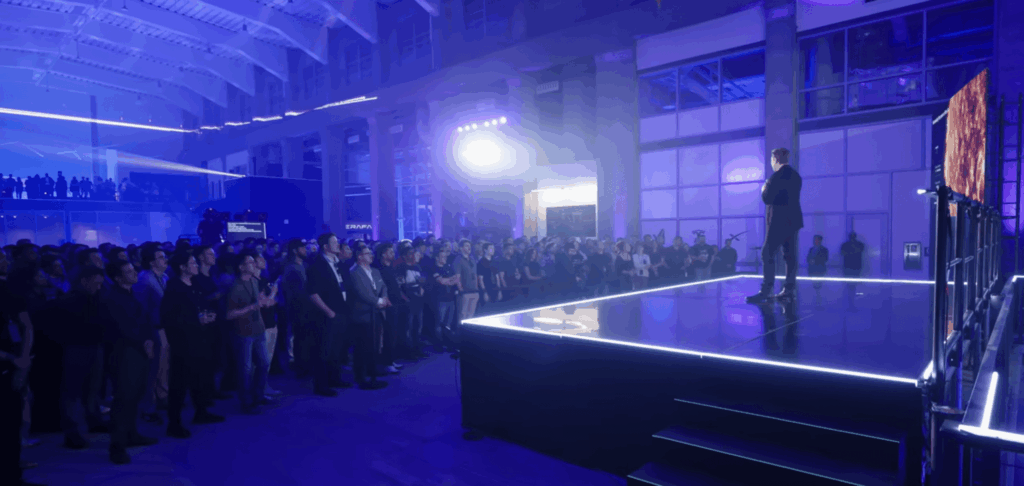
Tesla Chief Executive Elon Musk formally unveiled the Terafab project on 21 March at a presentation in Austin, Texas, confirming it as a joint venture between the automaker, SpaceX, and xAI estimated at US$20-$25bn. SpaceX’s involvement had not previously been disclosed, and represents the most explicit attempt yet from Musk to consolidate his companies towards a single hardware infrastructure play.
The facility, planned for the North Campus of Giga Texas, will house two separate fabrication lines targeting 2nm process technology. One will produce inference chips for Tesla vehicles and Optimus humanoid robots; the other will produce space-hardened chips for an orbital AI satellite constellation Musk is pursuing under a Federal Communications Commission application to launch up to one million satellites.
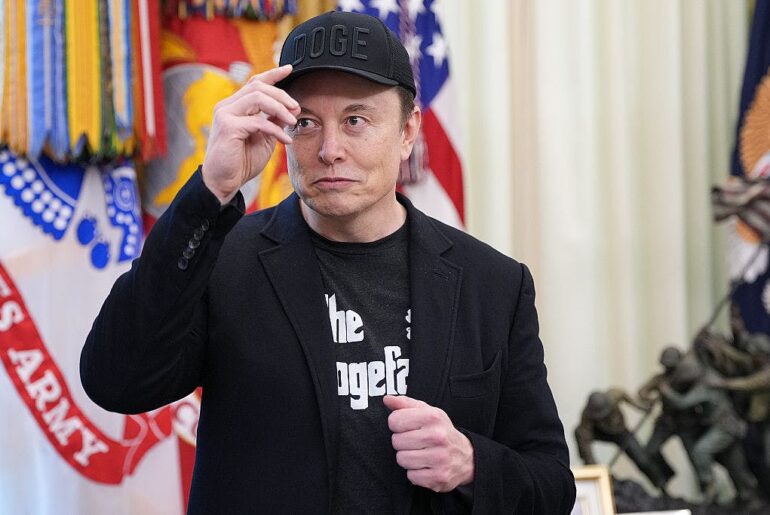
During the presentation, throughout which he was visibly unprepared and lacking focus, Musk said 80% of Terafab’s eventual compute output is intended for space-based workloads, with the remainder for terrestrial applications. Large portions of the presentation were buoyed by calls for the audience to imagine space travel being as mundane as the morning commute. “We’re starting a galactic civilization,” Musk told an audience largely comprised of employees.
The stated ambition for the Texas site is one terawatt of annual compute capacity, roughly double the current total chip output of the US, and 40-50 times the global output of AI chips specifically.Full-scale production is targeting one million wafer starts per month, approximately 70% of TSMC’s entire current global output. “A terawatt of compute power might seem enormous by our sort of civilisational standards, [but it is] still small in the grand scheme.”
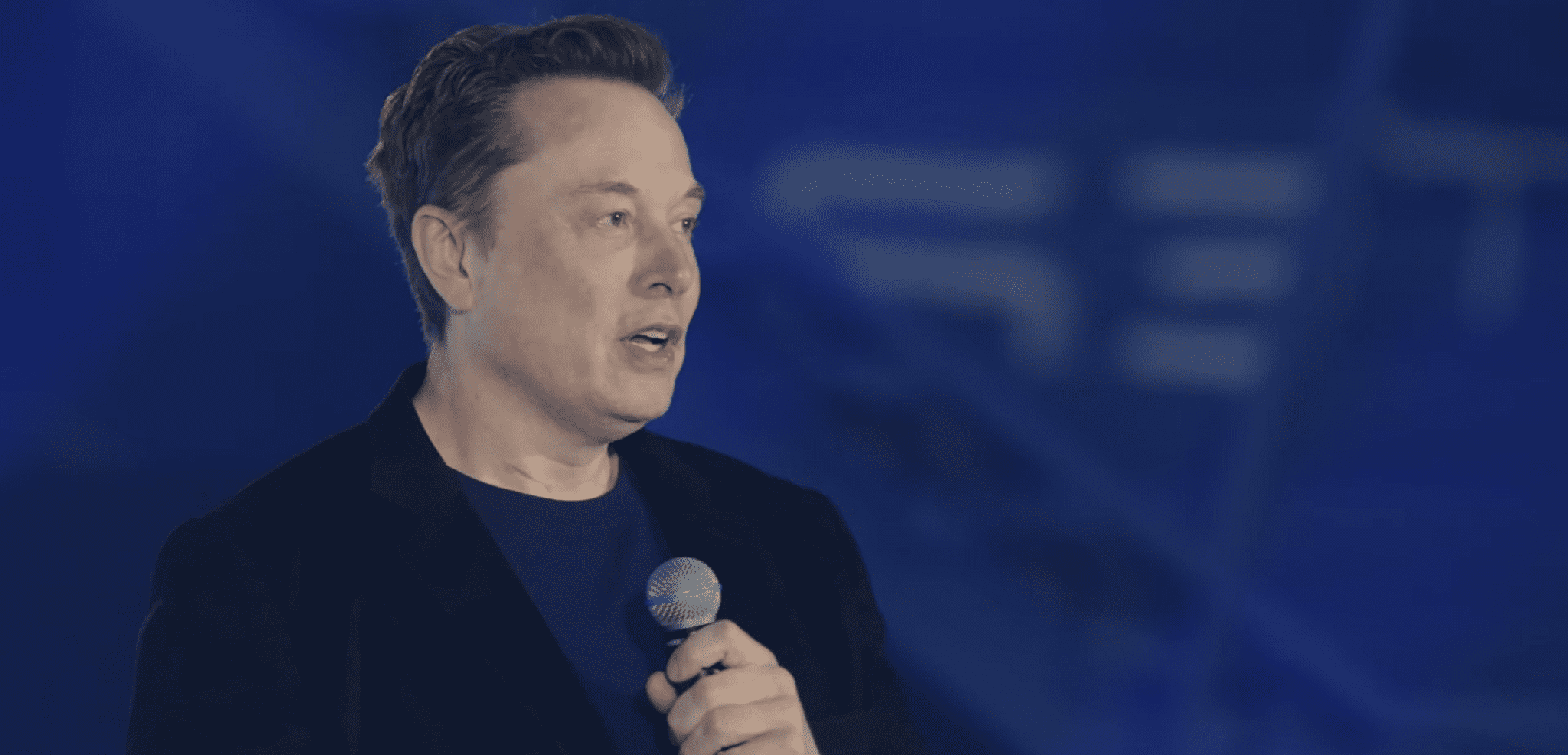 Musk appeared visibly unprepared during the live presentation
During the presentation, Musk acknowledged his existing chip partners Samsung, TSMC, and Micron but said their combined expansion rates fall far short of the—some would argue outlandish—needs he has projected for his companies. “We either build the Terafab or we don’t have the chips,” he remarked. Later he noted that total global chip production only amounts to around 2% of what his companies will eventually require.
Back on earth, Tesla’s Chief Financial Officer acknowledged that the full Terafab cost has not yet been incorporated into the company’s capital expenditure plan for 2026, which already exceeds US$20bn. Capex for 2026 is also being directed towards the Optimus humanoid robot programme, the Cybercab robotaxi, and a joint project with xAI called Macrohard which pairs xAI’s Grok model with a Tesla-made agent capable of autonomous software interaction.
It should be emphasised that Tesla has zero semiconductor fabrication history, and no construction timeline was provided at the event. The automotive dimension of Terafab also appears somewhat diminished now: still present, albeit limited in near-term scope. Small-batch production of the AI5 chip—already delayed to mid-2027 from an earlier target—is expected in 2026, with volume production the following year via TSMC and Samsung. The AI6, destined for Samsung’s Taylor, Texas facility under a US$16.5bn contract, faces its own delays after the timeline for the Korean manufacturer’s 2nm process slipped. Terafab is being framed as the long-term answer to such constraints, rather than an immediate solution.
The announcement follows a pattern now abundantly apparent across Musk’s companies: making ambitious commitments and eye-catching statements well before the previous generation of commitments and claims have even borne out. There are many such cases: the AI5 is not yet at tape-out, Tesla has yet to deliver autonomous driving, and its nascent robotaxi service does not cover half of the US population. The latter was projected for end-2025, but the service remains confined to a small fleet in a single city with a crash rate around nine times that of humans.
We either build the Terafab or we don’t have the chips
SpaceX’s inclusion in the venture is the most strategically significant disclosure, and arguably the most telling. It ties the Terafab narrative to a company preparing for a public listing at a valuation of around US$1.75tr, lending the announcement financial gravity that Tesla’s declining automotive business alone—even when bundled in with its lofty plans for humanoid robots and robotaxis—could not provide.
Whether that framing represents genuine operational convergence or an effort to attach Tesla’s investment thesis to SpaceX’s momentum is a question investors and regulators will be watching closely, particularly given the active shareholder litigation over Tesla’s earlier US$2bn xAI investment.
For the time being, Musk has returned to his familiar stomping ground of asking stakeholders to believe in outlandish claims (“I want us to live long enough to see the mass driver on the moon, because that’s going to be incredibly epic”). He urged the audience to remember it was not so long ago that electric vehicles were widely dismissed as a viable technology. However, this is not 2015, and Tesla cars are far less ambitious products than any of his more recent gambles.