Support CleanTechnica’s work through a Substack subscription or on Stripe.
In Part I, I discussed how bikes and ebikes can be used for:
Last-mile transportation in conjunction with public transport — you can take your bike with you on a commuter train, streetcar, or bus.
Transporting our children with us on bikes with jump seats and with trailers.
Bike transport to and from school by children and parents.
Commuting to work by bike.
Using bikes for running errands and shopping.
The old and handicapped can use (special) bikes.
How to prevent bike tire flats.
A few days ago, the daughter-in-law of our good friends in Wisconsin was hit and nearly killed while riding a bike in San Francisco. She has lost most of one leg as a result of the accident. My boss and a colleague from my East Coast NASA career were killed riding bikes. I was hit a couple of times while riding a bike in Madison, Wisconsin, in college. I had back pain for years but otherwise my injuries were minor. Bikes and cars don’t mix well. Biking is much safer on separated bike paths. Marked bike lanes on busy streets are also quite safe. Biking is also quite safe in low traffic neighborhoods and on country roads.
A) Safety: biking strategy on roads with traffic
When I retired, I began biking every day on low-traffic roads in Northern Wisconsin. Because of my previous bike accidents, I was quite fearful. I tried riding on the edge of the road against traffic, which is recommended for pedestrians. This didn’t work well because oncoming car and bike traffic didn’t know how to deal with me. Riding with the traffic on the edge of the road invites some drivers to drive within a few feet of you. You are entitled to occupy a full traffic lane, so I generally occupy a good part of the lane and watch for the car behind me using the mirror described below. When I see the car has seen me and is moving to the left to go around me, I move right to give a little more space between me and the car.
One needs to concentrate in all situations where an accident is possible. Concentration and fingers on the brakes are needed on a blind corner, and when crossing a road or passing others, especially children and dogs on a bike trail.
B) Using a rear-view mirror when riding on roads with traffic
As an older person, I find it difficult to turn my head enough to watch for cars behind me. For years, I used a rearview mirror mounted on my helmet as you see below.
 My wife and I. Helmet mirror. Three Lakes, Wisconsin. August 27, 2011. Photo by Fritz Hasler.
However, now I prefer a mirror mounted on my handlebars as you see below. There is a saying: When riding a motorcycle, act like you are invisible. Drivers just don’t see you as well as they see a truck or other vehicle which is a big threat to them. This is true even more for cyclists. When I was hit riding a bike in college, the truck driver didn’t see me right in front of him. Fortunately, he jammed on his brakes or my injuries would have been much worse.
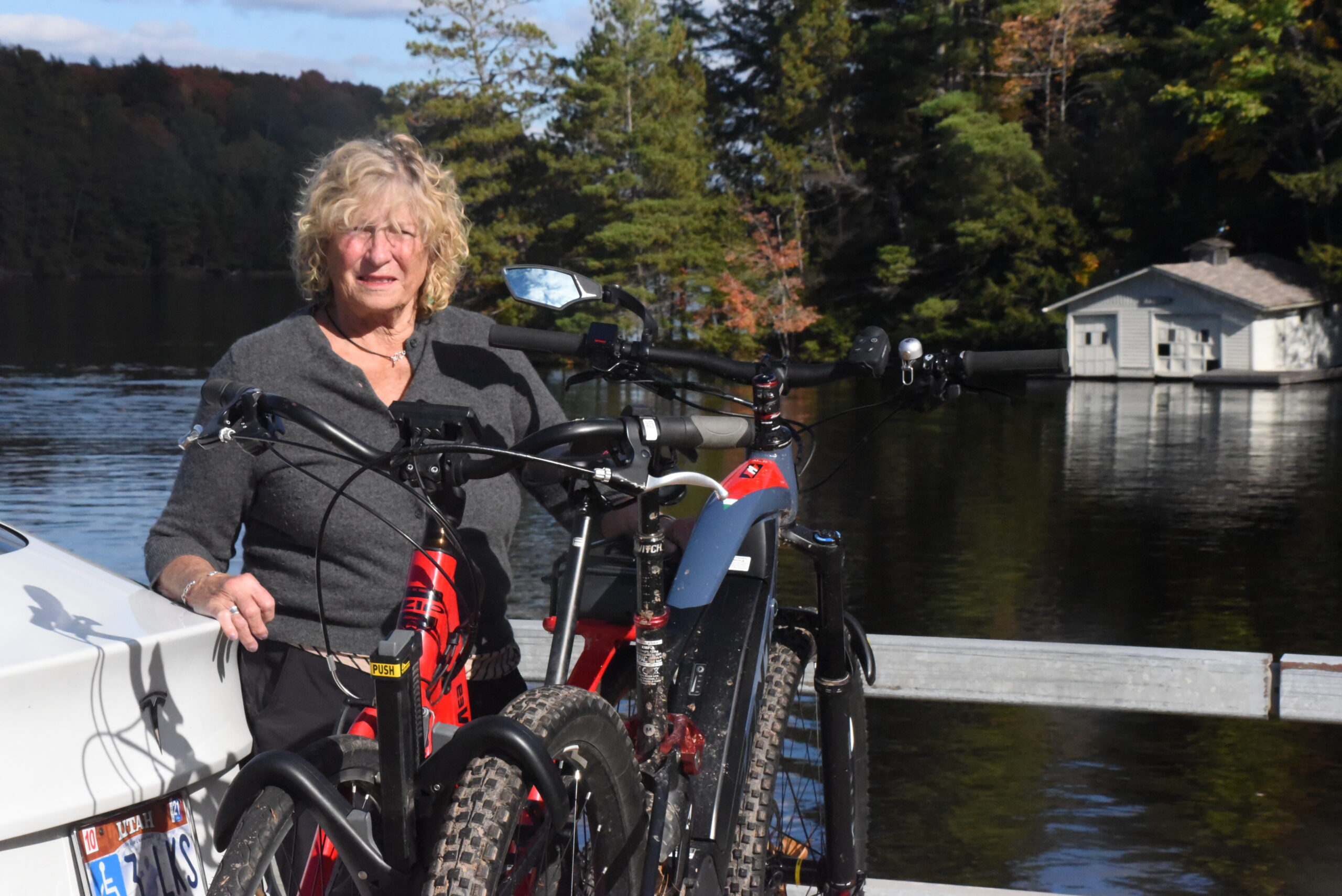 Bike with mirror on the handlebars. Three Lakes, Wisconsin. October 5, 2021. Photo by Fritz Hasler.
C) Helmets, bright/reflective wear, and lights
Fortunately, bike riders almost universally wear helmets these days. However, you also want to be very visible to other bike riders and cars. Unfortunately, a bright yellow jacket and/or reflective vests while biking, as you see me wearing at Zion National Park in the photo below, is not as common. It doesn’t matter what color you are wearing if you take a few minutes to put on construction worker’s reflective vest.
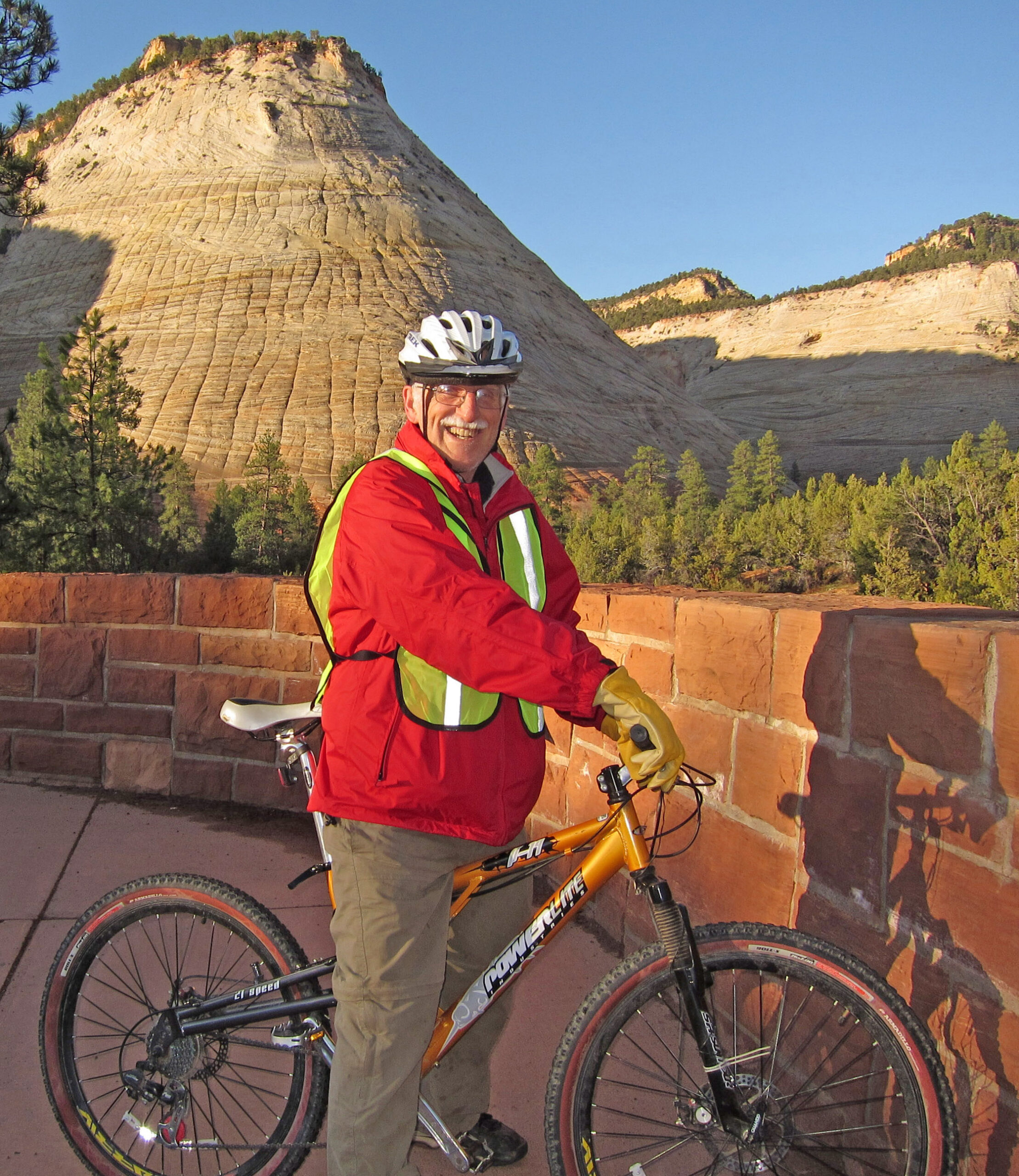 The author on a bike wearing a reflective vest. Zion Mt. Carmel Highway. Zion National Park, Utah. April 19, 2011. Photo by Fritz Hasler.
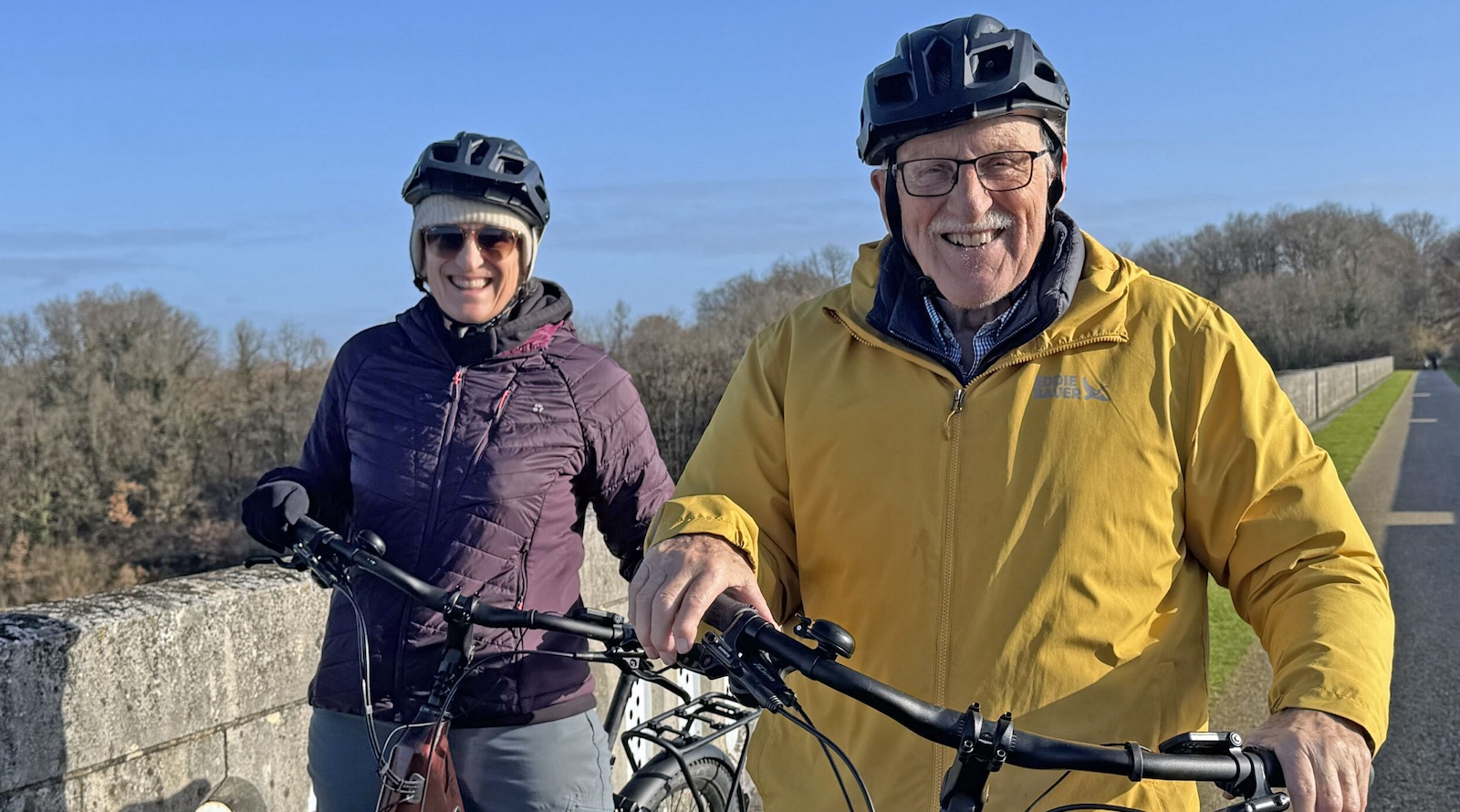
Many ebikes come with lights, as you see in the photo below, and they can be installed on most others. These lights draw on the main propulsive battery so you don’t have to charge them, and they are always available. If you don’t have a built-in light and can’t install one, a battery light is an excellent alternative. The one I bought recently has a rechargeable battery that can be recharged with your cellphone charging cable. If you are riding at dusk or at night, you should always use a headlight and tail light. Many people turn on the lights during the day for enhanced visibility. I like to use passive bright yellow and reflective clothing, but if you are wearing dark clothing, turning on your lights on would be highly recommended.
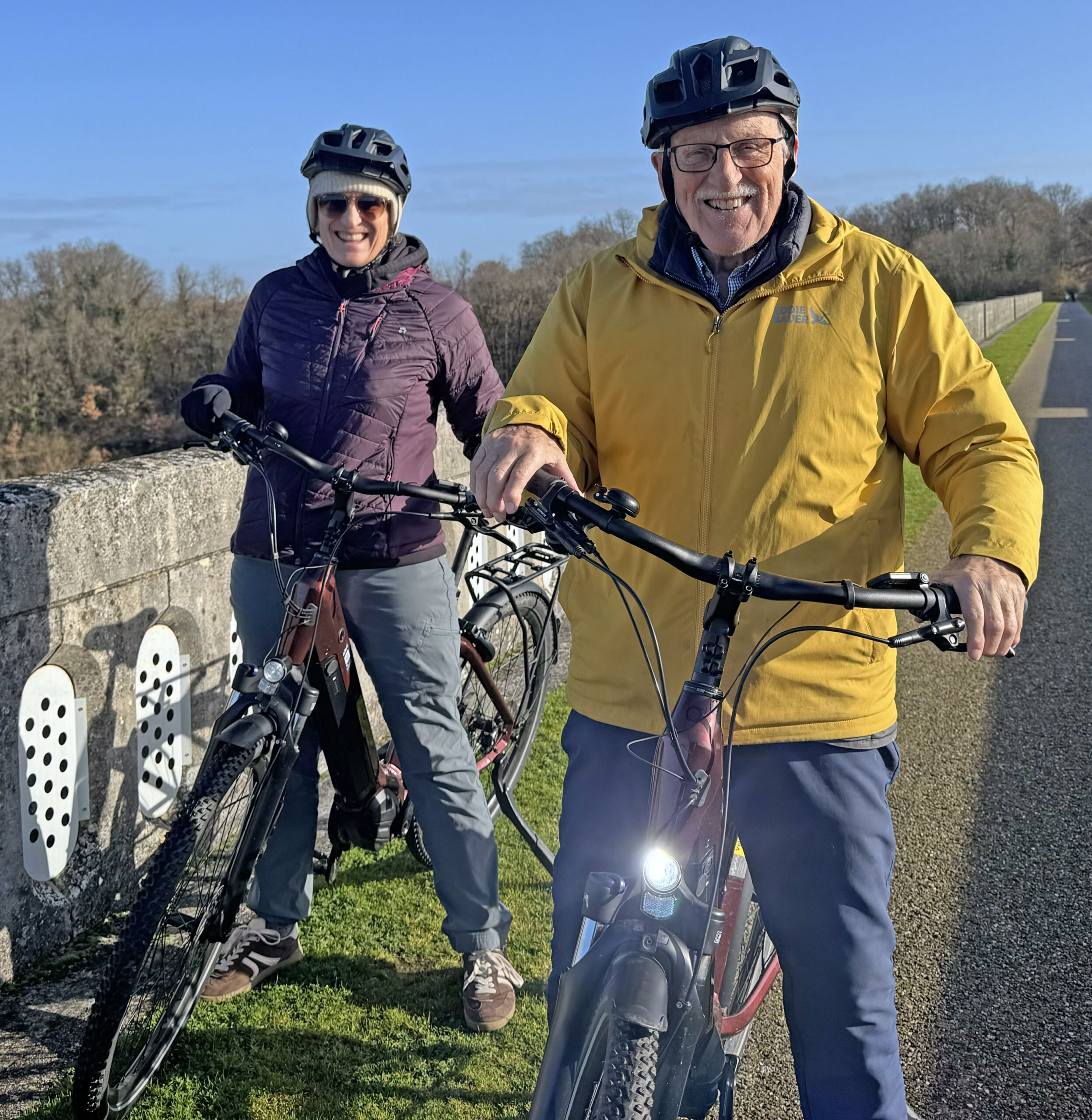 My daughter and me. Ebikes with lights. 100 ft tall converted railway viaduct. Le Blanc, France. Photo by Fritz Hasler.
D) Motorized vehicle barriers on bike trails
Most bike trails these days have barriers to keep motorized vehicles (effectively only 4-wheel motorized vehicles) off the trails. However, these barriers are dangerous. A moment’s lack of concentration, you clip one and have a serious accident. My brother broke 3 ribs after clipping one recently. On the gorgeous 14-mile Murdock trail that runs along my back property line in Lindon, Utah, the vehicle barriers are now left open year round, as you see in the second photo below. I have ridden on bike trails for years and have very seldom seen unauthorized motor vehicles on the trails. I think these barriers should be outlawed.
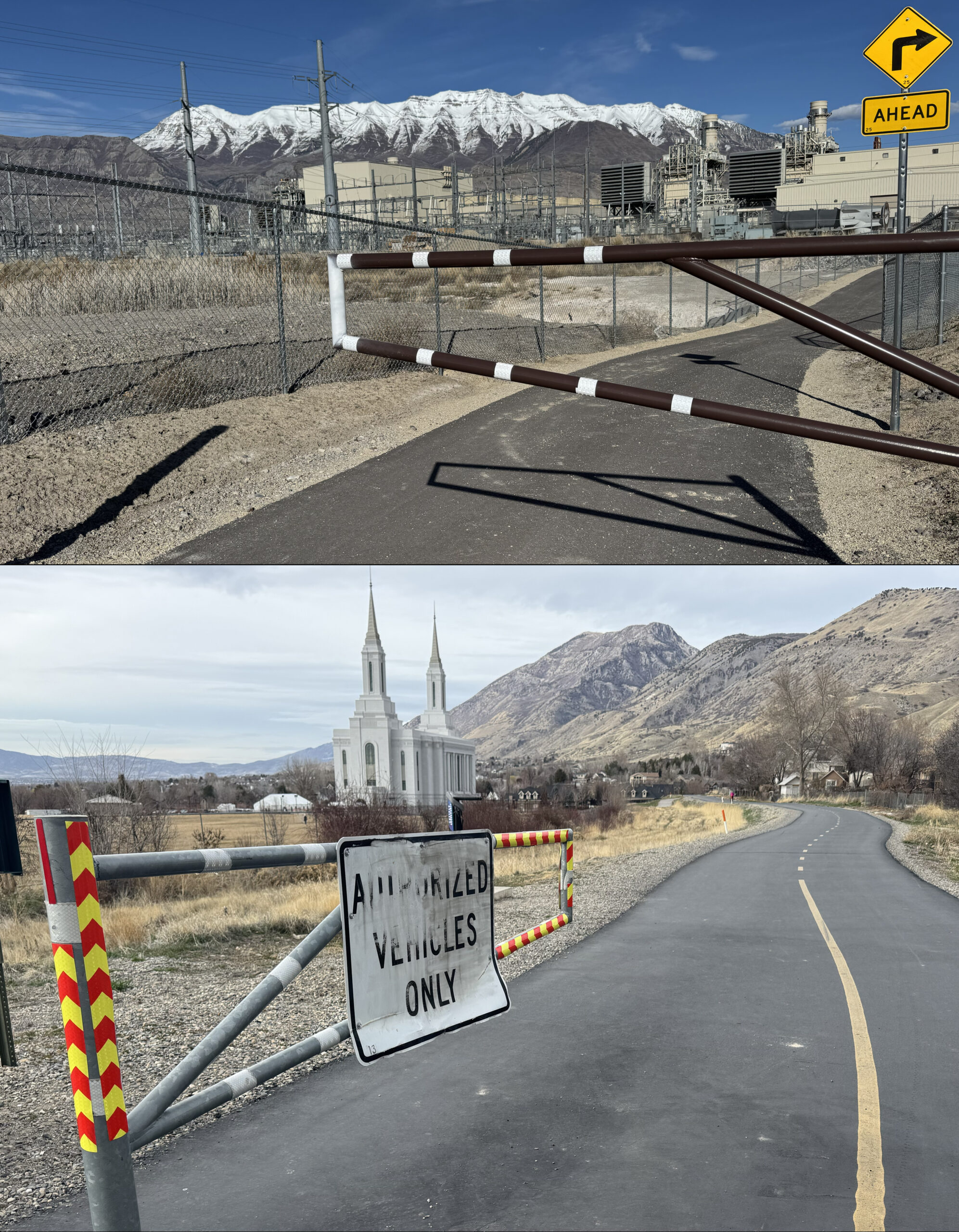 Bike trail motorized vehicle barriers. Closed and open. Lindon, Utah. March 9, 2026. Fritz Hasler Photos
E) Pedals: flat, breadbasket, or clip-in
Any self-respecting road-bike rider will be using clip-in pedals and shoes as you see on the right side of the photo below. Clip-ins allow you to apply power through the full circular stroke of the pedal. They also keep your foot from bouncing off the pedal on a big bump. I rode with clip-ins for many years on both road bikes and mountain bikes. However, clip-ins demand a few seconds of concentration to get your foot off the pedal when you come to a stop. In those many years, I crashed twice when distracted at the moment when I needed to get my foot off the pedal. Mountain bike riders usually do not use clip-ins (see the flat yellow standard mountain bike pedal on the left side of the photo below). The need to get your foot off quickly in difficult situations trumps the advantage of full stroke power. The breadbasket or mousetrap (second photo below) is a cheaper alternative to the clip-ins but doesn’t give the same tight control.
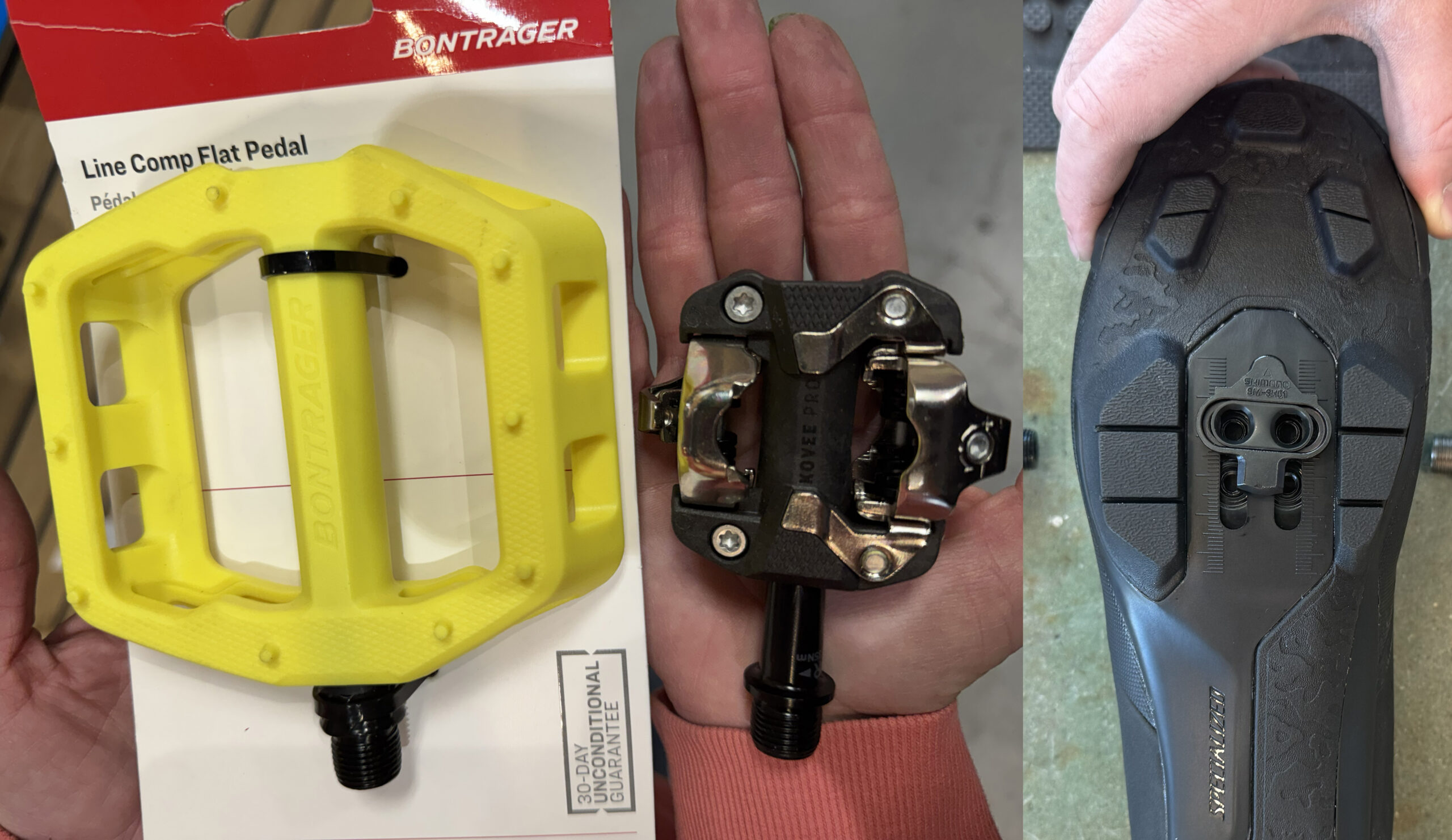 Mountain bike pedal, STD clip-in pedal, and STD clip shoe. Orem, Utah. Fritz Hasler Photos
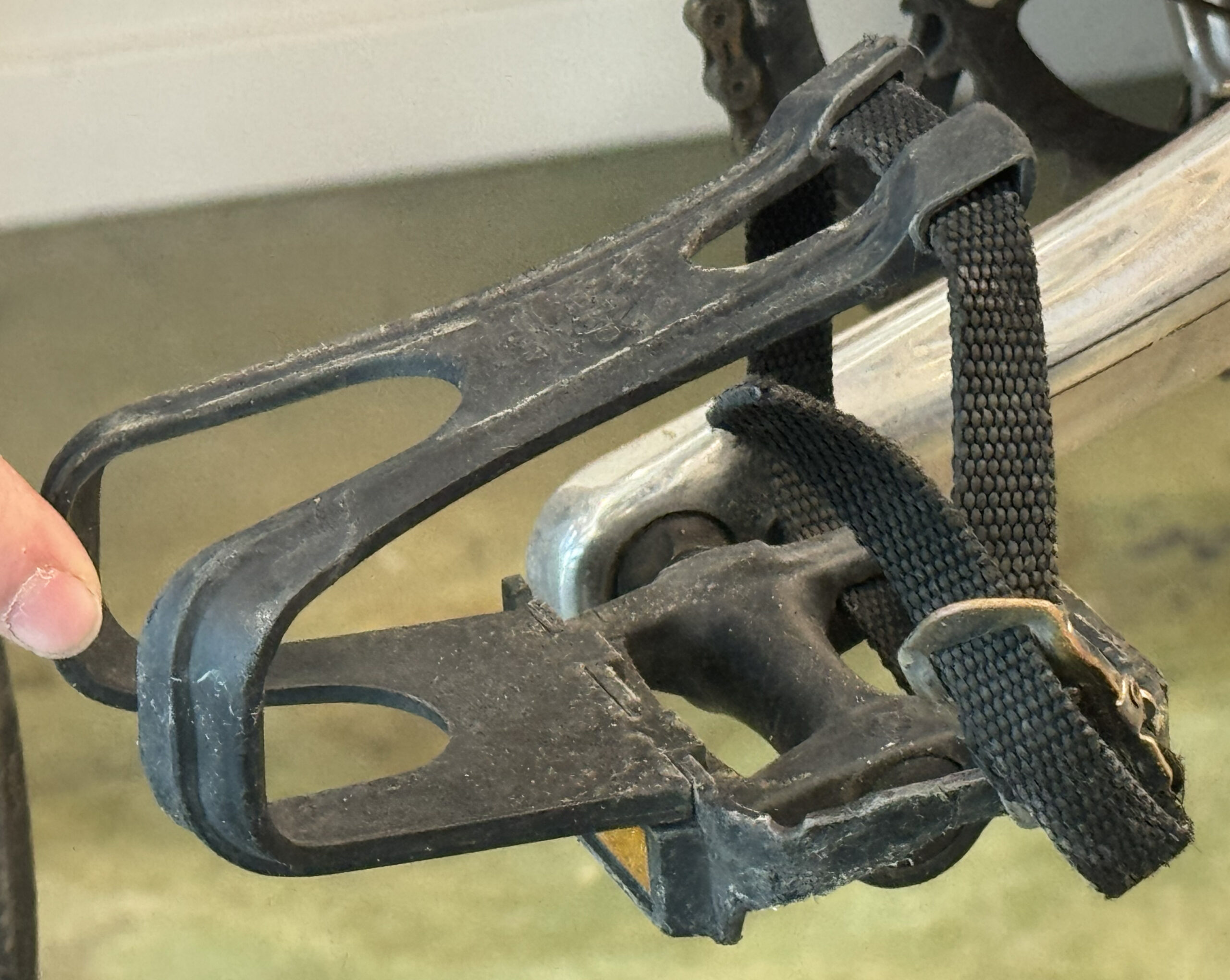 Breadbasket toe restraints. Road bike. Bike Peddler. Pleasant Grove, Utah. Photo by Fritz Hasler.
F) Earbuds
It seems to me that 90% of bike riders these days are wearing earbuds on the bike trail. (See photo below.) If they are just using them for an occasional short phone call, I think that’s okay. If they are blasting music, which I think most are doing, I think that is really stupid. I think you need all your senses to be safe while riding a bike. I assume they are blasting music because I have given up trying to talk to people wearing earbuds. They can’t hear me! Save listening to music with earbuds or headphones for spinning in the gym.
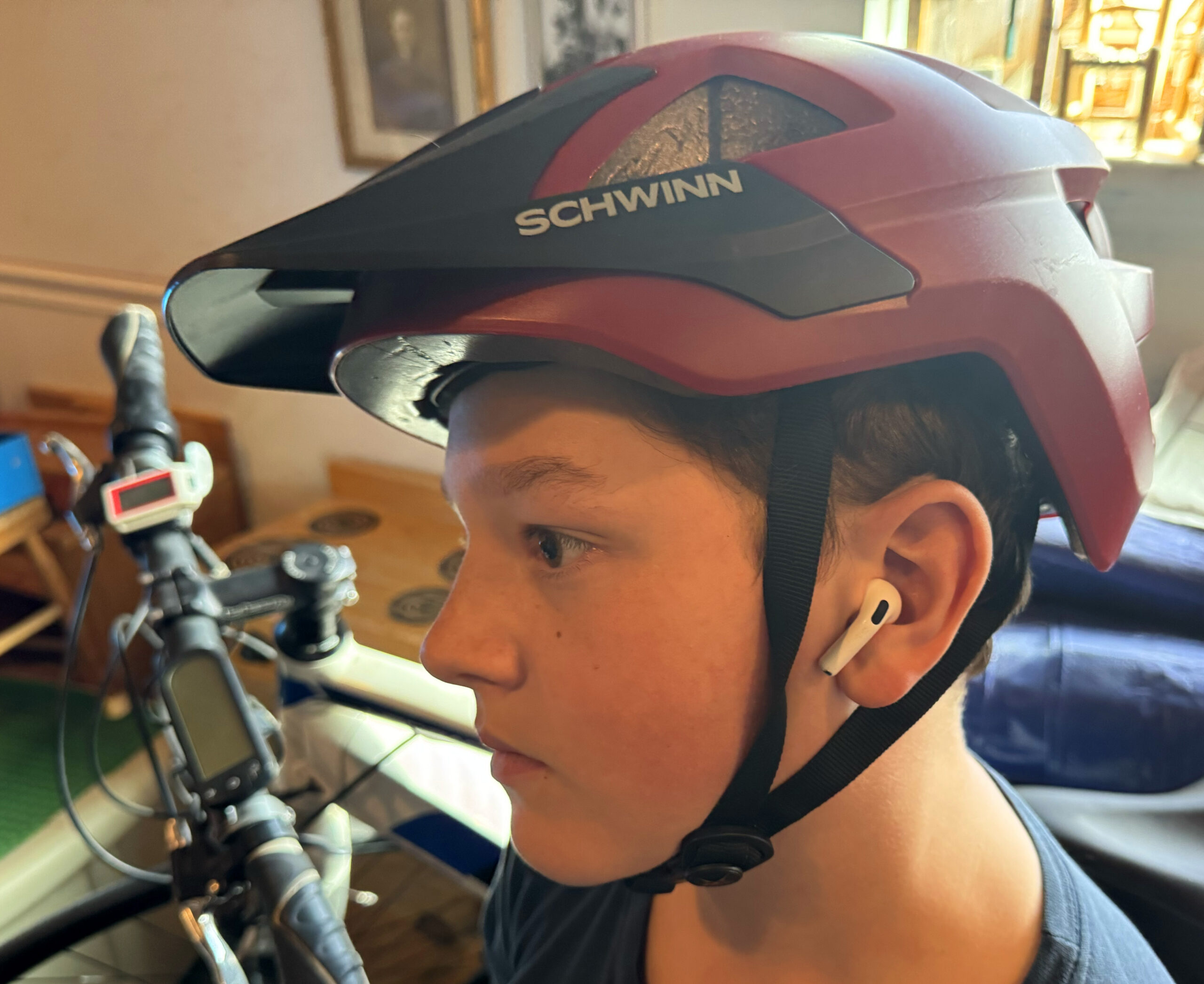 Grandson wearing helmet and earbuds. Lindon, Utah. Photo by Fritz Hasler.
G) Disc brakes for bikes
Performance road bikes and mountain bikes have traditionally used rim brakes where calipers fitted with rubber pads pinch the wheel rim. Hydraulic disc brakes (like you see in the lead photo of the article) previously introduced for motorcycles and cars were introduced for mountain bikes in about 1990. Anyone coming down a very steep trail appreciates the superior braking power of disc brakes over rim brakes. Hydraulic brakes for road bikes finally became standard around 2018. When shopping for a used bike, hydraulic disc brakes are an important safety consideration.
H) Off-road biking
I got my first full-suspension mountain ebike about 5 years ago. That bike changed my life. Previously, I rode exclusively on roads and bike trails. That bike opened up to me the spectacular off-road trails in Southern Utah like you see in the photo below. The mountain ebike also opened up off-road trails for me in Northern Wisconsin as well as Northern Utah.
Off-road trails come in two primary classes: single- and double-track. An ATV or truck could go on a double-track trail. Single-track trails are rated as L1, L2, and L3. As an 80-year-old, I stick to the L1 trails for safety. Some of the L3 trails we have in the Utah mountains are a narrow single-track trail on the side of a very steep slope. One slip-up and you would be head over bike going down the slope. L3 trails also have big rocks and logs that make them impossible for me to ride. I can navigate L2 drop-offs going downhill that would be impossible for me going uphill.
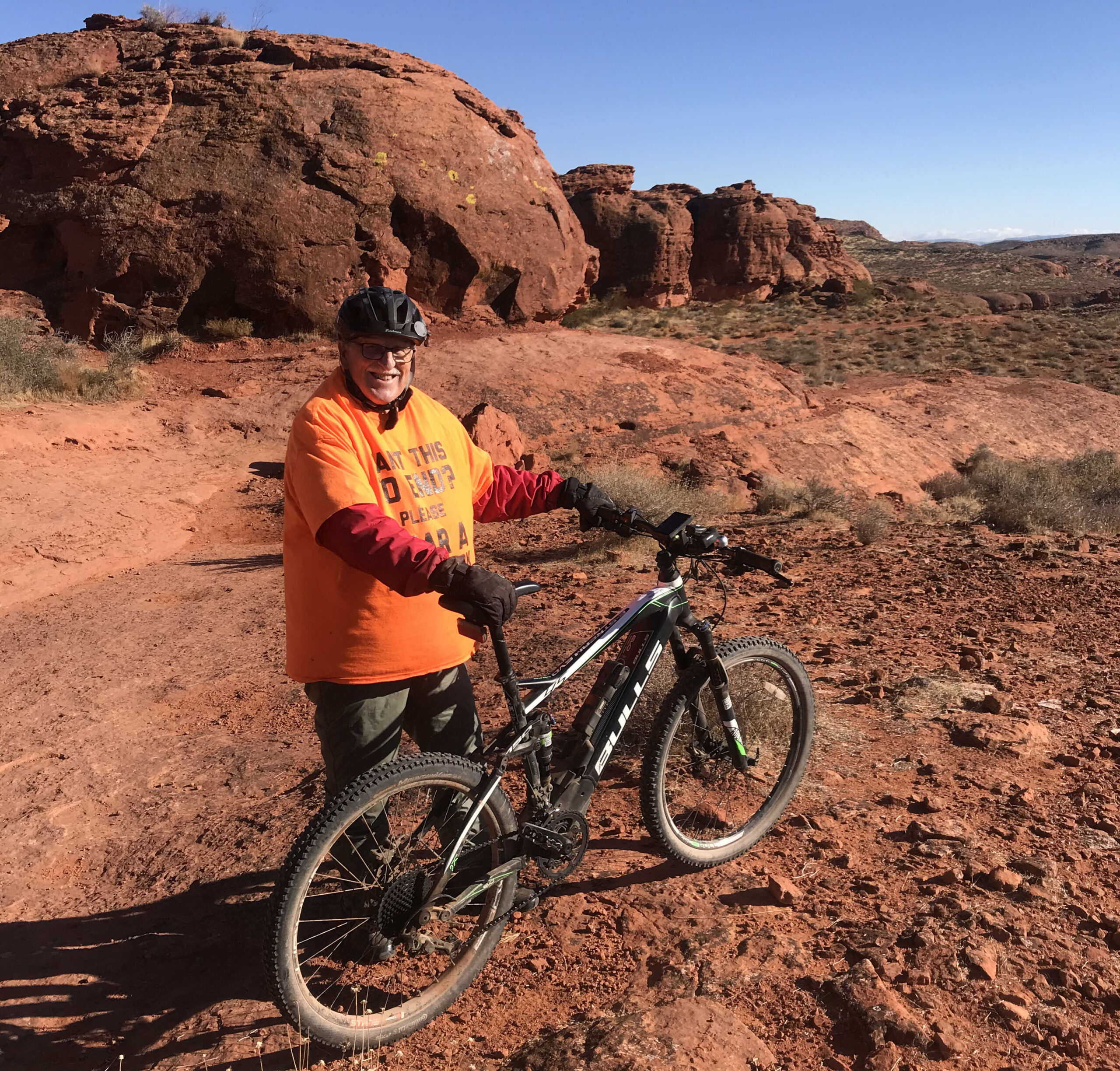 The author with mountain bike. Slick rock. Saint George, Utah. Photo by Fritz Hasler.
Sign up for CleanTechnica’s Weekly Substack for Zach and Scott’s in-depth analyses and high level summaries, sign up for our daily newsletter, and follow us on Google News!
Advertisement
Have a tip for CleanTechnica? Want to advertise? Want to suggest a guest for our CleanTech Talk podcast? Contact us here.
Sign up for our daily newsletter for 15 new cleantech stories a day. Or sign up for our weekly one on top stories of the week if daily is too frequent.
CleanTechnica uses affiliate links. See our policy here.
CleanTechnica’s Comment Policy