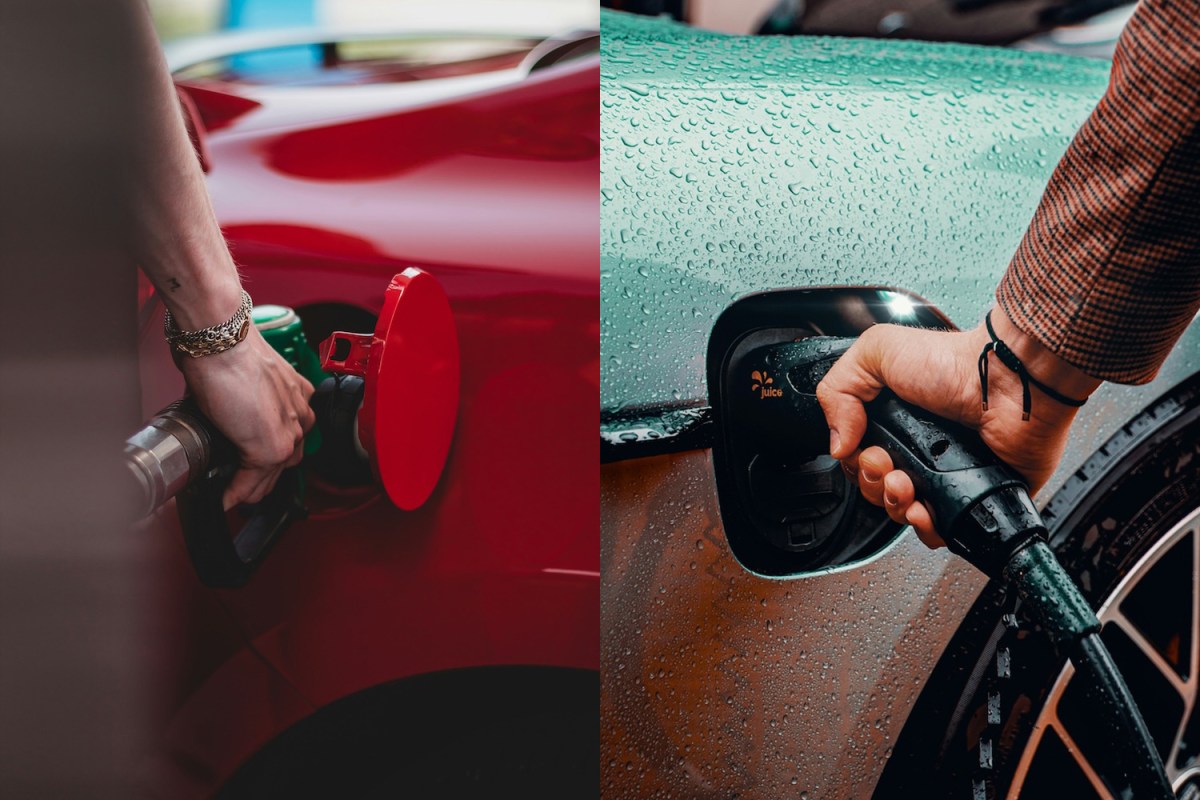
How much more expensive is your gasoline? Across the U.S., the average price for a gallon of gas has jumped 33% compared to a month ago, before the U.S. and Israel began the war against Iran. In specific states, that translates to a $1.03 hike in Florida, $1.25 in Arizona and $1.26 in New Mexico, according to AAA. I probably don’t have to tell you this, though. As prices hit their highest levels in two and a half years, every American who drives has been keeping tabs on gas station signs.
Some Americans are also keeping their eye on different prices: those for new and used EVs. As the war in Iran approaches its third week with no end in sight, and oil shipments through the Strait of Hormuz still disrupted, more consumers are starting to seriously consider trading in their gas guzzlers for electric vehicles.
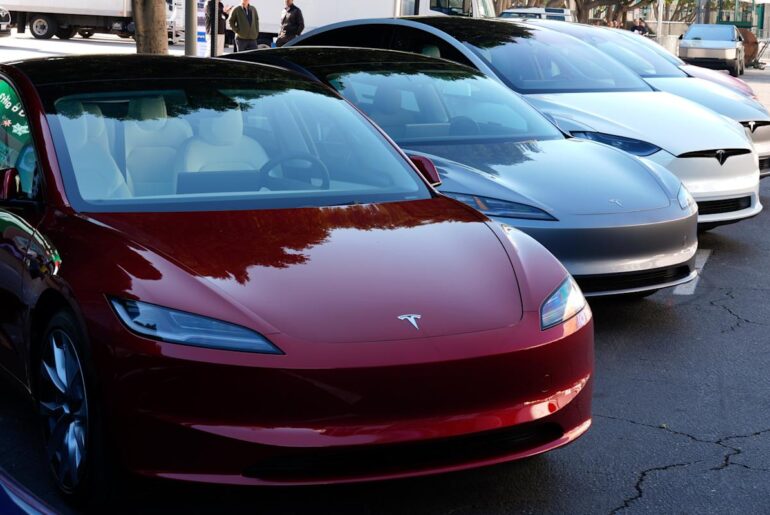
It’s an enticing prospect: a car that’s impervious to price spikes at the pump. That’s been one of the major selling points of EVs since the beginning of their entry into the market, with Tesla even advertising estimated gas savings alongside the purchase price of its electric sedans, SUVs and trucks. EV boosters are fond of saying that cost savings go beyond refueling, too, noting that owners of battery-powered cars don’t need to pay for oil changes and other routine car maintenance that’s specific to gas and hybrid vehicles.
While that’s all true, there’s more to the story, says David Undercoffler, the head of consumer insight at CarGurus, a car-buying platform. “It is not just as simple or reductive as, gas prices are high, that must mean EVs are the right choice for me right now,” he says.
If you’re curious about going electric simply because you want to save money, here are five lesser-known factors to consider.
Insurance
“Insurance on new EVs is quite a bit higher,” says Undercoffler. How much higher? According to a report from insurance-comparison site Insurify published last August, American drivers pay 49% more on average to insure electric vehicles than gas-powered cars. The company cites the higher repair and replacement costs of EVs as the main culprit behind this gap. But Undercoffler notes that buying a used EV can significantly cut down on the insurance rate compared to buying new.
Depreciation
It’s common knowledge that the value of a new car plummets the second you drive it off the dealer’s lot. For EV buyers, the hit is even more pronounced, as EVs depreciate 13% more over a five-year period than the market average, according to the used-car site iSeeCars. Here again we have an upside for those being used, as depreciation flattens out over time. “It’s not nearly [as big of] a factor in ownership costs of the car” for used EVs, says Undercoffler.
EV-Specific Fees
When modern EVs first started hitting the market, owners weren’t just exempt from paying for gasoline at the pump, they were also spared the gas taxes that states add on top of the price of a gallon. Now, that tax loophole is being closed. “You’re starting to see individual states boost fees, the sort of usage fee to make up for lost gas-tax revenue,” says Undercoffler. Currently, 40 states require EV owners to pay a higher annual vehicle registration fee than those with gas-powered cars, with some states even charging hybrid owners more. In Texas, new EVs are subject to a one-time $400 registration fee and then $200 annual renewals, whereas the price for light-duty gas-powered cars is under $100.
Charging
The conventional wisdom is that charging an EV is cheaper than paying for gas, especially if you charge your vehicle at home. But Undercoffler notes that electricity prices vary widely from state to state, so the savings depend on where you live. For example, he says that where he lives in California, residents can expect to pay about 34 cents per kilowatt-hour (kWh) of electricity, but in Washington state, it’s about a third of that. “So right there, the cost to charge an EV is three times higher for myself than it is for someone in Washington,” he says.
“It’s also, how long is one going to be owning that EV?” he adds. “If you’re going to be owning it for a while, the math starts to work out in your favor above three or four years. If this is a shorter-term ownership, EVs still don’t pencil out.”
New vs. Used
One of the most important questions in this car-buying conversation is one no one knows the answer to: How long will gas prices stay inflated? However, there are some educated guesses, and they’re not pretty. The U.S. Energy Department says gas prices won’t return to pre-war levels until the end of 2027, an estimate that is backed up by Goldman Sachs.
Thankfully, there’s good news for drivers who want the better cost savings offered by used EVs. “A whole bunch of [off-lease] used EVs are about to hit the market throughout this calendar year,” says Undercoffler. “I mean, to the tune of like several hundred thousand are expected. That presents an opportunity for used buyers because suddenly there’s a ton of supply, and many of those vehicles, or nearly all of those, have the depreciation baked in.”
He’s planning on taking advantage himself. His wife has a 10-year-old gas-powered Acura they’re looking to replace. After crunching the numbers, he has a specific category in mind: “a two-year-old used electric vehicle.”
Meet your guide

Alex Lauer
Alex Lauer is the features editor at InsideHook. Since joining the company in 2016, he’s covered a wide range of topics, including cars, the environment, books and business.
More Like This
This article appeared in an InsideHook newsletter. Sign up for free to get more on travel, wellness, style, drinking, and culture.