The U.S. National Highway Traffic Safety Administration (NHTSA) has escalated an investigation into problems with Tesla’s (NASDAQ: TSLA) Full Self-Driving (FSD) driver-assist system, the agency said in a filing on Thursday.
NHTSA is investigating possible safety defects that may make FSD dangerous to use in fog, heavy rain, glaring sun, or other “reduced roadway visibility conditions,” it said.
Will AI create the world’s first trillionaire? Our team just released a report on the one little-known company, called an “Indispensable Monopoly” providing the critical technology Nvidia and Intel both need. Continue »
The investigation covers 3.2 million Teslas built since 2016.
To be clear, this is still an investigation. While NHTSA has the power to order Tesla to recall and repair vehicles found to be defective, it’s still a step away from doing that.
But if the agency finds that FSD has safety defects, and if those defects can’t be repaired via an over-the-air software update, this could get expensive for Tesla in more ways than one.
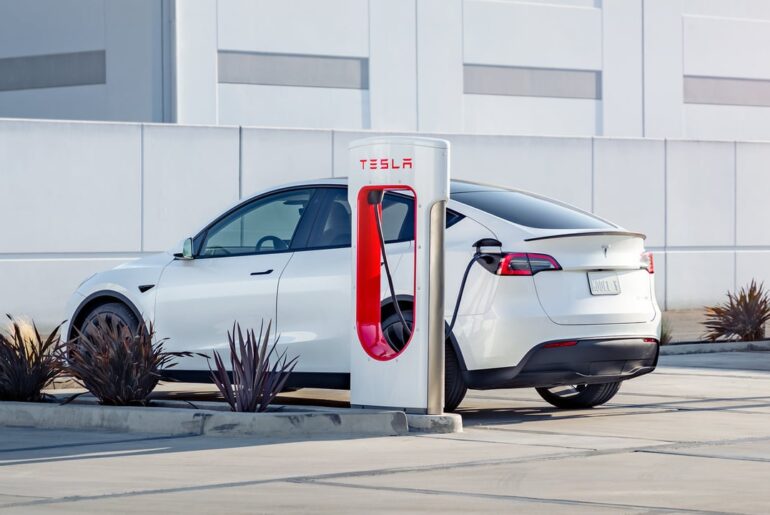
 Image source: The Motley Fool.
Unlike most advanced driver-assist systems, which use a combination of cameras, radar, and (sometimes) lidar, FSD relies entirely on cameras to “see” and understand what’s happening around the car.
Obviously, things like fog, glare, and heavy rain can degrade the ability of those cameras to give the system the information it needs to operate the car safely. Because of that, FSD has a “degradation detection system,” which is supposed to warn the driver and disengage FSD when it can’t see well enough to operate safely.
NHTSA has been investigating that system since last year. But this week, it said it has now opened an “Engineering Analysis” to determine whether the degradation detection system is working as it should. That puts the investigation a big step closer to a recall.
The agency said on Thursday that its investigators have found that, in nine incidents they’ve studied, “the [degradation detection] system did not detect common roadway conditions that impaired camera visibility and/or provide alerts when camera performance had deteriorated until immediately before the crash occurred.”
In one of those nine incidents, a Tesla operating on FSD hit a pedestrian, who later died.
The Engineering Analysis will review the updates Tesla has made to the degradation detection system since the fatal accident to determine whether they’re sufficient. It will also look into six more recent incidents that might be related, it said.
Long story short, if NHTSA’s analysis finds that the system isn’t working as it should, it can order a recall. But what would that mean?
I see a couple of possibilities. The most likely one will cost Tesla very little aside from some embarrassment. But there’s another possibility that could bring big headaches.
If a recall is ordered, Tesla may be able to develop a software update that satisfies NHTSA’s investigators. From what we know now, that’s probably the most likely outcome. Such an update would likely place small additional limits on FSD while leaving the system mostly intact. For Tesla and its vehicle owners and shareholders, that’s no big deal.
But it also seems possible that NHTSA will decide that a camera-only system is inherently unsafe — at least when sold as a “self-driving” system. (Despite its name, FSD is properly categorized as an “advanced driver-assist system,” meaning it’s not fully autonomous. Drivers are supposed to be paying attention at all times.)
Theoretically, NHTSA could force Tesla to rename and reposition the system — or to shut it off entirely unless the affected vehicles’ hardware is updated with additional physical sensors.
That would be a very expensive hit to Tesla’s cash and to its reputation — and although Tesla’s stock sometimes seems immune to bad news, a serious FSD recall or ban would go to the core of the Tesla investing story, especially following the recent crashes involving its still-small robotaxi fleet.
There are safety advocates who would like to see such a recall happen. Could NHTSA make it happen? It seems unlikely, but it’s also just enough of a possibility that investors should keep an eye on developments.
Ever feel like you missed the boat in buying the most successful stocks? Then you’ll want to hear this.
On rare occasions, our expert team of analysts issues a “Double Down” stock recommendation for companies that they think are about to pop. If you’re worried you’ve already missed your chance to invest, now is the best time to buy before it’s too late. And the numbers speak for themselves:
Nvidia: if you invested $1,000 when we doubled down in 2009, you’d have $447,961!*
Apple: if you invested $1,000 when we doubled down in 2008, you’d have $47,222!*
Netflix: if you invested $1,000 when we doubled down in 2004, you’d have $495,179!*
Right now, we’re issuing “Double Down” alerts for three incredible companies, available when you join Stock Advisor, and there may not be another chance like this anytime soon.
*Stock Advisor returns as of March 16, 2026
John Rosevear has no position in any of the stocks mentioned. The Motley Fool has positions in and recommends Tesla. The Motley Fool has a disclosure policy.
Should Tesla Be Worried About the National Highway Traffic Safety Administration? (Yes.) was originally published by The Motley Fool