Autoblog and Yahoo may earn commission from links in this article.
The level of technological sophistication Chinese vehicles have reached in recent years must have been impossible to anticipate two decades ago, when automakers in the Asian country started making their initial inroads into overseas markets. At the time, ICE vehicles from Chinese brands lagged way behind those manufactured by established automakers from North America, Europe, Japan and South Korea.
But the advent of the electric vehicle into the mainstream in the mid 2010s has provided a level playing field between Chinese automakers and their western counterparts, and from then onward, their development accelerated at warp speed in unprecedented fashion for the automobile industry.
Today, China is the world’s No. 1 player in EV manufacturing and EV battery manufacturing, and its market is by far the world’s biggest for electric cars. It also controls the majority of global refining capacity for critical EV minerals and dominates the battery supply chain.
Chinese automakers produce some of the world’s most high-tech vehicles, and Chinese customers’ fascination with technology is driving a constant barrage of new car tech. But technology for technology’s sake is not always a good idea, as many of you know, especially if you’ve driven a car that has essential vehicle functions hidden in a touchscreen menu or whose pop-out door handles freeze in winter.
The Smart Car Version of ‘Open Sesame’
With every new generation, Chinese smart cars are pushing the boundaries of in-car technology, even in areas one would never think necessary, such as the mundane act of opening a car door. For more than a century, people have opened doors by pulling handles, and everything worked out just fine.
In recent years, however, the trend of flush-mounted, pop-out door handles has taken over the industry—especially EVs—bringing benefits in aerodynamics and styling. They have also brought safety concerns that we won’t go over again; suffice to say China has banned electric pop-out door handles starting January 1, 2027.
AITO (AITO)
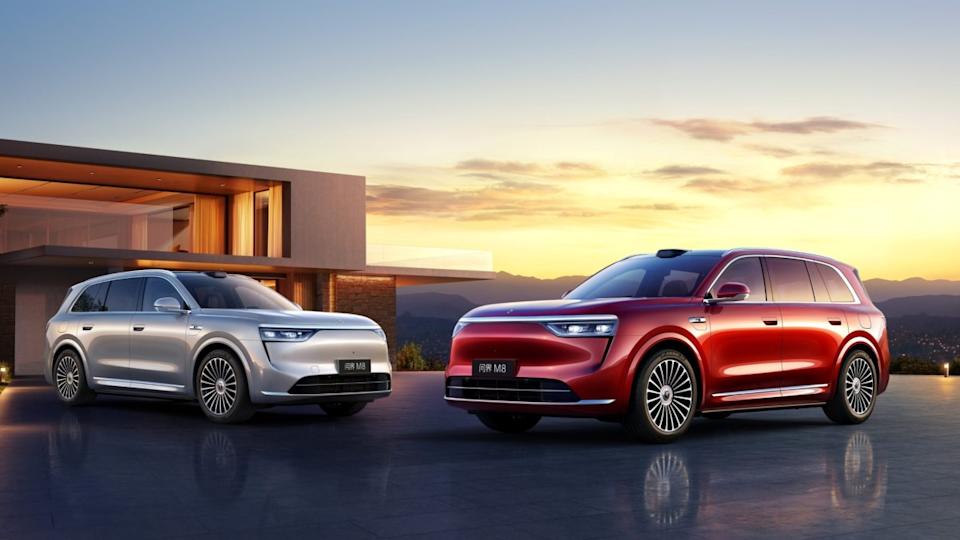
Meanwhile, there are several car models in China that have transformed the straightforward process of opening a door into a gimmick. Take the Aito M8, for example, a full-size electric luxury SUV whose doors can be unlocked and opened with gestures, without touching anything.
A video shared by user @TansuYegen on X.com demonstrates how the technology works, or rather how it doesn’t work if your gestures aren’t interpreted correctly by the system. The short clip shows a sales consultant demonstrating the feature to showroom visitors, who are having a hard time pulling the stunt.
It may be fun to experience in a showroom, but what happens in an emergency? Thankfully, the vehicle can be opened the old-fashioned way by pulling the handles; and if the 12-volt battery dies, the physical key opens the driver’s door and internal door handles allow passengers to exit.
How Does It Work?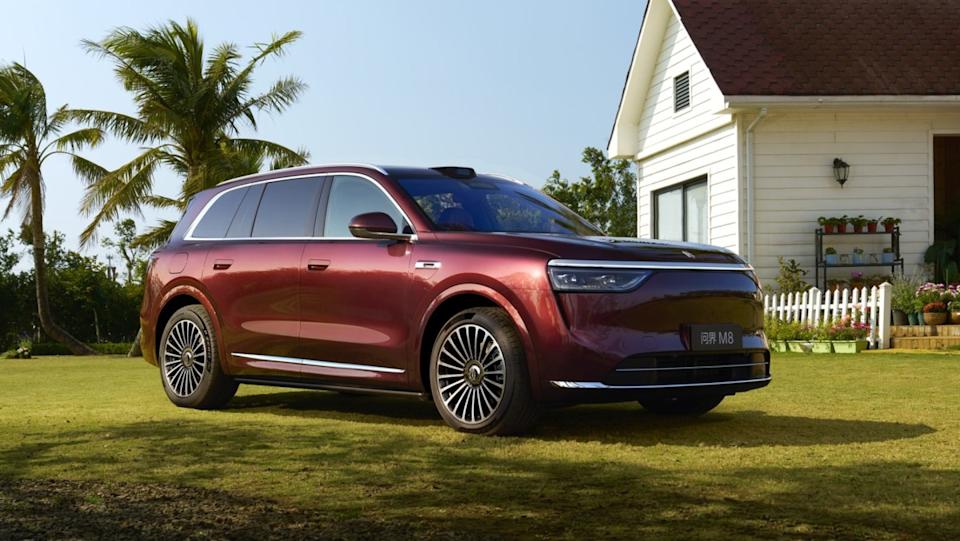
AITO (AITO)
The Aito M8 has cameras positioned between the front and rear doors that use facial recognition and Huawei’s AI algorithms to track hand movements, allowing users to open or close the doors with a simple gesture, without touching the door handle.
Hand gestures can also be used as confirmation commands, enabling the vehicle to reverse automatically into a tight parking space after the driver exits; the same gesture summons the car to drive itself out of a parking spot.
AITO (AITO)
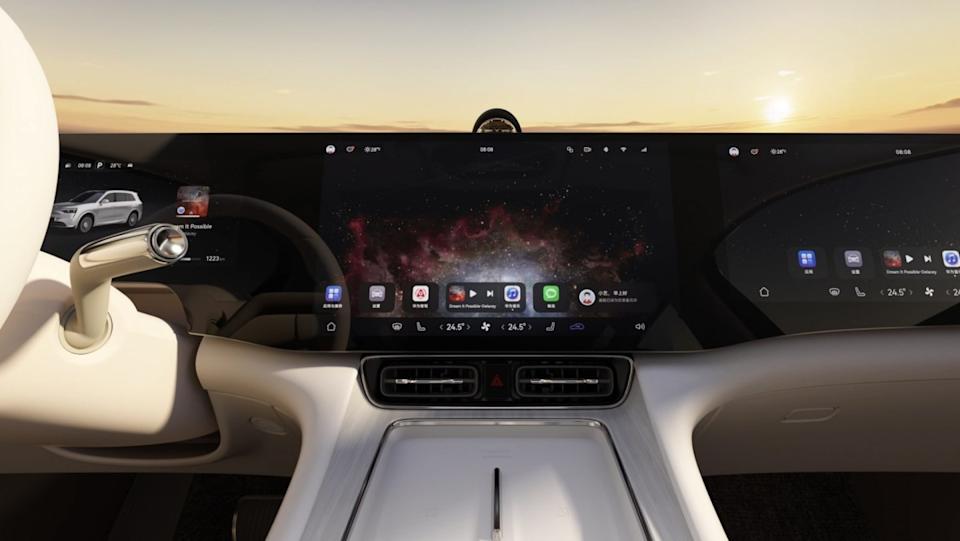
AITO, which stands for Adding Intelligence to Auto, is a luxury new energy vehicle (NEV) brand launched in 2021 as a partnership between Huawei and Seres. The Aito M8’s triple-screen infotainment setup runs the tech giant’s HarmonyOS, which is the same operating system incorporated in Huawei smartphones, tablets and wearables, enabling them to seamlessly connect to the vehicle. The M8 also features Huawei’s Qiankun ADS 4.0 advanced Level 3 autonomous driving system.
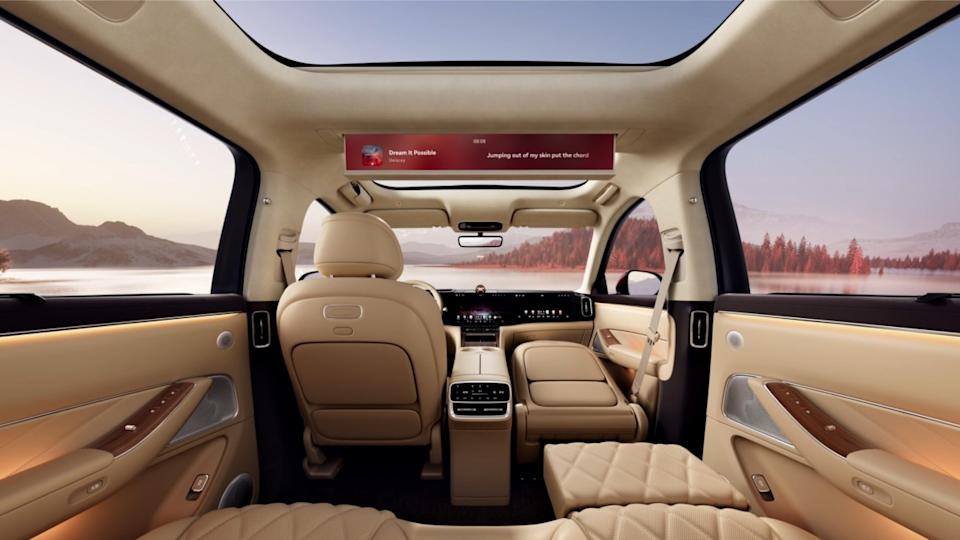
The Aito M8 offers both BEV and EREV powertrains, as well as five- or six-seat interior layouts. Prices start around $50,000 in China, where the M8 got 80,000 orders in its first month on the market.
AITO (AITO)
This story was originally published by Autoblog on Mar 20, 2026, where it first appeared in the News section. Add Autoblog as a Preferred Source by clicking here.