Your support helps us to tell the story
From reproductive rights to climate change to Big Tech, The Independent is on the ground when the story is developing. Whether it’s investigating the financials of Elon Musk’s pro-Trump PAC or producing our latest documentary, ‘The A Word’, which shines a light on the American women fighting for reproductive rights, we know how important it is to parse out the facts from the messaging.
At such a critical moment in US history, we need reporters on the ground. Your donation allows us to keep sending journalists to speak to both sides of the story.
The Independent is trusted by Americans across the entire political spectrum. And unlike many other quality news outlets, we choose not to lock Americans out of our reporting and analysis with paywalls. We believe quality journalism should be available to everyone, paid for by those who can afford it.
Your support makes all the difference.Read more
What better way to prepare myself for an interview with the boss of Lamborghini, Stephan Winkelmann, than a spin in their “entry level” (everything’s relative – it’s a quarter of a million quid) supercar, the Temerario.
The name, by the way, means daredevil, even reckless, which, ironically, is exactly the sort of person who oughtn’t be allowed within un milione di chilometri. That’s because it boasts some 900 horsepower and the twin-turbo motor, plus electric hybrid assistance, produces some 10,000 RPM.
“Hybrid”, I hear you say? “Hybrid?” Like a Prius? Well, yes, hybrid, and yes, if a Prius had a state-of-the-art 4-litre V8 with titanium rods plus three electric motors doing the business. It is as near-silent as a Prius running on electric only, but it can’t get very far in that mode, just enough not to disturb the neighbours or pollute the atmosphere along some chichi boulevard.
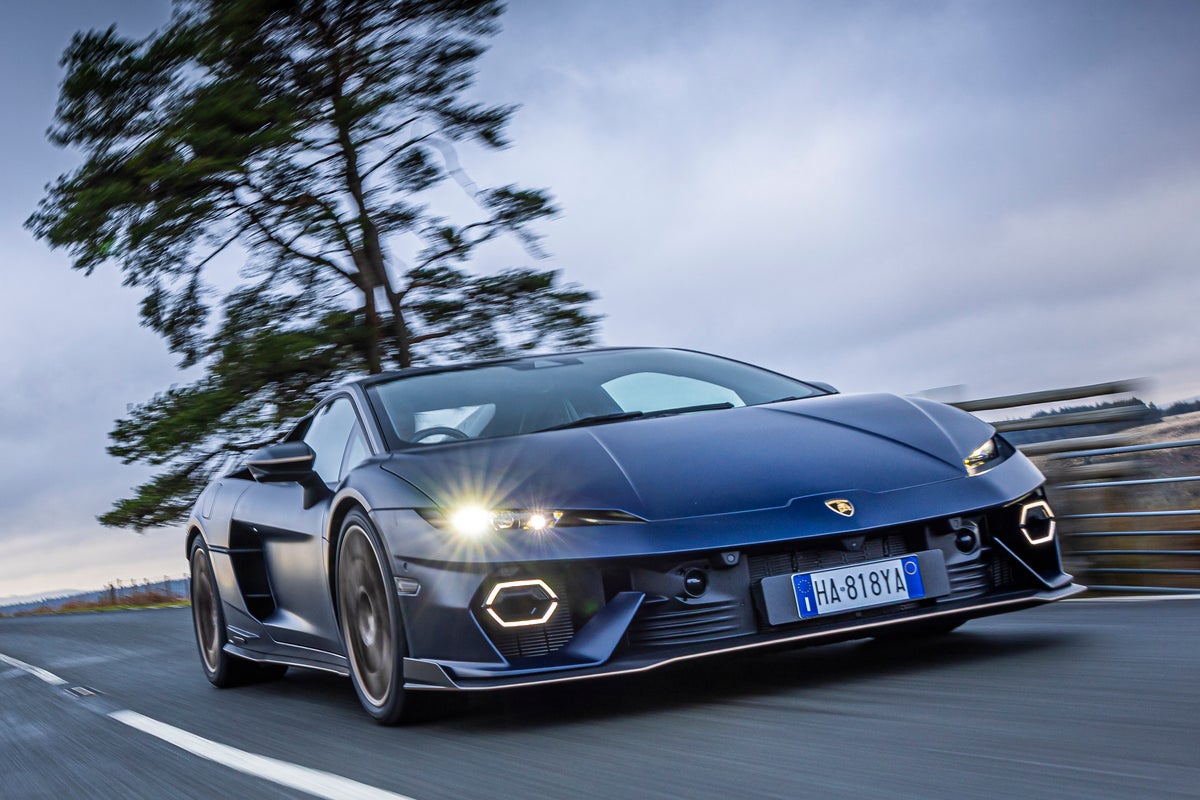
 Dialled up: while this is a potent machine, it feels easy to control (Sean O’Grady)
As with all hybrids, the modest electrification – you can even plug it in – adds a little boost before the V8 climbs up the rev range, and usefully chips a little off the frankly poor CO2 ratings and makes the fuel consumption marginally better. That said, you’re always going to pay a price for getting from rest to 60mph in 2.7 seconds and shortly after to 213mph.
The wonder of the Lamborghini Temerario is that even a mediocre driver like me can get the most out of it, at least on public roads. It sounds pathetic, but it really is very easy to exceed the speed limit, and I’ve rarely come across a machine that is quite so potent, yet where you feel in control of it. It’s loud, mind, if you operate in any of its performance modes, but in its default road setting it’s just about acceptably refined.
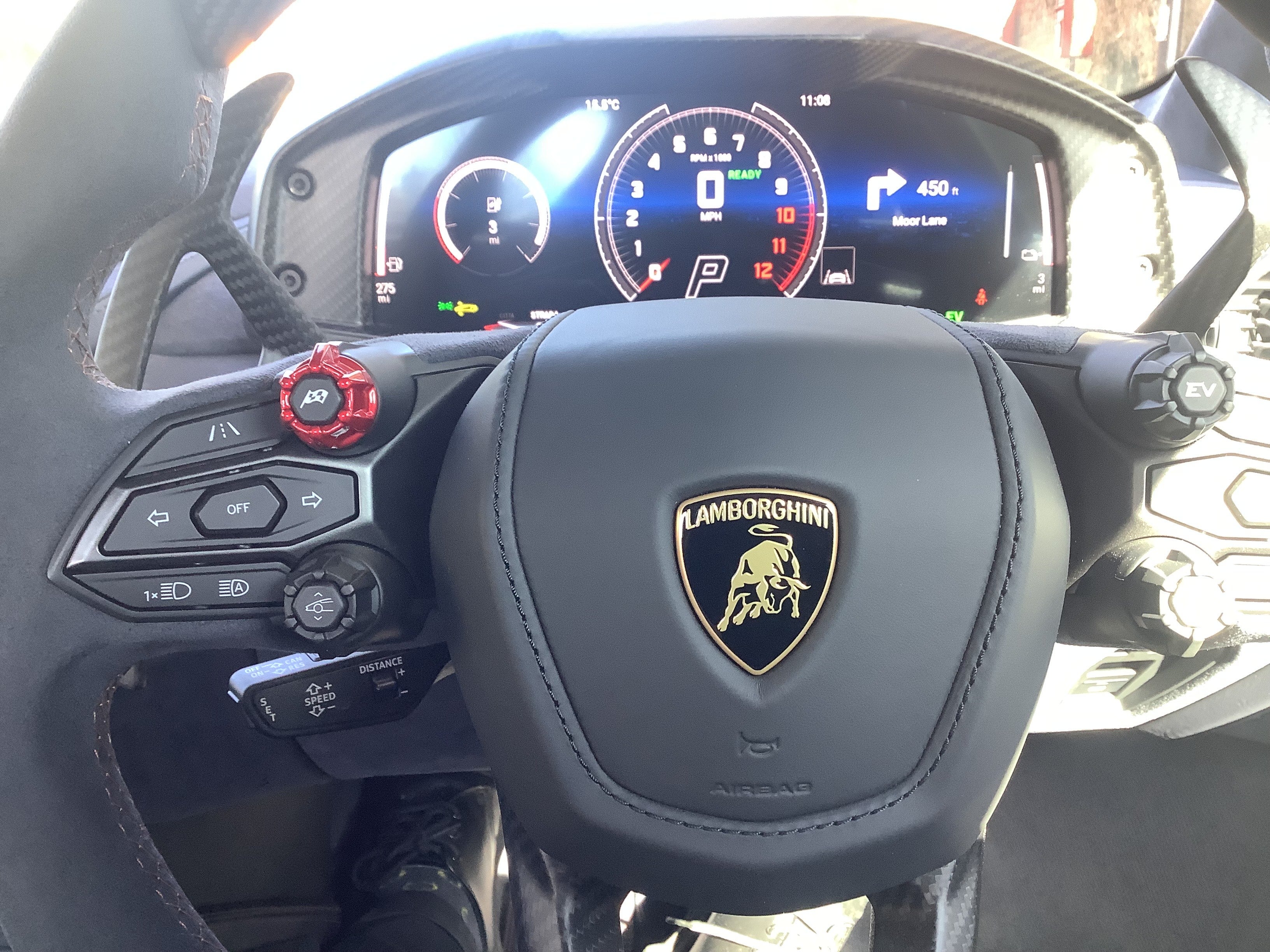
For those of us who are on the wrong side of tubby, it’s also easy to get in and out of. You have to use buttons on the steering wheel for indicating, but the rest of the controls are fairly familiar. It’s no comfy grand tourer – others do that better – but judged as something that will look after you as long as you treat it with respect, then it’s the ideal wheels, hybrid or not.
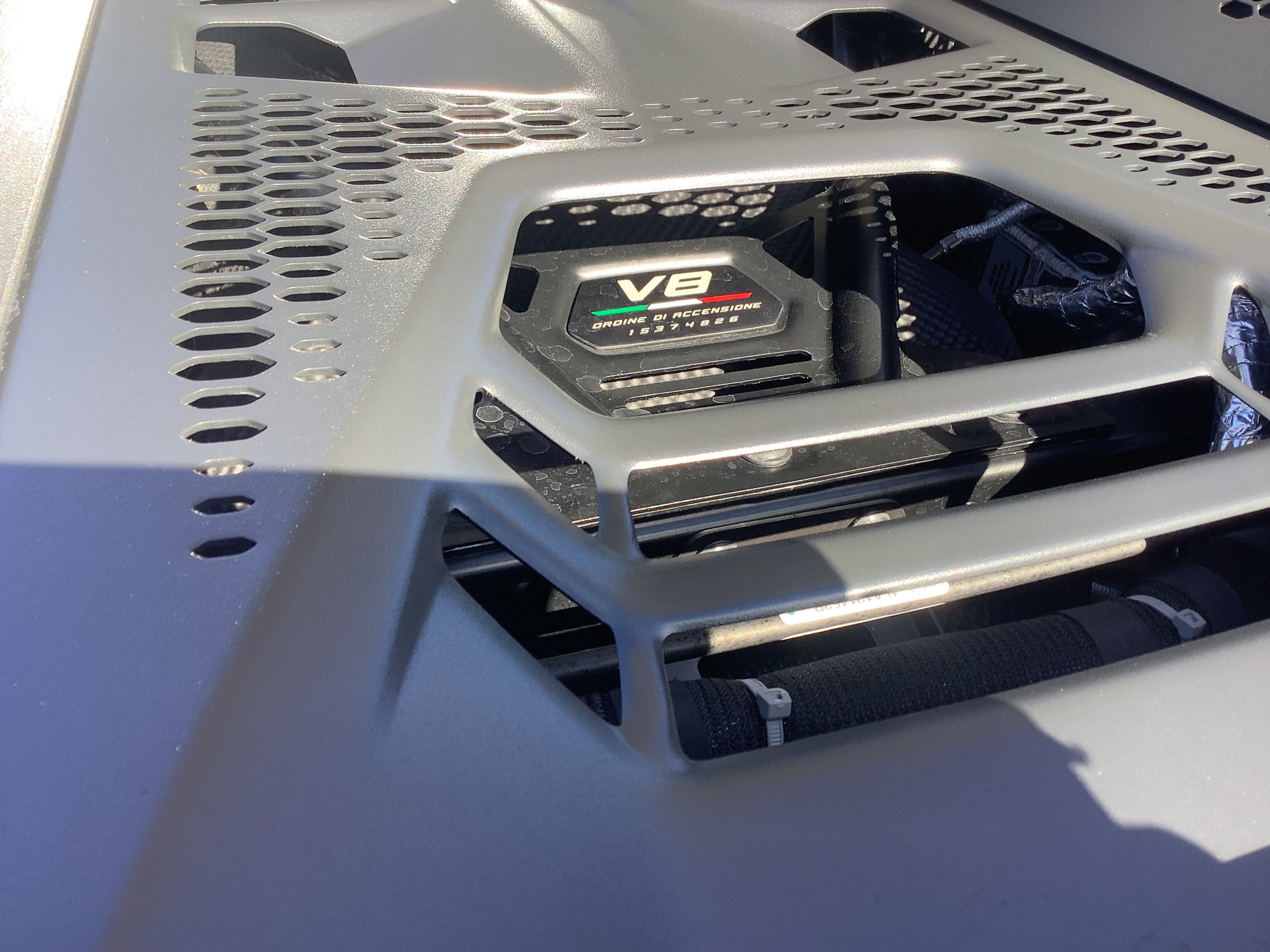 Rev review: the V8 engine helps the Temerario go from 0-60 in 2.7 seconds (Sean O’Grady)
Fortunately for Winkelmann and the rest of the team at the Italian HQ at Sant’Agata Bolognese, this authentically Italian model has gained, he says, a “positive” reception. A replacement for the slightly more raucous Huracan, Winkelmann says his customers like the new car, which still manages to look dramatic and fairly distinctive as a modern Lamborghini – and to my eye, an evolution of the Huracan’s looks rather than a fresh departure. It has certainly helped the company to keep its sales up in obviously difficult circumstances – over 10,000 in 2025, which is good for a specialist make, and comparable to its British cousin, Bentley, both being part of the giant VW Group. A few, I suspect, miss the Huracan’s V10, but not enough to matter.
What doesn’t seem to have enjoyed the same reception is the proposed new electric model, an extreme coupe but fully electric version of an SUV, which was being developed for production in the near future. Rather than persevere with the fully electric model, Lamborghini has decided to switch its propulsion to a plug-in hybrid set-up, which seems a shame.
Winkelmann puts it down to his highly successful clientele, people who he says have worked hard and exceeded their own expectations demanding something that has style, performance, is memorable and appeals to the “emotional part” of their being. Or, put more simply, they like the music of an internal combustion engine, and that cannot be replicated by “putting a record player in the car” – a reference to the practice of “aural enhancement” some rivals have resorted to. Hybridisation, he has found, has been more readily accepted.
Read more: Genesis Electrified G80 review: The luxury saloon gets a refined EV upgrade
THE SPECLamborghini Temerario
Price: from £259,570
Propulsion: 4.0-litre twin-turbo V8 engine, 3x electric motors
Power (hp): 907
Top speed (mph): 213
0-62 (seconds): 2.7
Economy (mpg): 16
Range (miles): 5-6
CO2 emissions (WLTP, g/km): 272
Such customer resistance has, of course, been allied to various moves across major markets to row back on electric vehicle targets. This has been most dramatic in the United States, where Trump has just scrapped the lot, a foolish decision made more stupid now by what his illegal war in Iran is doing to the price of petrol.
For Lamborghini, America is its most precious market and will remain so for some time – China and India, though huge and increasingly wealthy, aren’t apparently all that promising for daredevil Italian beasts. Hybrid versions of the larger Revuelto and Urus SUV are doing well, and all their models generate significant extra revenue from bespoke specifications and special editions, usually lightened up with carbon fibre and a pretty loyal fanbase. Nearly all have some degree of personalisation, like £15,000 for a matt paint job.
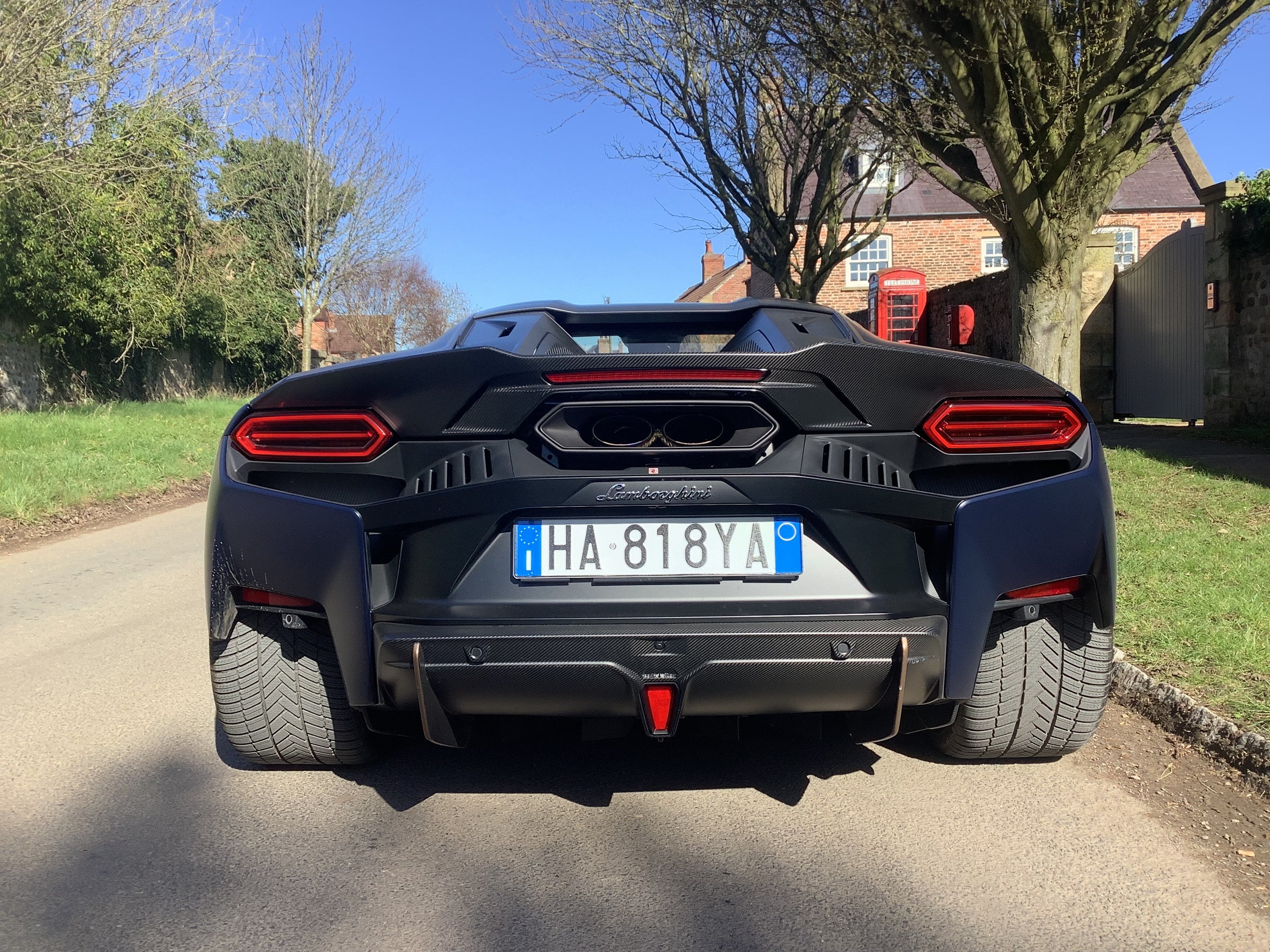 Kerb appeal: the Temerario shares similarities in looks to its slightly more raucous predecessor the Huracan (Sean O’Grady)
Sales were worth more than €3bn last year, but profits were constrained by the costs of ditching (hopefully postponing, in my view) the all-electric battery model, and by absorbing the costs of Trump’s tariffs. I was a little surprised by that, given the net worth of the drivers, but even at this exalted segment of the new car market, there’s competition, from the likes of Ferrari and Maserati, and from the German premium brands for the Urus SUV.
I do wonder, though, whether now that the likes of BYD of China are making their own supercars and racing them, albeit electric, Lamborghini and its parent group might like to take up the challenge of taking them on at their own fully electrified game. The same goes for Elon Musk’s new Tesla Roadster. I think they could do it. And recent events, that growing electric car market, and the transcendent issue of climate change, suggest that they have to do it.