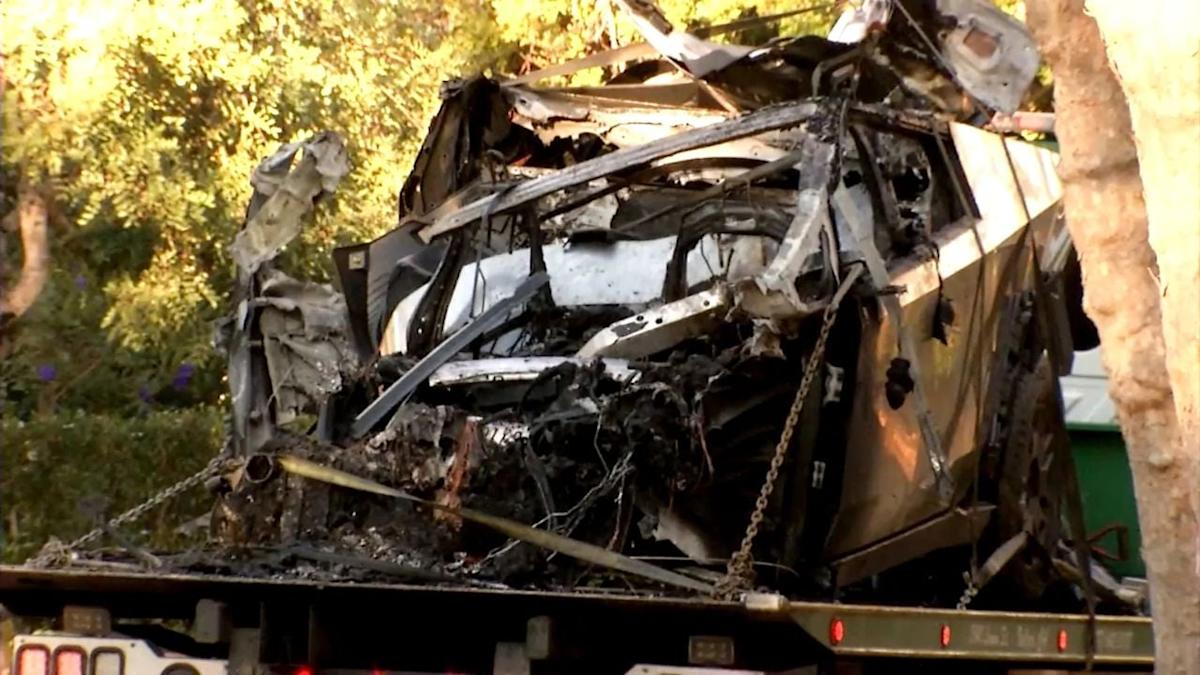
The sole survivor of a devastating Tesla Cybertruck crash that claimed the lives of three college students has filed a lawsuit against the automaker, alleging that the truck’s design left him trapped inside a burning wreck.
According to reporting by the Bay Area KRON4 News, the incident occurred during the early hours of Thanksgiving in 2024 in Piedmont, California.
Four young men, all former Piedmont High School students, home from college for the holiday, were traveling together when the crash happened.
A Night of Tragedy
Image Credit: KRON 4/YouTube.
Jordan Miller, 21, was seated in the front passenger seat when the Cybertruck, driven by 19-year-old Soren Dixon, struck a tree at high speed. The impact caused the vehicle to erupt into flames. Dixon and two other passengers, Krysta Tsukahara, 19, and Jack Nelson, 20, were unable to escape and died at the scene.
Miller was the only survivor, but his injuries were severe and life threatening. He suffered burns to his airways and lungs, required major abdominal surgery, endured a five-day induced coma, and sustained four fractured vertebrae that required spinal fusion. He also suffered third degree burns to his left leg and hand, along with extensive skin graft procedures.
The lawsuit, filed by Miller through his legal team at The Veen Firm, centers on claims that the Cybertruck’s electronic door system failed during the crash.
Attorneys argue that the vehicle’s push button door handles, which depend on a low voltage electrical system, did not function after impact, preventing both escape from inside and rescue from outside.
“That Is a Design Problem”: Attorneys Lay Out the Case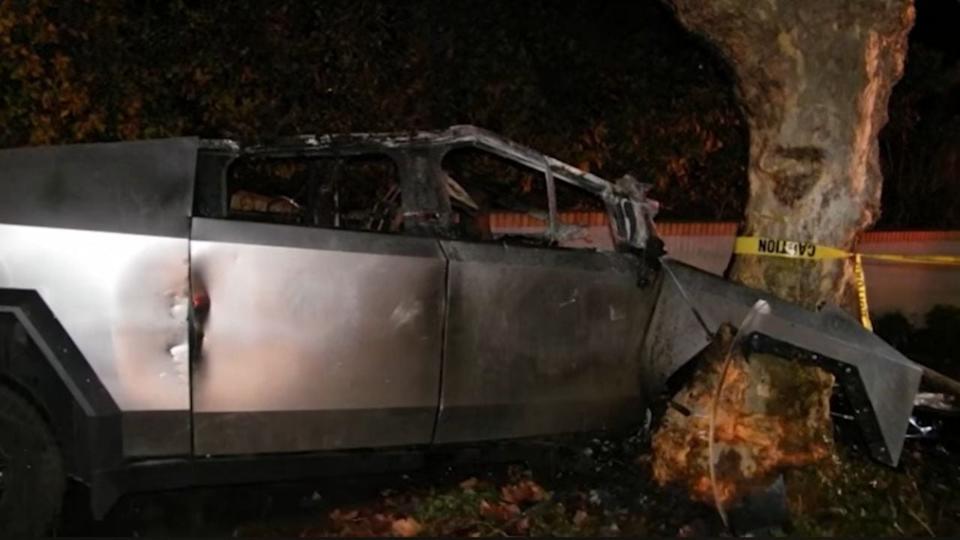
Image Credit: KRON 4/YouTube.
Attorney Annie Wu said a witness reached the vehicle within seconds but could not open the doors. She stated that there were no physical handles, and the electronic system did not respond, leaving Miller trapped inside a burning vehicle unnecessarily.
“A friend was right there within seconds,” said Wu. “He couldn’t open the doors. No handles. The buttons weren’t working. Jordan was trapped in a burning vehicle when he didn’t have to be. That is a design problem.”
Another attorney on the case, Anthony Label, argued that relying entirely on electronic systems for door operation creates a dangerous scenario in severe crashes. He said designing a vehicle without a mechanical override assumes the electronics will work in all conditions, including high speed collisions followed by fire.
“When you design a vehicle with no mechanical way to open the doors from the outside, you are betting the electronics will work in every scenario, including a high-speed crash followed by a fire,” said Label. “Someone was there to help immediately. He couldn’t get in. This lawsuit is about what Tesla knew and what Tesla designed.”
The lawsuit includes claims of negligence, design defect, failure to warn, and failure to recall. It further alleges that Tesla has been aware for years of the potential risk of occupants becoming trapped due to electronic door failures.
A Witness’s Desperate Rescue Attempt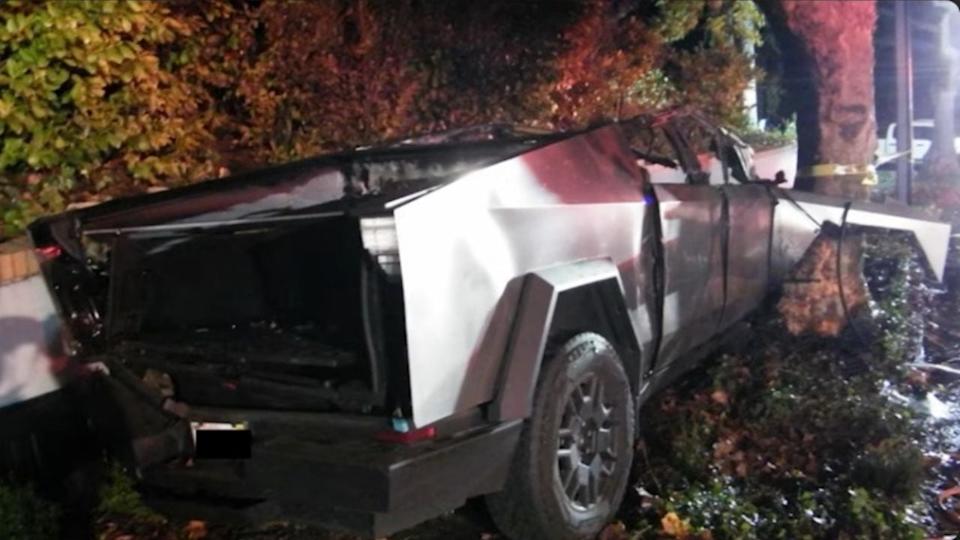
Image Credit: KRON 4/YouTube.
A key part of the case is the account of a witness who was driving behind the Cybertruck at the time of the crash. The witness had attended the same gathering as the group earlier that night and was following them as they traveled toward Miller’s home.
He told investigators he briefly lost sight of the vehicle as it rounded a bend. Moments later, he came upon the wreck, describing it as a burning vehicle wedged between a wall and a tree. Recognizing it as a Cybertruck, he immediately attempted a rescue.
Unable to open the doors, he used a tree branch to strike the front passenger window repeatedly, eventually breaking it after multiple attempts. He then instructed Miller, who was barely conscious, to unbuckle his seatbelt. Once Miller managed to do so, the witness pulled him out through the shattered window.
The witness then returned to the vehicle in an attempt to save the others. He tried to break the rear window near Tsukahara, but by then the fire had spread throughout the cabin, making further rescue impossible.
The Legal Battle: Comparative Negligence and Design Defect
Authorities later determined that the crash was caused by a combination of excessive speed, alcohol intoxication, and drug impairment. A coroner’s report found that Dixon had a blood alcohol concentration of 0.195 and cocaine in his system. The other victims were also found to have alcohol and cocaine present.
Image credit: Shutterstock.
This expectedly complicates Miller’s case but does not automatically defeat it. Under California law, comparative negligence applies—meaning Miller’s recovery could be reduced if he is found partially at fault for riding with an impaired driver.
However, the core of the lawsuit targets a separate issue: alleged design defect in the Cybertruck’s electronic door system.
Tesla will likely argue that the crash’s severity—not the door design—caused the fatalities and Miller’s injuries. They may also assert that Miller assumed risk by voluntarily entering a vehicle with an intoxicated driver.
But Miller’s claim centers on a different question: regardless of how the crash occurred, did Tesla’s door design unreasonably trap occupants after impact?
If Miller’s attorneys can prove the electronic system predictably fails in high-speed collisions, and that a mechanical override could have prevented entrapment, Tesla may face liability. Witness testimony that a rescuer arrived within seconds but could not open the doors is powerful evidence.
California’s strict product liability law holds manufacturers accountable for foreseeable risks. A jury may conclude that high-speed crashes, while not intended, are foreseeable, and that doors must function post-impact.
Comparative negligence would then allocate fault between Miller (for riding with an impaired driver) and Tesla (for defective design). Miller can still recover, though his damages may be reduced by his percentage of fault.
The families of Tsukahara and Nelson have filed separate lawsuits related to the crash.
Tesla has not publicly responded to the allegations at the time of writing.
Sources: KRON4 News
Read More
These are the Best Cars to Buy in 2026, According to Consumer Reports
Sorta Forgotten Gems: Do You Remember These Incredible Cars From the 1960s?