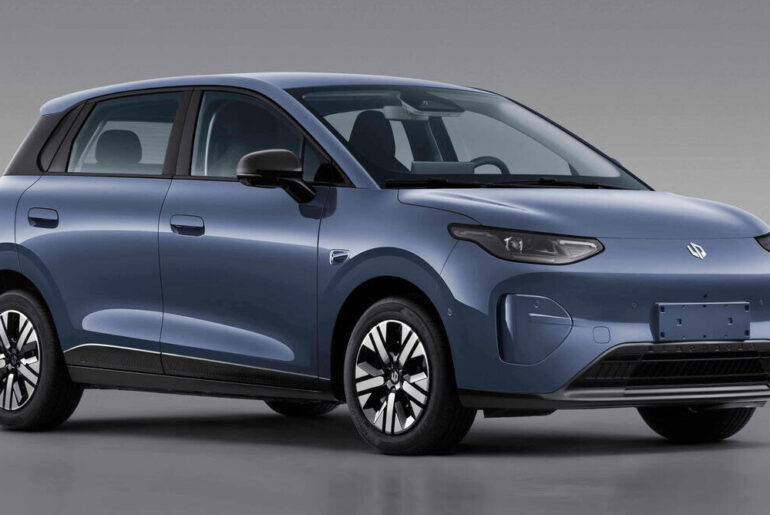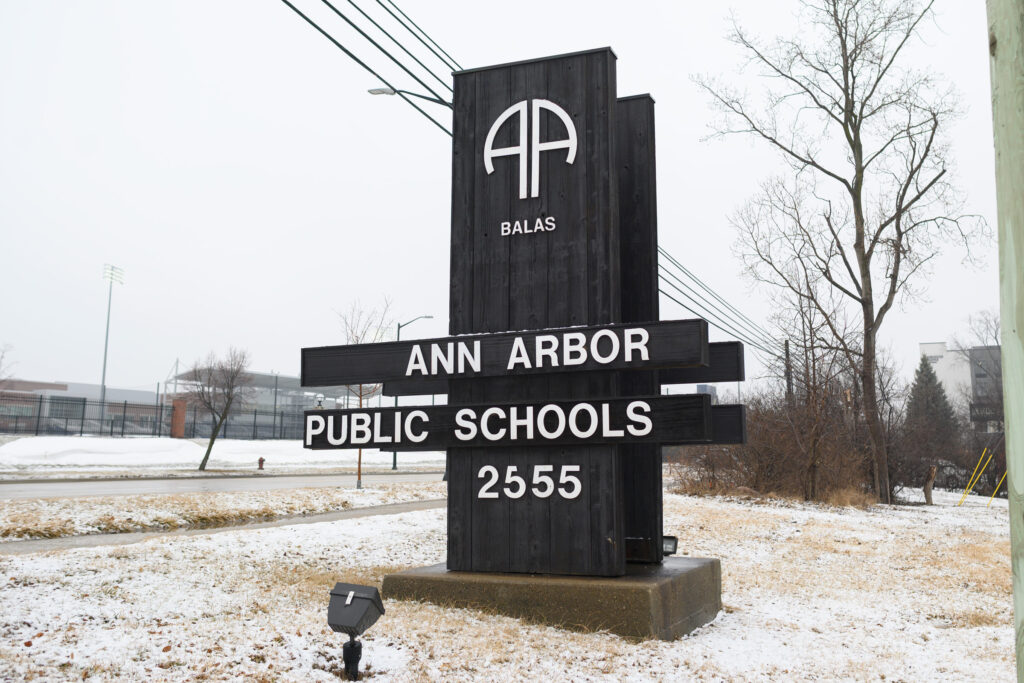
Ann Arbor Public Schools received $5.03 million from the Michigan Department of Education to help replace 10 buses in its fleet of 131 with electric vehicles.
In February, MDE awarded a total of $44 million to 27 Michigan school districts to replace diesel school buses with electric ones — the final round of the $125 million Clean Bus Energy Grant.
AAPS, which received the most of any school district, has a goal of transitioning all of its buses to electric vehicles by 2035.
In an email to The Michigan Daily, Liz Margolis, AAPS executive director of school safety and district operations, wrote that, while electric buses carry a higher upfront cost — about $469,000 compared to $168,000 for diesel buses — the state’s grant has allowed the district to work toward their long-term sustainability goal of zero direct carbon emissions by 2035.
“AAPS is currently in the process of exchanging the diesel buses for electric school buses to meet the goal of ending direct emissions by 2035,” Margolis wrote. “AAPS has 8 EV buses currently in service. We have another 6 on the way, and we will be asking for the Board of Education to approve another 10 to be purchased tonight at the Board of Education meeting.”
Margolis wrote AAPS has already built electric bus charging infrastructure and completed necessary training for drivers and mechanics.
“We have built the charging structure to support the EV buses,” Margolis wrote. “We have been running EV buses for a few years now and so we are past the “learning” stage for our drivers and mechanics.”
Geoffrey Henderson, assistant professor of environmental policy and planning, told The Daily AAPS’ transition reflects a larger shift in climate policy at both the state and local levels.
“I think Ann Arbor is a national leader,” Henderson said. “But also, the state of Michigan is clearly sort of thinking of this as a state-level policy. I think it was noteworthy that the Department of Education at the state level is making these grants and a whole bunch of different communities across the state.”
Henderson said the government should integrate climate and environmental policy with education policy.
“It is also an education issue,” Henderson said. “Kids should be breathing clean air, and schools and the transportation system that supports them should be part of the solution.”
Research from the University of Michigan found that school districts with upgraded electric school buses were associated with improved student attendance. Prolonged exposure to diesel exhaust fumes can worsen respiratory illnesses and other health conditions, causing preventable school absences.
Henderson said the grant plays a key role in broader climate strategies, particularly as Ann Arbor aims to reach carbon neutrality by 2030.
“You can’t just focus on electricity,” Henderson said. “You have to really look across all of the different sectors of your economy. In the U.S., transportation is the leading source of greenhouse gas emissions. … The next really big wedge to tackle in addressing climate change is that transportation piece of electrifying cars, trucks, buses and so forth.”
LSA sophomore Elaina Furton, an Erb Institute undergraduate fellow, said in an interview with The Daily she would be in favor of funds from the Clean Bus Energy Grant benefiting urban communities such as Detroit, where transportation emissions have affected air quality.
“I definitely think it should be expanded to communities like Detroit, especially Southwest Detroit, because there are so many transportation emissions,” Furton said. “Since automobile pollution is the leading cause of pollution, especially in states like Michigan, it’s more than a surface-level solution. I feel like it could have real impacts in these communities, especially with attendance rates and how children are impacted by asthma and other respiratory issues.”
Daily Staff Reporter Alexandra Sim can be reached at alexfsim@umich.edu. Daily News Contributor Hannah Hiller can be reached at hkhiller@umich.edu.
Related articles