Rivian
Happy Thursday! It’s March 19, 2026, and this is The Morning Shift — your daily roundup of the top automotive headlines from around the world, in one place. This is where you’ll find the most important stories that are shaping the way Americans drive and get around.
In this morning’s edition, we’re looking at Rivian’s new team-up with Uber on robotaxis, as well as the war on Iran’s effects on Japanese supply chains. We’ll also take a look at hoe much oil EVs have saved, and how India is being hit by fuel prices.
1st Gear: Uber pumps $1.25 billion into Rivian for robotaxis
Josh Lefkowitz/Getty Images
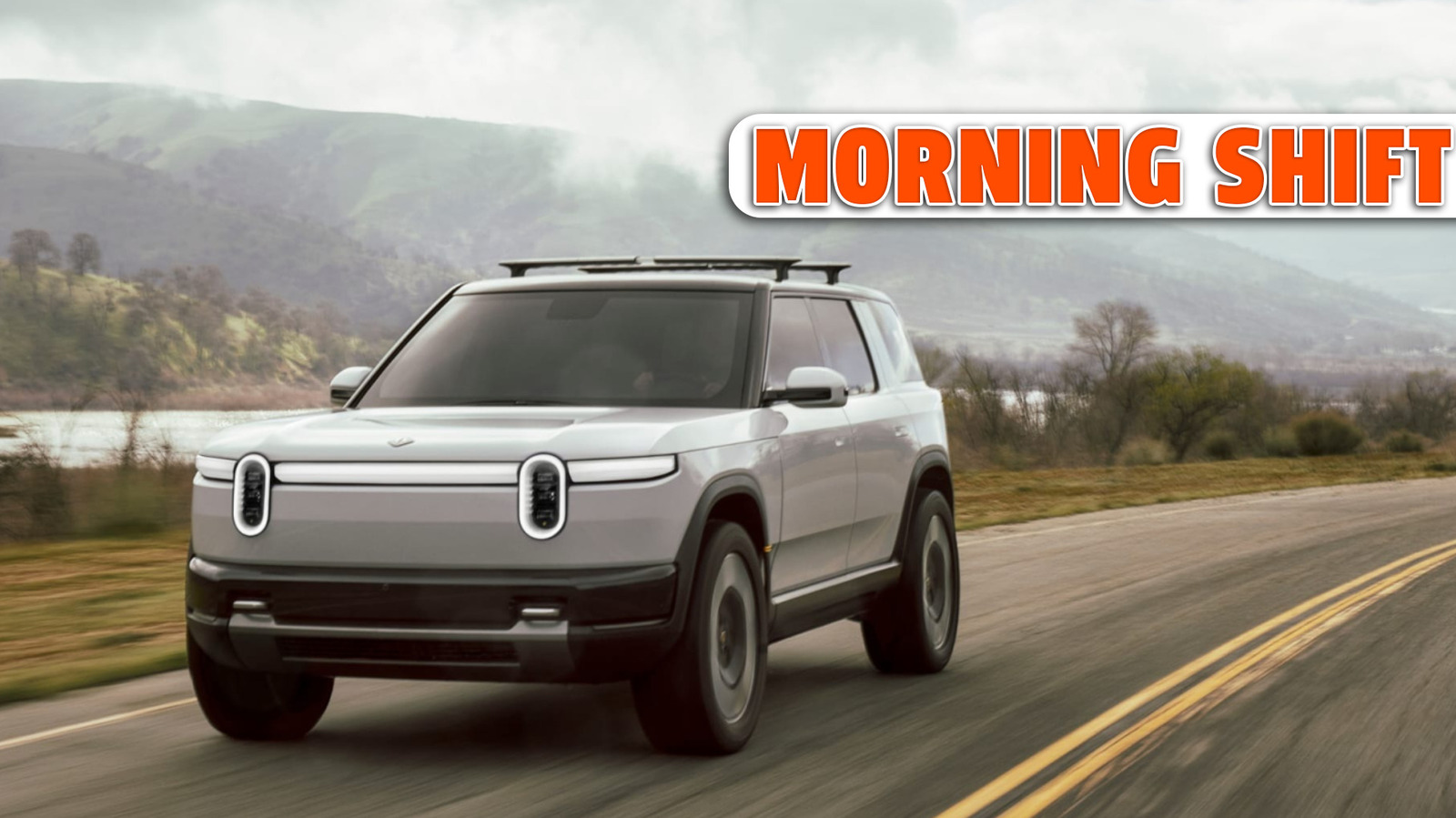
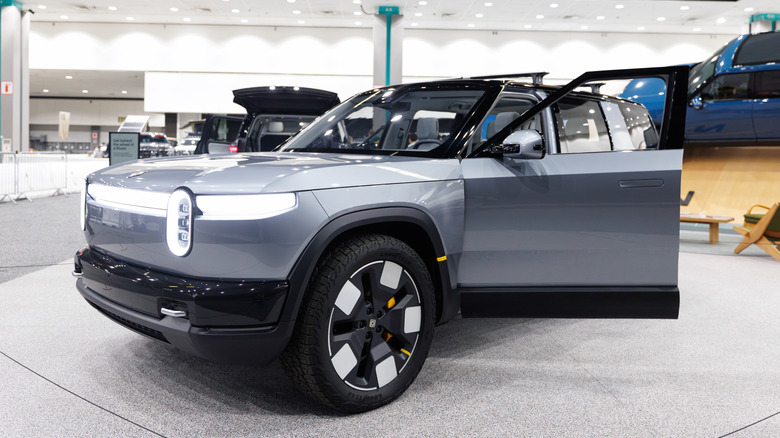
Rivian is in an unenviable spot right now. The company makes some of the best vehicles on the market today, full stop, yet it’s still struggling financially — turns out it takes more than building the best product to succeed. Now, the company wants to rake in some of that sweet sweet autonomy investment cash, and it’s turned to Uber for money. From TechCrunch:
Rivian said on Thursday that it is partnering with Uber to build thousands of robotaxis based on its upcoming R2 SUV. The deal could be worth up to $1.25 billion for the EV maker.
Uber is kicking off the partnership with an initial $300 million investment in Rivian, and is “expected to purchase 10,000 fully autonomous R2 robotaxis” ahead of a planned rollout in San Francisco and Miami in 2028.
Uber will have the option to buy up to 40,000 more autonomous R2 SUVs from Rivian starting in 2030. The two companies said they plan to launch the robotaxis in “25 cities in the U.S., Canada, and Europe by the end of 2031.” The fleet will be exclusively available on Uber’s network, according to the companies.
While the agreement is potentially lucrative for Rivian, it’s brimming with risk and challenges.
Rivian hasn’t started producing the R2 SUV yet; it has said manufacturing is expected to begin by June. Nor has it tested and deployed a self-driving system designed for robotaxis. To raise the hurdle even higher, the robotaxi is supposed to be built in Rivian’s Georgia factory, which is still under construction.
This is a big swing for Rivian, given that Uber placed its order for 10,000 autonomous R2 SUVs from Rivian’s Georgia plant before the company actually finishes building the Georgia plant, the R2, or any form of autonomy. If the folks at Rivian can pull it off, though, it’ll be a welcome financial windfall.
2nd Gear: Japan is running out of aluminum thanks to war in Iran

Tomohiro Ohsumi/Getty Images
Turns out, the Middle East has more than just oil. It also has aluminum and naphtha, which are both important for making cars. Toyota’s CEO is already warning about the war on Iran’s effects on Japanese supply chains, according to Automotive News:
Toyota CEO Sato Koji warned that Japan’s auto industry faces potential aluminum and naphtha shortages as well as vehicle delivery disruption because of the war in Iran.
Japan sources about 70 percent of its processed aluminum and naphtha, a feedstock chemical for plastics, resins and rubber, from the Middle East, Sato said at a March 19 news conference.
Speaking in his capacity as chairman of the Japan Automobile Manufacturers’ Association, Sato said JAMA cannot yet gauge the war’s full impact. But he said Japan exports about 800,000 vehicles a year to the region, valued at about ¥2.5 trillion ($15.7 billion).
“This is a very important market,” Sato said.
Well, good thing President Trump keeps saying the war is just about over. Now let me just take a big sip of coffee and see what Pete Hegseth says is going on.
3rd Gear: EVs offer salvation from high oil prices…
Christopher Furlong/Getty Images
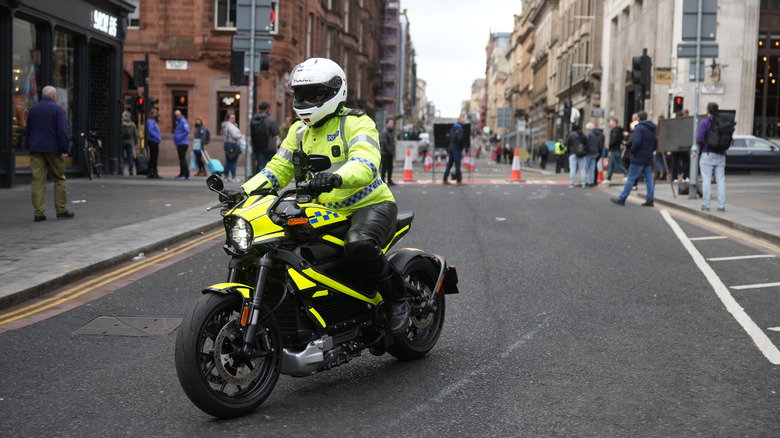
Oil prices are soaring, and it won’t be long before folks start trying to cut their fuel spending. Turns out, there’s a great way to do so — electric vehicles. For the biggest benefit, you can even ditch two of those pesky wheels. From Bloomberg:
Growing global adoption of electric vehicles helped avoid the consumption of 2.3 million barrels of oil per day last year, according to a modeled scenario from BloombergNEF.
Those fossil fuel savings are expected to increase every year for the rest of the decade as more drivers turn to battery-powered vehicles, said Claudio Lubis, BNEF’s oil analyst. The research group projects that by 2030, avoided daily consumption could more than double to 5.25 million barrels under the economic transition scenario, where governments deploy technologies that are economical rather than implement policies primarily driven by climate goals.
Two- and three-wheeler vehicles now make up the bulk of avoided road fuel use due to the fast rise of electric motorbikes, especially in developing nations. As electric cars become more common, they are forecast to cut more oil demand later this decade.
At current prices, that’s a savings of $224,365,000 per day. If anyone would like to give me, noted lover of two-wheeled and electric vehicles, $224,365,000, I would certainly take it.
4th Gear: …and India offers a warning of what could happen without electrification
SNEHIT PHOTO/Shutterstock
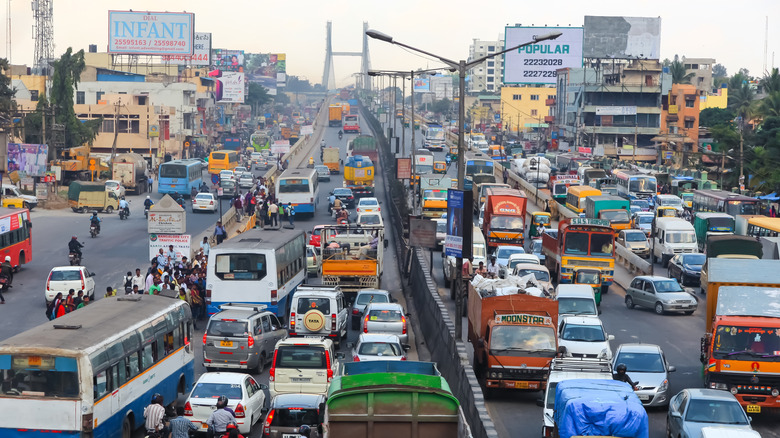
India’s auto market has been in a transition stage recently, as difficulty in the U.S. market has automakers seeking other areas to sell some cars. Now, though, the war on Iran could halt all that progress — if not send the country moving backwards. From Reuters:
India’s automakers and parts suppliers are bracing for production slowdowns and assembly-line disruptions as the Iran conflict chokes gas availability, threatening growth in the world’s third-largest car market.
Some parts suppliers to India’s leading carmakers like Maruti Suzuki, Tata Motors and Mahindra are already reporting a shortage of gas to power operations, an early sign that supply chain issues are developing, according to two dozen executives at car companies, part makers and dealers.
The disruption comes at a time when India’s car demand is soaring to record levels, with sales expected to cross 4.5 million units in the current fiscal year to March 31, leaving little excess inventory with manufacturers and dealers.
“At this point in time it is about survival. First and foremost we need to ensure production continues. The buffer stocks will not last long,” said a senior executive with a leading carmaker.
Do we think the Trump administration knows what an “externality” is? Do we think Pete Hegseth can pronounce it without slurring?
Reverse: Time is a flat circle
It is 1990, and the United States is invading the Middle East for reasons that are totally not oil. It is 2003, and the United States is invading the Middle East for reasons that are totally not oil. It is 2026, and the United States is invading the Middle East for reasons that are totally not oil — but this time, we’re invading a neighboring country to the last one. Totally different.
The Fuel Up
AAA
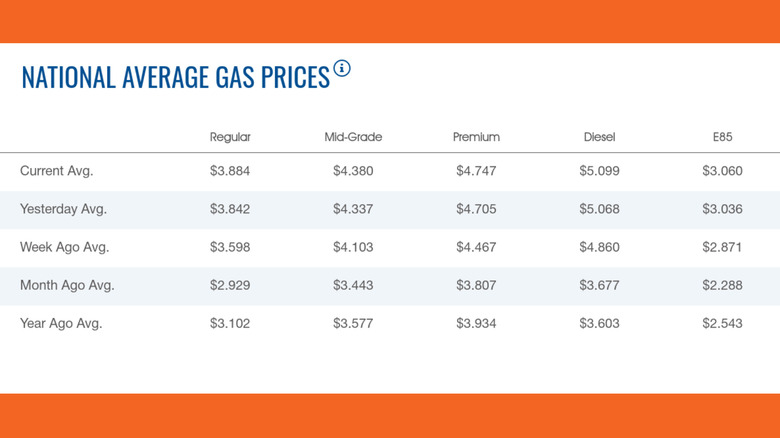
What do we think gas prices will hit on AAA’s chart? Five bucks for regular? I think it’s well within the realm of possibility.
On The Radio: Fleetwood Mac – ‘Tusk’
I’ve been listening to “Rumours” a lot recently, but there’s something great about the way “Tusk” builds. Plus, I love that drum beat.