 What’s It Like Living with the Polestar 4?
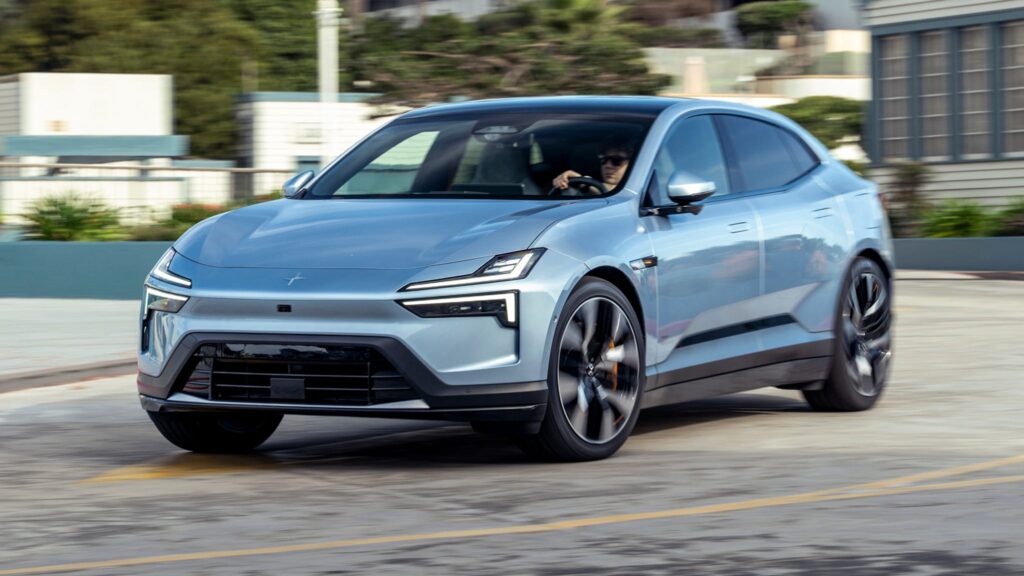
While the 2026 Polestar 4’s performance credentials are certifiable by its test-track showing, its luxury legitimacy is made clear through daily driving. The continuously controlled active dampers from ZF and coil-spring suspension, which provide admirable body composure under hard cornering and excellent stability at high speeds, can also be configured for a softer setup around town. The Polestar 4 feels downright plush on city streets, an impressive feat given the massive 22-inch wheels and low-profile tires.
We’re struck by how quiet the Polestar 4 is as it rolls over pavement. Very little tire noise makes it into the cabin; this must be among the most peaceful interiors you can get for under $100,000. The build quality of the cockpit contributes to the sense of serenity. Not only do the materials feel upscale, but they also feel as though they’re assembled with a solidity uncommon in today’s world of cost cutting. Nappa leather seating is a $3,700 charge, but the chairs are soft, comfortable, and supportive.
ADVERTISEMENT – CONTINUE READING BELOW
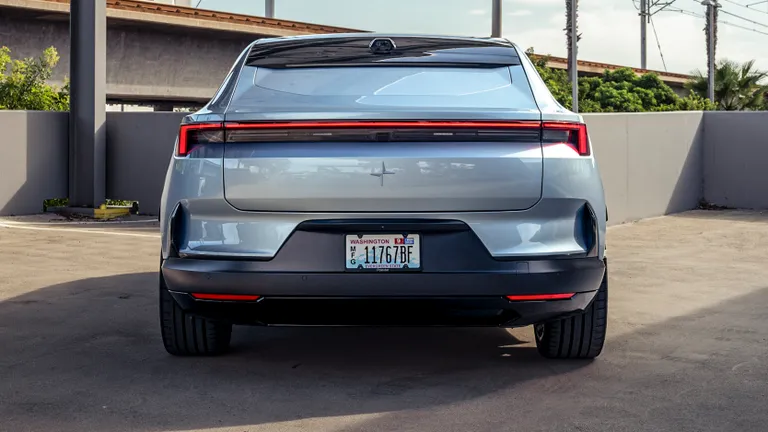
The absence of a rear window is the Polestar 4’s party trick, for better and worse. We suspect it must contribute to the hushed atmosphere of the interior. Polestar says the deletion of rear glass contributes to a more spacious second row with better headroom, as well. A removable divider allows you to seal off the trunk from the passenger area, further dampening noise. Adult passengers in the rear seat fit comfortably, so there’s something to be said for the design and engineering choices made.
There are some undeniable downsides to the opaque panel, however. You must rely on a digital rearview mirror to see directly behind you, but the perspective from the rear camera creates the illusion that cars following at a respectful distance are right on your bumper. You can adjust the camera angle to see more of your surroundings, but there’s no way to change the view to exactly mimic a traditional mirror. Amusingly, you can flip a switch and disable the rear camera. This allows you to look at occupants in the second row with a conventional mirror.
A less obvious downside to the lack of rear glass is the reduced ability of the driver to communicate with other motorists. If someone lets you merge in front of them, you can’t thank them with a friendly wave. In all, Polestar’s attempt at innovative design isn’t necessarily a gimmick, but a newly announced variant of the 4 with a conventional pane of rear glass appears to offer something more familiar to shoppers that are unwilling to experiment with the avant garde.
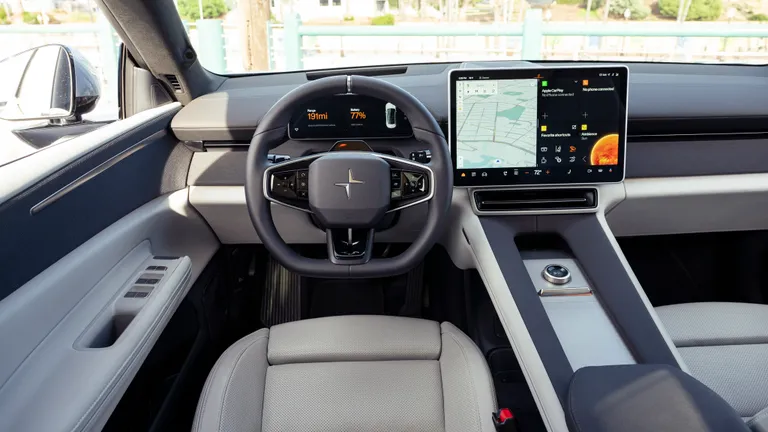
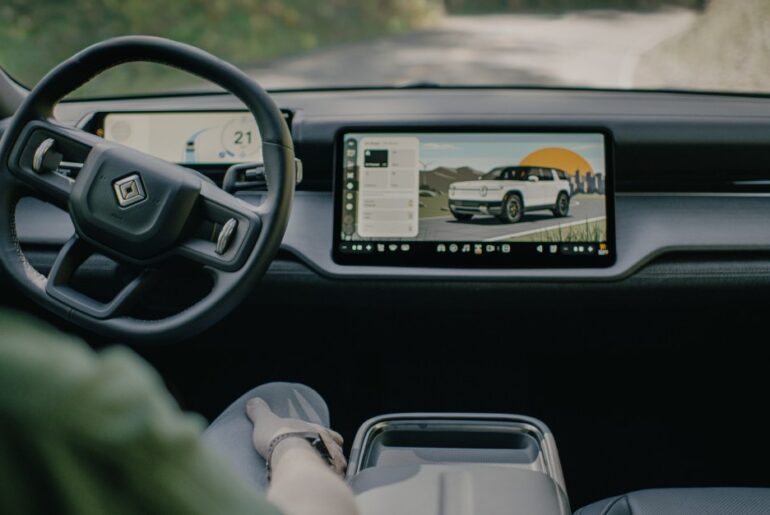
The 4’s arsenal of standard tech is expansive. The 10.2-inch driver display is smaller than what you’ll find on other luxury SUVs, but then again Tesla only equips a single display in its vehicles. In the Polestar 4, you also get an enormous horizontally oriented 15.4-inch infotainment touchscreen with standard wireless Apple CarPlay (no Android Auto) and Google Built-In applications.
ADVERTISEMENT – CONTINUE READING BELOW
The main screen’s home readout shows tiles with commonly used applications and configurable shortcuts to compensate for the relatively lack of buttons. Thankfully, the cabin has more physical controls with better labeling than what you’ll find in the ultra-minimalistic Polestar 3. Within the display, the menu structure is easy to follow and allows you to fly through pages of content without ever hiding the larger categories in case you’ve selected the wrong tab.