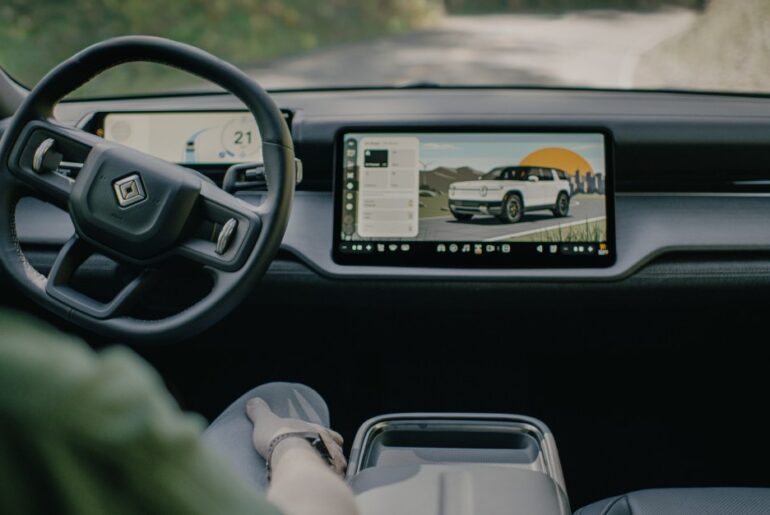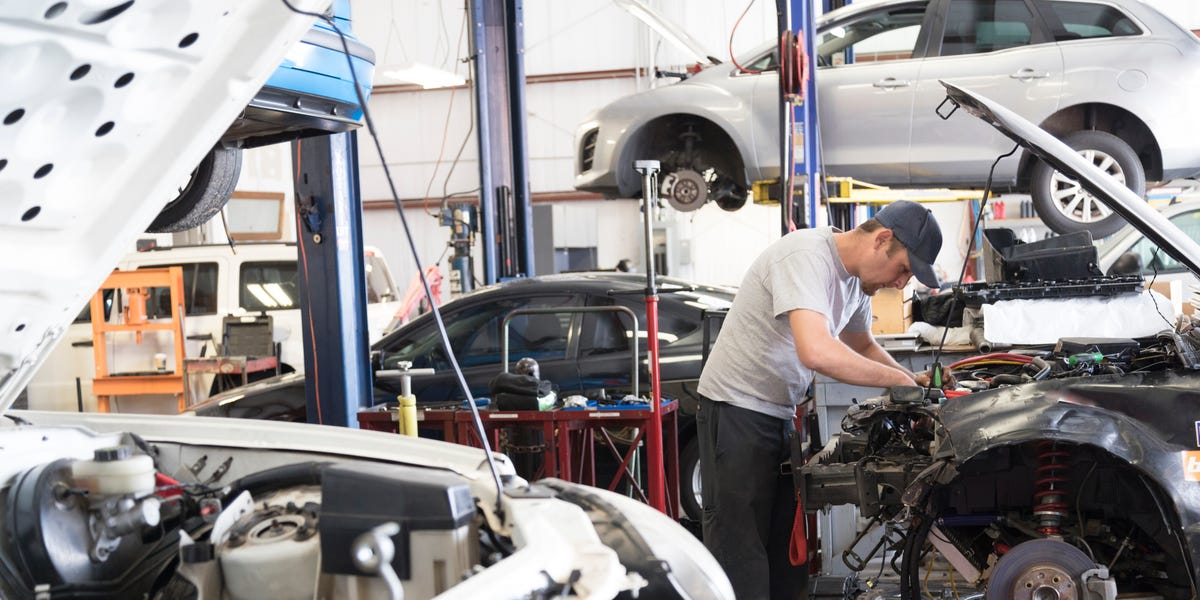
One of the few things Americans, nearly unanimously, agree upon is that they should have the right to repair their vehicles, and that independent shops should have access to the copious clues cars give off as to what’s gone wrong. It’s totally bipartisan. A new poll, conducted under the auspices of the CAR Coalition (representing independent auto parts makers, insurers, and retailers) found that 85% of Trump voters and 86% of those who went for Harris support the so-called REPAIR Act (H.R. 1566/S. 1379).
Related Story
The bill would require that consumers and independent garages have full access to their car’s onboard trouble codes and other diagnostic information to give them “choices for the maintenance, service, and repair of such vehicles.” Autoweek previously reported that the REPAIR bill was advancing, but it has traction in the Senate, and is now expected to get a full House Energy and Commerce Committee markup this spring, as early as March 25.
Independent shops support REPAIR, as do independent parts makers. Automakers, looking to protect their dealers’ service facilities, do not, and have proposed their own alternative called the Safe Repair Act.
 Reza Estakhrian//Getty Images
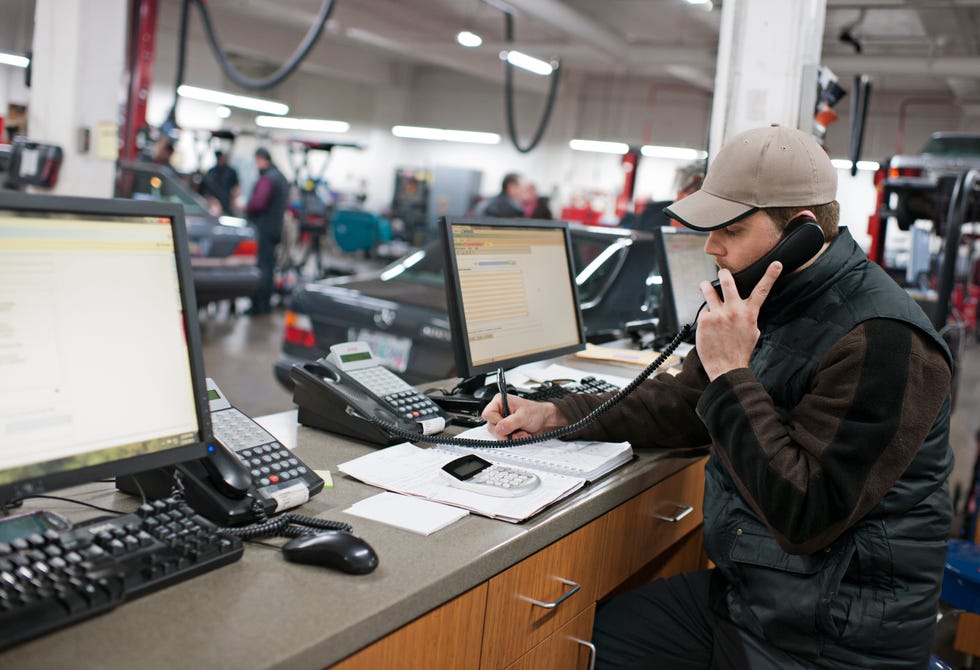
Independent shops want the same access to your car’s data stream that the dealer enjoys.
“Yes, you’re correct—our association opposes [the REPAIR] legislation,” said Brian Weiss, senior vice president at the Auto Alliance, which represents carmakers. Audrey LaForest, director of communications for its parent group, Alliance for Automotive Innovation, said in a statement to Autoweek, “Automakers make repair instructions, tools, and diagnostic codes easily available to dealers and independent repairers. That’s one of the reasons why more than 75% of post-warranty vehicle work today happens at independent repair shops.”
The National Auto Dealers Association (NADA) agrees with the Auto Alliance, claiming that 2023 agreement between automakers and “right to repair” advocates guarantees that access. “Today, the information independent shops need to repair vehicles is readily available from auto and truck manufacturers, as well as an effective resolution panel to address situations in which an independent repair facility believes a manufacturer has failed to provide required service information or tools.”
“Today, the information independent shops need to repair vehicles is readily available from auto and truck manufacturers.”
—The Auto Alliance
But critics such as the CAR Coalition say that if dealers have first priority in accessing cars’ data (including predicted failures), they can direct vehicle owners to their own service bays to replace a part that the diagnostics says is either worn out or approaching it. The shop down the street can only try to keep up by paying big bills for advanced scanners and the software to run them.
According to Dustin Brown, co-owner of 47-employee Brown’s Automotive in Albuquerque, New Mexico, “Simple repairs like doing brakes or changing tires now requires access to the computer. And if we don’t have access to the tools we need to plug in, a lot of time and resources are wasted.”
 CAR Coalition
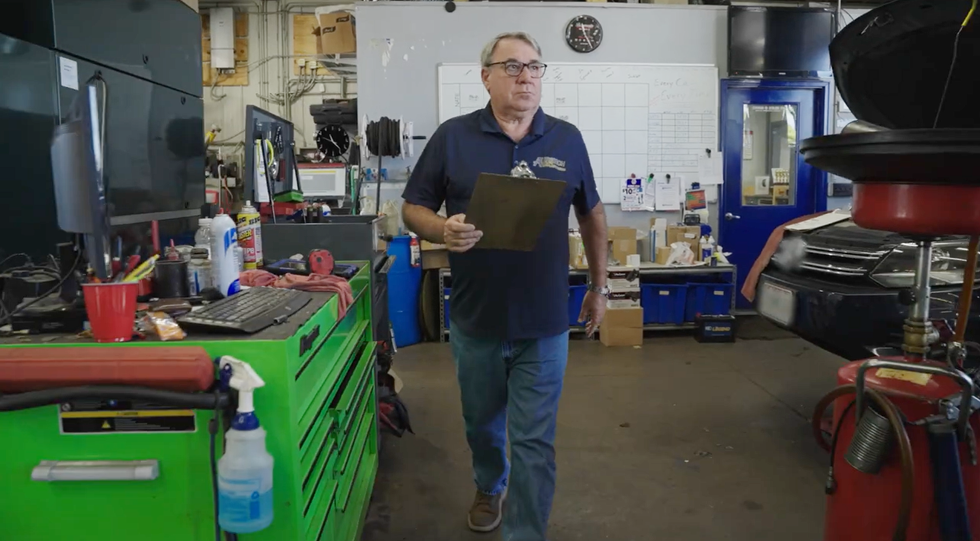
Autotech’s Mark Foppe: “They have you by the throat, and they take advantage of it.”
Mark Foppe of AutoTech Auto Center in Fallon, Missouri, adds, “We get 400 cars a month in here because people know us. But the only thing crazier than health care is auto repair. A front-end alignment that used to cost less than $100 is now several hundred, because it requires accessing the vehicle’s computer with a scanner that costs thousands of dollars and needs regular software updates costing hundreds. They have you by the throat, and they take advantage of it.”
Simple repairs now have electronic elements, such as a windshield wiper replacement that requires a dealer “service mode,” or a battery replacement needing an ECM reset. One local shop replaced a tailgate motor, but the dealer had to program it.
Related Story
All of this gets us to OBDII code readers and the question of why the car can’t simply give consumers the codes on the screen. Code readers are a minefield, with the cheaper ones ($25 to $40) very frustrating to use, and often displaying nothing but error codes.
The auto industry counters that the codes (P0456 and such) don’t give the specific broken part and suggested fix, but instead indicate a system area, and easy civilian access would cause inexperienced car owners to start throwing unnecessary parts at their problem. But would those non-mechanics even try to look up codes when their mechanic is a phone call away?
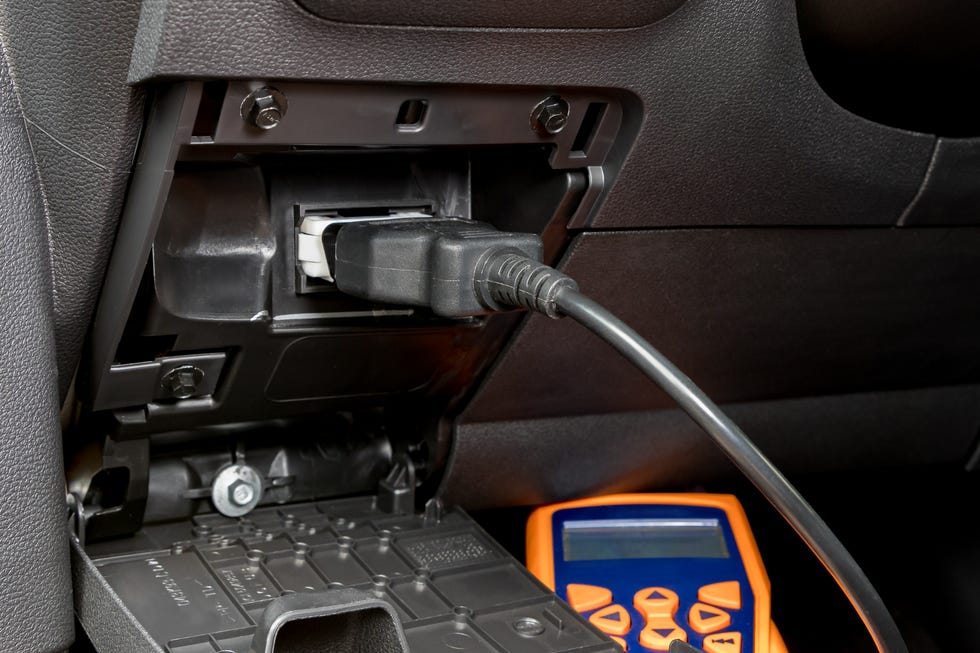 JJ Gouin//Getty Images
OBD II scanner to read vehicle data.
Right-to-repair obviously extends beyond cars to such consumer items as cell phones and other electronic devices. But a 2012 Massachusetts auto repair law, expanded in 2020 to include telematics, has spawned a lot of imitators. In 2023, a California law requires manufacturers to diagnose, maintain or repair for seven years products with a price point more than $100. For products under $100, it’s three years. New York requires companies to provide consumers with tools and part for electronics equipment sold or used in New York after July 1, 2023. And Colorado extends right-to-repair over agricultural equipment.
Right-to-repair laws are popular, and legislatures are approving them. And the federal REPAIR Act is moving forward.

Jim Motavalli is an auto writer and author (nine books) who contributes to Autoweek and Barron’s Mansion Global. He has written two books on electric cars, Forward Drive (2000) and High Voltage (2010), and hosts the Plugging In podcast.
Motavalli’s writing has appeared in the New York Times, CBS Moneywatch, Car Talk at NPR, Forbes, US News and World Report, Sierra Magazine, Audubon, and many more. In his spare time, he reviews books and jazz.