A coalition of 20 attorneys general and the state of Kentucky has publicly opposed a proposal that would effectively block federal funding for electric vehicle charging equipment.
In a comment letter to the Federal Highway Administration (FHWA), the coalition explains that the Trump Administration is “once again” attempting to disrupt federal funding of electric vehicle charging infrastructure, “which will gravely impact American manufacturers and the workforce”.
Last month, the FWHA suggested it would extend a Buy America public interest waiver for EV chargers, so that all hardware deployed using federal funds would have to be manufactured using 100% domestic content. Currently, the requirement is for 55% domestic content.
No other domestic industry in the US is required to meet a 100% requirement. The change would affect charging stations deployed through federal schemes including the National Electric Vehicle Infrastructure (NEVI) program and the Charging and Fueling Infrastructure (CFI) program administered by FHWA.
The coalition’s letter to FHWA says: “The states [represented by the attorneys general] have made significant planning, administrative and financial commitments in reliance on the current Buy America framework reflected in FHWA’s regulations and established waivers.”
The coalition is formed of the attorneys general of Colorado, California, Washington, Arizona, Delaware, Hawai’i, Illinois, Maryland, the Commonwealth of Massachusetts, Michigan, Minnesota, New Jersey, New Mexico, New York, Oregon, Rhode Island, Vermont, the Commonwealth of Virginia, Wisconsin, the District of Columbia, and the governor of the Commonwealth of Kentucky.
The comment letter asserts that the FHWA proposal is illegal because the agency cannot increase the Buy America requirement beyond the level set by Congress. The letter further calls the requirement, if implemented, “arbitrary and capricious”.
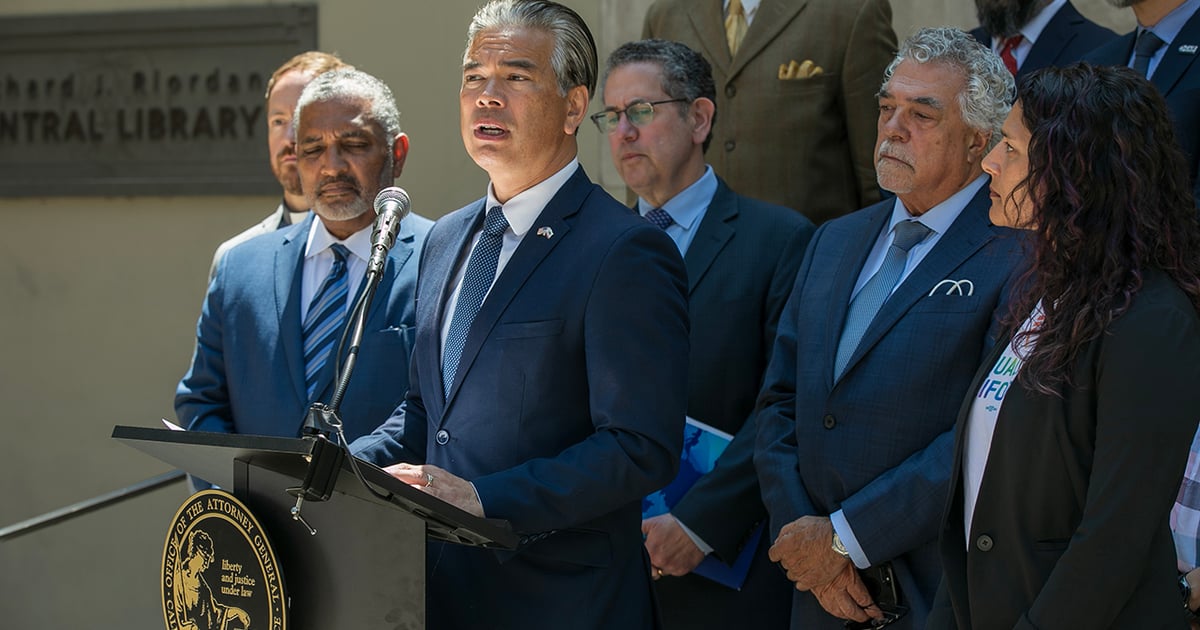
In a press released issued alongside the letter, California attorney general Rob Bonta said: “This proposal is the latest attempt by the Trump Administration to halt electric vehicle charging deployment—this time, by imposing an unachievable standard. Not only does the proposal undermine the intent of Buy America requirements, but it hinders the job growth and investment in American manufacturing that those requirements were designed to create.
“If implemented, this change will create regulatory uncertainty for American manufacturers, which will cause supply chain disruptions, increase costs and cede market share to international competitors. I urge the administration to withdraw this proposal immediately.”
Implications of the modification
The comment letter sets out the implications of the proposal for as yet unobligated funds. It states that the “sudden change” in requirements would prevent deployment of 43 out of 74 EV charging stations included in Arizona’s FHWA-approved NEVI plans. Arizona’s Department of Transportation (DOT) estimates it would thus lose access to over US$45 million of the US$76.5 million it has been allocated through NEVI.
Roughly US$42 million of investments in Oregon through NEVI, CFI and Carbon Reduction Programmes would be cut via the new requirements, which is almost half of the US$88.6 million committed to EV charging in the state.
In Massachusetts, the Department of Conservation and Recreation (DCR) has a US$1,200,000 CFI award from FHWA, US$875,000 of which remains unobligated. DCR is awaiting the relevant federal, state and local approvals to begin construction on the project, which involves installing charging stations in approximately 15 locations, so the proposed waiver could halt the project and prevent use of the remaining unobligated funds.
Significant NEVI formula funding remains unobligated in New Mexico. Rural regions especially stand to lose out should the waiver be approved, the letter points out, because station spacing requirements, limited utility infrastructure like transformers/distribution lines and fewer qualified vendors already present challenges for timely deployment.
The sentiment and detail of the letter echo Bonta’s statement that the proposal is less an attempt to extend the benefit of the Buy America scheme and instead represents another attempt by the administration to block EV charging deployment. This is something it has tried and failed to do before.