March 18, 2026
By Nehal Malik
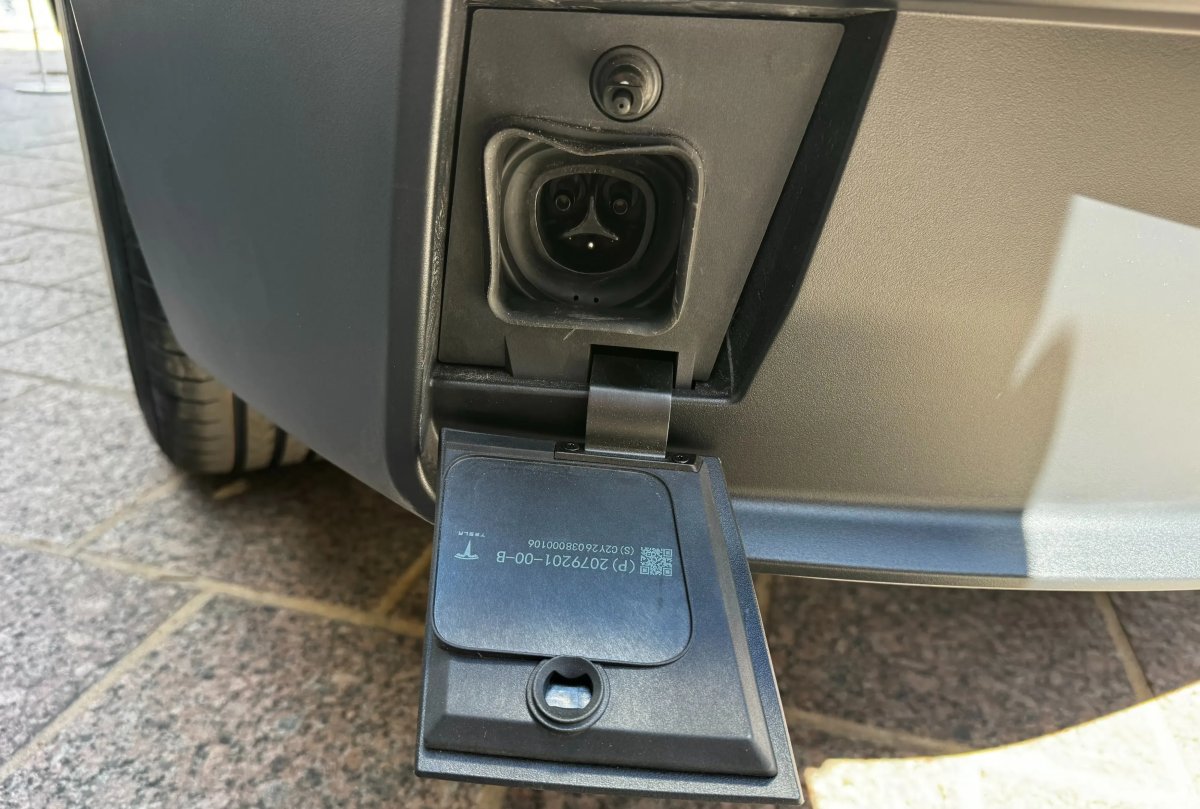
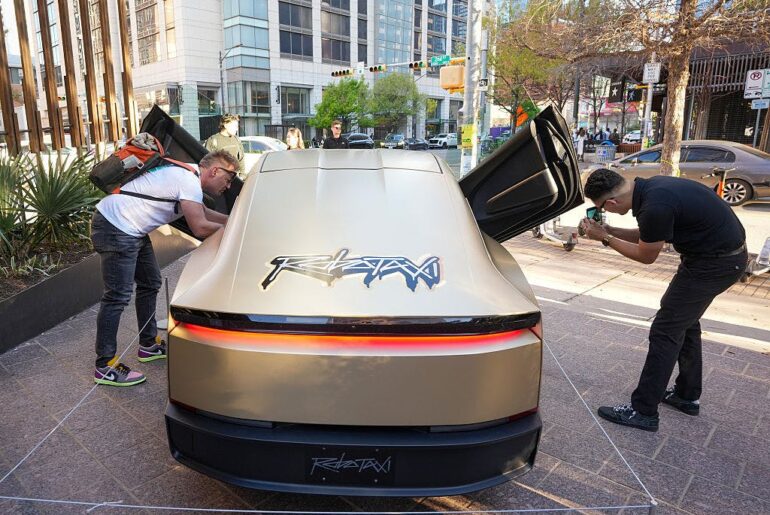
Tesla is entering the home stretch as it prepares to launch the Cybercab, and the latest production units are showing off some major refinements. New sightings of the autonomous two-seater have revealed a significantly updated charge port and a thoughtful focus on accessibility that could make it a game-changer for urban mobility.
As Tesla prepares for volume production at Gigafactory Texas next month, these tweaks suggest the vehicle is moving away from some of its more experimental concepts in favor of real-world reliability.
A New and Improved Charge Port
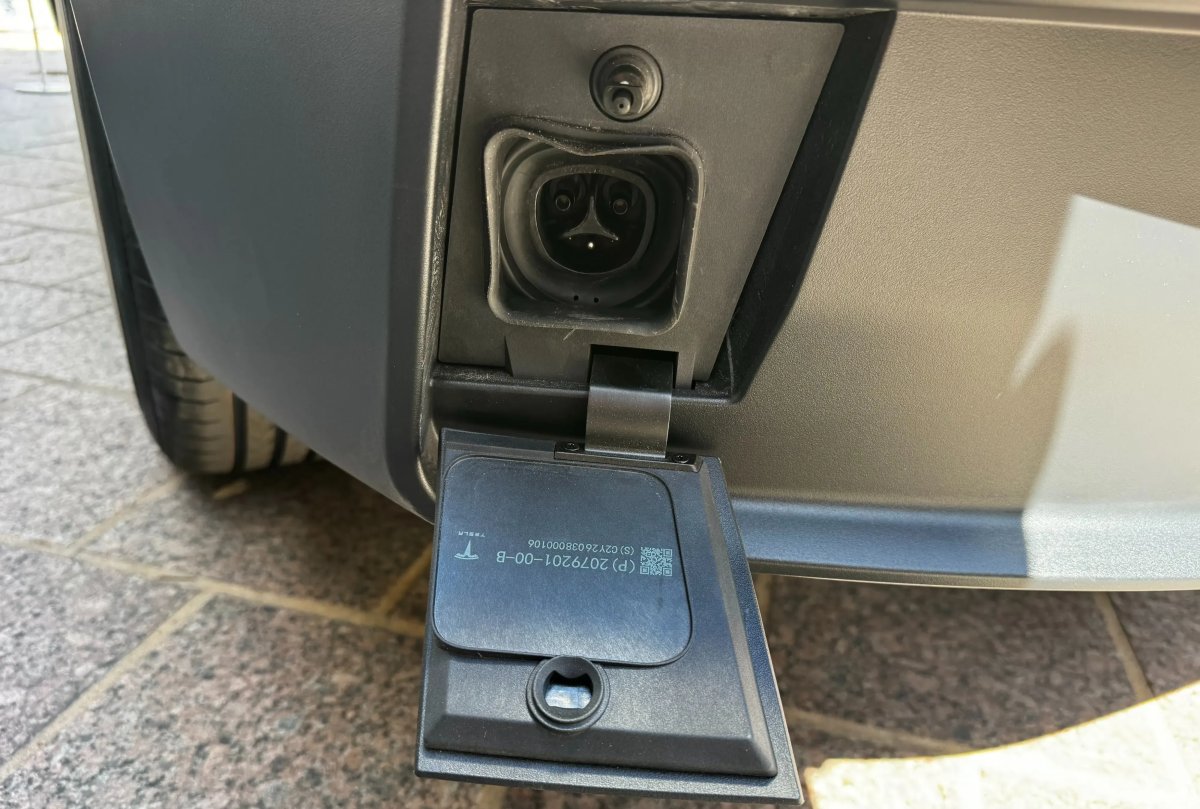
The biggest hardware surprise comes from the charging system. While Tesla has long teased that the Cybercab would rely entirely on wireless induction charging, recent production units have been spotted with a much more “finished” physical charge port.
According to JoshWest247 on X, the new port features several “huge changes” compared to earlier prototypes. The design is now fully integrated with a simpler door, a full surround gasket, and a flexible housing that eliminates the need for a weather plug. It’s significantly different and a lot more polished than the previous iteration, which we saw in action last month.
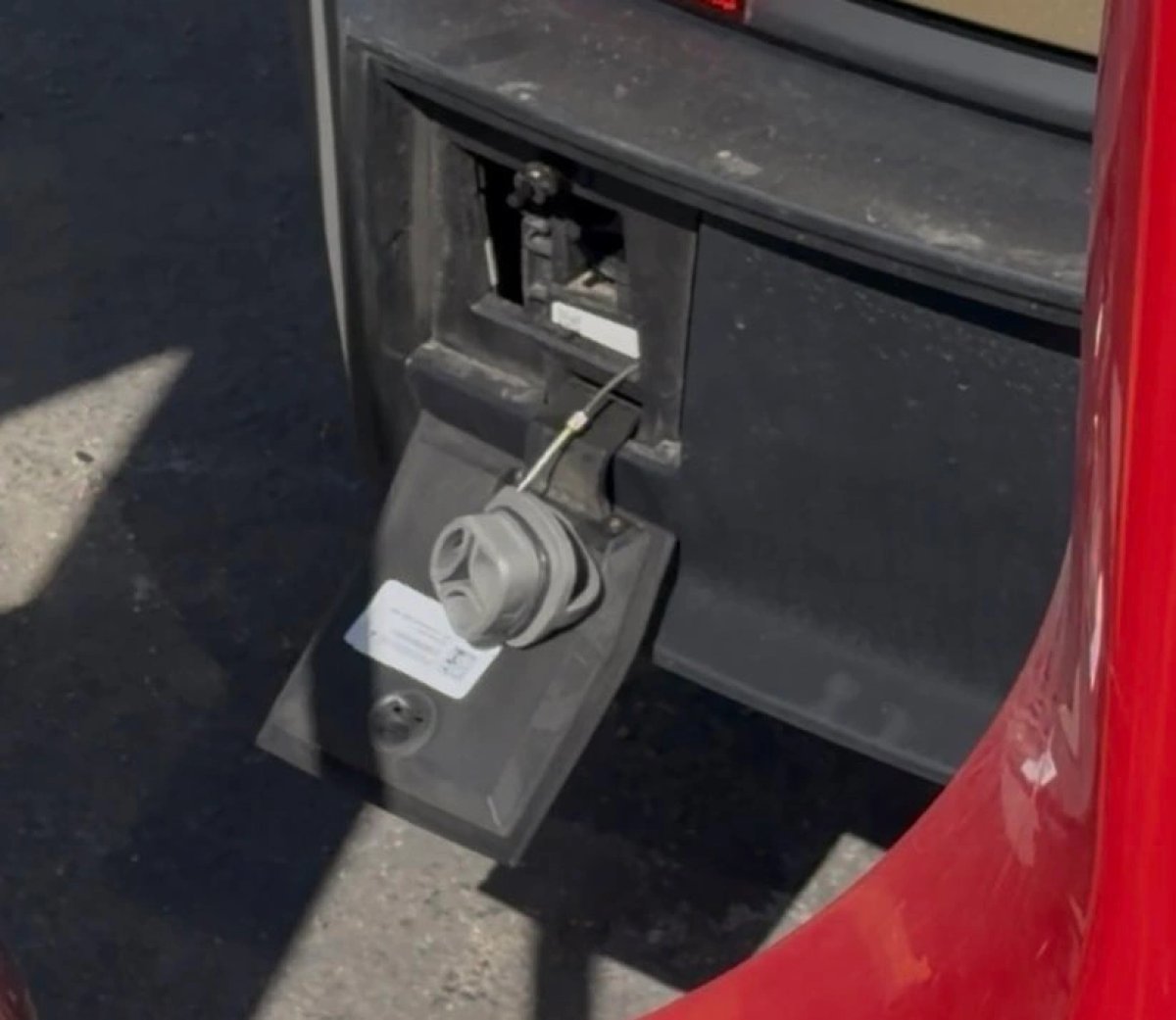
Importantly, the flap on the new charge port isn’t motorized, likely to optimize for low manufacturing and replacement costs. Seeing such a fleshed-out physical port this close to the April production start suggests that the Cybercab will launch with traditional plug-in charging first, using a native NACS port. While Tesla recently won FCC approval for the Ultra Wideband technology needed for wireless charging, that feature now looks like an “eventually” upgrade rather than a day-one necessity.
Built for Accessibility
Beyond charging, Tesla is also focusing on who will be using these vehicles. Eric E., Tesla’s Cybercab Engineering Lead, recently confirmed that the vehicle was designed with accessibility at its core.
“We built the seat height to be inline with standard wheel chair seat height. Accessibility is very important in autonomous vehicles, freedom of transportation for everyone is critical,” Eric said on X.
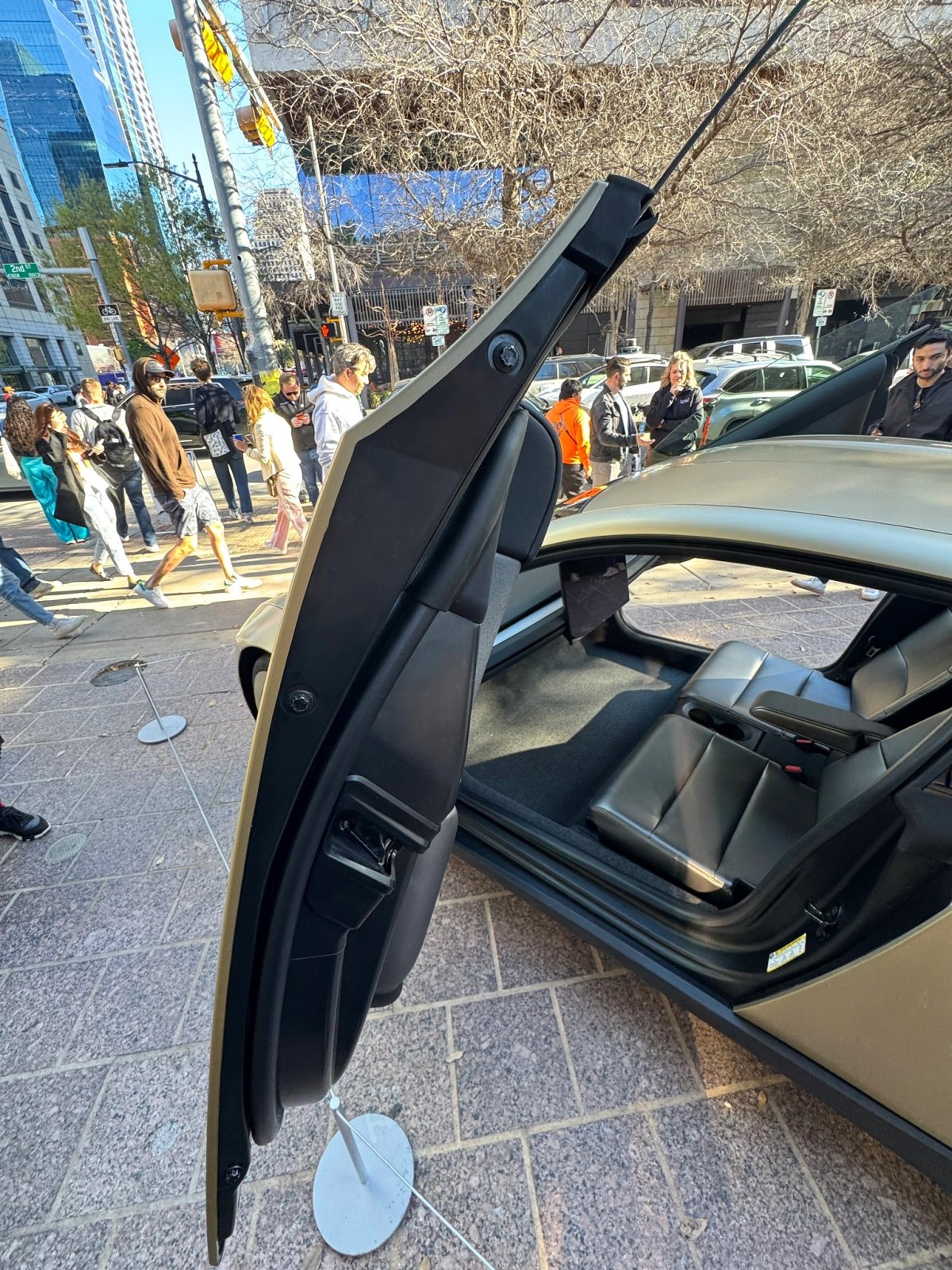
By matching the seat height to a standard wheelchair, Tesla is making it much easier for passengers with limited mobility to slide into the cabin, a crucial feature for a vehicle meant to provide “freedom of transportation for everyone.” According to the Tesla engineer, the Cybercab’s seat height and unique butterfly doors allow for a wheelchair to be parked parallel to the seat with plenty of room to maneuver between the two.
Production Refinements and Final Specs
The first production Cybercab has already rolled off the line, and we are seeing a massive “sanity check” of the hardware. Recent sightings in Austin have revealed larger front-facing cameras, an interior trunk camera to ensure passengers don’t leave anything behind, and even ambient lighting all along the cabin.
To ensure the Full Self-Driving system stays active in all conditions, the Cybercab is equipped with a high-pressure washer system for every external camera. This is a level of redundancy not seen on consumer Teslas, and it’s necessary for a vehicle the company plans to eventually ship without a steering wheel or pedals. Inside, nearly every function is handled by a massive 21-inch touchscreen, with only physical buttons for the doors and windows, along with a hazards button that doubles as an emergency stop trigger.
As Tesla moves toward its April mass production target, the Cybercab is looking less like a science project and more like a rugged, accessible workhorse for the upcoming Robotaxi network. The transition to a driverless society is quickly becoming a reality, and it seems Tesla is making sure everyone — including those with mobility challenges — can come along for the ride.
Subscribe to our newsletter to stay up to date on the latest Tesla news, upcoming features and software updates.
March 18, 2026
By Nehal Malik
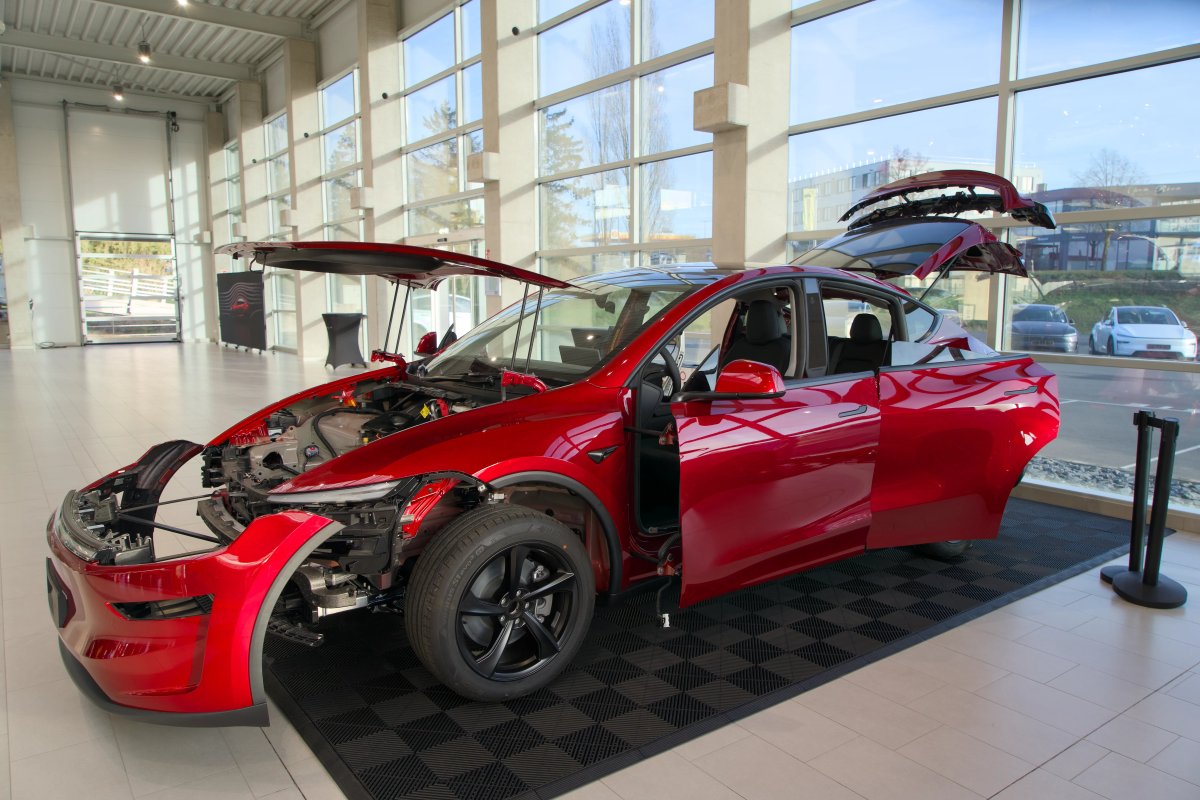
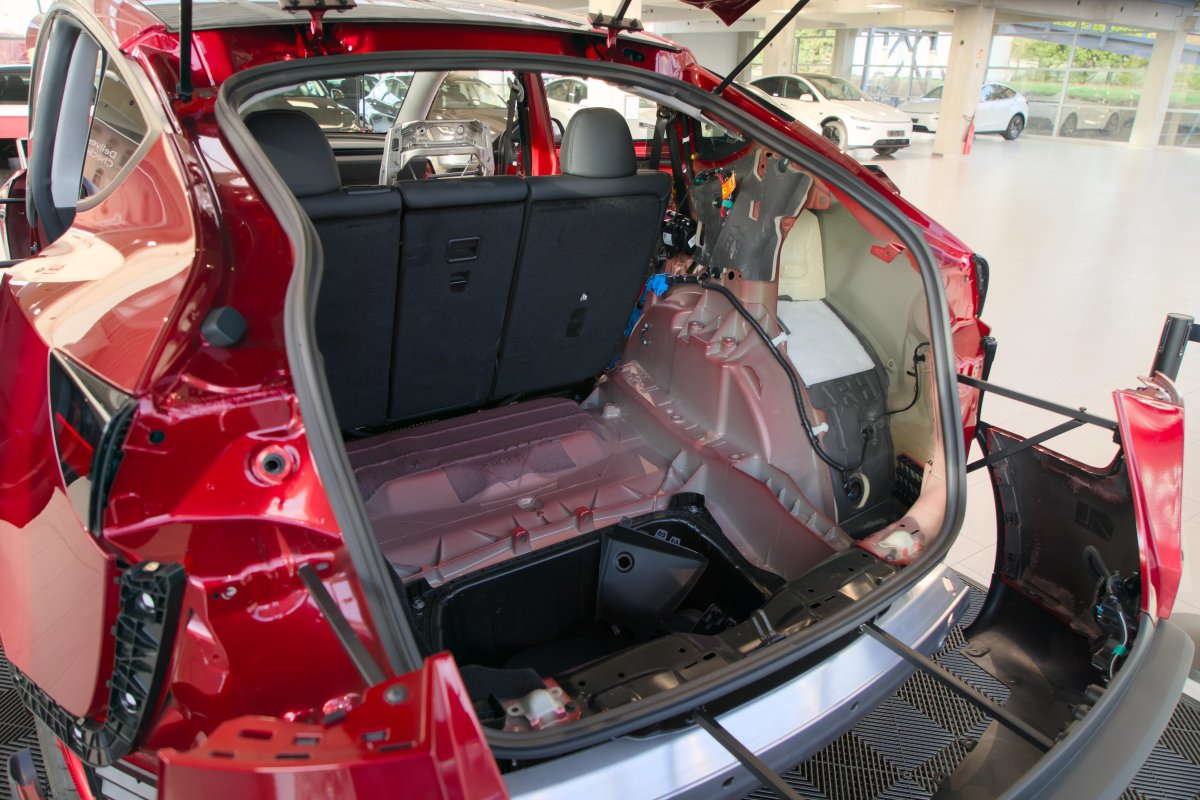
Tesla is pulling back the curtain on its industry-leading manufacturing processes by putting its hardware on full display. Recently, X user @DriveGreen80167 shared footage of a deconstructed Model Y showcased in an “exploded view” in China. This unique studio setup allows onlookers to see exactly how the world’s best-selling electric vehicle is pieced together, from the bare metal frame to the complex internal wiring.
Tesla puts everything on display for everyone to see clearly, because just looking brings true peace of mind. $tsla pic.twitter.com/vaLZkt7jai
— DriveGreenLiveGreen (@DriveGreen80167) March 9, 2026
While this specific display was spotted in China, similar showcases have appeared at Tesla delivery centers in Europe, specifically in Luxembourg. By literally dismantling the car in a studio setting, Tesla is highlighting a level of manufacturing expertise that has fundamentally changed how cars are built.
The Magic of Gigacasting
One of the most impressive parts of the deconstructed view is the look it gives us at Tesla’s revolutionary “gigacasting” process. Traditionally, a car’s frame is made by welding together dozens of small, stamped metal parts. Tesla flipped this on its head by using massive casting machines, known as Giga Presses, to produce large, single-piece aluminum structures for the front and rear of the vehicle.
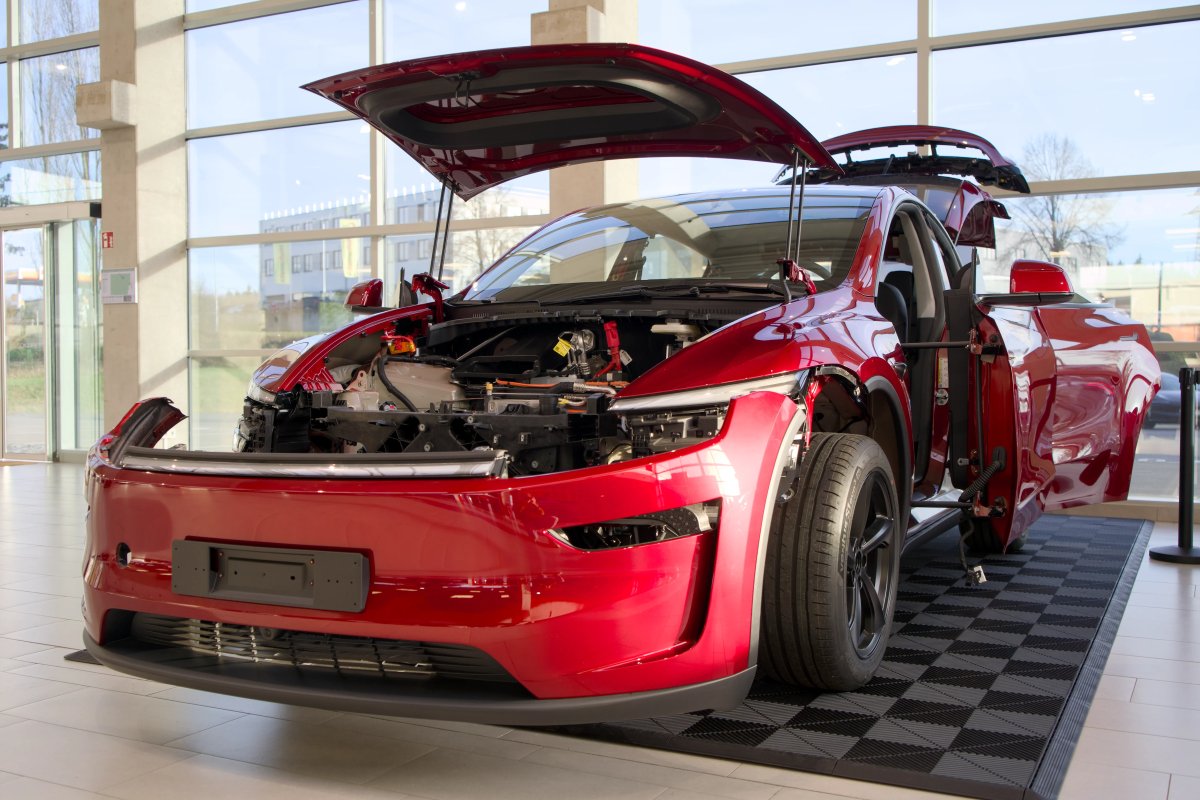
This technique is a game-changer for a few reasons. It simplifies the assembly process, reduces manufacturing costs, and significantly lowers the vehicle’s weight. Because there are fewer parts and joints, the car is also structurally more rigid and doesn’t have as many points of failure. This simplified architecture also helps with long-term durability. In fact, studies have shown that Tesla vehicles are among the cheapest to maintain and repair over time, largely thanks to these streamlined production choices.
 Peace of Mind Through Transparency
The “exploded” Model Y display also gives a clear look at the seat frames, the battery pack integration, and the simplified cooling systems. Seeing the car in this state makes it obvious why many competitors are now trying to copy Tesla’s manufacturing methods. It shows a level of build complexity that is actually much lower than a traditional gas car, which translates to fewer failure points for the owner.
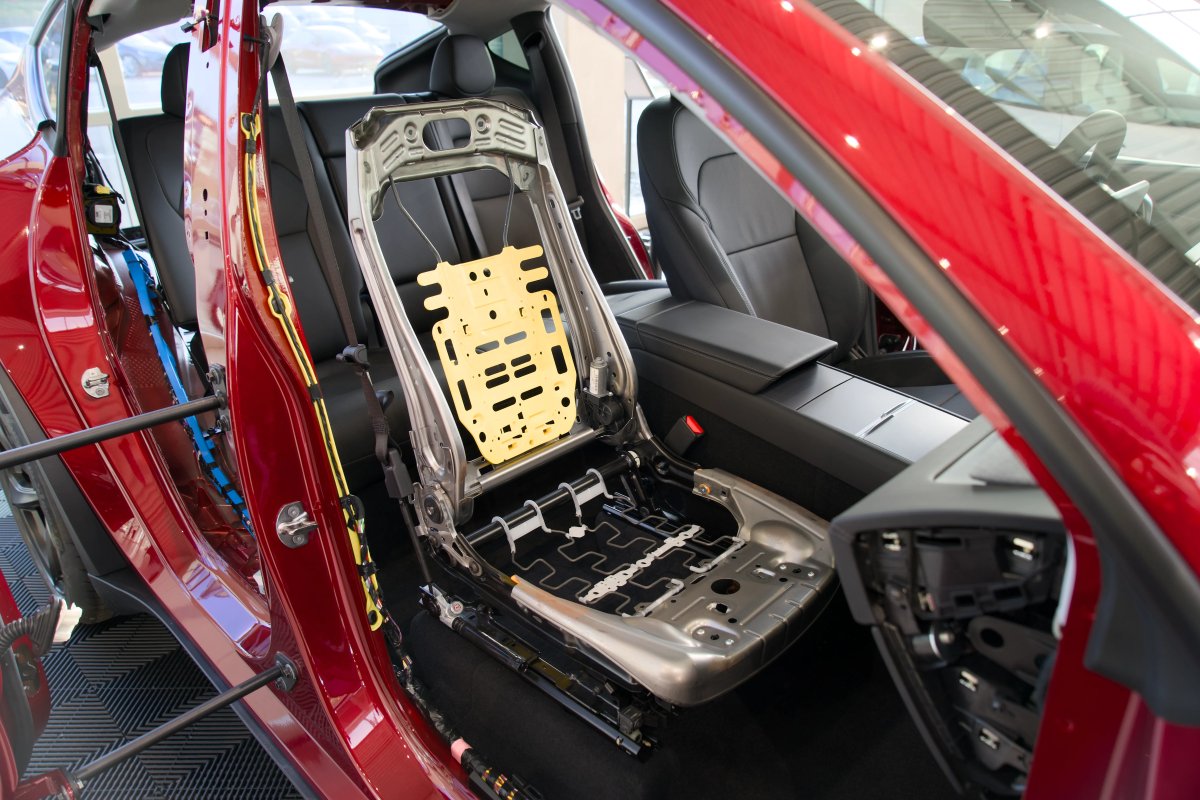
Tesla’s willingness to show off its “bones” in a public studio is a bold move that emphasizes transparency. It isn’t just about showing off a cool car; it’s about proving that the engineering underneath is as clean and efficient as the software on the screen.
As Tesla continues to refine these techniques at its Gigafactories across the globe, these deconstructed displays serve as a reminder of how far the company has pushed the automotive industry. Looking forward, these same gigacasting and new “unboxed” methods will make up the foundation for Tesla’s upcoming Cybercab and future vehicles.
March 18, 2026
By Karan Singh
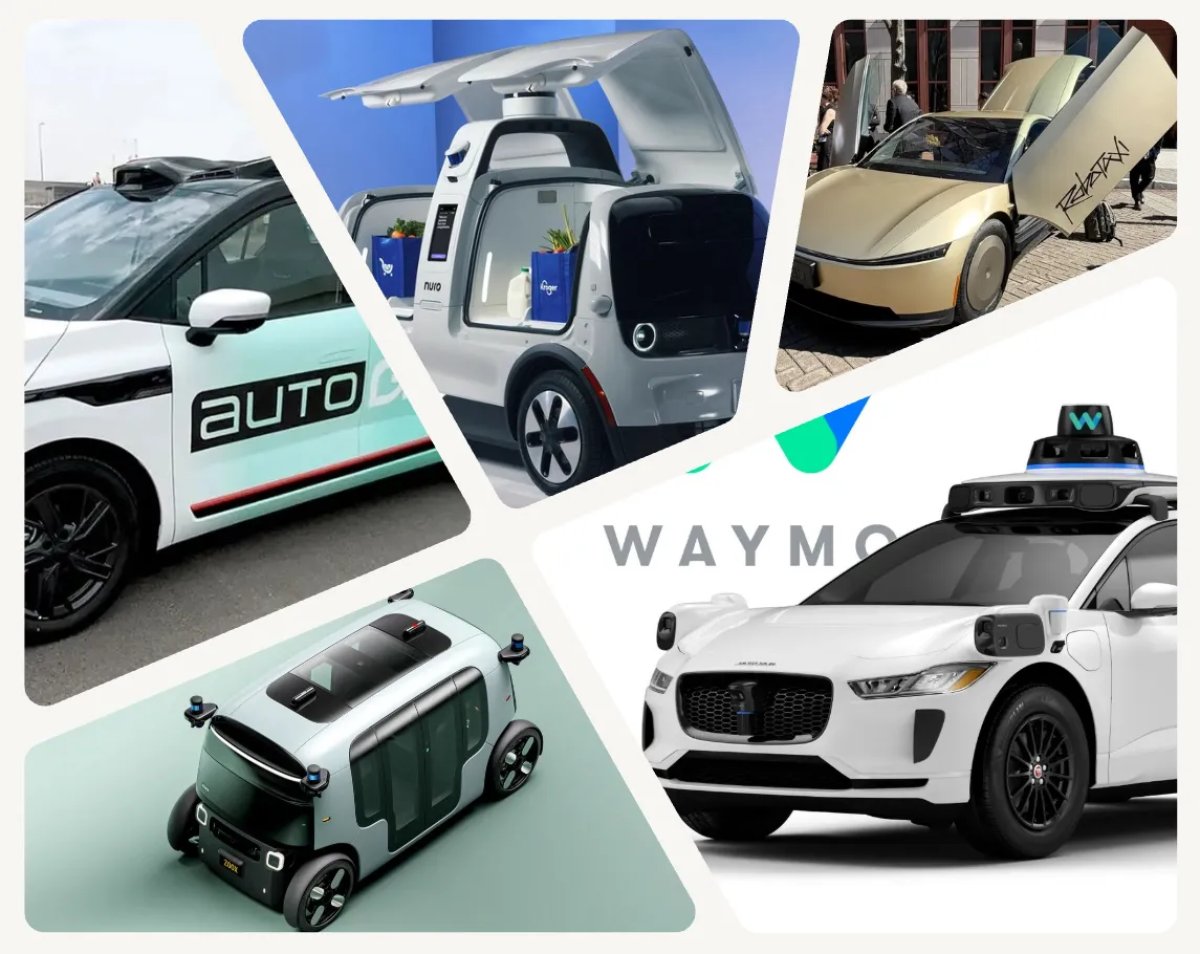
As Tesla continues to lay the groundwork for its highly anticipated Cybercab and Robotaxi network, a common misconception is that it is entering an empty arena.
The reality is that the autonomous vehicle (AV) market in 2026 is already fiercely competitive, heavily capitalized, and rapidly scaling to beat Tesla at its own game.
While Tesla is betting everything on a vision-only, end-to-end neural network approach, the rest of the industry has largely embraced sensor-heavy redundancy, partnering with major ride-hailing networks like Uber to bypass the struggles of consumer acquisition.
Here is exactly where the biggest players in the robotaxi space stand today, how their technology works, and whether they can actually scale to challenge Tesla’s ambitions.
The American HeavyweightsWaymo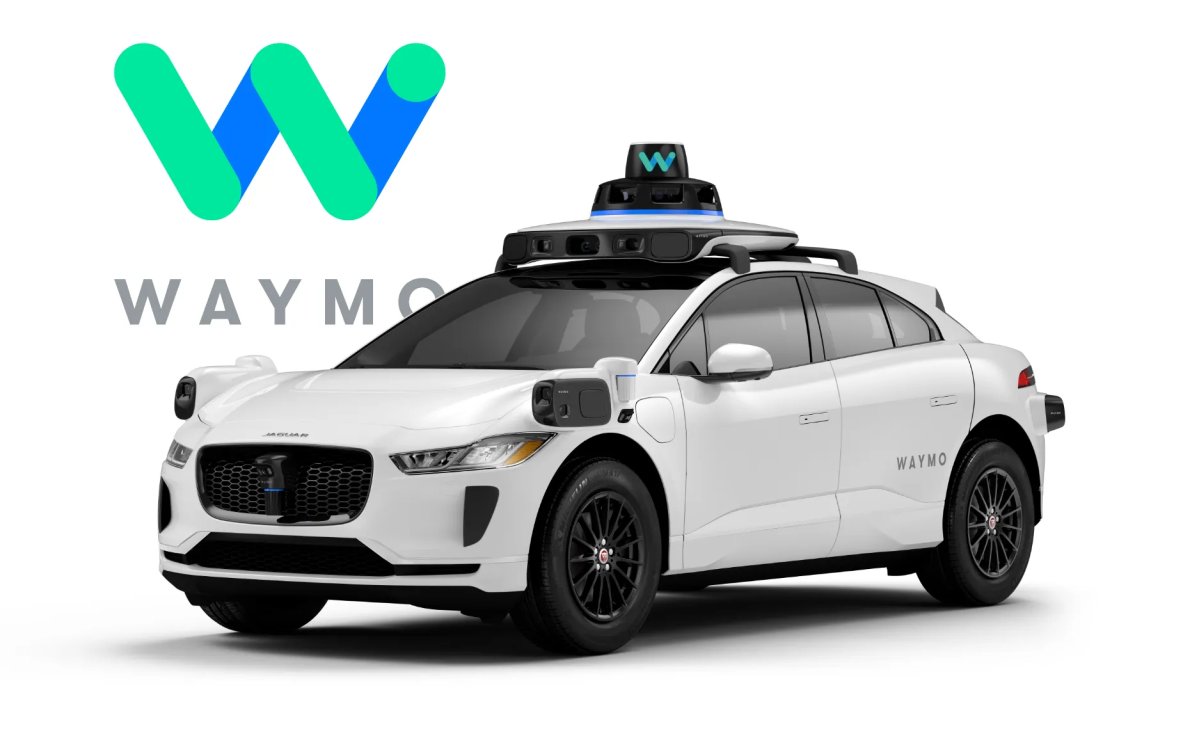
Google (Alphabet)’s Waymo is the current market leader in the United States. Waymo is using a sensor-heavy approach to achieve Level 4 autonomy, and is now on its sixth generation of hardware. The current Waymo Driver uses an optimized array of 13 cameras, 4 lidars, and 6 radar units to cut its sensor suite costs by ~40%.
As of early 2026, the company operates in 10 major U.S. metro regions, including San Francisco, Los Angeles, Phoenix, Atlanta, Austin, Miami, Dallas, Houston, San Antonio, and Orlando.
With an active fleet estimated between 2,500 and 3,000 vehicles, Waymo’s scalability is currently unmatched in the United States. The company is completing 400,000 paid rides per week and is targeting 1 million weekly rides by the end of 2026. To support this growth, Waymo operates a dedicated integration plant in Mesa, Arizona, capable of producing tens of thousands of units per year, and is actively transitioning its fleet to Zeekr Ojai vans and Hyundai IONIQ 5s.
Zoox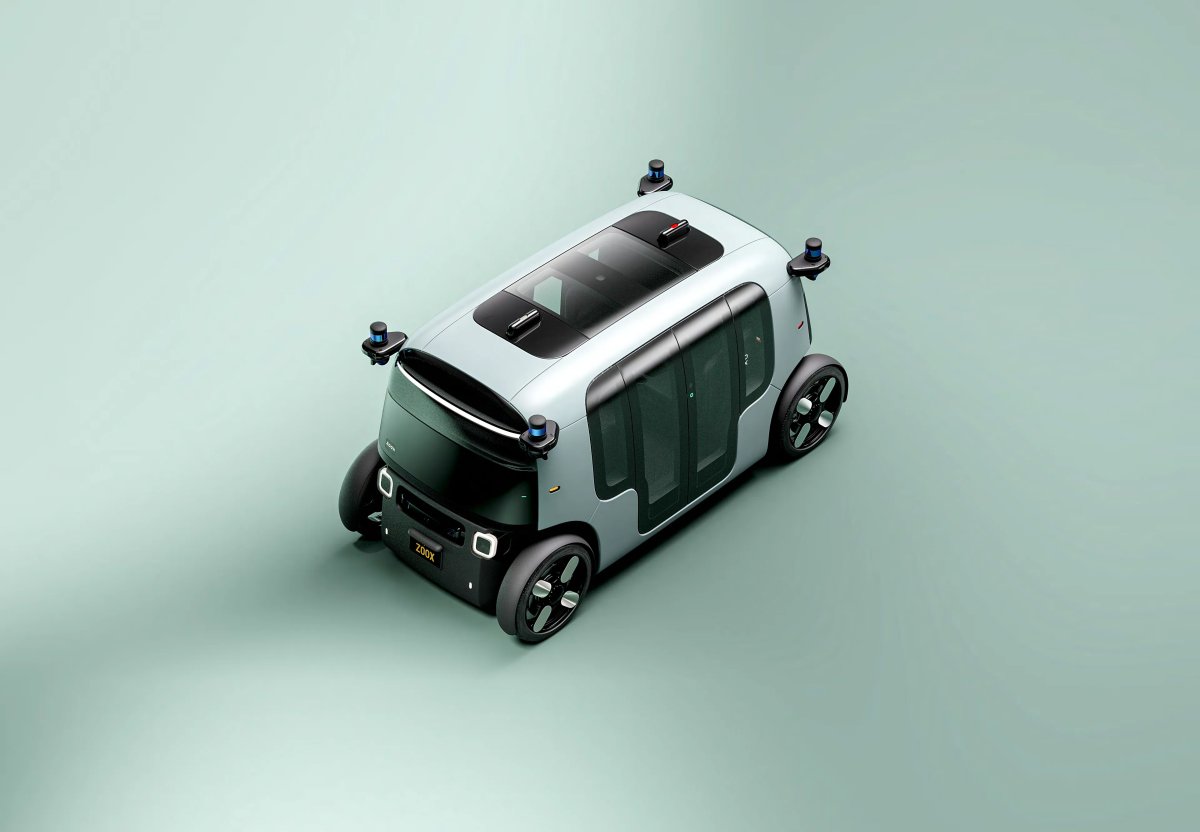
Acquired by Amazon in 2020 for $1.3 billion, Zoox has taken a radically different hardware approach. Rather than retrofitting existing consumer cars, Zoox relies on purpose-built, bi-directional pods designed strictly for passengers.
These vehicles have no steering wheel or pedals and utilize a heavy mix of cameras, radar, and lidar. The company is currently running testing and limited services in Las Vegas and San Francisco, with testing expanding to Dallas, Seattle, and Miami.
While Zoox’s scalability is incredibly high, it has historically been bottlenecked by the law. Because the vehicles lack manual controls, the company relies on federal NHTSA exemptions to deploy.
However, Zoox recently unlocked a massive network opportunity: its robotaxis are officially launching on the Uber app in Las Vegas in Summer 2026, followed by Los Angeles in 2027.
The Cautionary Tale of Cruise
General Motors’ Cruise serves as the industry’s ultimate cautionary tale. Cruise originally relied on retrofitted Chevy Bolts equipped with cameras, radar, and lidar, and was aggressively scaling across the U.S.
However, after a disastrous rollout in San Francisco, highlighted by a severe accident where a robotaxi dragged a pedestrian, the company lost public trust and its regulatory permits. Facing $10 billion in total losses, GM officially folded Cruise’s original robotaxi program.
Shortly after, GM pulled funding for further dedicated robotaxi development, deciding that the time and resources required to scale simply weren’t worth the financial bleeding.
The Chinese PowerhousesApollo Go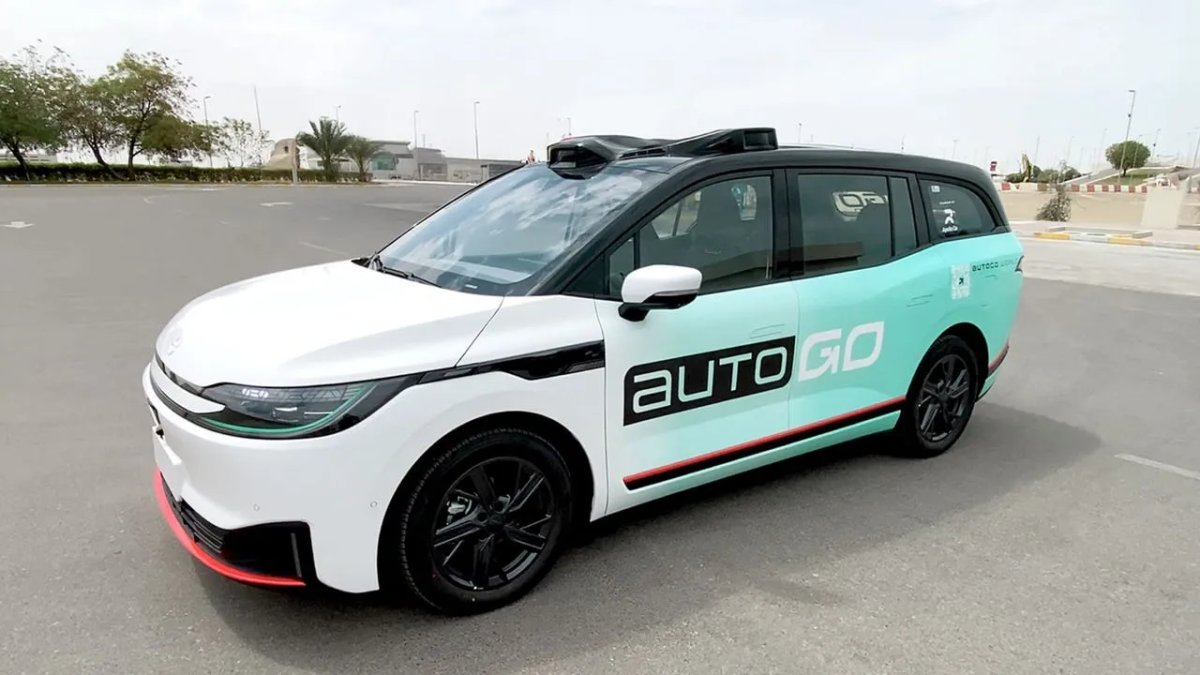
Backed by China’s premier search and AI giant Baidu, Apollo Go operates with a massive global footprint. The company employs Level 4 autonomy in its 6th-generation Yichi 06 vehicles, which feature 5 lidars and lack a steering wheel. Apollo Go operates in 22 cities and recently launched a fully driverless commercial service on Yas Island in Abu Dhabi.
Baidu’s scalability is practically limitless. Apollo Go currently processes over 250,000 weekly driverless rides and has logged over 17 million cumulative rides to date. Because their 6th-generation vehicle costs under $29,000 to manufacture, they are able to scale extremely quickly, at a price competitive to Tesla’s upcoming Cybercab.
The company is approaching unit profitability in major markets like Wuhan and is actively partnering with Uber to deploy thousands of vehicles globally.
Pony.ai
Recently listed on both the HKEX and NASDAQ, Pony.ai is an independent Chinese startup making massive waves. Their 7th-generation sensor suite relies heavily on lidar and cameras bolted onto BAIC and Toyota vehicle platforms.
Currently operating in Tier-1 Chinese cities like Guangzhou, Shenzhen, Beijing, and Shanghai, the company operated 1,159 vehicles as of late 2025. Having achieved unit economics breakeven in Guangzhou (averaging 23 daily customer trips per vehicle), Pony.ai plans to expand its active fleet to over 3,000 vehicles by the end of 2026.
WeRide
WeRide is an independent autonomous driving startup that just executed a massive manufacturing leap. Utilizing Level 4 autonomy, WeRide operates the purpose-built Robotaxi GXR built on Geely Farizon’s Super VAN platform.
The vehicle uses an AI steer-by-wire chassis and the GEN8 sensor suite, featuring a thousand-beam lidar that can detect objects up to 600 meters away.
Operating across China, Singapore, and the Middle East (Abu Dhabi, Dubai, Riyadh), WeRide has been working to rapidly scale on the other side of the world. In March 2026, the company signed a massive order with Geely to deliver 2,000 new Robotaxi GXRs.
Their new manufacturing partnership slashed vehicle assembly time to under 10 minutes, and they expect their global fleet to surpass 2,600 active vehicles this year on their way to tens of thousands by 2030.
Other PlayersNuro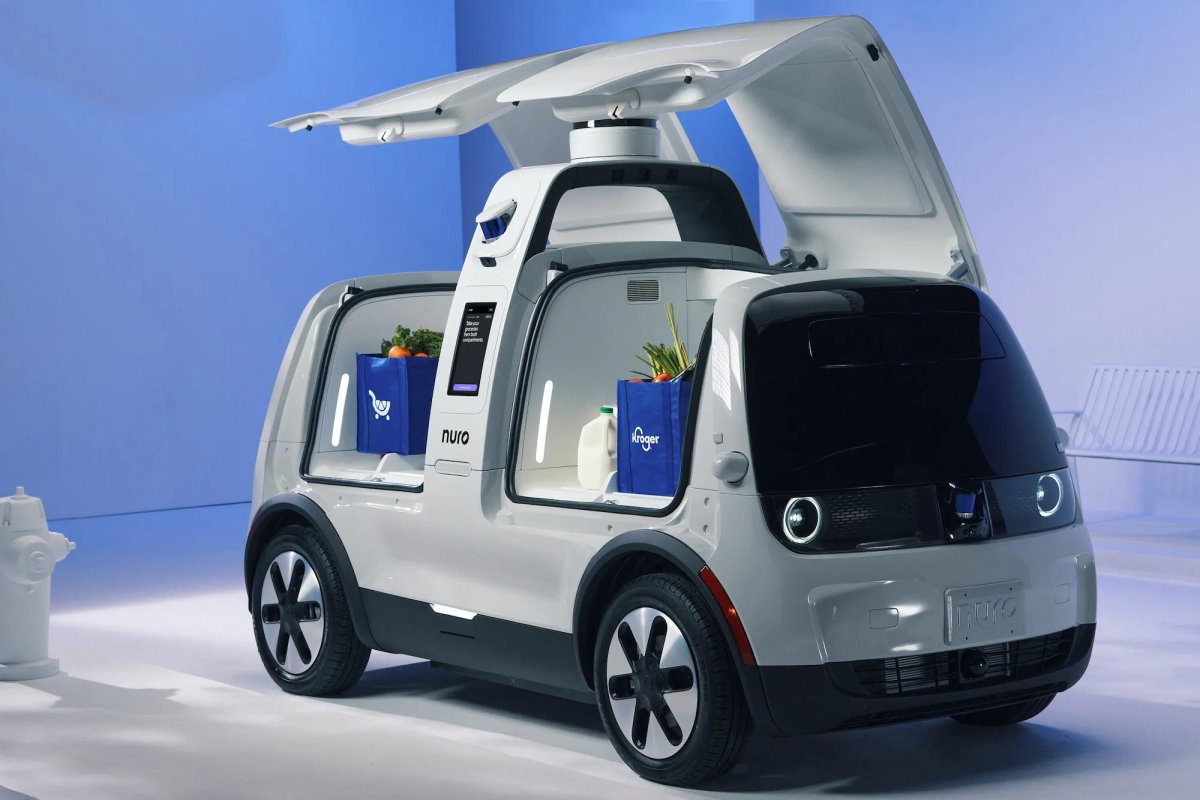
Nuro is famous for its small, autonomous delivery pods, but the startup recently executed a massive pivot into passenger robotaxis. At CES 2026, Nuro announced a new partnership backed by Uber to integrate its Level 4 autonomy systems into the Lucid Gravity SUV.
This premium robotaxi fleet will leverage Nvidia’s DRIVE AGX Thor compute platform and Gravity’s massive 450-mile range to drastically reduce charging downtime. Uber plans to deploy 20,000 or more of these Lucid-Nuro robotaxis across global markets over the next six years, with the first vehicles hitting the streets in late 2026.
Aurora
Aurora is not competing with Tesla for passenger ride-hailing; they are the future competition for FSD on the Tesla Semi.
Aurora is laser-focused on Class 8 heavy-duty trucking. Originating as an independent company that previously acquired Uber’s self-driving unit, Aurora utilizes its FirstLight Lidar (capable of seeing over 450 meters ahead), alongside cameras, radar, and “Verifiable AI.”
They currently operate daily commercial driverless routes in Texas and plan to scale to a couple of hundred driverless trucks across the Southern U.S. by the end of 2026.
Rimac Verne
Spearheaded by hypercar legend Mate Rimac, Verne is targeting a highly premium, luxury robotaxi experience.
Built on Mobileye’s Drive platform (13 cameras, 9 lidar, 5 radar), the vehicle is a two-seat pod with sliding doors, no steering wheel, a massive 43-inch screen, and seats that recline fully flat.
While they have agreements with 11 cities across Europe and the Middle East, they are scaling as a boutique offering rather than a mass-market Uber competitor. Verne has built 60 validation prototypes and plans to officially launch on-road services in Zagreb, Croatia in Spring 2026.
NVIDIA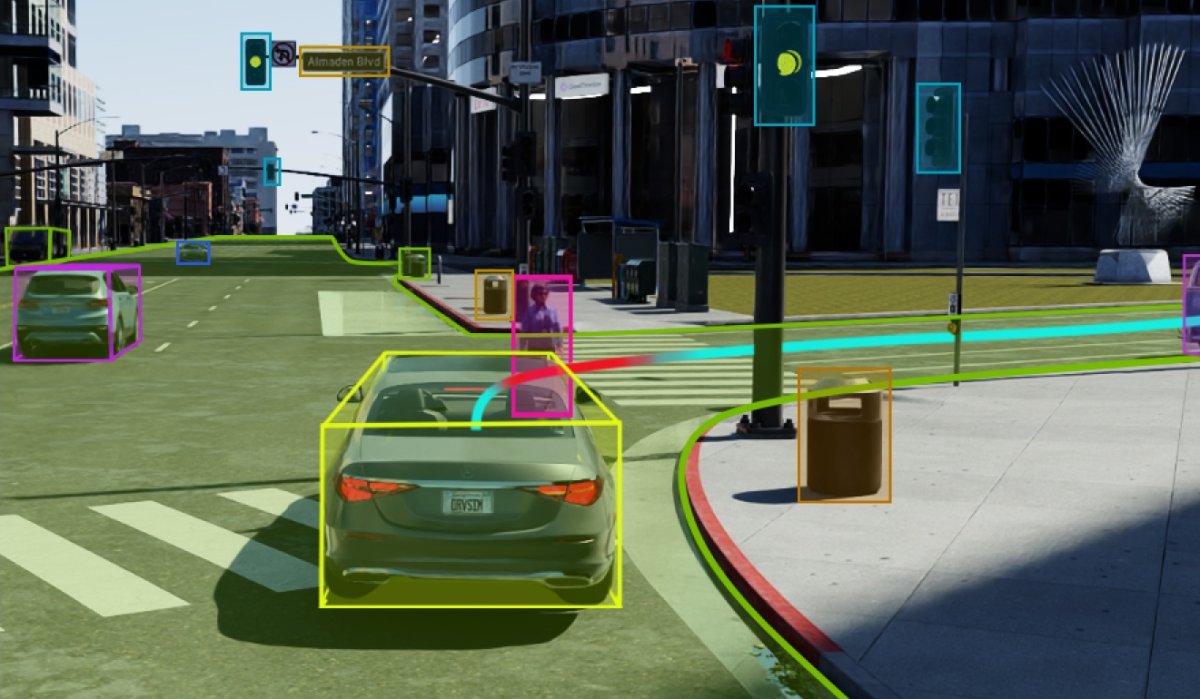
While Nvidia does not operate its own robotaxi fleet, they are the arms dealer of the AV industry, providing both the hardware and the software.
Their DRIVE AGX Hyperion 10 and Thor architectures provide the computing brains for a massive chunk of the market, including Lucid, Nuro, Mercedes, WeRide, and Aurora.
Nvidia recently partnered directly with Uber to scale a global autonomous fleet targeting 100,000 vehicles by 2027 using Nvidia’s AI infrastructure.
While Tesla leads autonomy in the Western consumer market, there is a lot of competition in other categories. The holy grail is providing transportation for people and goods at scale.