BMW
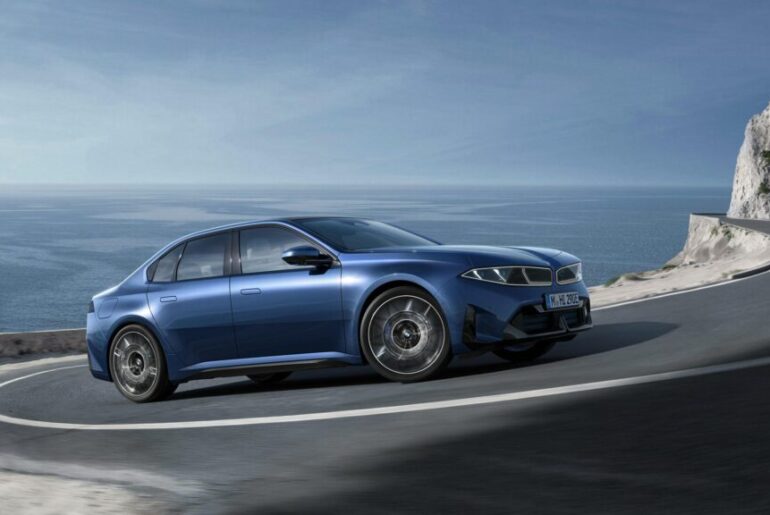
We’ve been eagerly anticipating the arrival of BMW’s electric Neue Klasse 3 Series since the first concepts came out in 2023, and now just as its iX3 crossover sibling is reaching customer hands, the new i3 has been revealed. Not to be confused with the phenomenal i3 city car we used to get; BMW already reused the i3 name on the outgoing-gen 3 Series EV, which was only offered in China. The automaker says the new i3 is both “a technological quantum leap” and “an authentic BMW sports sedan,” and the Neue Klasse design language certainly makes it look more like a 3 Series than anything post-Bangle has.
If you’re still an annoying electric car hater, or if an EV really wouldn’t “work” for your “lifestyle,” don’t worry. There will still be a gas-powered 3 Series, instead riding on a new version of the current model’s CLAR platform. Its styling will be largely the same as the Neue Klasse i3, but with a longer dash-to-axle ratio, a tweaked roofline and more traditional proportions overall. The interior should be identical, though don’t expect the gas 3 Series to have the i3’s level of technology. (Oh, and for the real BMW nerds among you, the i3’s model code is NA0 while the 3 Series will be G50.)
We no longer live in an era where EVs are compromised when compared to gas cars. The Neue Klasse’s 800-volt architecture gives the i3 a range of up to 440 miles, and that’s not on the European cycle or a way-overstated estimate — the i3’s 440-mile projected range is based on BMW’s testing of the U.S. EPA test cycle. That’s better than almost every other EV on sale, which alone makes the i3 worth paying attention to.
It’s got four superbrains
BMW
As with the iX3, BMW will first be launching the i3 in all-wheel-drive i3 50 xDrive form, with an electric motor at each axle producing a total of 463 horsepower and 476 pound-feet of torque. That’s only 10 hp off from a base G80 M3, though 120 hp and 110 lb-ft less than an i4 M60. You can expect lower-powered rear-wheel-drive and all-wheel-drive i3s and at least one more-powerful M Sport model to come soon down the line, followed by an electric M3 with a quad-motor setup. The rear motor is an electrically excited synchronous unit that flexibly regulates a magnetic field for better performance and efficiency, while the front motor is asynchronous. This new motor setup reduces overall energy losses by 40%, manufacturing costs by 20% and weight by 10%.
BMW hasn’t said how big the i3’s battery is, but it should match or get close to the 112-kWh pack in the iX3. Along with that amazing 440-mile range — which will probably be exceeded by future trims — the Neue Klasse architecture provides 400-kW DC fast-charging capability, with speeds 30% faster than BMW’s current EVs. The in-house-designed batteries have cylindrical cells for 20% better energy density, and a cell-to-pack design that “[integrates cells]directly into the high-voltage battery without modular construction or structural elements, [enabling] high energy densities at pack level and saves weight and costs.” The pack is also a structural component, closing up the chassis’ open floor and using the housing of the batteries as the car’s underbody, saving more weight and improving aerodynamics. It has vehicle-to-load, vehicle-to-home and vehicle-to-grid capabilities, too. Oh, and in the U.S. the i3 will have an NACS plug.
 BMW
BMW
The Neue Klasse platform uses a four-zone electrical architecture with four “superbrains,” each separately controlling driver-assist systems, infotainment, powertrain and vehicle dynamics. The final one is the Heart of Joy, which controls the brakes, drivetrain, steering and recuperation, operates 10 times faster than previous systems. It all sounds great for fans of driving, as BMW says it reduces the number of control interventions and makes cornering behavior more consistent and predictable, and the steering only needs “a light touch for maximum accuracy.” The zonal architecture also allows for basically every aspect of the i3 to receive over-the-air updates.
A two-joint spring strut front axle is paired with a new five-link rear axle, and the i3 is fitted with stroke-dependent shock absordbers and anti-roll bars with highly preloaded bearings. You’ll be able to option an Adaptive M suspension system. BMW also says its Soft-Stop system gives you the smoothest, quietest stopping process in the brand’s history, and regenerative braking is strong enough that you’ll only need the friction brakes in emergencies or when doing “very sporty driving.”
Finally the 3 Series looks funky again
BMW
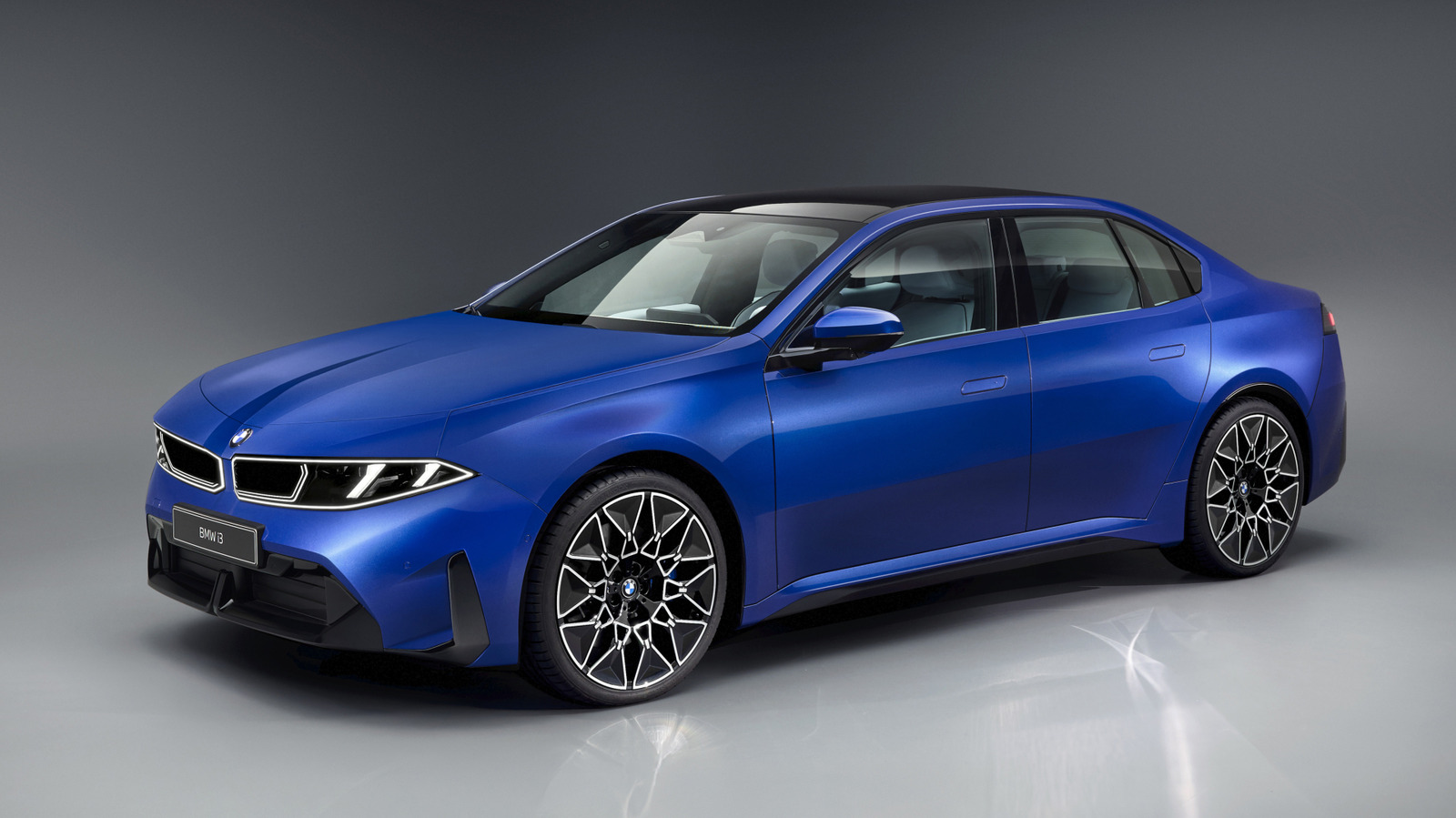
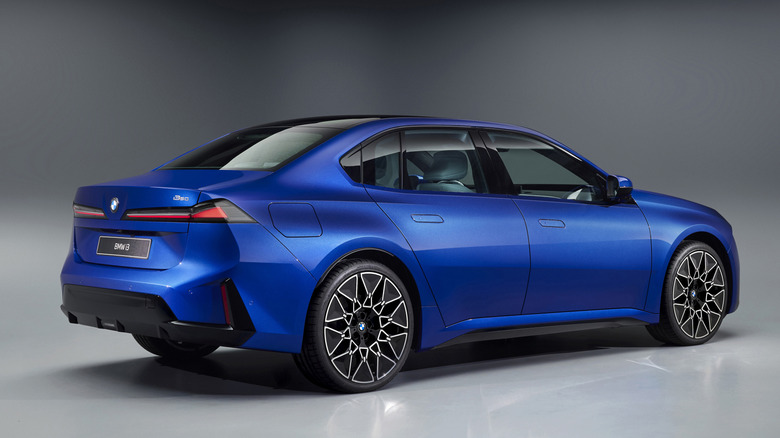
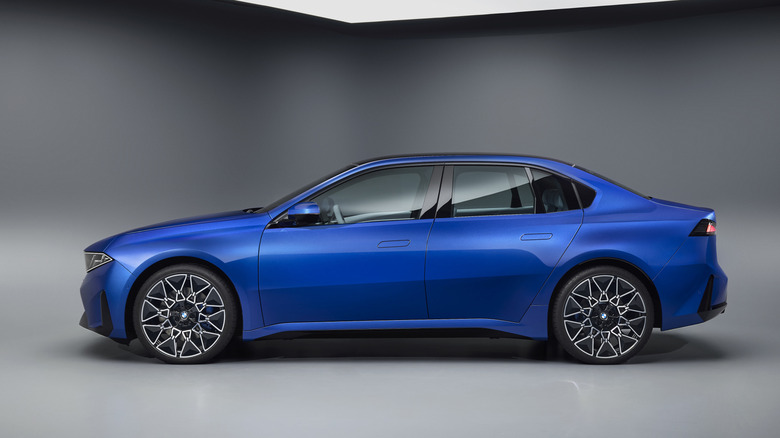
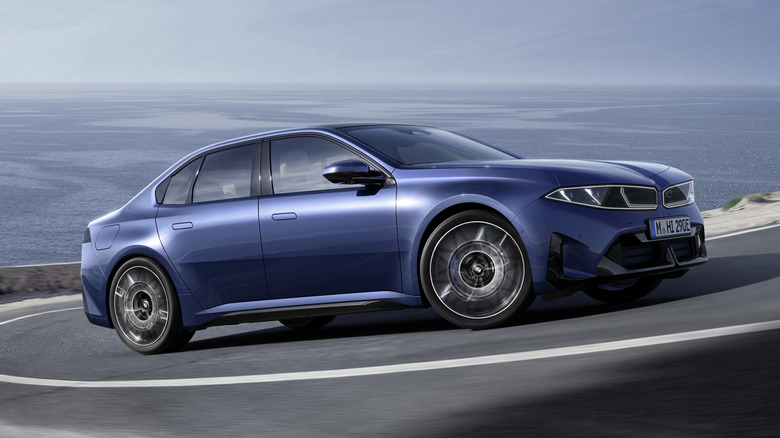
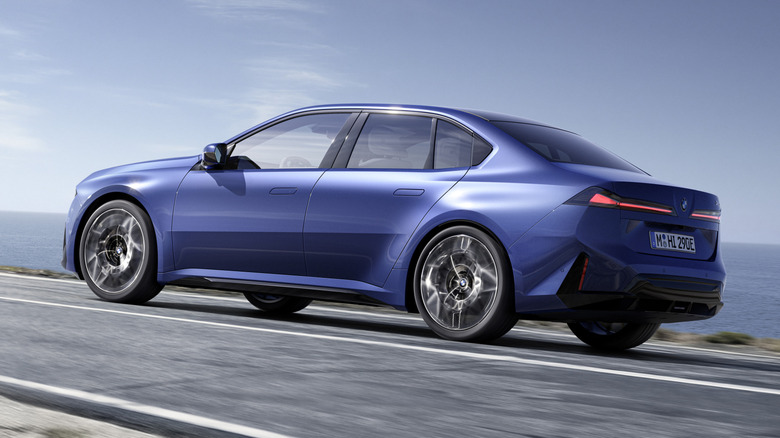
Now that you’ve scrolled past some photos of the design, what do you think? BMW has (in my eyes blissfully) leaned back into boundary-pushing styling in the past few years, and the Neue Klasse stuff is certainly eye-popping and divisive, while also being reverent to classic BMW design cues. Though admittedly less exaggerated than the concept, the i3’s angular greenhouse and “2.5-box” silhouette, as BMW calls it, work with the shark nose and pointy tail to give the sedan proportions akin to an 02 Series car or the E21 3 Series. I’m guessing I’ll see a lot of comments about the dash-to-axle ratio being too FWD-esque, but I’m into it, and I think the car has a fantastic stance overall. At 187.4 inches long the i3 is 1.5 inches longer overall than a current 330i, and its wheelbase is 1.9 inches longer. The i3 is also 1.5 inches taller, likely due to needing to fit a battery pack but also just because of the boxier greenhouse, and it’s 1.5 inches wider as well.
 BMW
BMW
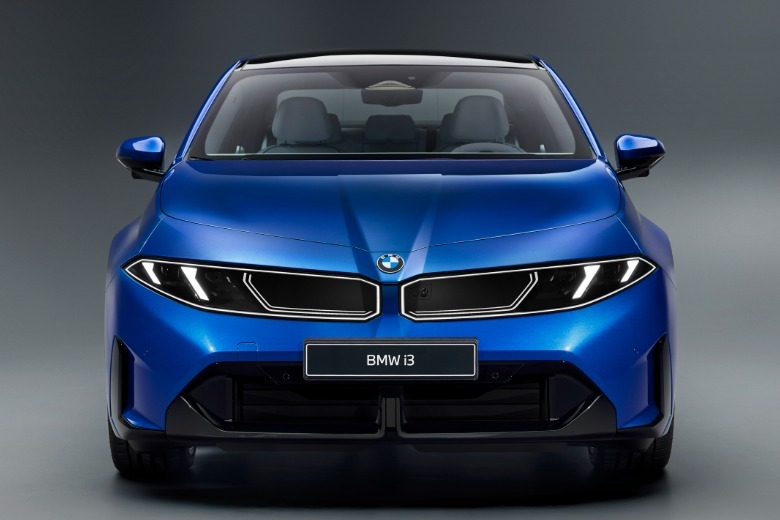
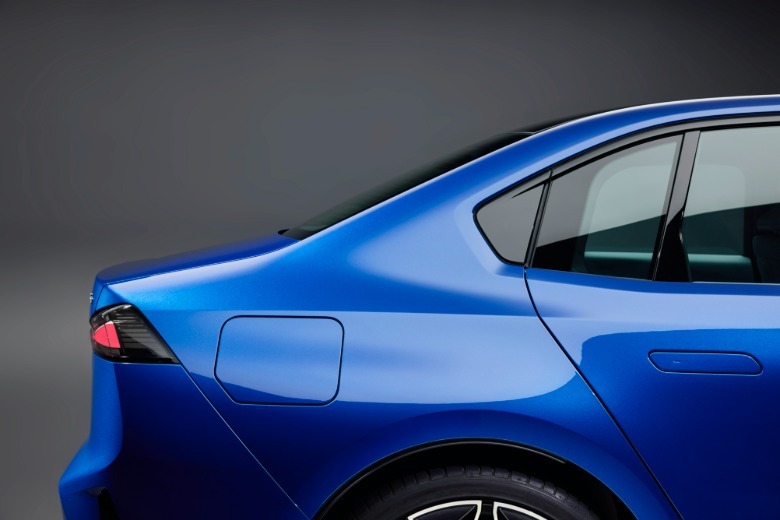
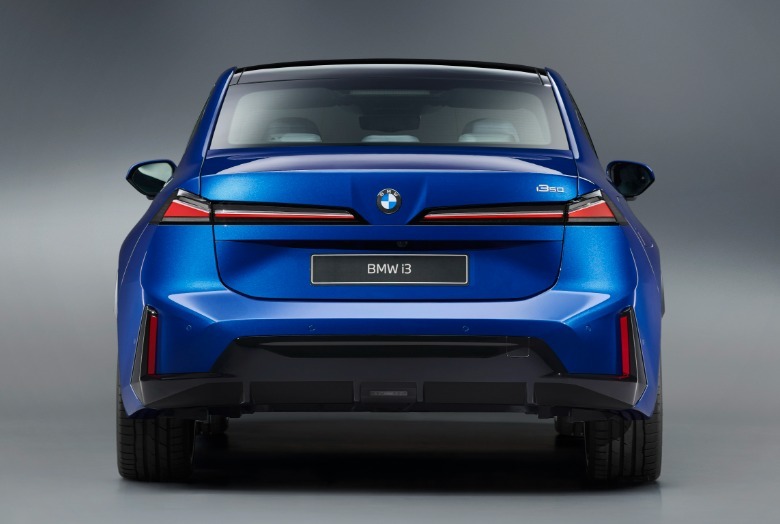
It has the same super-wide eye mask design and hash-mark headlights as the iX3, but instead of skinny illuminated kidneys in the center of the nose, the i3 has light lines inside the eyes that give the shape of traditional BMW kidneys. All the sensors and cameras are housed in those panels, which is nice. The rear end takes BMW’s L-shaped lights to a slim extreme, and it’s a much funkier trunk shape than most other sedans. Though the i3’s surfacing is actually fairly restrained, there are some really nice lines like the creases atop the fenders, the edge surrounding the side windows, and nostril-like center section of the hood.
 BMW
BMW
One design element I find particularly fun is the charging flap matching both the rear bumper cutline and the Hofmeister kink, and hidden side window seals are another appreciated detail. BMW says eleven different colors will be on offer, including the M Le Castellet Blue in these photos. I can’t wait to see the specs that BMW Individual will surely come up with once production is really up and running. There’s no details on wheel offerings, but the ones you see here are 21-inchers, and of course there will be an available M Sport package with different styling features.
The interior is funky, too
BMW
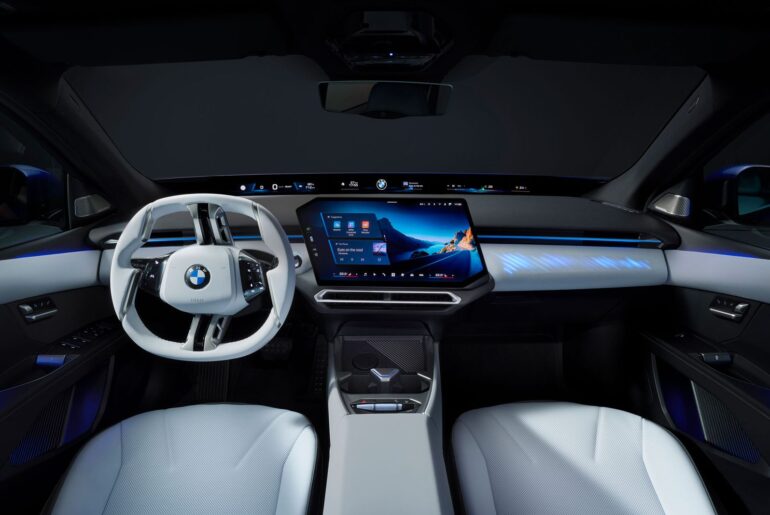
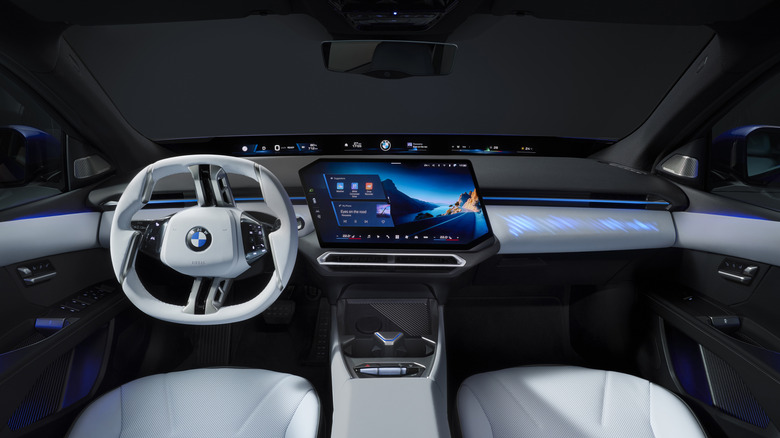
Inside, the i3 is largely the same as the iX3, though the sedan has a different shape and color split on its dashboard and door panels. The 17.9-inch free-cut center screen is definitely the centerpiece, angled toward the driver and running BMW’s newest Operating System X, and instead of a normal gauge cluster the i3 also uses the fantastic, customizable Panoramic Vision display that’s projected onto the base of the windshield between the A-pillars. (You can get a 3D head-up display, too.) I especially like the use of ambient lighting, which includes projections of light onto the dashboard.
 BMW
BMW
The i3 also has the iX3’s strange steering wheel, which has spokes at 12 o’clock and 6 o’clock, and fixed thumb rest control pods on the hub at 9 and 3. BMW says this wheel is better for ergonomics and adheres to its philosophy of “hands on the wheel, eyes on the road.” An M Sport steering wheel with a flatter design and spokes at 8 and 4 is optional, as are M Sport seats with more distinctive bolsters. There are a few different interior styling packages, including the Contemporary scheme that can be had with Digital White, Castanea red, or Agave Green vegan upholstery.
 BMW
BMW
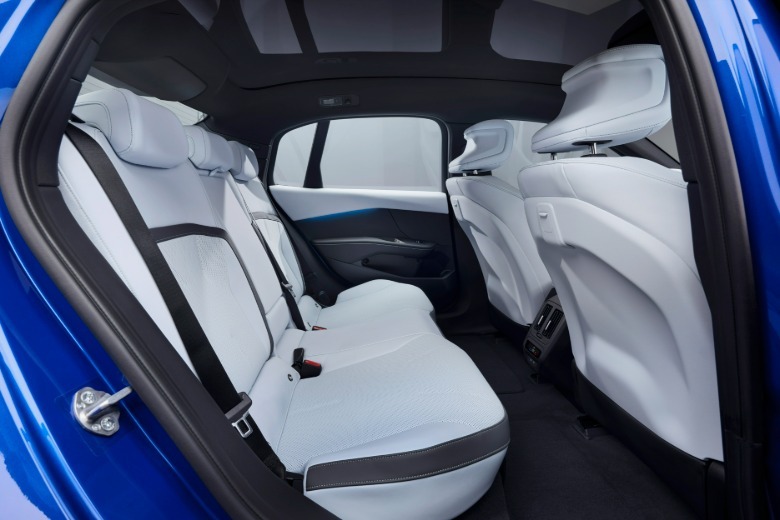
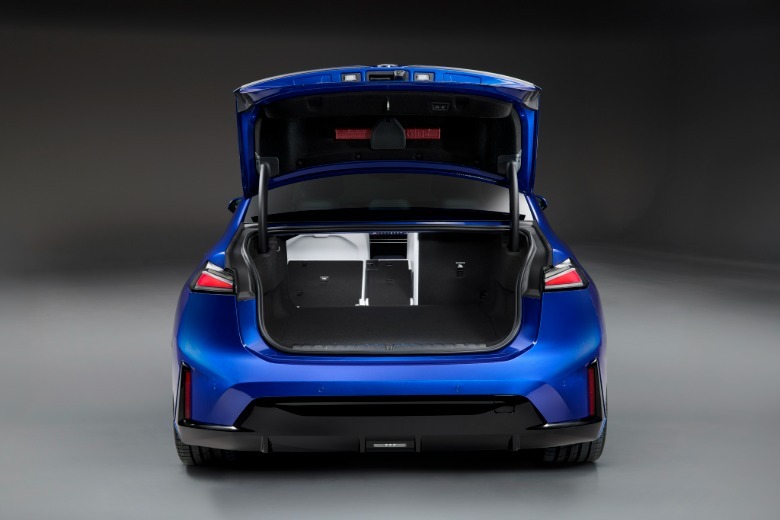
We don’t know any interior dimensions, but it should be more spacious than a current 3 Series. Even with the standard panoramic sunroof, which goes all the way back to the rear-seat headrests, it seems like there’s a lot of headroom, and the flat floor and longer wheelbase should be good for leg room. There’s a decently sized frunk with its own plastic cover, and the trunk looks at least as big as the existing 3 Series.
You can feel good about driving it
BMW
Starting this August the i3 will be built at BMW’s factory in Munich, which has been undergoing huge upgrades over the last four years, and a year later the plant will switch to only producing Neue Klasse EVs. BMW is going big on sustainability, with the aim to reduce its CO₂e by 40 million tons by 2030 and 60 million by 2035. The automaker says the i3 “achieves a CO₂e benefit over a comparable model with an internal combustion engine after just 1-2 years of use,” and CO₂e emissions in the supply chain were reduced by 33% even when taking the vehicle’s development into account. There’s a lot of recycled materials used throughout the car:
In the front bumper of the BMW i3, 30 percent recycled plastic is used in the trim. In addition, the variety of materials in the entire bumper without attachments has been reduced from 15 to 7 materials compared to its predecessor (BMW 3 Series). Thanks to the extensive use of a plastic especially suitable for recycling, the proportion of recyclable plastics was increased from approximately 46 percent in the predecessor model to approximately 85 percent. This creates the basis for the recovery of high-quality recycled plastics from the vehicle.
The new BMW i3 consists of a total of around 30 percent of secondary materials1: The proportion of secondary materials in the aluminium cast components of the new BMW i3 swivel bearings and hub carriers is 80 percent; the cast aluminium rims consist of 70 percent secondary aluminium. The housing of the Gen6 motor also consists of approximately two-thirds recycled aluminium.
The Gen6 battery cells of the BMW i3 high-voltage battery pack use a proportion of secondary materials for cobalt, lithium and nickel. Energy from renewable sources is also used in the production of anode and cathode material as well as in cell production. Compared to a previous Gen5 cell in the BMW i4, the CO₂e footprint in the cell supply chain was reduced by around 33 – more – – 19 – percent per Wh. Another example of the innovative use of materials and secondary materials is the engine compartment cover and the storage compartment under the hood of the BMW i3. The base material consists of 30 percent recycled marine plastic. This is post-consumer material made from used fishing nets and ropes. The starting material of the yarn for the textile of the headliner and the A-pillar in the BMW i3 consists of 100 percent recycled material.
Production starts this summer
BMW
BMW isn’t talking about price yet, but with the iX3 50 xDrive promised to start at around $60,000, the i3 could come in at around $55,000. That would undercut the existing rear-drive i4 eDrive40 by a few grand, and wouldn’t be much pricier than the $51,350 330i xDrive. That’ll also make the i3 a pretty screaming deal. The only other EVs in the U.S. with a longer range are the $116,400 Lucid Air Grand Touring, and GM’s giant trucks and SUVs like the Cadillac Escalade IQ. Its closest competitor will be the upcoming Mercedes-Benz C-Class EV, which is also going back to more traditional styling and could have an EPA range of over 400 miles. That car will also be revealed within the next few months.
Joachim Post, BMW’s head of development, recently said that it’s “easy and important” for the brand to develop niche body styles, including the 4 Series coupe and convertible that will be based on the i3. I wouldn’t be surprised if we get another i4 Gran Coupe, as well, and the i3 will definitely get a wagon variant — normally I’d be telling our American readers not to hold their breath for it, but I think the Neue Klasse wagon has a better chance of coming to the U.S. than past 3 Series Tourings.