Stay up to speed with stories written by drivers, for drivers.
Get automotive news, DIY tips, market trends, in-depth car profiles, and more right in your email inbox.
The eighth-generation BMW 3 Series is not called “3 Series”—at least not yet. Unveiled online, the 2027 BMW i3 takes the torch from the current, G20-generation car with a familiar name, the latest technology in the company’s arsenal, and an electric drivetrain. The gasoline-powered 3 Series will return, however.
Sold from 2014 to 2021, the original i3 was a small electric city car with unusual proportions and a pair of rear-hinged rear doors. The new i3 shares nothing with the first-generation model; It also shares nothing with the outgoing 3 Series. It’s built on the EV-only Neue Klasse platform that already underpins the iX3.
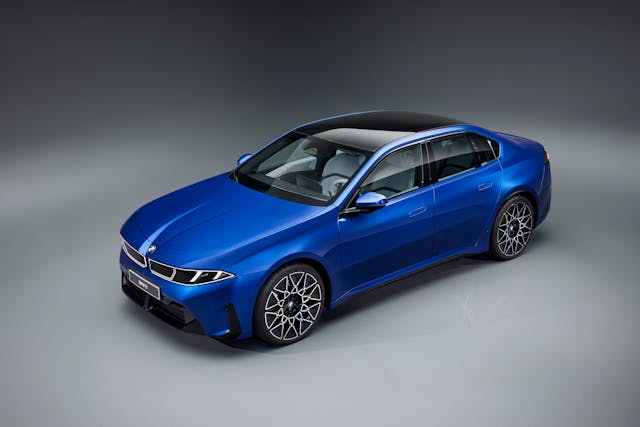
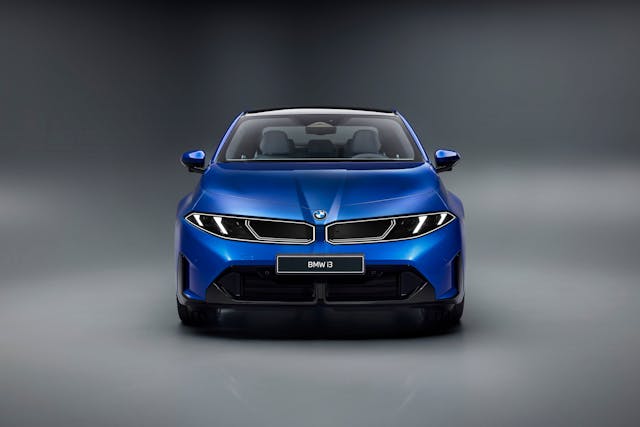
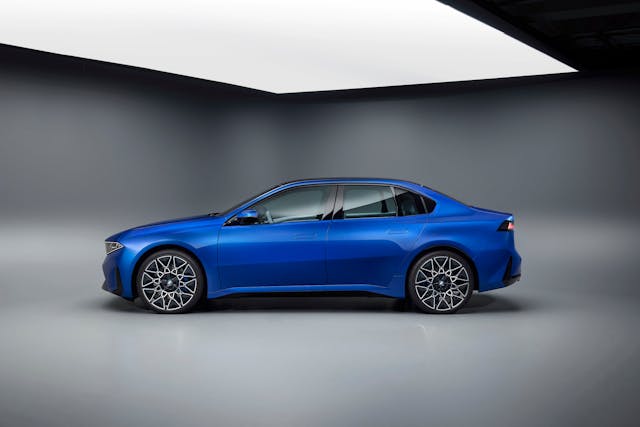
Neue Klasse—a name fished out of BMW’s heritage well—isn’t merely a platform. It’s an entirely new approach to designing a car inside and out. Visually, the i3 falls in line with BMW’s latest design language with a futuristic-looking front end that integrates the headlights into each kidney grille. We’ve been here before: The first two generations of the 3 Series used this basic layout, along with several older models.
 BMW
BMW
 BMW
BMW
 BMW
BMW
 BMW
BMW
 BMW
BMW
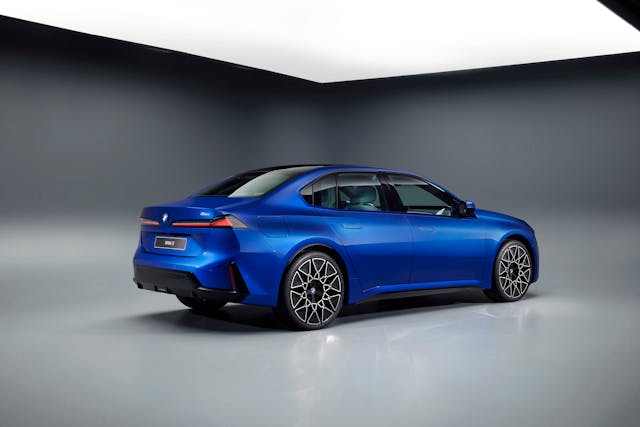
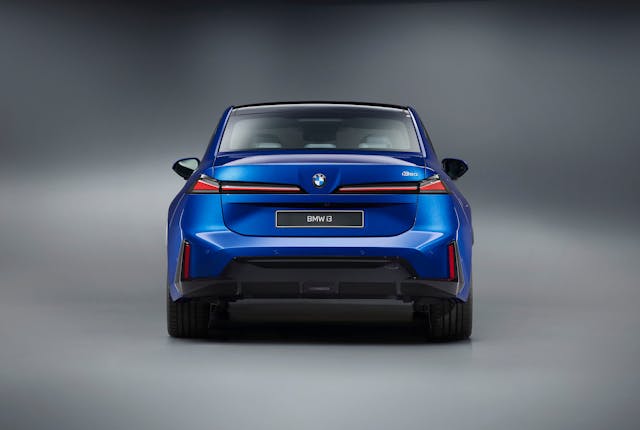
And yet, there’s nothing retro about the styling. The i3 is more closely aligned with the 2023 Neue Klasse concept than with any of its predecessors. Going electric allowed designers to extend the wheelbase while shortening the overhangs and the dash-to-axle ratio, which arguably represents the most significant shift in the 3’s proportions since the nameplate made its debut over 50 years ago. Flat, sharp-looking surfaces characterize the side profile, and the rear end gets a pair of horizontal lights that stretch into the trunk lid.
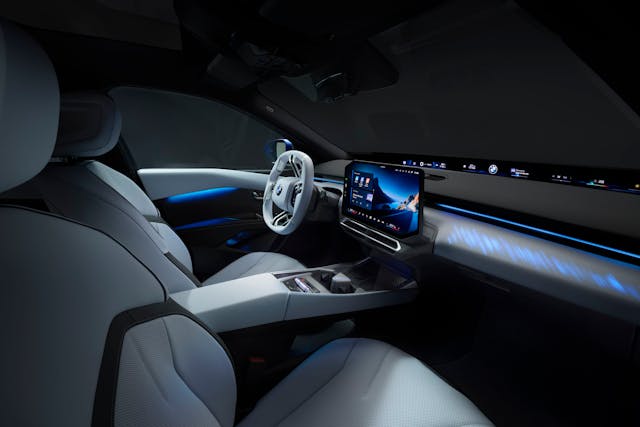
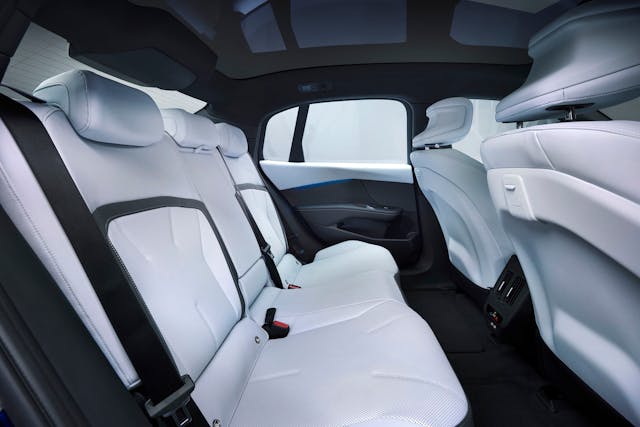
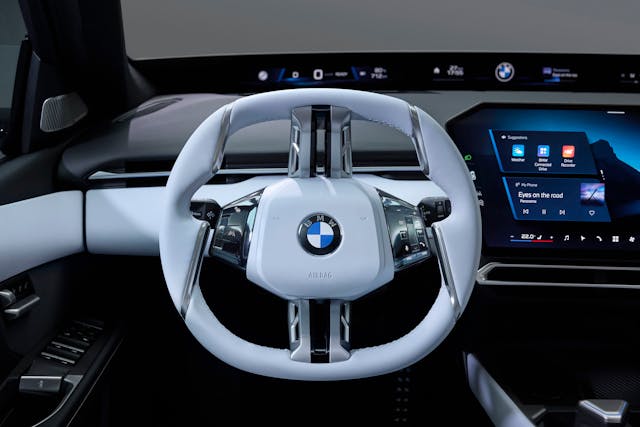
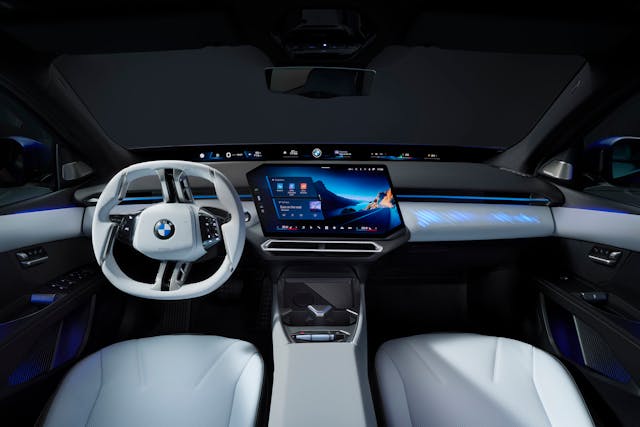
The i3 is more of a revolution than an evolution, then, and this approach to design permeates the interior as well. Most of it is carried over from the iX3, including the steering wheel with two vertical spokes and a 17.9-inch touchscreen for the infotainment system. You won’t find much in the way of buttons on the dashboard, but BMW left stalks for the turn signals and the wipers, a handful of switches on the steering wheel, and a volume knob next to the gear selector on the center console. The steering wheel’s buttons, which are linked to key driving assistance, parking assistance, and infotainment system features, are only illuminated when the function that they correspond to is available, a solution BMW refers to as Shy Tech.
What about the instrument cluster? Good question; It’s not there. Not in the traditional sense of the term, at least. BMW replaced it with a color display called Panoramic Vision that stretches the entire width of the bottom of the windshield. It shows the information you’d expect to find in the instrument cluster, such as speed and range, and passengers can configure the middle and right parts of it by adding up to six widgets from the infotainment system’s screen. These include weather data, navigation directions, and a compass.
 BMW
BMW
 BMW
BMW
 BMW
BMW
 BMW
BMW
The only variant of the 2027 BMW i3 that has been announced so far is the 50 xDrive model. It gets two electric motors (one per axle) for through-the-road all-wheel drive, and its total system output checks in at 463 horsepower and 476 pound-feet of torque. Additional specifications, such as performance figures, weight, and the battery’s size, haven’t been released, but BMW expects the i3 to offer a 440-mile range.
Called Gen6 internally, the new drivetrain relies on 800-volt technology to offer up to 30% faster charging than BMW’s current crop of electric cars. It’s compatible with 400-kilowatt DC fast-charging, too, and the i3 offers bi-directional charging functions like vehicle-to-grid, vehicle-to-home, and vehicle-to-load.
It’s reasonable to assume that additional electric variants will join the range later in the production run, including a rear-wheel-drive model with a single motor. And, while nothing is official yet, credible rumors claim that gasoline-powered and hybrid variants of the i3 will land to keep the 3 Series nameplate alive; The 3 remains one of BMW’s bread-and-butter models, so making it electric-only isn’t a wise move. The next 3 Series is expected to offer a 2.0-liter turbocharged four-cylinder and a 3.0-liter turbo straight-six.
Unsurprisingly, technology also shapes the way the i3 drives. The sedan uses what BMW calls a superbrain named Heart of Joy that controls the driving characteristics, the brakes, the energy recuperation, and some of the steering functions. It’s 10 times faster than the previous system, and we’re told that it makes the i3 more consistent, more predictable, and more agile around a bend. There are three additional superbrains in the i3—we’ve come a long way since the days when an onboard computer was an option on the E30.
BMW can’t rely exclusively on technology to dial in a sport sedan’s handling, however. The 2027 BMW i3 has a new five-link rear axle and roll bars on both ends, and it’s available with an Adaptive M suspension.
The 2027 BMW i3 will be built in the company’s historic Munich, Germany, plant starting in August 2026. Deliveries are scheduled to start in the fall of 2026. Looking ahead, the i3 will spawn the first electric M3, and the model could receive up to four electric motors. If you’re more interested in liters than in kilowatt-hours, BMW confirmed that the next-generation M3 will also be available with a gasoline-burning engine.
(Editor’s Note: BMW shared that some of the images provided contain AI-based content. While we don’t expect the actual car to be different than what you see here, we do look forward to sharing real images when the car is released.)