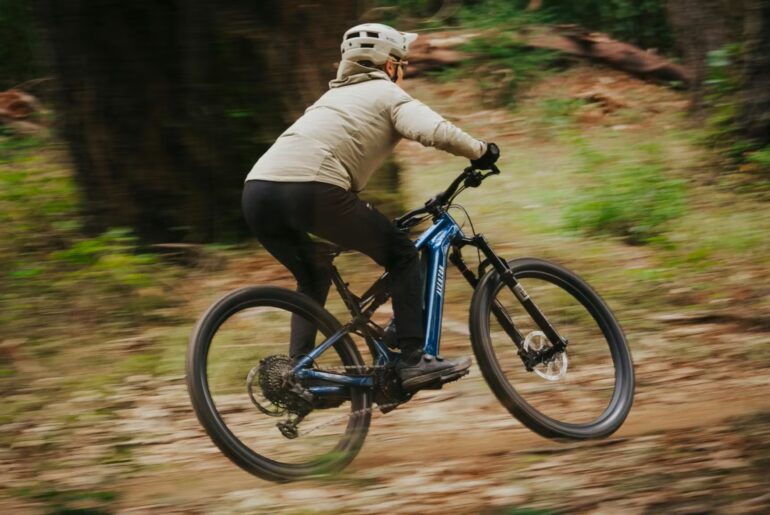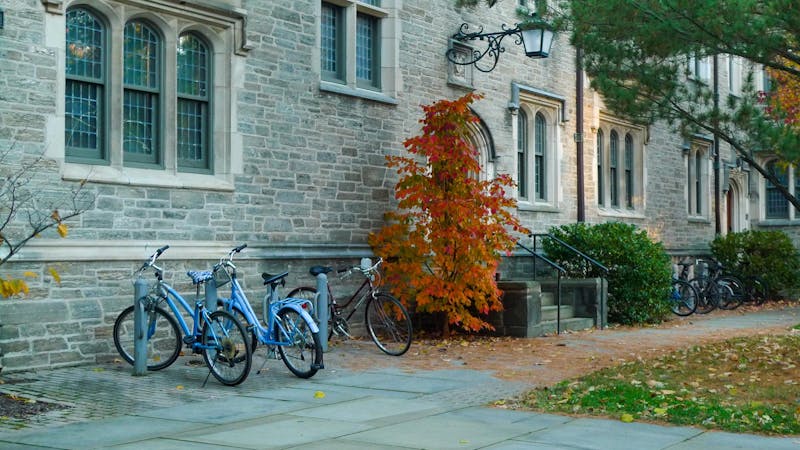
Electric scooters are gone, and e-bikes could be next. In December, the University’s Environmental Safety and Risk Management (ESRM) Committee raised e-bike issues in a presentation to the Council of the Princeton University Community (CPUC). Many concerns, from indoor storage and charging of vehicles to increased presence of mopeds, were mentioned in the ESRM presentation, which reported that students are split on the issue. But the major concern, as my colleague Charlie Yale put it, is: “I don’t want to get run over by an e-bike.”
In other words, what ESRM is primarily concerned about is pedestrian safety. Many characterize this issue as black and white: We keep e-bikes, and pedestrians are run over, or we ban them to ensure pedestrians’ safety. But this view of e-bike policy ignores real concerns about campus mobility, failing to understand e-bikers’ legitimate reasons for using e-bikes. At Princeton, e-bikes and pedestrians can coexist, but they’ll need robust and specific University mechanisms like stipulating specific types of allowable bikes.
Campus discourse on the issue rightfully assigns more importance to pedestrians’ safety than to the other side of the coin: convenient mobility — that is, the ability to move around campus, from class to extracurriculars to practice to dinner, with ease. Those 10–20 minute walks add up to hours across days and weeks. We have to acknowledge that convenient mobility is important on a fast-paced campus. And with all our hills and potentially heavy backpacks, it’s much more convenient to ride an e-bike than a normal bike, let alone walk.
Admittedly, mobility should come second to pedestrian safety. But it still isn’t to be disregarded. The value of mobility should spur us to avoid the extreme of a blanket ban and instead ask a more nuanced question: Can we have e-bikes without pedestrians being endangered, or are these mutually exclusive?
There is a path to keeping e-bikes while still ensuring pedestrian safety. A set of regulatory policies and enforcements can allow students to ride e-bikes while keeping pedestrians safe. But to have both requires strict enforcement for a period of adjustment time to foster a new campus culture of harmony between bikers and non-bikers.
The University has expressed concern about an increase in the size and speed of e-bikes on campus, and the correspondingly growing danger. By enforcing specific rules for which e-bikes are allowable — based on wheel size, frame width, top speed, motor type, and so forth — we can avoid these more dangerous motorbikes without a totalizing ban. These guidelines could be enforced by the Department of Public Safety or Transportation and Parking Services. Registration of bikes could also be made more robust, using more obvious signage for approved vehicles. Using disciplinary action, like fines for using unlicensed e-bikes, could also improve compliance.
The University can explore the most effective ways to actually go about enforcing these regulations. Static enforcement is straightforward, scanning bikes when they are parked inside or outside of buildings to identify offending vehicles. Additionally, they could use golf carts to conduct checks on random days and locations, such as when violators are on the road or stopped at intersections. An effective mechanism for enforcement is crucial, and it’s what was missing from the first PEV policy on scooters.
Peak hours and transition times between classes, when pathways are particularly congested with both riders and pedestrians, deserve special consideration. At those times, the University should require riders to walk their vehicle when inside what the University could designate as “dismount zones,” like the area outside of Frist Campus Center or McCosh Courtyard. Wide peripheral routes like Elm Drive, Chapel Drive, and Washington Road could be designated preferred bike corridors, and riders could be required to dismount on McCosh Walk and Goheen Walk. Traffic laws must also be enforced against e-bike users. Integrating with the existing Campus Map project, along with physical signage, would be a perfect way to put all this together.

Support nonprofit student journalism. Donate to the ‘Prince.’ Donate now »
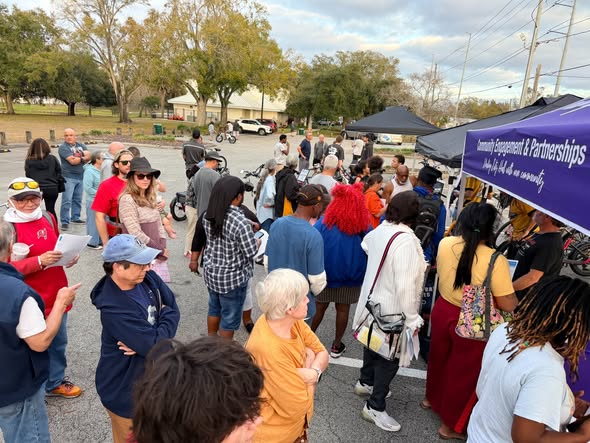
Biking etiquette should change, as well. Princeton should also encourage bikers to follow “keep right, pass left” rules and announce passes audibly or with a bell. As students, we have to demonstrate responsible ridership behavior. ESRM has said that despite its attempt to educate students, there was no compliance. However, the “effort” was simply writing the policy, which brought no engagement. Greater student engagement and coordination with the Undergraduate Student Government can bring fruition to these strategies for safe commuting for all. An educational campaign on social media and embedded and engaged training would be good examples of increasing engagement on these critical issues.
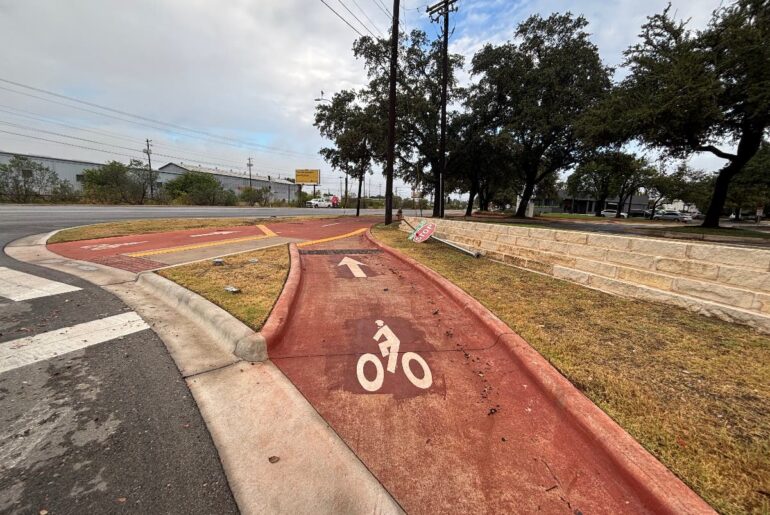
Mobility and safety have long been issues that communities have wrestled with, especially since cars have become ubiquitous. It’s why we have crosswalks and bike lanes on roads. As new modes of transportation have emerged over time, we have not banned them, but rather worked to integrate them, mitigating their worst effects through robust regulations.
It’s possible to keep pedestrians on Princeton’s campus safe without an absolute ban on e-bikes if the University takes the initiative to enforce effective regulation. A more nuanced approach can tread the narrow path and satisfy both e-bikers and pedestrians alike.
Luqmaan Bamba is a staff Opinion writer and an electrical and computer engineering major from New York. The last sentence of the piece was definitely a pun. He can be reached at luqmaanbamba[at]princeton.edu.

Get the best of the ‘Prince’ delivered to your doorstep or inbox. Subscribe now »