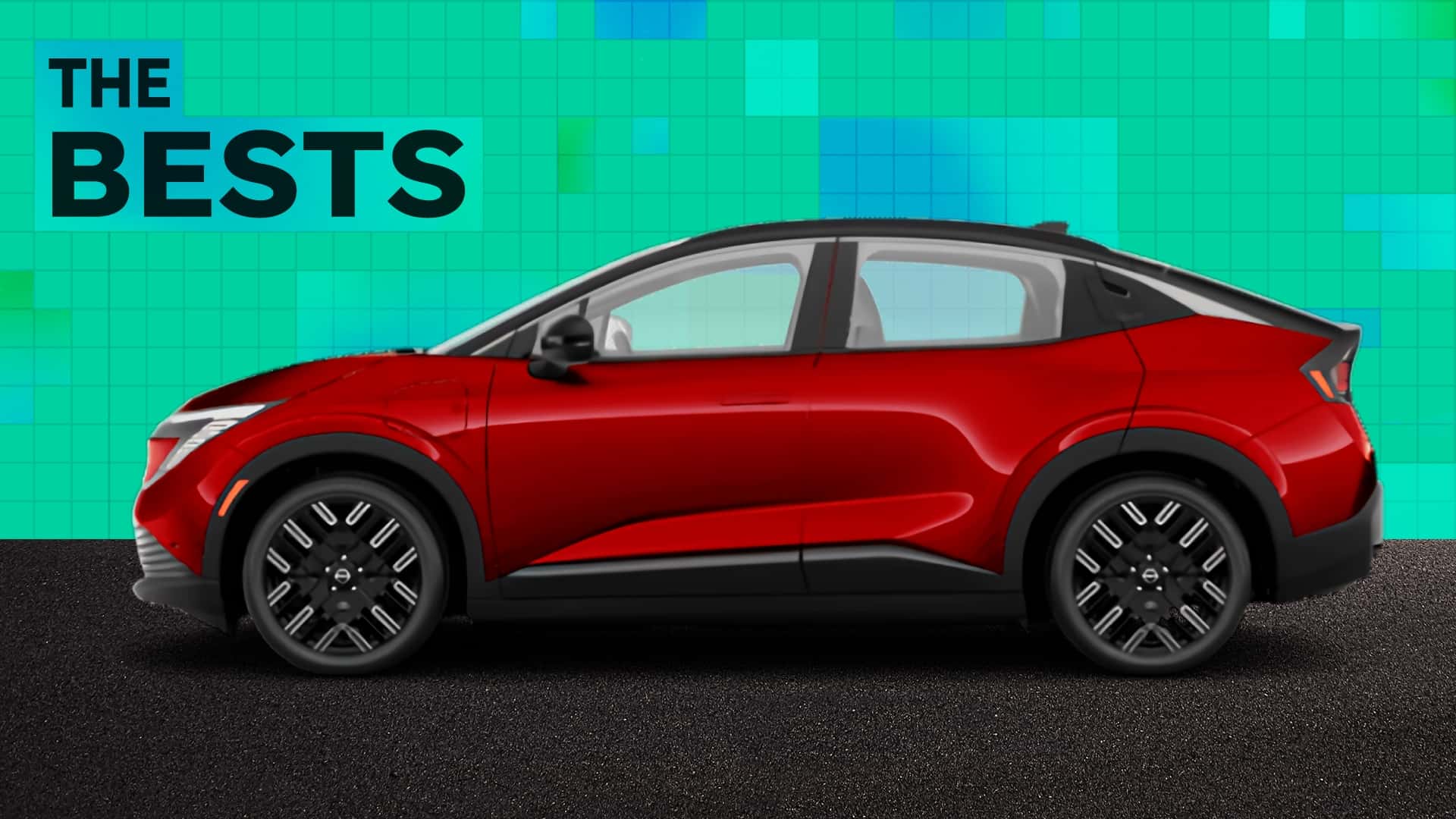
As gas prices close in on $4 a gallon, more Americans are considering breaking up with fossil fuels.
The problem with banking on electrification to lower one’s monthly bills is that new EVs have historically cost more on average than gas cars, and they still do.
Still, the market is growing fast, so there are a handful of cheap electric cars to choose from amid the sea of Audis, Cadillacs, BMWs and the like. The good news is that the list of affordable electric cars is growing quickly, with new additions like the 2027 Chevrolet Bolt and price cuts to existing models. The even better news is that EVs are steadily becoming a better value, with even the lower-cost options offering stronger range and charging figures than ever before.
“Cheap” is a relative term in the EV world. The reality is that there are very few battery-powered models that we can call objectively affordable in the U.S.
But EVs aren’t just for the 1% anymore, either. Below, we’ve compiled a list of the cheapest electric cars you can buy in America. All cost less than the average going price for a new car in the U.S.
How We Test And Rank Cars
InsideEVs editors have dozens of years of combined experience testing cars. We also spend every day reporting on the ever-changing electric car landscape, ensuring you have the latest information to make an informed decision. Throughout the year, we test dozens of EVs, at first-drive events, during week-long reviews and during Breakthrough EV testing. From the streets of Shanghai to our own driveways, we drive everything so we can give you the best possible information.
We’re basing this list on the sticker prices for the latest model year available for each vehicle—that means 2025 and 2026 models, along with some 2027s.
But keep in mind that a bunch of factors can impact the final price you’ll pay for a car.
The $7,500 EV tax credit may be gone, but some states and cities offer policies of their own that can bring down the upfront cost of getting into a plug-in vehicle.
Both dealerships and manufacturers regularly offer great EV lease deals, discounts, preferential loan rates and other incentives to move cars off of their lots. And those deals are sticking around for a while as manufacturers try to make up for the loss of the tax credit.
These are the cheapest electric cars on sale in the U.S., arranged from most to least expensive. All prices include manufacturer destination charges. We’ve included some pros and cons about each vehicle, too, drawn from both real-world testing conducted by the InsideEVs staff and our analysis of the market.
Check out our full reviews of each vehicle get an even richer picture of what these cheap EVs offer.
2026 Tesla Model Y

2026 Tesla Model Y Standard
Photo by: Tesla
Base price: $41,630
Range for base model (RWD): 321 miles
Maximum range: 357 miles
Drive type: RWD or AWD
The Tesla Model Y is America’s most popular EV, and its also one of the very best values on the market.
Tesla dropped the Model Y’s price further last year by introducing a new, stripped-down trim level. The fact that Elon Musk’s long-promised “more affordable models” are just lower-cost versions of existing may be a letdown for Tesla fans. But it’s good news for anybody looking to get into a new Tesla in the cheapest way possible.
The Model Y RWD (formerly called the Standard) loses the front and rear light bars of the Premium model, and has a simpler interior. Inside you get more fabric, less vegan leather and a manually adjustable steering wheel. The frunk is smaller and, let’s be honest, uglier. And Tesla traded the panoramic glass roof for a fabric headliner.
Tesla also cut Autopilot from the cheap model, meaning that if you wanted lane centering you’d need to step up to a Premium version. That made the base Model Y an iffy proposition. Tesla has since cut Autopilot from all its new models, leaving Full Self-Driving as its primary driver-assistance feature. That actually helps the entry Model Y’s case.
All in all, the Model Y Standard may be $5,000 cheaper than its Premium siblings, but that doesn’t make it a great deal.
Check out our review of the cheapest Tesla Model Y here.
2026 Subaru Trailseeker
Photo by: Mack Hogan/InsideEVs
Base price: $41,445
Range for base model: 281 miles
Maximum range: 281 miles
Drive type: AWD
At long last, Subaru fans can buy a battery-powered Outback. Basically. The Trailseeker is a lifted wagon with a spacious cargo area, standard all-wheel drive and a solid 8.5 inches of ground clearance. It also accelerates like no Outback before; the Trailseeker packs 375 horsepower and a brisk 0-60-mph run of 4.4 seconds.
It should help satisfy EV buyers who want something a little bigger and more rugged than the options previously available—but don’t want to spend an arm and a leg on a Rivian or G-Wagen. But Subaru’s in-cabin EV tech is outdated, and there’s no one-pedal-driving feature. Overall, Mack Hogan liked it when he took it on a test drive not too long ago.
Read our review of the 2026 Subaru Trailseeker for more.
2025 Nissan Ariya
Base price: $41,160
Range for base model (Engage): 216 miles
Maximum range: 289 miles
Drive type: FWD or AWD
Nissan was responsible for one of the first mass-market EVs in the U.S.: the Leaf hatchback. The Ariya is its long-awaited second act. Like many of the cars on this list, it’s solid. Not amazing, but not bad either.
It’s a stylish EV inside and out, and I especially liked how some buttons are embedded in the wood-grain trim. In higher trims, you can get serious amounts of range, but the base one is a bit lacking in that respect.
The Ariya has been discontinued for 2026, however. So if you dig the Ariya, get your hands on a new model while you still can. A quick online search shows there are some new examples still for sale—some with hefty discounts.
See our full Nissan Ariya review here.
2026 Kia Niro EV
Base price: $41,195
Range: 253 miles
Drive type: FWD
Kia is a leader when it comes to mass-market EV tech. Models like the EV6 crossover and EV9 three-row serve up extremely quick charging speeds and advanced, 800-volt architectures.
The Niro EV, however, uses an older platform and isn’t a ground-up EV. It offers around 250 miles of range. Kia claims a max charging rate of just 85 kilowatts and a 10%-80% charge time of 43 minutes. Still, if you need an around-town EV and not a road-tripper, the Niro EV may be a good choice.
Read our full Kia Niro EV review here.
2025 Ford Mustang Mach-E
2023 Ford Mustang Mach-E GT.
Photo by: Patrick George
Base price: $39,840
Range for base model (Select): 260 miles
Maximum range: 300 miles
Drive type: FWD or RWD
It can be easy to forget about the Mustang Mach-E, as it’s been on the market since 2020. But this crossover has quietly become one of America’s best-selling non-Tesla EVs—and for good reason. It’s a great-looking EV with competitive specs and a big ol’ screen. And after a price cut, the Select trim can be had for under $40,000 before any incentives.
Read our review of the Ford Mustang Mach-E Rally here.
2026 Subaru Solterra
Photo by: InsideEVs
Base price: $39,945
Range for base model (Premium): 288 miles
Maximum range: 288 miles
Drive type: AWD
I used to put the Solterra in the category of “EVs you should consider if you can get a great deal.” But the Solterra got a major glow up for the 2026 model year, while its price barely budged. Range in the base model has been boosted to 288 miles (up from 227). That makes it much more competitive.
It’s also pleasant to drive, is a nice size and has a charming, funky interior. I was a big fan of the Solterra’s digital gauge cluster, which is pushed back to the windshield and sits nicely near the bottom of the windshield.
The refreshed Solterra gets about 25% more range than before, extra horsepower and a peak charging rate of 150 kW, up from 100 kW. The 2026 Solterra arrives at dealerships this fall.
Read our full 2026 Subaru Solterra review here.
2025 Hyundai Ioniq 6
Photo by: Hyundai
Base price: $39,095
Range for base model (SE Standard Range RWD): 240 miles
Maximum range: 342 miles
Drive type: RWD or AWD
The Hyundai Ioniq 6 may be America’s most underrated EV. This sleek sedan offers exceptional range of over 340 miles, great driving dynamics and the excellent charging performance that Hyundai’s latest EVs have become known for. Mack, our Deputy Editor, called the Ioniq 6 his “favorite EV” when he reviewed one last year.
Despite all that, Hyundai decided to kill the non-N Ioniq 6 after the 2025 model year. Get one while you can. Just remember: Like the Ioniq 5 above, the base model comes with a smaller battery and less driving range than other trims.
Read our full Hyundai Ioniq 6 review here.
2026 Tesla Model 3
2026 Tesla Model 3 Standard
Photo by: Tesla
Base price: $38,630
Range for base model (RWD): 321 miles
Maximum range: 363 miles
Drive type: RWD or AWD
There’s a new cheapest Tesla on the block: the Model 3 RWD. It loses swankier features like ambient lighting, a touchscreen for rear passengers and full vegan-leather seats, but also cuts the Model 3’s entry price by $5,500.
The sedan has long been one of the best values on the EV market. A much-needed facelift for the 2024 model year—plus a new cheaper variant—only make that value proposition stronger. The update brought fresh styling in front and rear, multicolor ambient lighting and more range.
Those are some of the reasons why the Model 3 is our pick for the best electric sedan on sale in America. In our testing, we’ve found the Model 3 to be quick and agile. And in any Tesla you can expect a smooth and feature packed infotainment system and seamless charging at thousands of the company’s Superchargers.
Some cons: The Model 3 foregoes conventional turn signal controls and instead has steering wheel-mounted buttons. (Though you can buy a factory stalk retrofit for $595.) Some may find the interior too spartan and the controls too concentrated in the touchscreen.
Read our full Tesla Model 3 review here.
2026 Hyundai Ioniq 5
Photo by: Patrick George
Base price: $36,600
Range for base model (SE Standard Range RWD): 245 miles
Maximum range: 318 miles
Drive type: RWD or AWD
The Ioniq 5 is what we’d consider the best overall EV in America that isn’t a Tesla. Thanks to a recent refresh, it’s better than ever before with an updated interior, improved tech, more range and a Tesla-style North American Charging Standard (NACS) plug. It can natively use Tesla’s Supercharger network or achieve the fast-charging times it’s famous for on a CCS plug using an adapter.
And just after the EV tax credit went away last year, Hyundai slashed pricing across the board for the 2026 model year, making an Ioniq 5 up to $9,800 cheaper.
It’s worth noting, however, that the cheapest price is for the basic SE Standard Range version, which offers a mere 245 miles of range. You may need to upgrade if you need more than that.
Read our first drive review here.
2026 Toyota bZ
Photo by: Patrick George
Base price: $36,350
Range for base model: 236 miles
Maximum range: 314 miles
Drive type: FWD or AWD
The Toyota bZ4X was always an also-ran, dogged by low range and sluggish charging speeds. But that’s set to change with the introduction of the redesigned 2026 bZ, which will deliver more than 300 miles in some trims—all while costing about the same price as the outgoing model.
Read our full Toyota bZ review here.
2026 Chevrolet Equinox EV
Photo by: Motor1.com
Base price: $36,495
Range for base model (LT): 319 miles
Maximum range: 319 miles
Drive type: FWD or AWD
This compact crossover is the one of the easiest vehicles to recommend on this entire list. It was our Breakthrough EV of the Year in 2024, after all. Until the revamped Nissan Leaf came around, it was the cheapest electric car with a 300-mile range. And it still beats that crossover by a few miles.
Our testing found that the Equinox EV delivers something that’s been missing from the electric market for years: an affordable, appealing car with legitimate amounts of range. Even in its cheapest trim, the Equinox EV returns an EPA estimate of 319 miles, which is great. It also comes with a large touchscreen display and modern looks.
Overall, the Equinox EV is a very compelling package. We have noticed, however, that the FWD model is a bit sluggish. Another con for some: no Apple CarPlay or Android Auto. General Motors has decided to eliminate those features from all its EVs.
Read our full Chevy Equinox EV review here.
2026 Subaru Uncharted
Photo by: Mack Hogan/InsideEVs
Base price: $36,445
Range for base model: 308 miles
Maximum range: 308 miles
Drive type: FWD or AWD
An electric take on the Subaru Crosstrek has arrived. The Uncharted is a new compact crossover with a. solid 308 miles of range in the mid-$30,000s. In his recent first-drive review, Mack Hogan said it’s “charming and precise on the road” and talked up its ground clearance and all-wheel-drive system. In short, this little EV can do Subaru stuff like hit gravel roads and maybe even a bit more.
For more on the pros and cons of the Uncharted, check out Mack’s review.
2025 Hyundai Kona Electric
Photo by: InsideEVs
Base price: $34,470
Range for base model: 200 miles
Maximum range: 261 miles
Drive type: FWD
The Kona Electric proves that EVs “don’t need to be complicated,” staff writer Kevin Williams writes in his review. It’s just a straightforward, no-nonsense EV, with swift acceleration, a comfy ride and futuristic looks.
But the Kona does have its caveats, like most of America’s cheapest electric cars. The base model only provides 200 miles of range, which is not competitive in the least. (Especially when you take a look at the even more affordable Equinox EV.) And, like its Kia Niro EV cousin, charging is nothing to write home about. It took Kevin around 41 minutes to recharge his tester from 10% to 80%.
Read our full Hyundai Kona Electric review here.
2026 Fiat 500e
Base price: $37,695
Range: 149 miles
Drive type: FWD
The 500e is, on paper, one of the very cheapest EVs you can buy new. But that doesn’t necessarily make it a great value. In his review of the 500e, small-car aficionado and InsideEVs staff writer Kevin Williams said he doesn’t know who it’s for.
According to Kevin, well over 30 grand is a lot to ask for a car that only goes 149 miles on a charge. Some pros, per his review: The 500e is cute and drives well. Cons: It’s too basic inside, lacks a heat pump and can’t go as far as similarly priced rivals.
But then again, if you’re in the market for a tiny city car that’s also electric, this is the only one you can buy new right now. The more premium Mini Cooper SE is on a hiatus in the U.S.
Read our full Fiat 500e review here.
2026 Toyota C-HR
Photo by: Suvrat Kothari
Base price: $38,450
Range for base model: 287 miles
Maximum range: 287 miles
Drive type: FWD
Toyota is adding to its skimpy EV lineup this year with a few models, including the C-HR, which hits dealerships in March. After driving it earlier this year, I can say it’s a solid addition to the sub-$40,000 space. With a few caveats.
With 338 horsepower and all-wheel drive, it’s quick and fun to drive. It’s comfortable on the road too. And I really dug the C-HR’s sharp styling. But it’s small, more expensive than the bigger bZ, and lacks EV features like route planning. (That’s a wider Toyota issue.)
Still, the C-HR has a place in the market. Better yet, the automaker is already offering big discounts.
Read my review of the Toyota C-HR here.
2026 Nissan Leaf
Photo by: Suvrat Kothari
Base price: $31,485
Range for base model (S+): 303 miles
Maximum range: 303 miles
Drive type: FWD
This model has been kicking around since 2010, when it launched as America’s first mass-produced electric car. Up until recently, it was far behind the times. Through the 2025 model year, it was still a hatchback that used an outdated CHAdeMO port, which no other EV in America has. Its base model had an uninspiring 149 miles of range.
For 2026, everything’s changed. The new Leaf is a charming little crossover with over 300 miles of range in base guise and a similarly low price. That’s for the S+ model. An even cheaper S version is coming soon, with an even lower price tag.
Read our full Nissan Leaf review here.
2027 Chevrolet Bolt EV
Photo by: Chevrolet
Base price: $28,995
Range for base model: 262 miles
Maximum range: 262 miles
Drive type: FWD
And, finally, the absolute cheapest electric car you can buy new in America today: the reborn Chevrolet Bolt. With a starting price of $28,995 for the LT model, the Bolt is currently America’s cheapest new EV.
For that, you get a Bolt that’s vastly improved over its previous generations. The little crossover gets 150 kW charging, about triple its peak rate before. Chevy says 10-80% happens in just 26 minutes, which is actually quicker than the Blazer EV or Equinox EV.
It gets slightly more range and a NACS port from the factory. EPA range is not bad, especially for the price: 262 miles. It’s one of the biggest signs yet that EV affordability is moving in the right direction in America. The only problem: It’s going away after just a short time on the market.
Read our full first-drive review here.
Our Takeaway: The Best Cheap EV Is Probably Be A Used One
Fending off high gas prices by going electric is a sound idea. Filling up an EV at home is cheaper on a per-mile basis than driving the average 25-mpg gas car in every state, according to a New York Times analysis. But the overall math only works if you can get into an EV at the right price.
The absolute best way to find an affordable electric car is to buy a used EV. The abundance of off-lease EVs and aggressive depreciation on plug-in cars means that if you’re willing to drive a car that’s a couple years old, you can save thousands of dollars on up-front cost.
That will change as the market grows and matures. In the next few years, we expect several cheap EVs to hit the market, expanding options for budget-conscious buyers. Those include the Slate truck, the Kia EV3 and EV4, and Ford’s next-generation $30,000 truck. We’ll be sure to keep this list updated as those cars hit the road.
Contact the author: Tim.Levin@InsideEVs.com
We want your opinion!
What would you like to see on Insideevs.com?
– The InsideEVs team