Audi has said that the new car will be focused on people who value ‘everyday usability in the city’ (REUTERS/Annegret Hilse)
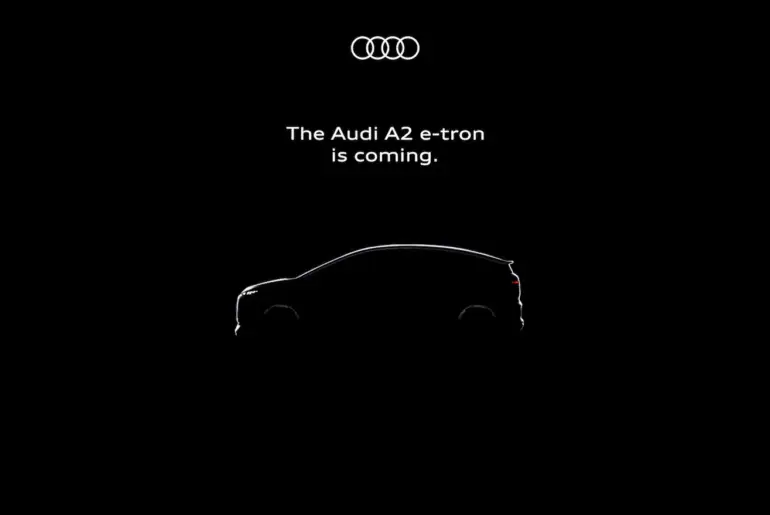
Audi has confirmed the revival of its A2 nameplate, set to return as an all-electric model dubbed the A2 e-tron.
The original A2, first introduced in 2000, was a pioneering city car lauded for its futuristic design, exceptional interior space, and impressive efficiency.
Its innovative construction featured an almost entirely aluminium bodyshell and key panels, which significantly reduced weight and contributed to a remarkably low drag coefficient, optimising fuel consumption.
The forthcoming A2 e-tron is expected to emulate these “groundbreaking methods,” promising a modern interpretation of its predecessor’s core values. Audi has confirmed the new electric vehicle will be fully unveiled later this year.
Though details on the new model are scarce, Audi has said that the new car will be focused on people who value ‘everyday usability in the city’, suggesting that the upcoming model will be focused on urban environments.
The brand has also said that the A2 e-tron will be built at the company’s home in Ingolstadt.
Gernot Döllner, Audi CEO, said: “We’ve listened. Our customers want electric mobility that impresses in everyday life. The A2 e-tron is our promise to deliver exactly that – efficient, compact, and confident. We’re making entry into the electric Audi world easier and more relevant than ever.”
Set for its premiere this autumn, the Audi A2 e-tron has only been previewed by a silhouette image. It shows a profile similar to the original A2, with a curved roofline, short overhangs, and a compact rear spoiler.
The brand has also said that the A2 e-tron will be built at the company’s home in Ingolstadt (REUTERS/Piroschka van de Wouw)
Electric vehicle adoption is accelerating across the UK, with sales surging by 23.9 per cent last year as consumers increasingly recognise the financial, environmental, and practical advantages of switching to an EV.
A significant draw for many buyers lies in the reduced running costs, particularly for those able to utilise specialist low-rate tariffs designed for electric vehicles. The upfront price of EVs is also rapidly decreasing, driven by the introduction of more affordable models and advancements in technology, while ongoing maintenance expenses are notably lower than traditional petrol or diesel cars.
Further bolstering this trend, the UK government’s Electric Car Grant (ECG) has played a crucial role in making these vehicles more accessible. This established scheme continues to deliver substantial savings for electric car purchasers nationwide, as government officials, car manufacturers, and dealerships collaborate to enhance EV affordability.
EVs that get the £3,750 Electric Car Grant discount
• Citroën ë-C5 Aircross Long Range
• Ford E-Tourneo Courier
EVs that get the £1,500 Electric Car Grant discount
• Citroen e-C3, e-C3 Aircross and e-C3 Urban Range
• Citroen e-Berlingo
• Citroen e-SpaceTourer
• DS DS3
• DS No4
• Kia EV4
• Peugeot E-Rifter
• Peugeot E-Traveller
• Renault Megane
• Toyota Proace City Verso
• Vauxhall Combo Life Electric
• Vauxhall Grandland Electric
• Vauxhall Vivaro Life Electric