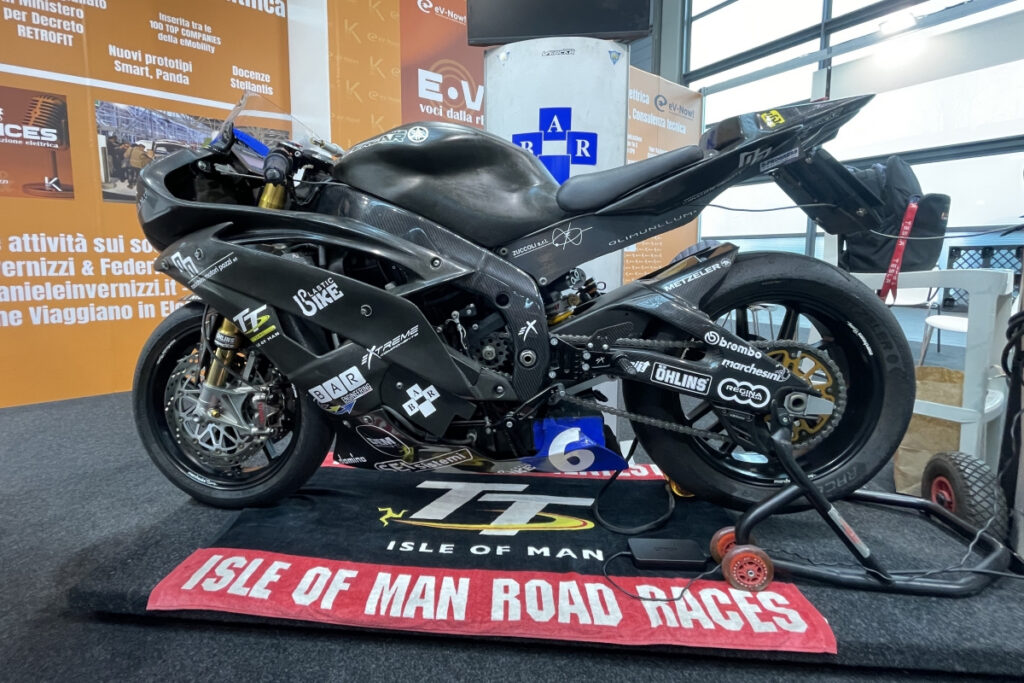
Source: THE PACK Italia – Author Marco Ghezzi | Sometimes, all it takes is an explosive mix of passion, pioneering spirit, and hard-earned experience – gained on the road, on the track, and in paddocks around the world – to create something truly exceptional. In this case, it meant transforming a race-bred Yamaha R6E, a machine designed to scream at 15,000 rpm, into an electric motorcycle.
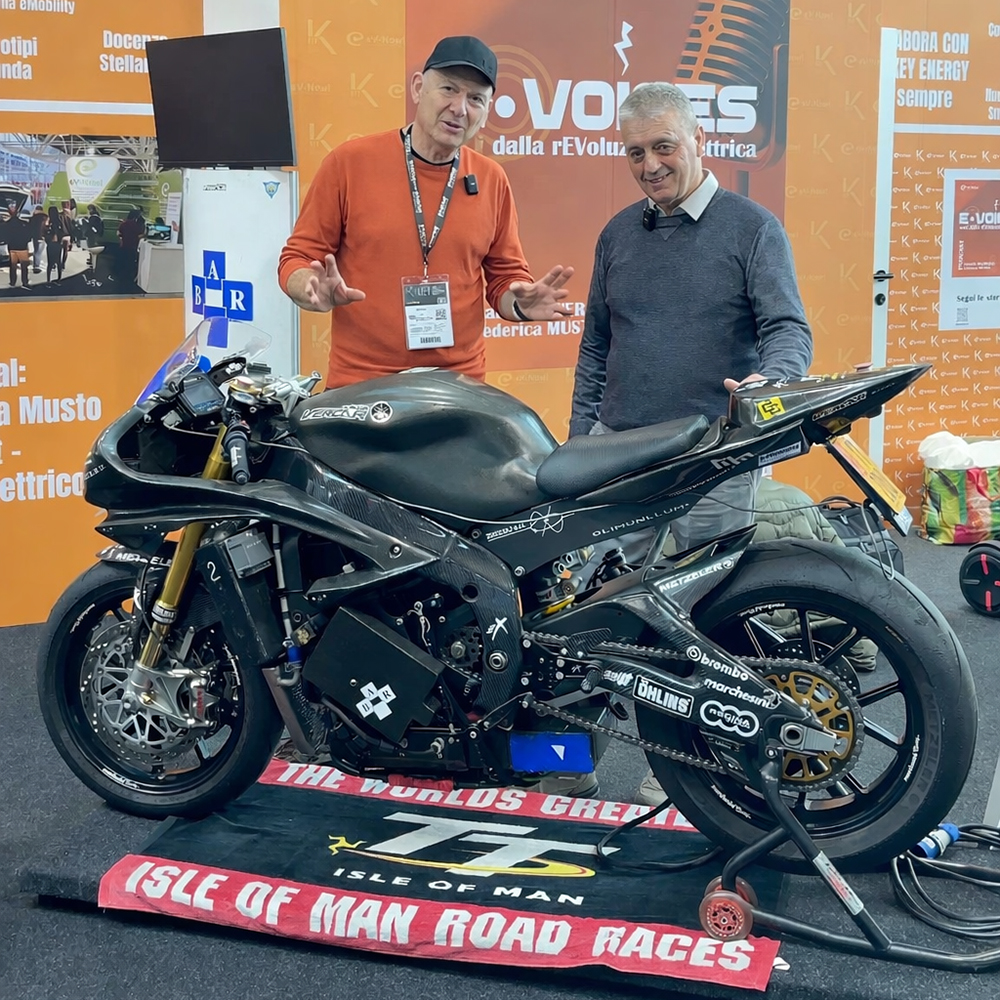
The man behind this ambitious project is Carlo Gelmi, a road and enduro rider with a strong hands-on technical background. His life has been split between racetracks and his workshop in Bellano, until, in 2007, he was struck by a bold idea: take an R6E, convert it to electric, and race it.
At the time, electric motorcycle racing was barely a concept. Everything had yet to be invented, and the challenge was irresistible. Despite widespread skepticism, Carlo pushed forward, driven by enthusiasm and the determination to prove it could be done. In truth, it was more a personal challenge than a business venture.
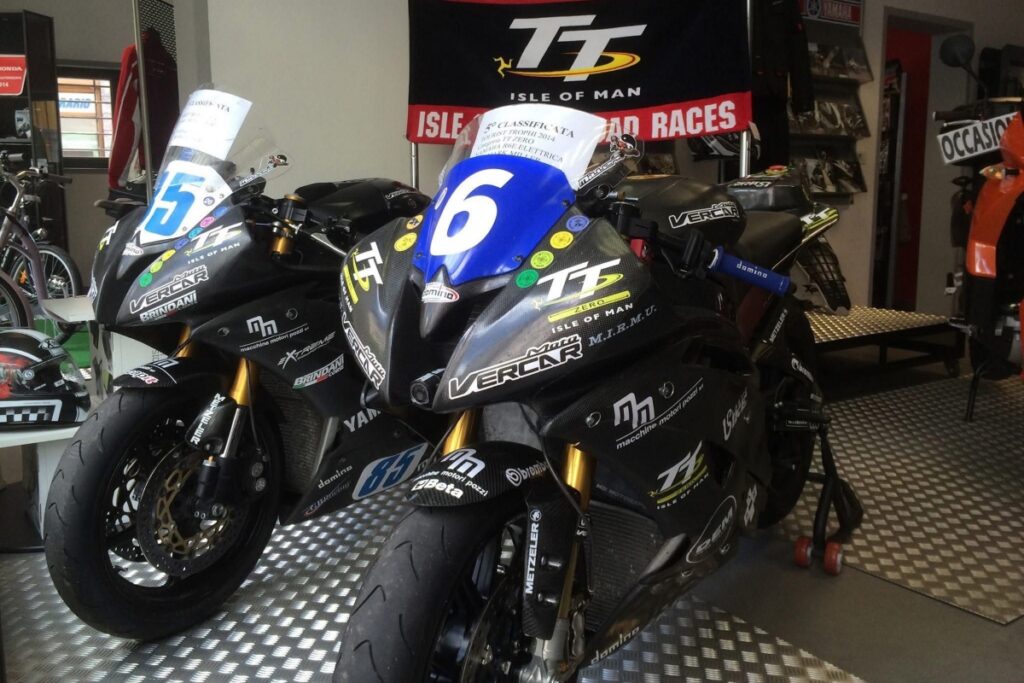
In 2009, in what could only be described as a near-sacrilegious act, Carlo put the bike under the milling machine, without CAD drawings, without computer simulations. Just experience, determination, and an intimate knowledge of every bolt on that motorcycle. He literally cut away the combustion engine, symbolically breaking with a century of racing tradition to give birth to something entirely new. What seemed like heresy became a revolution.
THE PACK Italia met Carlo at Key Energy in Rimini, where he and his R6E were guests at the stand of eV-Now!, a foundation promoting electric mobility. The bike drew significant attention, and that’s where he shared his story with us.
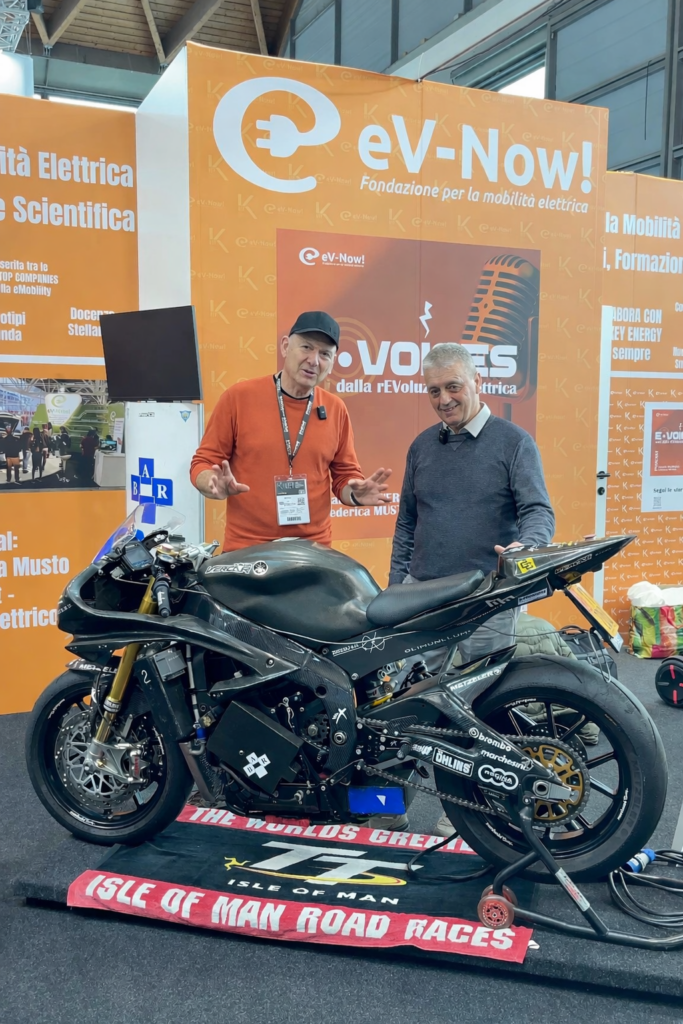
“They told me it couldn’t be done”
“Transforming a race bike into an electric one… everyone told me it was impossible! But I believed in it. It was a step-by-step process.”
The first step was removing the combustion engine, while retaining the gearbox. Then came the integration of the electric motor, followed by the inverter, the BMS, and the battery system.
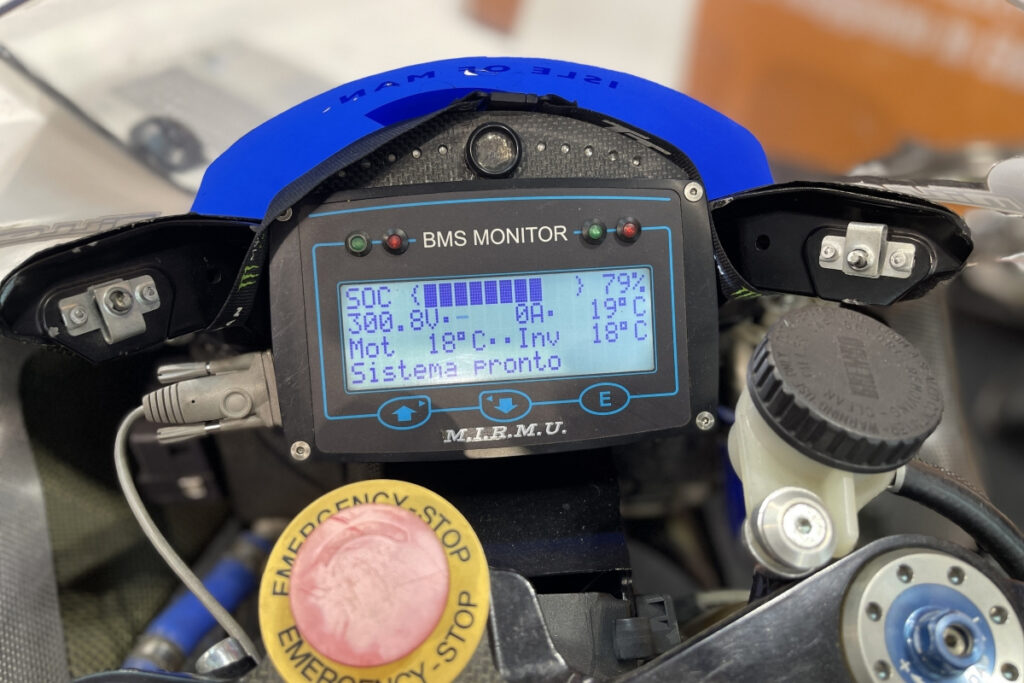
Every component was a challenge. Everything had to be built from scratch, using custom-made solutions. The electric motor, for instance, had to be specially designed, at the time, nothing existed with the right size and power characteristics.
The batteries were also handcrafted, starting from the selection and arrangement of individual cells, with complex yet reliable wiring built manually. Remarkably, they have never caused issues and are still functioning perfectly today.
As for the inverter, Carlo adapted an industrial unit with characteristics suitable for automotive use.
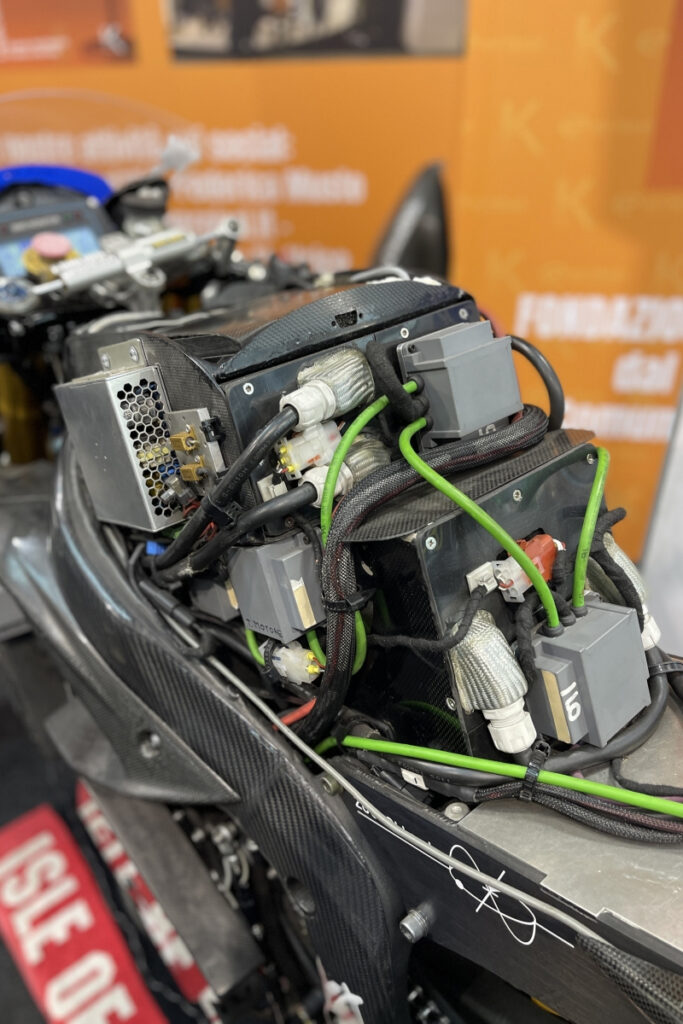
Challenges & battery design
“The biggest challenge wasn’t the build itself, but tuning the entire system.”
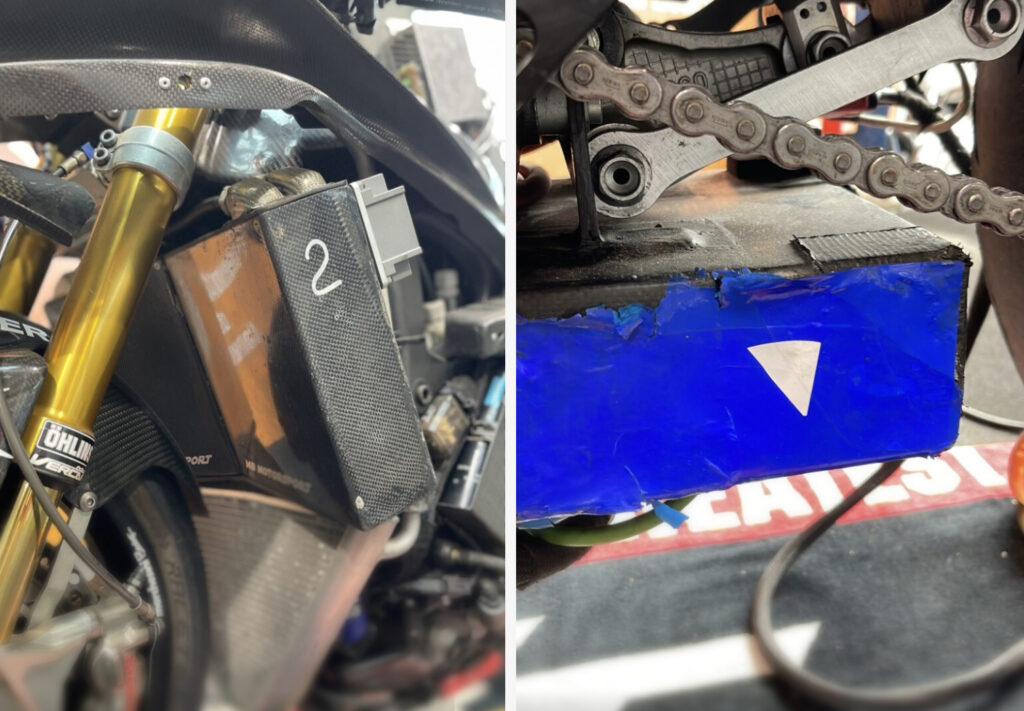
Everything had to be invented, and suppliers often came with long lead times. One of the most critical aspects was battery placement. Instead of a single pack, the batteries were distributed across different parts of the R6E frame, connected between the front end, under the seat, and beneath the swingarm, to optimize weight distribution. This solution improved handling but made maintenance, such as replacing individual cells, significantly more complex.
Performance
The bike delivers 72 real horsepower at the wheel, less than a combustion-powered R6E. However, on the Modena circuit, it proved capable of lapping just 1.5 seconds slower than a 210-horsepower R1.
Experienced riders like Marco Borciani found it surprisingly effective and intuitive.
“It’s exceptional—it does exactly what you want,” he said after riding it.
Technical advantages include retaining the gearbox, which helps optimize energy use, and a customizable regeneration system adjustable for each gear. The battery capacity stands at 10.5 kWh.
 © Image: Steve Babb
Built for the Isle of Man TT
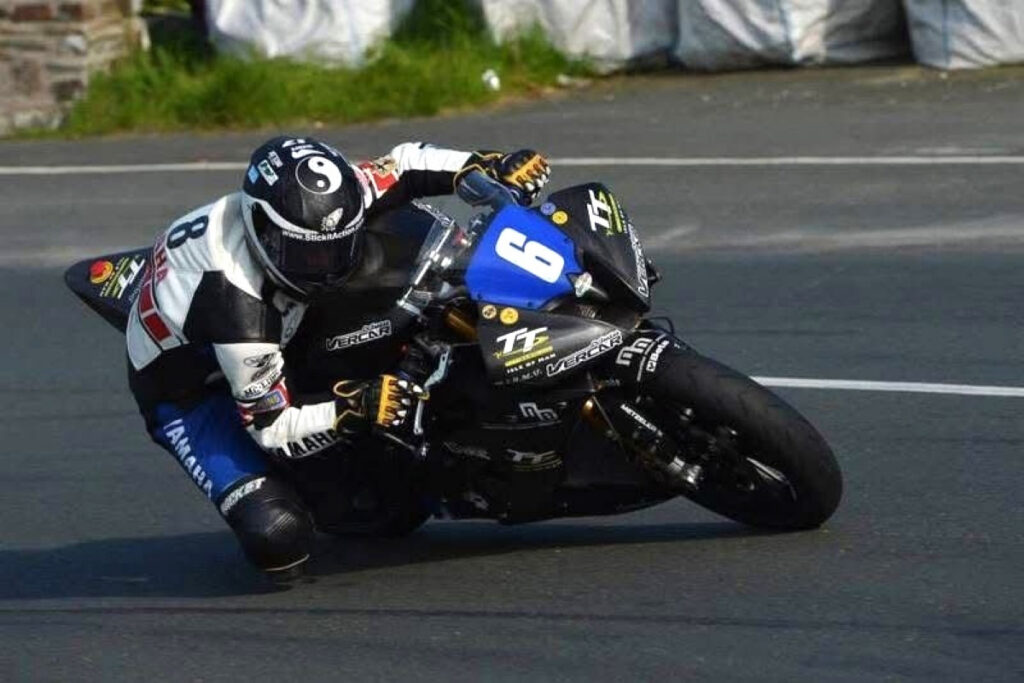
The project began in 2009, and after three years of development, the bike was ready for competition, at none other than the legendary Isle of Man Tourist Trophy (TT).
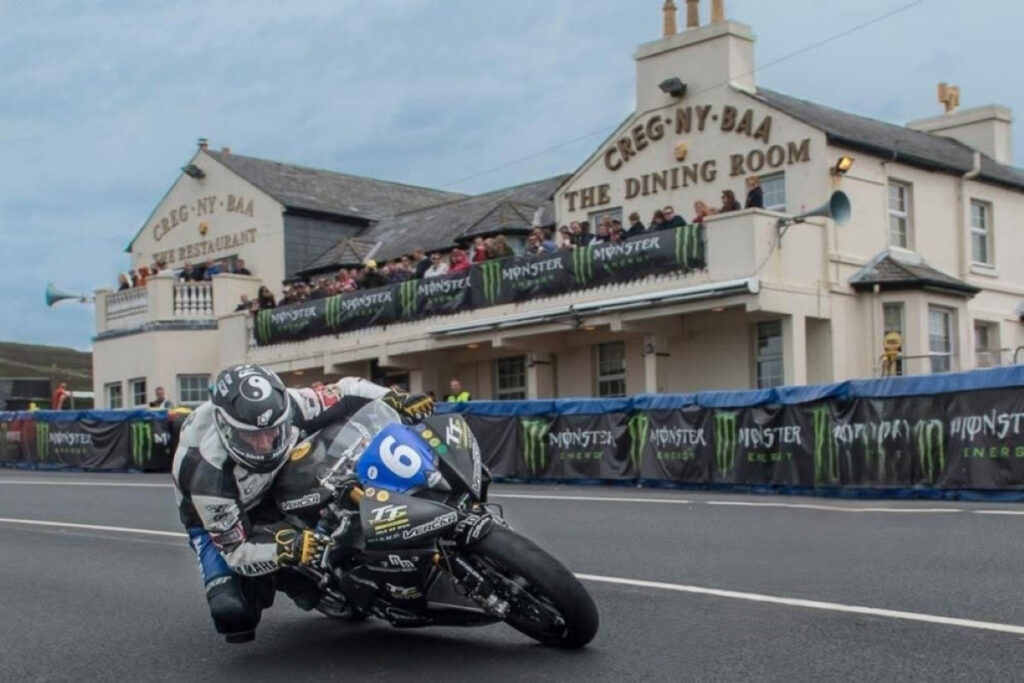
The R6E was specifically designed for the TT and made its debut in 2012. At the time, there were virtually no other racing opportunities for electric motorcycles. In fact, Carlo recalls being denied track access at Mugello because the bike was “too quiet.”
 © Image: Steve Babb
In its first TT outing, the bike was ridden by Gary Johnson. Unfortunately, at the Union Mile jump, the bike bottomed out, damaging the heat exchanger, which led to the inverter failing.
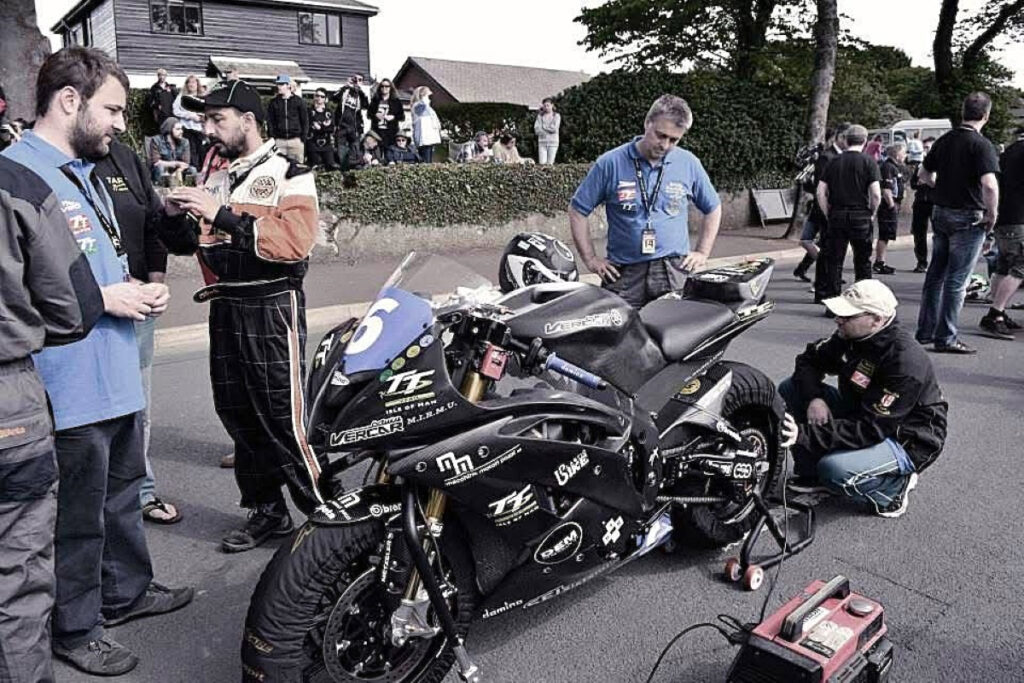
In the following years (2013–2014), the bike was improved and successfully completed the race with experienced TT riders such as Chris McGahan (Isle of Man) and Californian Mark Miller.
What’s Next?
Today, the electric R6E stands as a “rolling laboratory” that has completed its development cycle. The knowledge gained is now ready to be transferred into a new project, potentially a Moto2E.
Such a category would allow direct comparison with combustion-powered Moto2 bikes, using the same chassis, track, and rider, but with an electric power unit. This could finally create a truly competitive and credible championship for electric motorcycles.
As for the future, Carlo still has another dream in mind, once again on two wheels, and of course, electric. For now, it exists only as an image on a computer… but perhaps not for long.
If you prefer the Italian language, please visit our THE PACK Italia division: