Uber’s former CEO says there’s a clear leader in the robotaxi race.
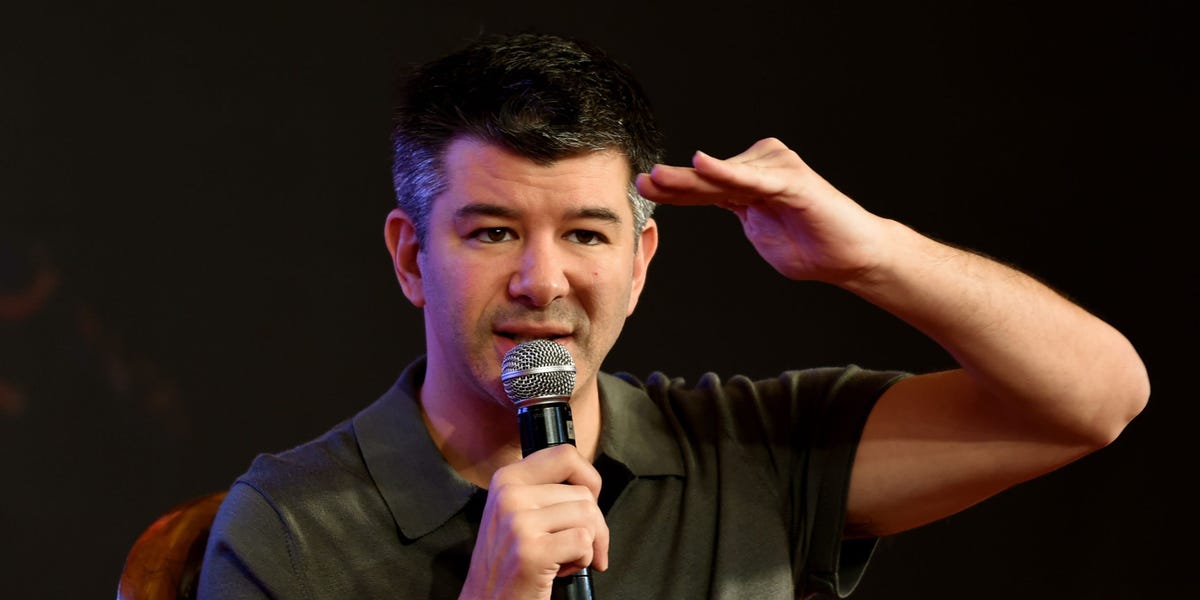
Speaking on an episode of the “All-In” podcast published on Monday, Travis Kalanick said Waymo had pulled ahead of Tesla as the two companies roll out autonomous vehicles across the US.
“Waymo obviously is ahead; the existence proof is there. Their issue is manufacturing and scale and urgency and fierceness,” said Kalanick, adding that the Google-backed startup’s desire to win and ability to expand its service quickly would be key to its success.
The former Uber boss said Tesla had the technical “fundamentals” needed to execute its own vision for a nationwide robotaxi service — but said that the company’s ambitious goals meant it faced a more uncertain timeline.
“The question is, do they get there in what time scale?” said Kalanick, who added that Tesla was chasing a “ChatGPT moment” for vision-based autonomous driving.
While Waymo’s vehicles use an expensive suite of sensors, including cameras and lidar, Elon Musk’s automaker is attempting to build a vision-only autonomous driving system that relies on the cameras included in its EVs — an approach that is cheaper to scale but more technically challenging.
“Let’s call it vision without other sensors. So super inspiring, but like what’s the timeline on it?” he said.
Tesla is the ‘Google of this era’ in physical AI
Waymo announced it had launched driverless ride-hailing in four new cities last month, taking the total number of US cities it operates robotaxis in to 10.
Tesla, by contrast, operates robotaxis with safety monitors in Austin and a non-autonomous ride-hailing service in San Francisco. The company began offering “unsupervised” robotaxi rides to the public in Austin in January, but this service appears to be limited to a small area of the city and includes only a handful of vehicles.
Kalanick’s comments come after the Uber cofounder publicly unveiled Atoms, a robotics and manufacturing company that he said would seek to automate everything from food delivery to mining.
Speaking on “All-In,” Kalanick said that Tesla was the dominant player in “physical AI,” adding that the Austin-based automaker had the same gravity-warping impact on its industry that Google and Microsoft had in the 2000s and 1990s.
“They are the Google of this era. What I mean by that is if you were doing a startup in the 2000s, the first question you would get is ‘Why isn’t Google going to kill you?’” he said.