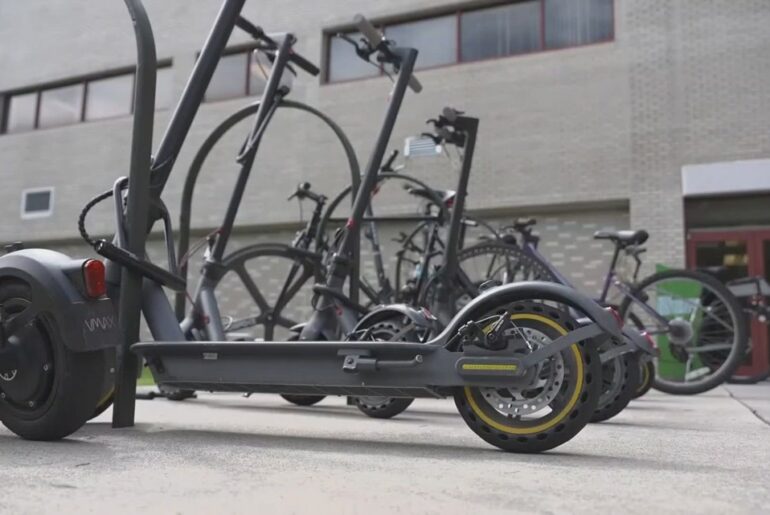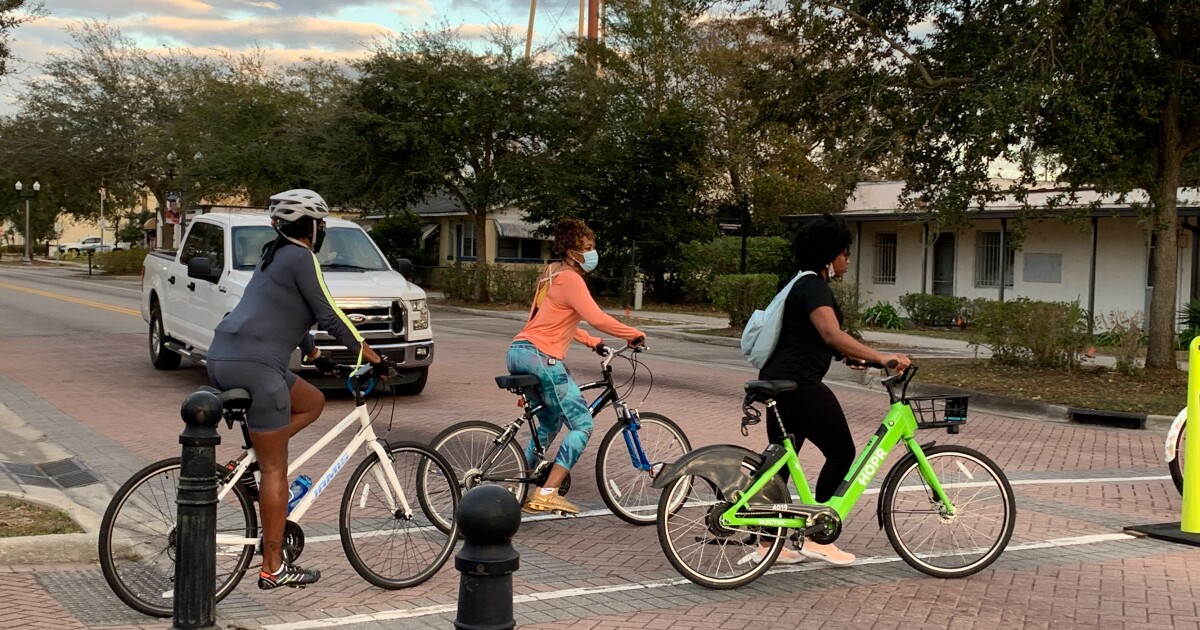
DeLand city commissioners advanced an ordinance Monday to ban electric bikes and scooters from downtown sidewalks. The ordinance, which must still be heard a second time before being adopted, would also require helmets for e-bike users under the age of 18.
The discussion comes as local and state regulations for micromobility devices are still in flux. Some local governments in Central Florida have e-bike rules in place, like Orange and Osceola counties; others are working to enact their own. In Brevard County on Wednesday, Satellite Beach council members will consider an ordinance to define and regulate “micromobility and related devices.”
Meanwhile, state lawmakers have approved legislation seeking to further standardize regulations. The bill currently awaiting Gov. Ron DeSantis’ signature would create a new Micromobility Device Safety Task Force, whose members would study and recommend improvements to the state’s regulatory framework.
Lay of the land
Electric micromobility devices like e-bikes and e-scooters are small, low-speed transportation devices powered by electricity, according to the U.S. Department of Transportation.
But that simple definition doesn’t capture all the layers of nuance involved with defining different types of micromobility devices, said Bike/Walk Central Florida Executive Director Emily Bush.
“It’s an interesting space we’re in right now, because there is no legal definition for some of these vehicles,” Bush said.
Under Florida statute, e-bikes have two or three wheels, fully operable pedals and a seat or saddle, along with an electric motor of less than 750 watts.
“Anything that’s 750 watts or greater is no longer in that e-bike category,” Bush said.
Florida law currently divides e-bikes into three separate classes:
Class I: Pedal assist only; maximum speed of 20 miles per hourClass II: Pedal assist or throttle (can run on the motor alone/without pedaling); maximum speed of 20 miles per hourClass III: Pedal assist only; maximum speed of 28 miles per hour
“Once you modify an e-bike, and it can go faster and it has more watts, it is no longer considered in one of those classes,” Bush said.
Florida Department of Transportation
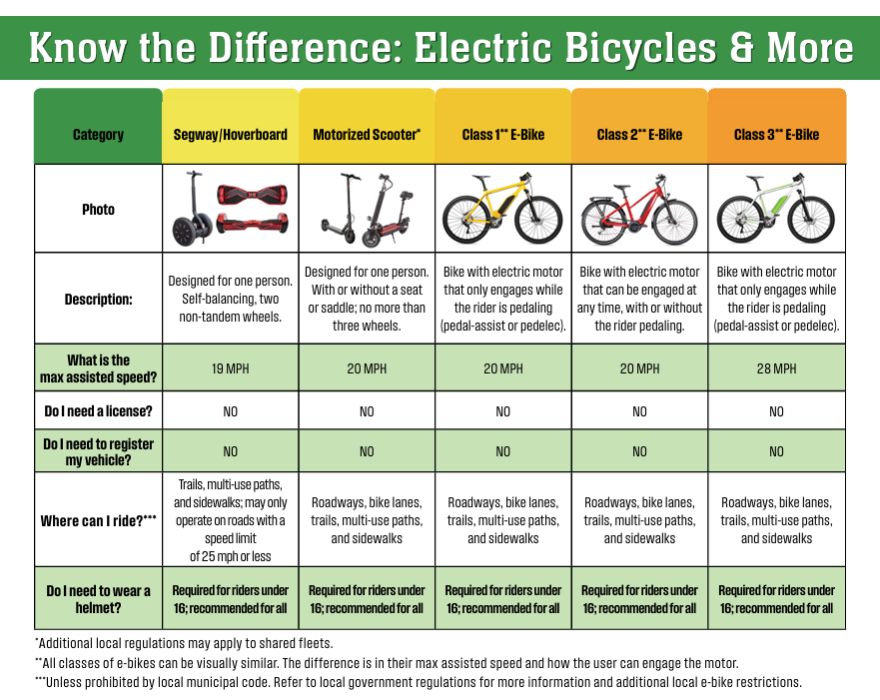
A chart from the Florida Department of Transportation’s educational campaign “Alert Today, Alive Tomorrow” breaks down key differences between some of the most popular micromobility devices: segways/hoverboards, motorized scooters, and three different classes of e-bikes.
Modifications, motorcycles and more
As more people buy and use e-bikes and other micromobility devices, Bush said, more people are also getting hurt. Young children and teenagers, who often receive the devices as gifts, are among those most affected.
“Our communities are really not designed for these types of devices,” Bush said. “So we’re finding that there’s been serious injuries and fatalities, due to the different users (and) the different modes of transportation not seemingly being able to function together, and those users not necessarily following the rules of the road in order to ensure their safety.”
And there’s a problematic trend complicating the dynamic: the modification of micromobility devices.
Users and retailers alike will sometimes try to modify e-bikes by removing their pedals, ramping up the motor wattage or making other adjustments. Those changes ultimately make the devices less safe — and harder to classify.
Bush said some retailers have sold devices, labeled as e-bikes, which don’t fit into any of the state’s three defined e-bike classes.
“We’re finding that these people that are buying these machines online, these vehicles online, are trying to get them serviced at bike shops. And bike shops are not able to service them, because they’re not bicycles,” she said.
E-bikes don’t require a license, registration or insurance in Florida — but mopeds, motorcycles and other types of motor vehicles do. In some states, anyone operating a motorcycle is also required to wear a helmet. (Florida has a helmet exemption for anyone at least 21 years old with a certain level of medical insurance coverage.)
DMC Photography/DMC Photography
/
Courtesy Bike/Walk Central Florida
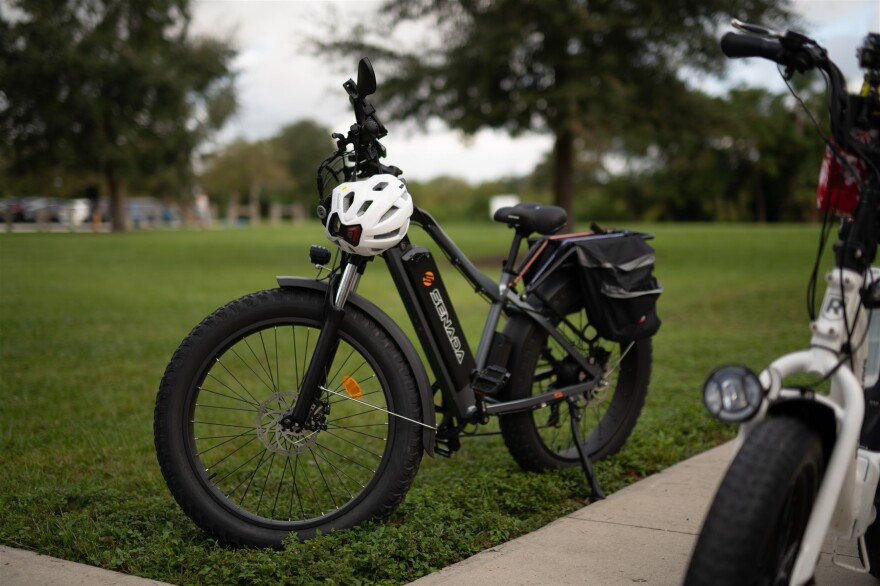
An e-bike, or electric bicycle, is a type of micromobility device.
A dearth of device data
As micromobility device regulations continue to take shape, so does the data for device-related injuries and deaths. Right now, much of that data is pretty hit-or-miss.
“That has been a challenge for us: to understand, when users get into serious injuries and fatalities, if they’re on an e-bike or not,” Bush said. “Oftentimes it’s just a bicycle, or it’s not even noted what the device is. So it’s difficult to develop policy if you don’t have the data in order to do so.”
To analyze trends for serious injuries and fatalities involving e-bikes, Bush’s group relies on two primary data sources: crash data collected by the Florida Department of Highway Safety and Motor Vehicles, and hospital data. Bush also recommends Signal 4 Analytics, an interactive dashboard consolidating and visualizing data from the FLHSMV.
On the hospital side of things, the data is getting better, Bush said: incidents involving an e-bike or another type of micromobility device now get separated out and identified as such. But when it comes to crash report documents submitted by law enforcement agencies to the state, the data is much less clear.
“Sometimes it’s mentioned, sometimes they mark it as a bicycle, sometimes they don’t,” Bush said. “It really is jurisdictional and officer-based, which is unfortunate.”
Work is underway to standardize that reporting process, allowing for law enforcement officers to easily indicate if a crash involves an e-bike. But it’ll be awhile.
“This change is coming to the crash data form that law enforcement fills out, but … 2028’s a long way away,” Bush said. “We need the data now.”
That’s why Bush calls Senate Bill 382 a “step in the right direction.” The legislation requires law enforcement agencies to track crashes involving micromobility devices and report those numbers to the state. It also sets a maximum speed limit of 10 miles per hour for e-bike users within 50 feet of pedestrians and directs the creation of a Micromobility Device Safety Task Force.
“I think that if I were a local government, I would wait to see what this task force comes up with before making any movement, because this could preempt anything that a local jurisdiction would be wanting to do,” Bush said.
The state’s Law Enforcement Liaison program makes some e-bike resources available, including a list of Florida communities with local e-bike ordinances.