By Simon Harris.

The predicted administrative chaos and fiscal ‘cliff edge’ for PHEVs are being met in many cases with a strategic shrug
The plug-in hybrid is increasingly being viewed as a legacy asset by fleets rather than an essential bridge to electrification.
As the industry sees the dust settle around it following the November Budget, the predicted administrative chaos and fiscal ‘cliff edge’ are being met in many cases with a strategic shrug.
Changes to the treatment to plug-in hybrids announced by Chancellor Rachel Reeves a few months ago highlighted the risk of a tax trap in the years ahead, but the UK fleet sector appears to have outmanoeuvred the legislation by accelerating its move directly into battery electric vehicles (BEVs).
The catalyst for the current shift was the arrival of Euro 6e-bis emissions standards, which threatened to triple official CO2 figures by finally acknowledging the reality of ‘engine-on’ driving.
But as of early 2026, the expected administrative friction, specifically regarding the backdated 1g/km Benefit-in-Kind (BiK) easement introduced in the November Budget which would leave many drivers overpaying tax on their PHEVs before the announcement, has largely failed to materialise.
“I haven’t heard of any fleet managers complaining about an administrative issue with reclaiming overpaid BiK tax for 2025,” said Paul Hollick, chair of the Association of Fleet Professionals (AFP). While the industry had braced for a ‘limbo’ period where drivers would be caught in a retrospective tax mess, Hollick suggests the reality is that many managers have already moved past the problem.
“Most fleets are running BEVs, so this won’t be a big issue,” Hollick explains. “Many drivers are now going straight into BEV without PHEV.” This ‘PHEV bypass’ suggests that the administrative and fiscal complexity of the hybrid is no longer seen as worth the investment for a professional fleet operation.
For those drivers who do remain in the PHEV camp, the management approach has shifted toward robust risk mitigation. Fleet managers are no longer simply supplying vehicles; they are legally distancing themselves from the choices their drivers make. Hollick notes a significant rise in the use of formal ‘waivers’, where drivers choosing a PHEV must sign a document acknowledging the consequences of future tax changes.
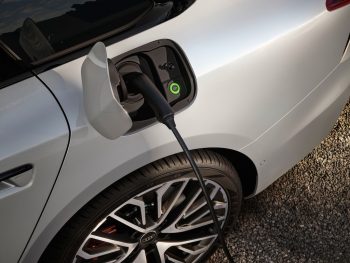
For those drivers who do remain in the PHEV camp, the management approach has shifted toward robust risk mitigation
This is a move designed to protect the long-term integrity of the fleet and ensure continuity beyond the current manager’s tenure.
“Fleet managers are also preparing the ground for their successors, should they move on from their current roles,” said Hollick.
By ensuring drivers are fully aware of the flat 18% BiK rate and eVED mileage charges arriving in April 2028, managers are preventing ‘tax-shock’ grievances from becoming a legacy burden.
This strategic shift is being accelerated by the success of salary sacrifice schemes elsewhere in the business. The ‘retail-style’ success of these programmes is serving as a real-world proof-of-concept for traditional company car drivers who might otherwise have clung to the hybrid safety net.
“The increase of salary sacrifice BEVs are illustrating to company car drivers that it can be done,” Hollick adds. The visibility of colleagues successfully navigating daily life with a BEV has effectively killed the ‘range anxiety’ argument that previously underpinned the case for the PHEV.
While the fiscal cliff-edge first identified in May 2025 was a valid technical warning, the industry’s response has been to build a different road entirely.
By the time the 2028 tax wall arrives, the PHEV may well be a minority asset on the UK corporate fleet. Through the use of waivers, the influence of salary sacrifice and a clear-eyed focus on future-proofing, the modern fleet manager is simply driving past the hybrid mirage.