Three Honda electric vehicles that collision repair shops were expecting to see in the coming years won’t be built.
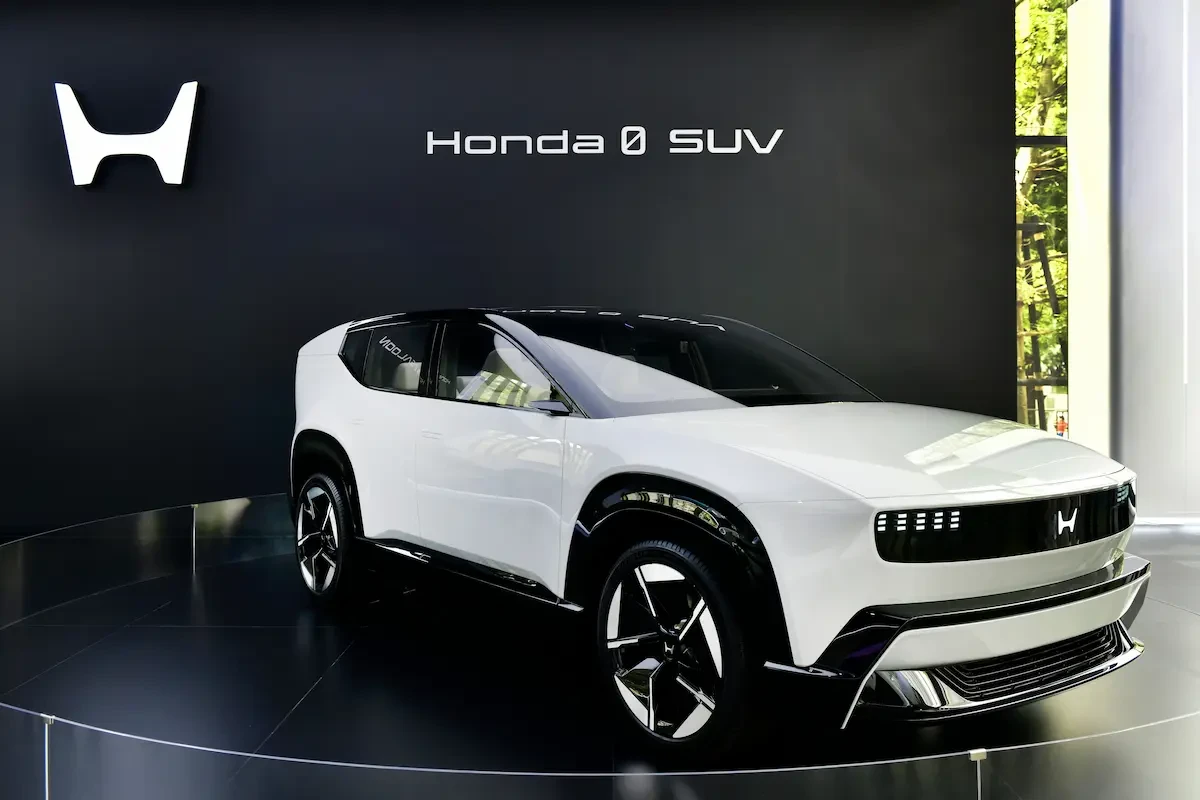
Honda Motor Co., Ltd. announced March 12 it is canceling the Honda 0 SUV, Honda 0 Saloon, and Acura RSX, all of which were planned for production at the company’s EV Hub in Ohio. The company disclosed up to ¥2.5 trillion ($15.7 billion) in associated losses as it pivots away from battery-electric vehicles and toward the hybrid models that are already driving record sales for the brand.
The 0 Series had been unveiled at CES in January 2024 as the centerpiece of Honda’s electrification push, with the Saloon expected to go on sale in North America in 2026. Instead, Honda now expects operating losses of ¥270 billion to ¥570 billion ($1.7 billion to $3.6 billion) for the fiscal year ending March 2026. It would be the company’s first annual loss since it listed on the Tokyo Stock Exchange in 1957, according to Reuters. Several senior executives will take pay cuts of 25% to 30%.
What Honda said went wrong
Honda attributed the decision to three compounding pressures.
In the U.S., the company pointed to the expiration of federal EV incentives and the easing of fuel-efficiency regulations as factors that slowed EV demand.
In China, Honda said it lost ground to newer EV manufacturers that leveraged shorter product development cycles and strengths in software-defined vehicle technologies, including advanced driver-assistance systems. The company acknowledged it “was unable to deliver products that offer value for money better than that of newer EV manufacturers, resulting in a decline in competitiveness.”
The third factor is one collision repair shops have been tracking across the industry: tariffs. Honda said its existing gasoline and hybrid business, not just its EV plans, has seen profitability decline “due to the impact of newly imposed tariffs.”
That is a different pressure point than what Stellantis described when it reported a €22.3 billion ($26.3 billion) net loss last month, where tariff costs were projected forward. Honda is saying the damage to its core business is already happening.
Combined with Ford’s $19.5 billion write-down in December and General Motors’ $7.6 billion in EV-related charges, the industry’s collective retreat from battery-electric vehicles now totals roughly $67 billion.
What this means for collision shops
The practical effect is a vehicle mix shift that has been building for months but is now accelerating. The pure-BEV models that OEMs projected would fill shop bays by 2028 and 2029 are being replaced on product roadmaps by hybrids, extended-range electric vehicles, and in some cases a return to internal combustion.
Honda’s own sales data illustrates what’s actually arriving in the repair stream. Days before the company disclosed billions in EV losses, it reported an all-time February hybrid sales record of 30,671 units, driven by the CR-V, Accord, Civic, and the all-new Prelude. The Passport’s TrailSport trim accounted for more than 80% of that model’s mix. Acura posted its best February in five years.
These vehicles bring their own complexity. High-voltage battery systems, regenerative braking components, and dual-powertrain architectures all require specific training and procedures. But they are hybrids, not the battery-electric models Honda had planned around.
The EV fleet isn’t shrinking either. Repairable BEV claims rose 14% year over year in the U.S. in 2025 even as new EV sales declined, according to Mitchell International’s latest Plugged-In report. The installed base of electric vehicles continues to grow regardless of what manufacturers are building next. Mild hybrid claims are climbing too.
For shops making certification and training decisions, the signal from Honda is the same one Stellantis and Ford sent before it: plan around what’s actually on the road in your market, not around what an OEM says it will build in three years. Honda’s February hybrid record is the near-term reality. Its 0 Series was the long-term promise. The near-term reality won.
What to watch
Honda plans to announce a revised mid- to long-term strategy at a press conference in May.
The future of the Ohio EV Hub remains uncertain. A Honda spokesperson told the Dayton Daily News the company “established a highly flexible manufacturing environment in Ohio capable of building the right products to meet customer demand,” but did not specify what those products would be.
The next quarterly Section 232 tariff inclusion window opens in April, adding another variable to parts-cost planning for Honda, as well as every other OEM with cross-border supply chains.