Our brains like to compress large portions of history into small, bite-sized descriptions that allow us to understand a time in the past without fully immersing ourselves in it. The Gilded Age. Thje Roaring ’20s. The Great Depression. The Global Financial Crisis. It’s always a vast oversimplification, but it works in a pinch. What will we say about the 2020s? If they’re roaring, they’re roaring like a lion and not like a hot jazz and bathtub gin-fueled speakeasy rager.
While I’ve been happy to call it the Decade of the Hybrid™ in The Morning Dump, that’s also a little glib. Right? This morning, I’m becoming worried that the shorthand for the 2020s will be the collapse of the EV dream, setting us up for a Return of the Jedi-style comeback in the 2030s. Instead of Ewoks we’ll have EREVs. Don’t think too much about it. Just trust me.


Looking at the news today, I think the automotive industry is just caught in a bigger story, which is the larger reconsideration of the efficiencies of global economies. First up, there’s finally a good estimate of what tariffs have cost automakers up to this point, and it’s a lot. If there’s one company that represents the failure and possibility of the ’20s thus far, it’s Honda. If there’s a sport that’s benefited from, and then suffered under the same, it’s F1.
Perhaps this is too Western-centric a view? If you’re looking at it from China’s automotive industry, the world might look like your oyster.
Tariffs Took More Than $34 Billion From Automakers So Far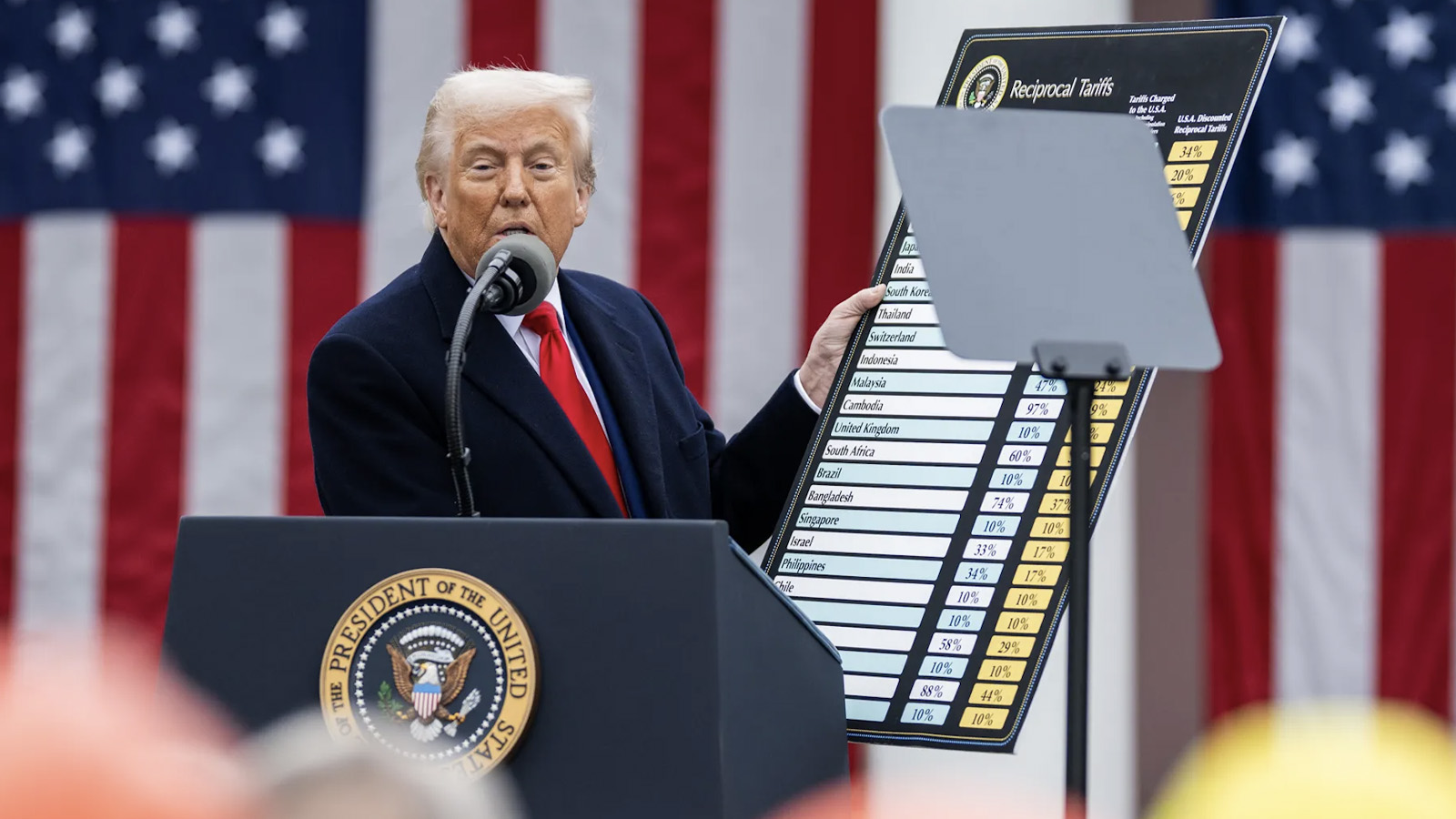 Photo: White House
Most of the tariffs levied against automakers didn’t fall under the same guidelines overturned by the Supreme Court, meaning that they are still being enforced. The one year anniversary of “Liberation Day” is coming up, and Automotive News went through all of the public financial reports to put together a first estimate of what it’s all cost. So far, the total is around $35.4 billion.
Remarkably, and unlike the Pandemic, not all of this is being passed onto the consumer. The Trump Administration’s policy of strong-arming private companies and institutions has some obvious drawbacks, but it does seem to have at least temporarily delayed a huge raising of prices. That being said, automakers have found ways to sneak price increases into the total price.
Perhaps it’s not the hardball that’s behind automakers outwardly trying to avoid announcing price hikes. Maybe it’s just the uncertainty. These tariffs were supposed to lead to a rush of new projects in the United States, although it’s been a little slow-going. From that Automotive News report, there’s an explanation as to why:
The Trump administration has framed tariffs as an incentive for automakers and suppliers to build vehicles and parts in the U.S.
Yet a year after Trump implemented new duties on vehicle and parts imports, automakers are still trying to decipher which tariffs might stick and which might be negotiated down or go away, said Dan Hearsch, global co-leader of the automotive and industrial practice at AlixPartners. Greater clarity will allow them to make more decisions on resourcing parts or changing where and how they build vehicles to avoid tariffs, he said.
“That’s still pretty hard to do because the administration has just not been very clear or consistent in application and what stays and what goes up and what goes down and what gets added,” Hearsch said.
Any increase in production here is also an offset against all the canceled or lowered factory output related to electric cars. It’s impossible to know what would have happened if CAFE limits and the Inflation Reduction Act had stuck around in some form, but my guess is that not everything would have been shut down.
The lack of clarity has a deeper cost than just tariffs. This $34 billion (and counting) is on top of the more than $70 billion automakers took in restructuring write-offs related to electrification. How you view the impact of electrification is, of course, its own sort of litmus test. It’s obviously not just governments pulling back, infrastructure being too slow, automakers starting with expensive cars, or consumers not wanting electric cars. It’s all of the above.
How did automakers find themselves in all these traps? I think nearly every major problem facing automakers was an inability to accept that the conventional corporate wisdom that unrestrained free trade would last forever and that a calmer global environment that formed after the collapse of the Soviet Union would go on forever.
What makes electrification the weird sort of exception is that it seems like a demand problem and not a supply problem. The Pandemic wasn’t a demand problem, it was a supply issue (the lack of semiconductors). Tariffs aren’t a demand problem, but they can be viewed as a supply challenge as automakers looked to squeeze a few extra cents out of cheaper local production around the world and stretched supply chains so far that they were at risk of governments deciding to change the rules. The populist snapback in response to a loss of jobs was, in a way, probably inevitable.
I think there’s a way to see the electrification as an upstream issue that fits into this larger narrative. For the mass adoption of electric cars to be feasible, automakers have to fundamentally alter the way they source and build cars. Not all the old ways work when it comes to building an EV supply chain. China spent years building up battery technology, charging infrastructure, and access to the rare earth minerals necessary for mass electrification. The West didn’t. It’s possible this all would have been a waste of time given where demand is, but after the success of Tesla it suddenly seemed important and most big OEMs and suppliers spent a lot of money trying to play catch up.
In the absence of a mature supply chain, the Inflation Reduction Act (and other investment programs from the Biden administration) basically had to promise automakers both money (to build plants) and offsets from consumers (to stoke demand). If the United States viewed China the way it viewed the EU, this would have been a fairly solvable problem. We could have just imported a bunch of cheap Chinese EVs and batteries. Obviously, that wasn’t going to happen.
What’s happened instead is a nightmare for automakers . Even Toyota, the automaker that’s felt the smartest lately, ended up with the largest tariff hit at over $9 billion so far (there’s an argument that GM might actually be the best-positioned automaker for the second half of the decade, but I’ll leave that for another day).
I’ve tended to focus on German automakers, which have found themselves stuck between China and the United States. The struggle is real in Germany. Honda may end up being the best/worst face of the mass loss of bearings in the 2020s.
Honda’s EV Troubles Are Just The Latest Trauma Photo: Honda
There’s been a lot of Honda news lately, including the fourth consecutive quarter of losses from its automotive division and its decision to cancel all its electric cars. Honda has taken a lot of flack for it, and it’s mostly been fair.
Over at InsideEVs, our buddy Mack Hogan takes on his displeasure with the company in post headlined “I’ve Watched Honda Fail At EVs For Five Years. After Today, I’m Out Of Patience,” in which he laments:
From the decade-long saga of teasing a new NSX, to a decade-long saga of saying “this time, we’re really serious about EVs,” the company has a terrible habit of building hype for nonexistent products. Three years ago they heavily implied to me that an electric S2000 and an electric NSX were both in the works. Now we can’t even get a replacement-level electric crossover. I am exhausted. I am out of hope. I feel lied to.
We did get the Honda Prelude, and that’s not nothing, but it’s a little too expensive and maybe a little too weird for the market. Bloomberg has a story about how Honda’s troubles are way beyond letting its EVs die, and have more to do with a lack of focus and consistent vision. Honda beat Toyota to market with hybrids in the United States by a few months, but today we get the Prelude and yet there’s no hybrid minivan, truck, or large crossover.
As often happens with big car companies, a pursuit of volume is probably to blame:
In 2012, then-CEO Takanobu Ito set an audacious goal of doubling annual sales to 6 million vehicles within five years. To do that, it built factories in China, Indonesia and Thailand, and accelerated production development to meet the target, which in turn placed pressure on its engineers and led to a series of recalls and botched vehicle launches.
While Hachigo, who succeeded Ito as CEO, shifted the focus away from chasing sales targets, Honda never recovered its mojo even as rivals such as Hyundai Motor Co. and BYD began taking away market share. The Tokyo-based company’s global sales volume peaked in 2019 at 5.32 million vehicles; it expects to sell 3.3 million in the fiscal year ending this month, down from last year’s 3.7 million.
That has left Honda in a weaker position to absorb other blows, ranging from President Donald Trump’s tariffs on cars imported into the US to a glut of vehicles and price deflation in China. Bernstein notes Honda’s Chinese sales have declined for 24 consecutive months.
Honda is a global brand, and pursuing more sales isn’t prima facie a terrible idea. However, the first step of building more cars needs to be building great cars that fit the needs of specific markets. That’s where Honda got lost, and then found itself stretched too thin to deal with the sudden onslaught of challenges all automakers are facing.
One of the biggest tells is that Honda separated its advanced R&D from vehicle development a few years ago. That’s giving into the fantasy that automakers could ever stop being automakers and start being technology companies. Now, it was just announced, Honda is reversing that decision.
F1 Cancels Middle East Races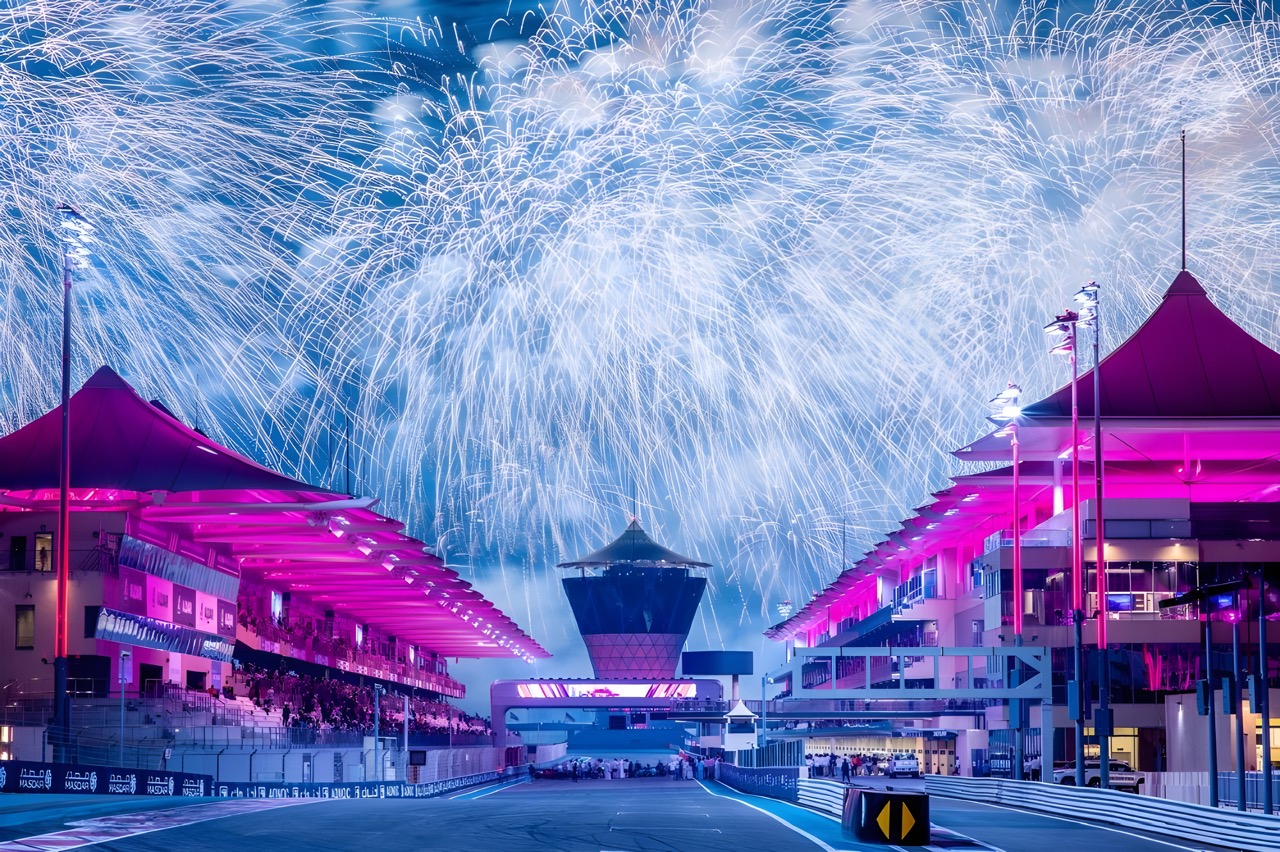 Photo: Newspress
There is no true cultural monoculture because of the Internet, right? I felt that way up until I found my daughter rushing into our living room way past her bedtime to watch the excellent performance of “Golden” by the cast of Netflix’s K-Pop Demon Hunters during last night’s Oscars broadcast. In a way, the rise of Korean pop music is perhaps a reminder that industries that aren’t so reliant on global supply chains are still globalizing.
Formula 1 is probably the biggest beneficiary of a re-flattening of entertainment, with Drive to Survive finding audiences in places that mostly overlooked the series in recent years. It’s been a huge boon for the sport, which has expanded to 24 races.
Well, maybe 22 this year, as ESPN reports:
Formula 1 confirmed on Saturday that April’s races in Bahrain and Saudi Arabia have been canceled due to the war in Iran.
The conflict had already placed the rounds on April 12 and April 19 in major doubt, and they were both officially canceled ahead of Sunday’s Chinese Grand Prix.
It leaves F1 with a five-week void between the third round of the new season in Japan on March 29 and the Miami Grand Prix on May 3, and looks likely to reduce the number of races this season from 24 to 22 — although it was not entirely ruled out that the Bahrain and Saudi Arabia events could be run at another stage this year.
“While this was a difficult decision to take, it is unfortunately the right one at this stage considering the current situation in the Middle East,” Stefano Domenicali, president and CEO of Formula 1, said in a statement.
The races in Abu Dhabi and Qatar are still set for later this year and one would have to assume that things will have cooled down by then. Right? Right…
BYD Shares Jump As Exports Rise Photo credit: BYD
And while we’re talking about globalization, there are many ways to view China’s electrification strategy. If you’re willing to give the government too much credit, this was all a plan to help the environment. If you’re feeling cynical, China predicted a world that would be over reliant on Chinese green energy products it could then sell to other countries.
Some of the above is true, but what’s happening in Iran and shutting down F1 races is probably the bigger reason. If China needs oil, it’s going to have to get most of it from somewhere else. That somewhere else is the Middle East, Russia, South America, or the United States. All of those places, have, historically, been a problem.
Obviously, China cannot be reliant on the United States for anything existential. Venezuela has been a source of oil for China, but now the United States is helping call the shots there. China and Russia have an uneasy alliance. This week was a reminder that the Middle East isn’t always going to be a safe source, even though China has huge oil reserves and only gets a small portion of its oil via the Strait of Hormuz.
Electric cars have turned out to be a great hedge and, though the country is now dealing with overcapacity, BYD has found a global audience for its cars as Bloomberg reports:
The Chinese EV leader’s Hong Kong-listed stock jumped 7.8%, the most in 13 months. It was the top performer on the Hang Seng Tech Index, followed by peers Nio Inc. and Xiaomi Corp., which climbed around 5%.
Sentiment is getting a lift from local Chinese news reports that BYD’s Brazil plant received an export order for about 100,000 units from Argentina and Mexico, said Eugene Hsiao, a strategist at Macquarie Capital Limited.
“This is positive for the broader BYD thesis, which is that overseas sales will become the core growth and profit driver over time,” he said.
This is the potential upside of an energy crisis for China. If you’re in the United States there’s enough domestic oil production to make it through anything, and if you’re in Europe you’ll be able to pay the higher rate for crude. If you’re in South America, Africa, and parts of Asia that might be harder. China’s move towards EVs has both partially inoculated it against higher gas prices and given it a way to reach deeper into other markets.
What I’m Listening To While Writing TMD
I’m not sure why The Man From U.N.C.L.E. reboot wasn’t more of a hit? I enjoyed it and would like to have seen a sequel. “Compared To What” by Roberta Flack was an excellent pull for the soundtrack, and the lyrics really hold up.
The Big Question
You have $100 billion to spend on cars, but they all have to be the same car. This is potentially enough money to buy every Ford Escort ever built, for example. What do you buy?
Top photo: DepositPhotos.com