Researchers with Delft University have told Cycling Electric that they have concerns that e-bike motor longevity may not be living up to consumer expectations, with a pattern emerging of failures beginning to cluster at between 16,000 and 20,000 kilometres ridden.
Leading a survey of 500 electric bike and speed pedelec owners, Sonja van Dam took time out from the research work last week to explain the reasons many e-bike motor systems eventually fail and to deliver a relatively cheap solution for manufacturers that pre-warns when a customer is about to experience a breakdown. That solution: something called a Piezo sensor, a specialist pattern detection device that can determine when there are anomalous behaviours coming from a motor in motion.
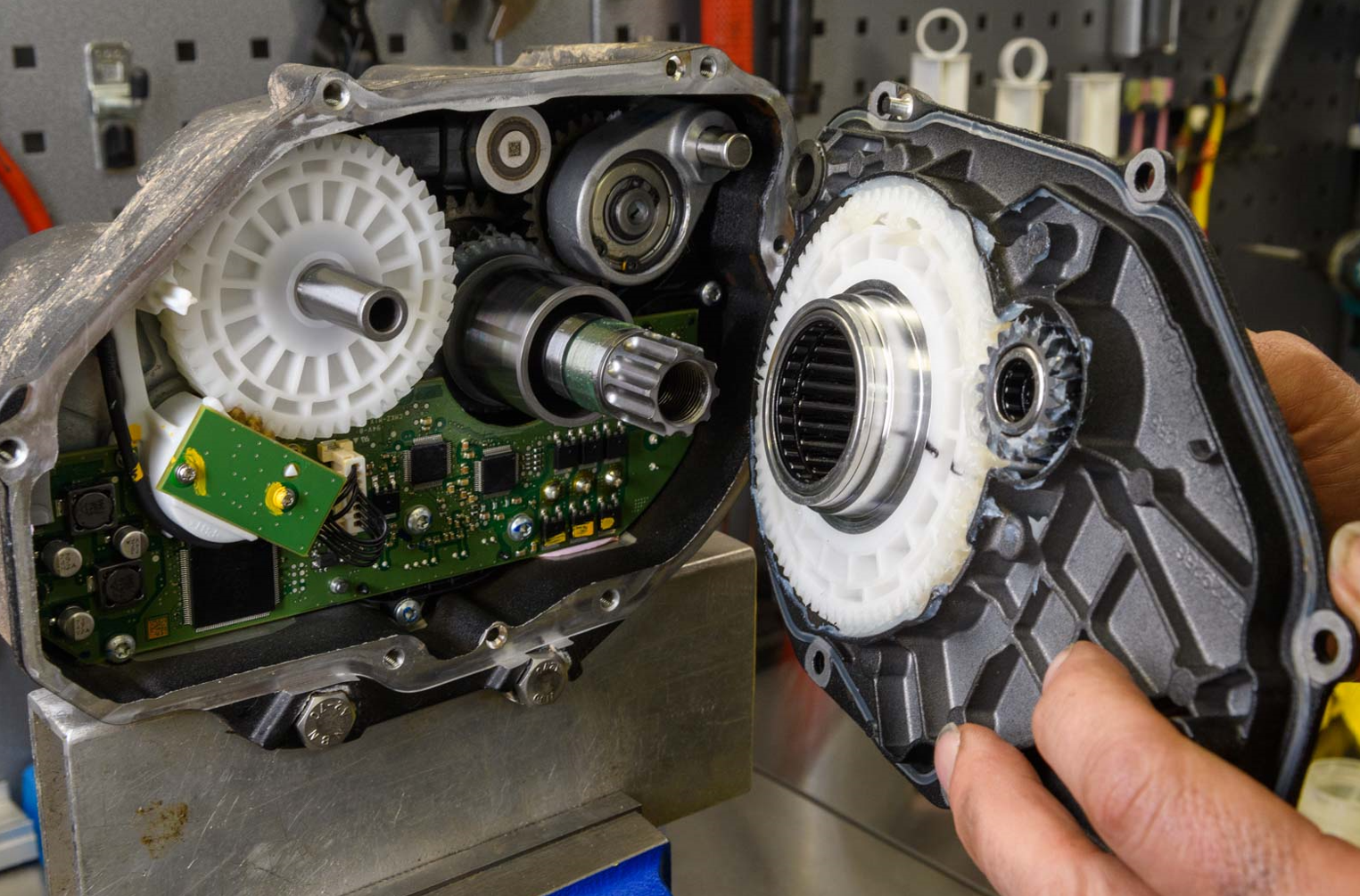
Sonja explains ‘Piezo sensor technology is used in other sectors, often to measure if bearings are wearing out. In over half the cases we have studied it is the bearings or the gears inside a motor that degrade. Also, electronics are vulnerable to water ingress too, but most are true hardware faults. There are causes we can identify for failures, which can be pieces of bearings breaking when, for example, a bike hits a curb, but perhaps more often it is using too high a torque in too high a gear, which ups the pressure on parts over the course of rides. There are too some cases where nylon gears on the inside wear too quickly.’
On the subject of water ingress, the researchers explained that where motors heat and then cool, small amounts of water can end up inside the motors as moisture and components expand and contract, essentially creating a vacuum. This doesn’t always happen right away, we’re told, but where e-bikes have moving parts that are under strain, gaps can appear over time that reduce the effectiveness of seals.
‘Keeping it airtight when you have moving elements is actually a big design challenge. Our students are looking at how you can avoid that moisture, causing an issue. They are looking at silicone pearls, for example, that you can build that into a motor to absorb minor moisture ingress,’ she says.
Where bikes are sometimes left on a kickstand, the researchers believe that the tilted angle can also influence water collecting in places where designers considered relatively secure. All food for thought for e-bike designers, as is the finding that 9% of users studied admitted to pressure washing their e-bike.
Sonja adds: ‘Dion’s, who is leading the Piezo sensor research, main conclusion so far is that ideally bike makers begin to build a Piezo sensor into the motor so that faults are flagged to the user ahead of a mechanic discovering it too late. This is a relatively affordable and simple thing to implement. Think of it like a light on your dashboard alert on a car.
‘In my opinion, it’s not fair to blame user, though many bike mechanics we have spoke to are opinionated about causes of failures. I think being careful with transporting bike on the back of a car is good advice; make sure you cover the motor so water isn’t spraying up into the motor at 80mph on highway.’
How people react when an e-bike motor fails
Sonja’s part in the work has focused on the results of a wide-ranging survey of existing e-bike owners past and present and there are already some findings that illustrate what consumers do next when their e-bike motor systems fail. Startlingly, the top line finding thus far is that as many as 43% would dispose of the entire bike if the motor had failed, that is, despite the issue, almost half the time, being as simple as a failed bearing.
For Sonja, the research is personal, her mother having experienced a motor failure at 12,000km and only 3.5 years into ownership; just long enough to fall out of warranty, thus opening up a ‘near €1,000 replacement cost’.
That, believes Sonja, wouldn’t fly on things like cars, so should it with an e-bike, which is also a transport solution for many? Nor would a five-week replacement timeline, which she says is commonly reported as part of their research.
‘Existing studies have suggested that as many as 24% of people have motor issues during the lifetime of their e-bike and we have tended to find that after around 20,000km, about 13% of current e-bike owners encounter an error,’ she told Cycling Electric.
‘Our data shows that people will replace their entire e-bike 24% of the time if a battery fails, and of course, these are even less repairable. Research from the automotive industry suggests that remanufacturing can happen,’ she adds.
While the right to repair on e-bike batteries remains controversial, it’s here that we find out that the recent EU right to repair directive doesn’t mention e-bike motors as yet.
This, calculates Sonja, could mean that from just the top eight by volume sales countries in Europe (amounting to four million units), 360,000 e-bikes go to landfill per year, despite the study calculating that 80% are repairable.
Though anecdotal, it is interesting that the survey’s highest mileage e-bike at over 100,000km ridden was in fact a speed pedelec, which would presumably have been manufactured to a light electric vehicle standardisation. Otherwise, the team declined to comment on which systems encountered the most problems over time.
Sonja van Dam will soon address this issue and expand upon her research at the Velo-city conference in Rimini this June. The research team from Delft University are currently seeking further funding to carry on their work, with hopes of some Dutch Government funding awaiting approval.
If you are in the UK seeking an e-bike motor repair, specialists like the eBike Motor centre may be able to help, though as Sonja pointed out to us, sometimes brands do not specifically support the efforts of third-party repair outlets, so conditions may apply. If you are seeking insight on what to do if your Bosch e-bike motor needs repair, here is our explainer.