![Tesla is Chasing Short-Term Profits Ahead of Long-Term Loyalty [Opinion]](https://www.evshift.com/wp-content/uploads/2026/03/2-million-fremont-factory.jpg "Tesla is Chasing Short-Term Profits Ahead of Long-Term Loyalty [Opinion]")
March 15, 2026
By Karan Singh

For the better part of a decade, Tesla didn’t just have customers – it had evangelists. People spoke out about the company, defended its values, and advocated for it in a form that was completely unique for an automaker, much less any major company.
Tesla built its empire on the backs of early adopters who were willing to overlook panel gaps, software bugs, and bare-bones service centers because they believed in the mission. They were part of a club.
But as we move deeper into 2026, that relationship has fundamentally changed. As Tesla shifts its focus from satisfying its dedicated base to capturing the mass market and maximizing quarterly margins, its executives are developing a habit of chasing short-term profits at the direct expense of long-term brand loyalty.
The Illusion of Loyalty
Nothing illustrates this shift quite like Tesla’s recent treatment of its veteran owners. Just recently, Tesla quietly slashed its existing owner loyalty discount in half, dropping it from $1,000 to just $500, while simultaneously removing its premium Model S and Model X from the referral program entirely.
But the true slap in the face to early adopters has been the ongoing Full Self-Driving (FSD) transfer saga. For years, owners begged Tesla to tie their $8,000 to $15,000 software purchases to their accounts rather than the physical cars. Tesla has, from time to time, as a demand lever, allowed customers to transfer FSD.
Each and every time, Elon Musk has said, “This is the last time.” Tesla has repeatedly dangled, yanked away, and resurrected the transfer offer exclusively to juice end-of-quarter delivery numbers. It turns the company’s most dedicated software beta testers into pawns to hit financial targets.
Now, it appears that this time is truly the last, and rather than being generous in their interpretation, Tesla flipped the tables on customers. In January, they adjusted the terms of their offer to state that orders placed by March 31st were eligible for FSD transfer. Then, in late February, they switched it around – only orders delivered by then were eligible, leaving customers hanging – especially those who purchased the new AWD Dual Motor Cybertruck.
Pricing Whiplash
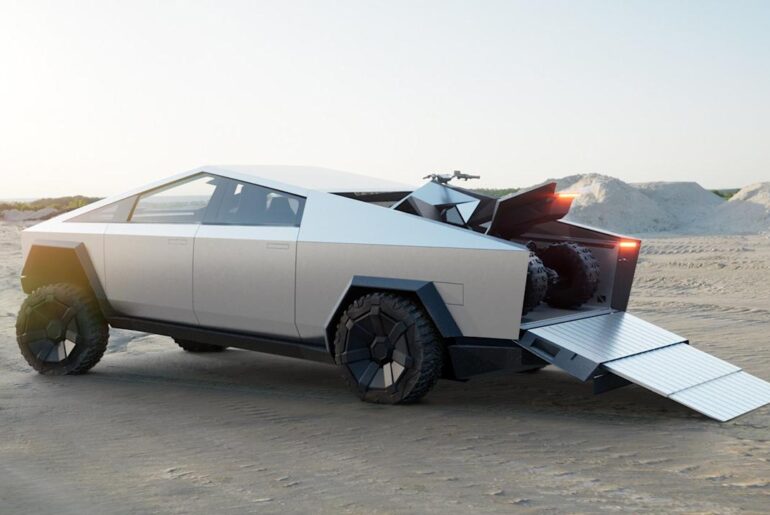
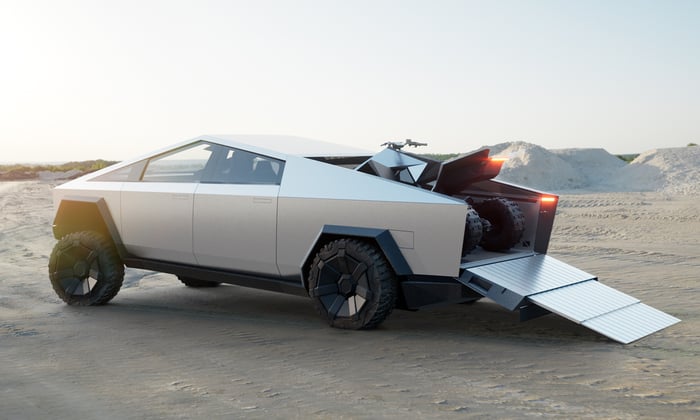
This transaction mindset has heavily bled into how Tesla prices its vehicles, particularly the Cybertruck. The launch of the long-awaited pickup was supposed to be a triumph for the reservation holders who gave Tesla free interest loans for half a decade.
Instead, early reservation holders were met with the massive markup of the mandatory Foundation Series. Many, including myself, still went ahead with the purchase of the Foundation Series, because we fell in love with the Cybertruck and the future of Tesla.
Let me flat out say it here: I love the Cybertruck, and the Foundation Series was the best vehicle purchase I have ever made.
On launch, the Cybertruck didn’t have FSD, Summon, Autopilot, or a myriad of other autonomy features. When it finally got FSD, it was a lacking experience, and it is still missing Summon today. With the official cancellation of Autopilot, Tesla is now not even including basic lane keeping in any part of its lineup – a feature now found standard on a base-level Honda Civic or Toyota Corolla.
Recently, Tesla finally introduced the new AWD Dual Motor Cybertruck, offering a “Standard” experience, and moving the existing trim to a new “Premium” branding. This new cut-down trim was a massive step up from the failed and cancelled launch of the Cybertruck Long Range last year. Most importantly, it was affordable at $59,990, and allowed many old reservation holders to finally convert their original orders or follow up and get the vehicle of their dreams.
But hours after its launch, Elon Musk posted on X and said the pricing would only last for 10 days. There was no indication on whether that meant the end of this new trim, or whether the price would go up or down, or by how much. Finally, 10 days later, Tesla hiked the price by $10,000 to $69,990, making it unaffordable once again.
FSD Transfer Issues
Many of Tesla’s loyal owners who owned FSD saw this new Cybertruck – and saw the deal it represented. It was finally a chance for them to get a new, modern vehicle – and transfer FSD to boot. With the change of terms and the fact that Tesla won’t even begin AWD Dual Motor deliveries for months past the new deadline, all these owners are left high and dry.
They can either find an inventory vehicle to transfer to if they want to upgrade now before the transfer period ends, or they will be forced to subscribe to FSD once they finally receive their new vehicle.
Stagnation at the Top
While Tesla squeezes its existing lineup for margins, its actual automotive innovation has begun to stall. Tesla is actively winding down the flagship Model S and Model X to make room for its robotics and autonomous goals, and hasn’t released any major updates to its flagship vehicles for years, barring last year’s minor refresh.
Many buyers expected the refresh to include significant new features such as steer-by-wire, 800V architecture, V2L support, and other features found in the Cybertruck.
With the death of the S and X, Tesla’s lineup is looking increasingly utilitarian at a time when the competition is fiercely innovating. While legacy automakers and new startups like Lucid and Porsche are rolling out 800-volt architectures, massive range milestones, and true luxury interiors, Tesla has largely rested on its laurels.
Just this week, BYD introduced a new consumer vehicle battery that charges at a 1MW peak, while holding at high C rates – putting even the 500kW peak that the Cybertruck achieves for a few seconds to shame.
Aside from the welcome but incremental changes with the Juniper and Highland refreshes of the Model Y and Model 3, the core vehicle hardware feels stagnant. Tesla is no longer the undisputed king of range or charging speed, yet they seem disinterested in fighting to win those crowns back.
Abandoning the Track
While legacy automakers are out setting Nürburgring lap times and fighting for motorsport dominance, Tesla seems to have completely lost its appetite for performance supremacy. It has been years since Tesla made any meaningful effort to conquer Pikes Peak, and the mythical, track-destroying Model S Plaid+ was unceremoniously killed off before it ever saw an assembly line. Today, there appears to be absolutely zero corporate ambition to develop dedicated race vehicles or push the absolute physical limits of EV track performance.
This newfound apathy isn’t just limited to the asphalt; it extends to the dirt, too. When the Cybertruck launched, its dedicated Off-Road Mode felt like the opening salvo for a rugged, overlanding ecosystem. Instead, it was a once-and-done inclusion. Tesla never went back to meaningfully iterate on its off-road software capabilities, nor have they released a substantial lineup of first-party accessories to support the rugged lifestyle they aggressively marketed.
Look no further than the infamous Cybertruck roof lightbar: years after launch, it is still not available to purchase in the official Tesla Shop, and it remains glaringly absent from the vehicles of early customers who paid a massive premium expecting the hardware.
Service Center Reality
All of this culminates in the grim reality of the modern Tesla service experience. As the company has broadened its reach to sell millions of Model 3s and Model Ys, the service infrastructure has failed to keep pace with the culture it initially built.
What used to be a highly communicative, premium service experience has been reduced to an automated, app-only queue. Reports of weeks-long wait times, unavailable parts, and a stark lack of human communication have become the norm rather than the exception. Tesla is scaling its sales like a legacy automaker, but treating its service centers like tech support for a smartphone.
The Cost of the Mass Market
It is completely understandable that Tesla needs to evolve. You cannot become the most valuable automaker on Earth by solely catering to a niche group of early-adopting tech enthusiasts.
However, brand loyalty is a finite resource. By continuously weaponizing FSD transfers, treating vehicle pricing like a day-trading exercise, letting its premium features stagnate, and allowing service to degrade, Tesla is eroding the very foundation of evangelists who built the company.
They may be successfully squeezing out short-term profits today, but they are mortgaging the fierce customer loyalty they will desperately need tomorrow.
We’re still loyal fans, but we’d like to see Tesla take a moment and reflect back on just how they got here today – and maybe throw a bone to long-term supporters once in a while.
Subscribe to our newsletter to stay up to date on the latest Tesla news, upcoming features and software updates.
March 15, 2026
By Karan Singh
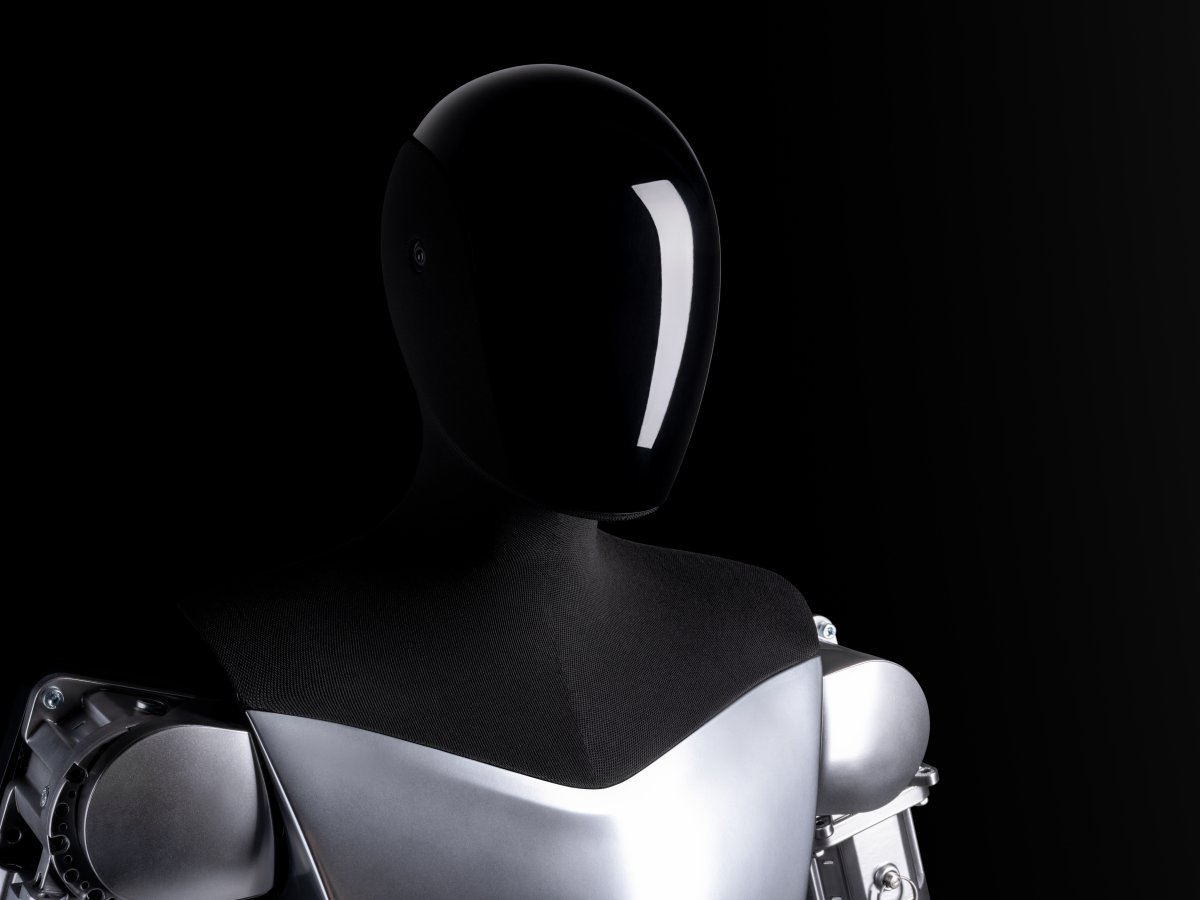
During a sweeping interview at the 2026 Abundance Summit, Tesla CEO Elon Musk laid out an aggressive roadmap for Tesla’s AI and robotics divisions, officially confirming the production timeline for Optimus Gen 3 and detailing his vision for a post-capitalist economy.
Here is Elon Musk’s full interview from the Abundance Summit today. https://t.co/Fr6tNCxiqG
— Sawyer Merritt (@SawyerMerritt) March 12, 2026
Speaking with Peter Diamandis, Elon provided a detailed look into the inner workings of xAI, the Tesla Bot program, and exactly how the rapid scaling of humanoid robots will fundamentally alter the global economy.
Optimus Gen 3 – Coming This Summer
The biggest news for Tesla fans came via another direct update on the Optimus program. Elon stated that Tesla is in the final stages of developing Optimus 3, claiming it will be the most advanced robot in the world when it arrives.
Elon laid out a clear manufacturing timeline for the robot, with initial production beginning with a slow ramp this summer. High-volume production should be achieved by the summer of 2027, with about 10 million square feet of factory space dedicated solely to the robot.
Despite the rapid influx of automated labor, Elon reassured that Tesla is not planning any human layoffs. Instead, he expects the robotics integration to make Tesla’s output per human extremely high.
Hard AI Takeoff
Beyond physical robotics, Elon also confirmed that the AI industry is currently experiencing a hard takeoff. He expects recursive self-improvement, in which AI models train and improve successive models without a human in the loop, to be fully automated by the end of this year or next year at the latest.
Elon also teased the capabilities of xAI’s newest model, Grok 4.20, noting it is currently the best model in the world at predicting outcomes.
However, he candidly admitted that xAI is currently lagging behind competitors in coding capabilities. In fact, Elon noted he was late to the interview because he was leading a giant all-hands on programming to catch up, a milestone he expects to hit by the middle of the year.
Universal High Income
As AI and Optimus scale, Elon doubled down on his prediction that the cost of living will plummet, leading to an era of massive deflation. Because humanoid robots will be able to produce goods and services at a rate that far exceeds the money supply, he envisions a future of Universal High Income.
“I think money will stop being relevant at some point in the future.”
He predicted that governments would simply issue money to citizens because AI-driven output would completely saturate human desire. In this post-scarcity economy, Elon noted that superintelligent AI won’t even care about currency; it will only care about power and mass, wattage and tonnage.
March 14, 2026
By Nehal Malik
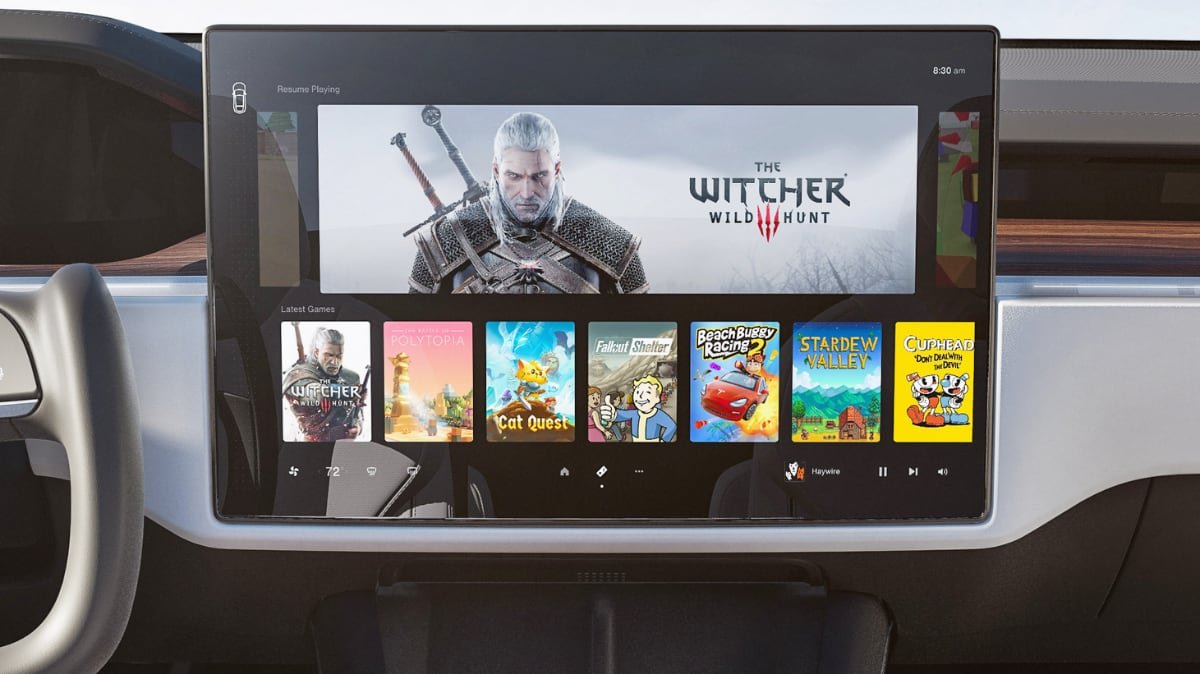
Tesla is making some quiet but significant changes to its flagship vehicles as they head into their final production cycle. According to findings from well-known Tesla hacker @greentheonly, the company has substantially downgraded the infotainment hardware in the 2025 Model S and Model X. These changes mark a definitive end to Tesla’s much-touted ambitions of turning its cars into high-end gaming rigs.
The shift appears to have occurred in units produced after June 2025. While the Model S and Model X have long shared a more powerful computer than the Model 3 and Model Y, the gap is narrowing as Tesla prepares to discontinue both of its pricier models later this year.
Downgraded Graphics and Storage
The most notable change in the 2025 models is the total removal of the dedicated GPU (dGPU). For several years, the Model S and Model X featured a separate graphics card that allowed them to process complex visuals. According to @greentheonly, the dedicated GPU is entirely gone.
In addition to the missing graphics hardware, Tesla has cut the internal storage for the infotainment system in half. The NVMe storage drive has been dropped from 256GB to 128GB, bringing it in line with the storage capacity found in the Model 3, Model Y, and Cybertruck. While the 16GB of RAM remains — which is double what you get in a Model 3 or Model Y — the overall system is clearly being lean-optimized.
Despite these hardware cuts, the cars are reportedly still capable of handling Unreal Engine implementations for basic UI and lightweight applications, but the heavy-lifting power required for serious gaming is no longer there.
The End of the Steam Gaming Promise
This hardware downgrade is the final nail in the coffin for Tesla’s gaming dreams. When Tesla first launched the redesigned Model S and Model X, Elon Musk famously touted the cars as having PS5-level power and the ability to run AAA titles like Cyberpunk 2077.
In late 2022, Tesla officially launched the Steam app as part of a holiday update, allowing users to access thousands of PC games via a virtual SteamOS environment. However, the hype was short-lived. By mid-2024, Tesla began removing Steam support from new deliveries, even though the vehicles at the time still had the dedicated GPU required to run it.
It appears the company realized that most owners would rather scroll through their phones while charging than set up a controller to play a massive open-world game on their dashboard.
Looking Forward
These hardware changes suggest that Tesla is focusing on cost efficiency as it winds down the current generations of the Model S and Model X. With both models slated to leave the lineup in the coming months to make room for newer platforms, these final units are being built with utility in mind rather than devil-may-care gimmicks.
If you are a hardcore gamer looking for a car that can double as a PC, you might want to look at used inventory from 2022 to early 2025. For everyone else, the 2025 models still offer a premium experience, just without the unnecessary promise of high-end gaming.