Sunday, March 15, 2026 | 2 a.m.
Editor’s note: Este artículo está traducido al español.
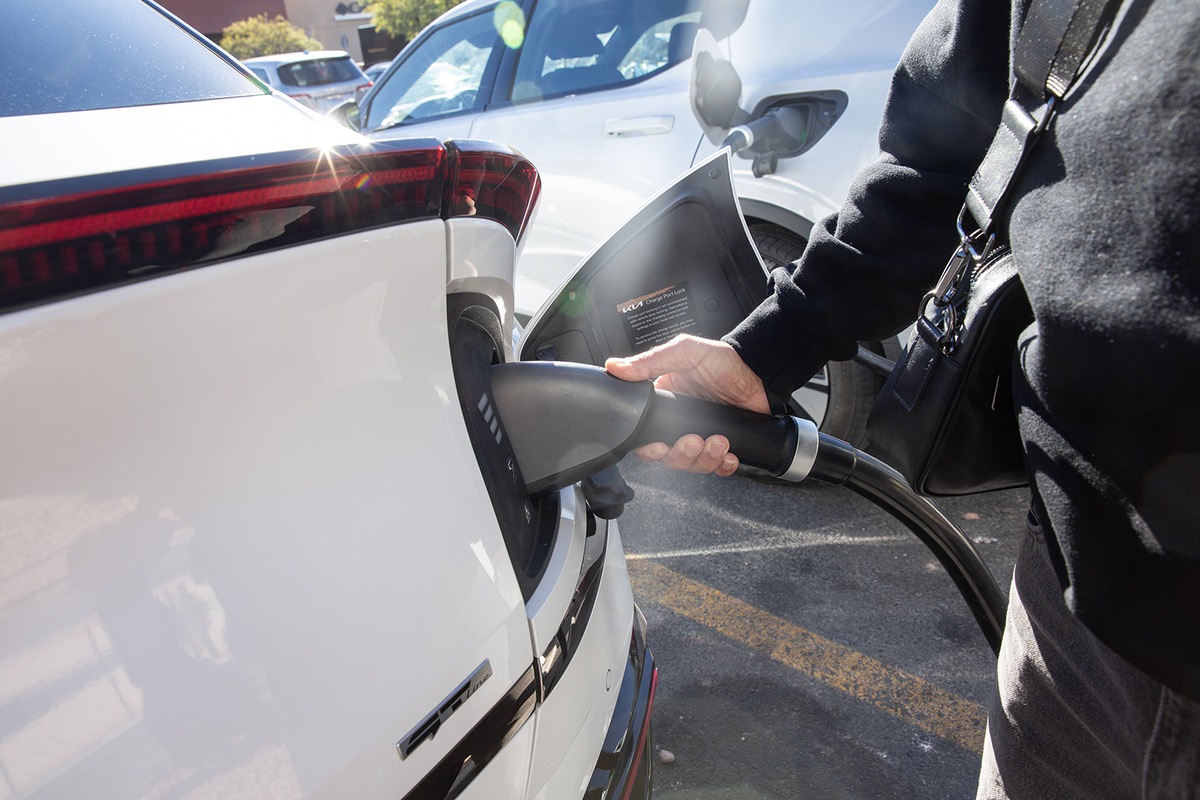
Nevadans’ ongoing adoption of electric vehicles and improving gas mileage are dampening state revenue from the motor vehicle fuel tax, threatening the departments that depend on those dollars through the state highway fund, according to agency officials.
Representatives from the Nevada Departments of Transportation, Motor Vehicles and Public Safety told the Nevada Legislature that funds from the flat tax haven’t kept up with inflation and the state’s growth.
The DMV’s operating costs have more than tripled over the past 20 years as the money it took in grew by 85%, DMV Director Tonya Laney said. The purchasing power of 23.81 cents, which the state has levied for each gallon of gas for decades, fell 39% over the same period, according to the Bureau of Labor Statistics.
“When the highway fund was established (with) the current rates, it was a generous budget,” NDOT Director Tracy Larkin Thomason said. “In the last decade, it has reached the point particularly where it is degraded and it is stretched across the three agencies.”
The highway fund is vital for the departments to function, agency leaders told the Joint Interim Standing Committee on Growth and Infrastructure this month.
Kristen Defer, deputy director of the Department of Public Safety, told legislators that the Nevada Highway Patrol is “almost entirely” propped up by the highway fund. And around 78% of NDOT’s funding last year came from the highway fund.
Assemblymember Howard Watts, D-Las Vegas — who chairs the committee — asked the three department leaders to name projects they can’t pursue because of funding constraints.
Larkin Thomason said phase two of Project Neon, which would alleviate traffic on the Interstate 15, and an interchange in Henderson have been delayed. She added that NDOT is still pursuing two to four passing lanes a year, but that the agency wants to do more.
“There is no more road to kick the can down. If we do not find another sustainable way to support not only the regional (highways), the interstates … and all those other roadways in between,” Larkin Thomason said, “we’re doing a disservice to our citizens.”
Without more funding, Larkin Thomason said NDOT’s scope — which she said is already focused on “keeping the lights on” — would be further reduced.
Defer responded to Watts that the department currently doesn’t have a dedicated commercial inspection station. Laney said it would be “ideal” if Fernley’s growing population could have a dedicated DMV office and that the agency wants a mobile unit to travel rural Nevada.
“Nevada’s populations and service demands continue to grow faster than the funding is available,” Laney said. “Without meaningful updates to our revenue and fee structures, the DMV will struggle to keep up with the expectations and maintain service levels.”
The factors worsening the highway fund’s viability also show no sign of stopping.
The number of electric vehicles in Nevada could quadruple from 2023 to 2032, according to a forecast commissioned by NV Energy. That would be nearly 200,000 electric vehicles, or 7.4% of all the vehicles in the state, the forecast showed.
The average new car’s fuel economy also improved by 28% from model year 2005 to 2025 when excluding electric vehicles, according to the Environmental Protection Agency.
The U.S. Department of Transportation, under President Joe Biden, published a rule requiring that fuel efficiency improve by 2% each year for passenger cars. However, President Donald Trump has moved to end the rule, citing concerns that it would raise vehicle prices.
The country’s high inflation after the pandemic has also leveled off, according to the U.S. Bureau of Labor Statistics. Similarly, Nevada’s rapid growth is set to slow.
While the population grew by 46% from 2002 to 2022, according to the U.S. Census Bureau, the Nevada Department of Taxation found that it could grow by 24% from then to 2042.
“We absolutely need to do something, or else we are going to really severely degrade the quality of life for people across the state who depend on transportation to get to work, to get their groceries, to get their health care and to get home,” Watts said.
An advisory working group, established through legislation in 2021, recommended in 2022 that the Nevada Legislature create a road usage charge for electric vehicles. The state would then fully replace the gas tax with the per-mile levy for new vehicles by 2035.
But that would take years to implement, according to the group’s final report. To deal with the backlog of projects in the meantime, the state should adjust current revenue sources, according to the report.
That could include increasing vehicle registration fees and fuel excise taxes while expanding Clark County’s fuel tax indexing — the amount of which is collected moves with inflation — to other counties in the state.
“Although revenue has increased over time, it has not kept pace with the rising costs or project needs,” Laney said. “Highway fund allocation growth has slowed, creating a widening gap between revenue and infrastructure demands.”