Support CleanTechnica’s work through a Substack subscription or on Stripe.
Many of our readers ask why Australia doesn’t have an automotive industry. Well, here comes the next generation to take up the challenge. Meet Applied EV, a Melbourne-based startup that has just raised AU$40 million to progress its autonomous electric dreams. The list of investors includes some heavy hitters, among them Japan Post Capital, who are counting on a big return. Applied EV’s vehicle platform is the Blanc Robot, an autonomous electric vehicle built on a modified Suzuki Jimny chassis. Suzuki currently holds a 4% stake in the company, highlighting the strategic relationship between the two organisations.
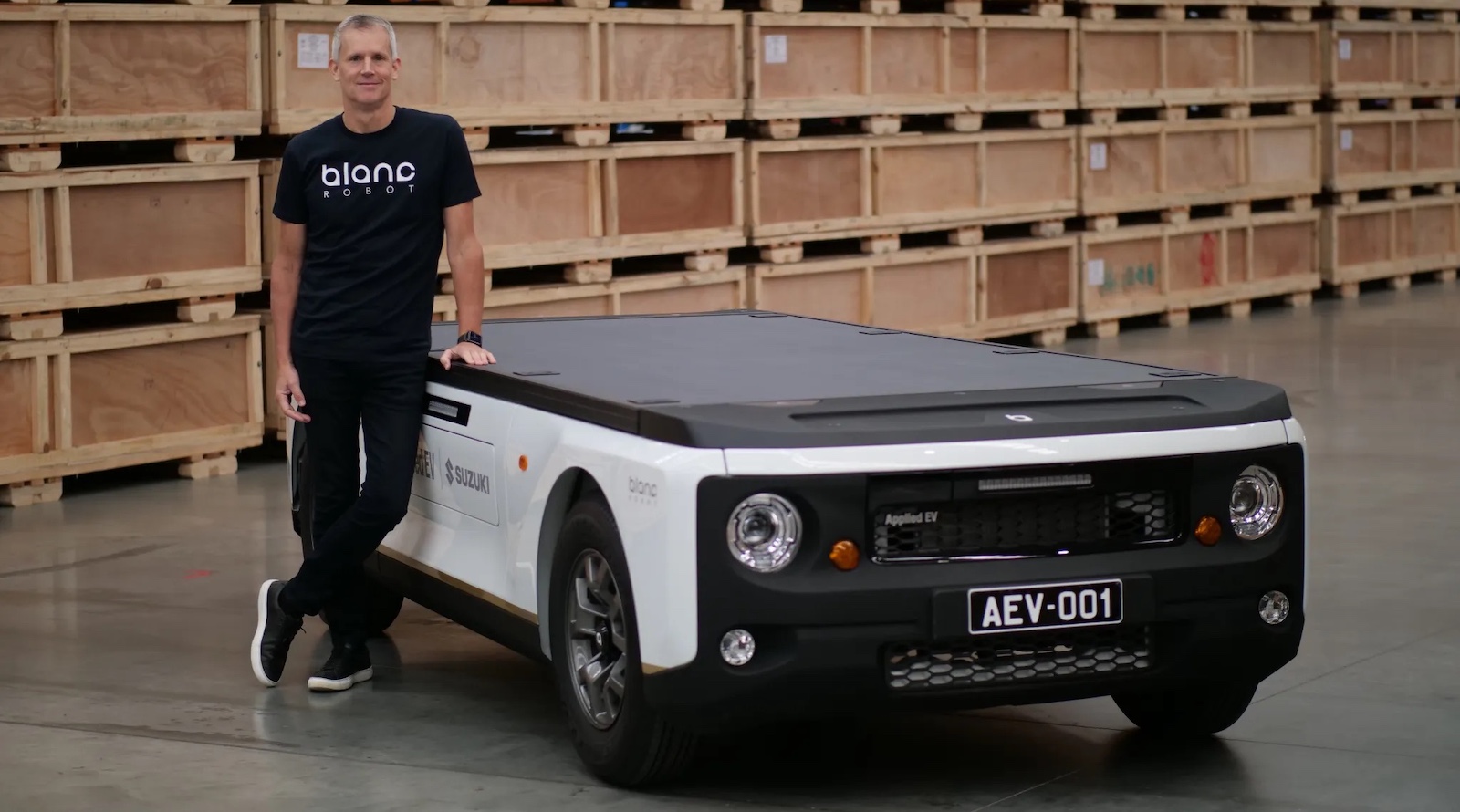
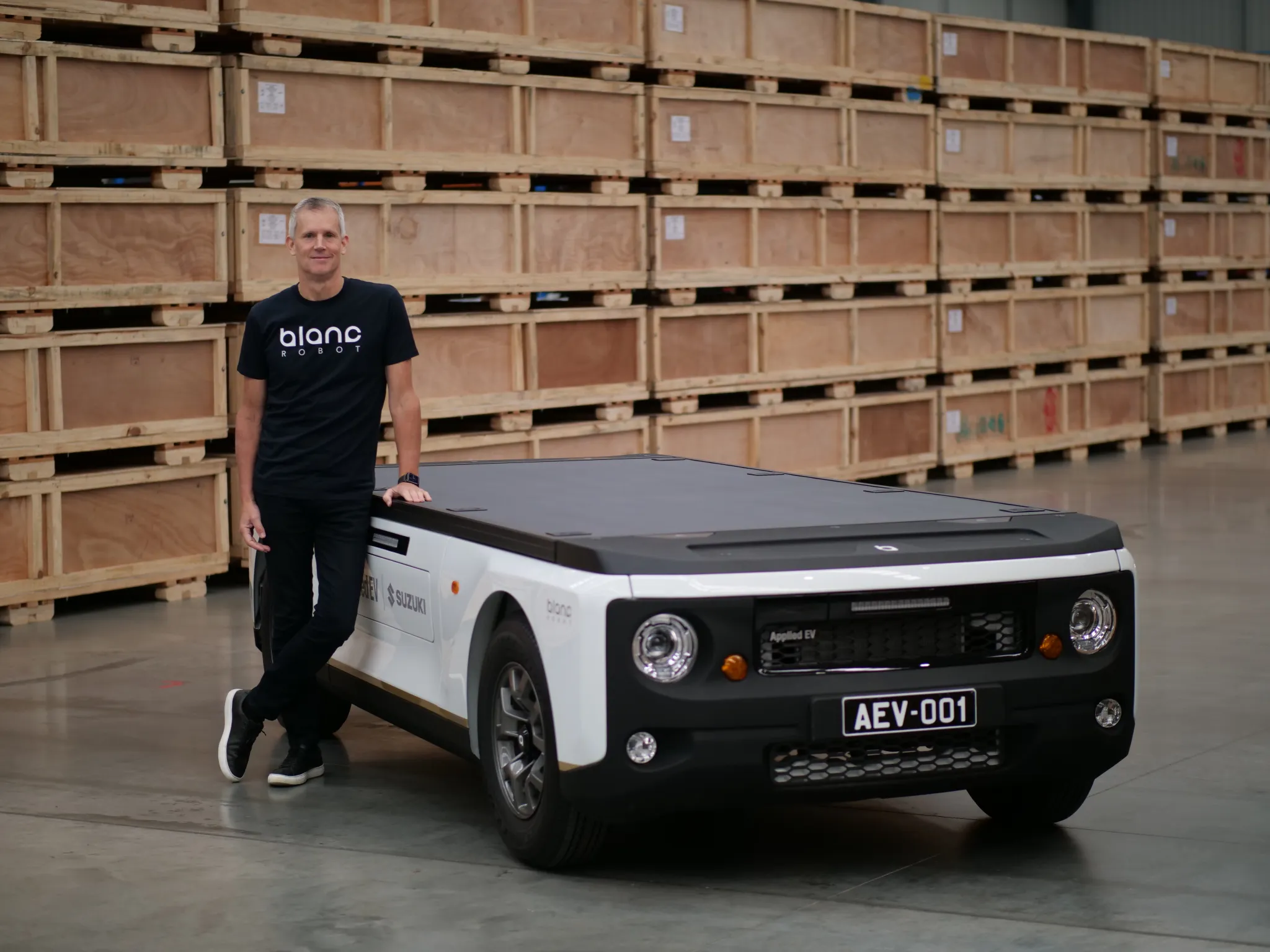 Julian Broadbent with the Blanc AV EV. Photo courtesy Applied EV.
Applied EV is preparing to deploy 100 sixth-generation autonomous electric vehicles. These will be added to the 20 Applied EV vehicles already deployed. So far, their deployment has been restricted to confined, “mundane tasks like dust suppression for miners and inter-warehouse logistics for manufacturers.” The aim is to get thousands of vehicles in use over the next 5 years.
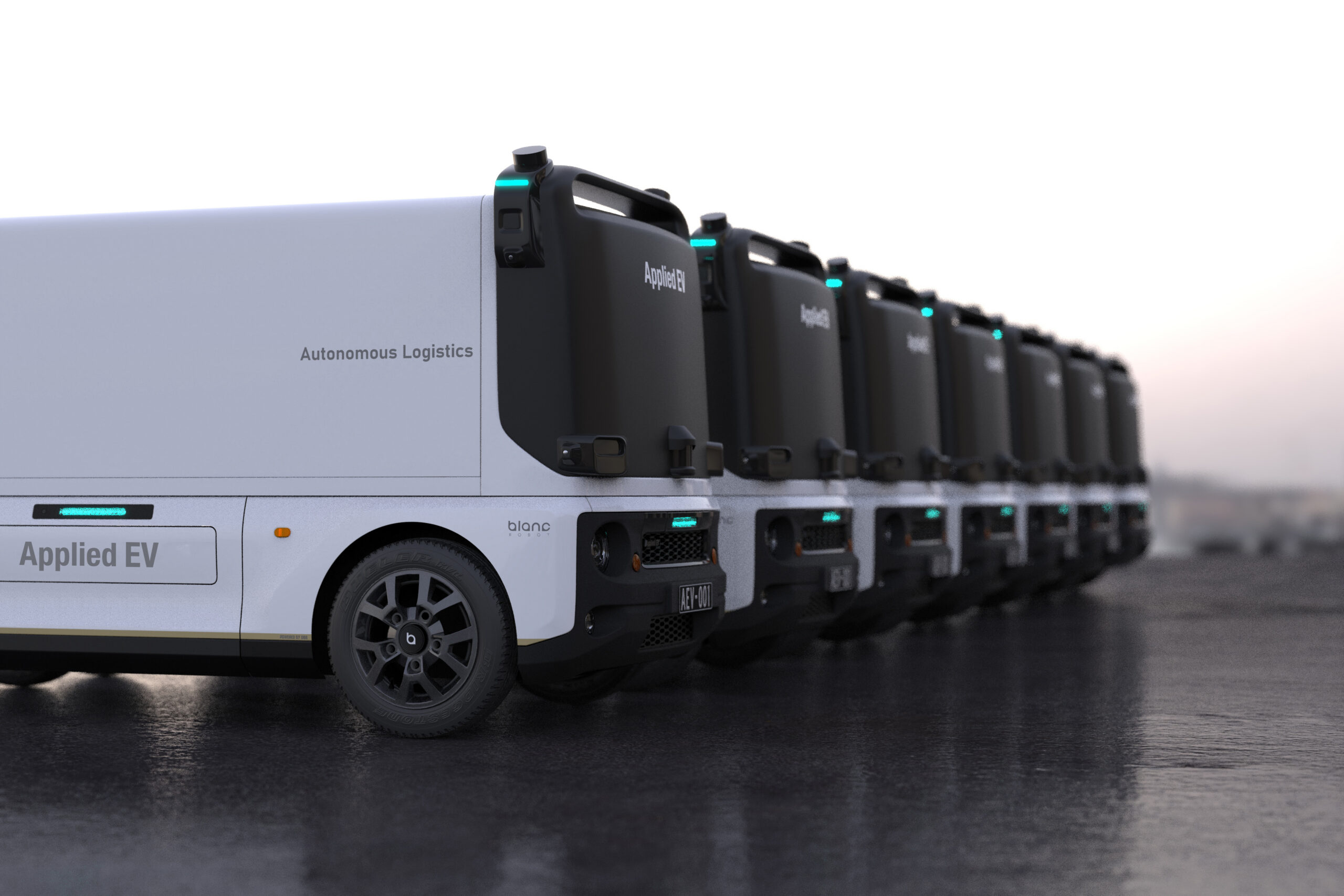 Applied EV G6 7X VEHICLES runway. Photo courtesy Applied EV.
The Generation 6 Blanc Robots represent a new class of purpose-built logistics vehicles. They feature a cabinless design and a flat chassis that can be configured for a range of uses. As described by Applied EV on its website: “Blanc Robot™ — a cabinless, adaptable vehicle engineered for autonomous logistics and industrial transport. Powered by Digital Backbone™ — Applied EV’s proprietary safety-rated, fully programmable control system delivering scalable autonomy for any vehicle or task.”
“The vehicle frames are built by Suzuki, but the boxes that control them are made in Melbourne. New jobs coming in what I call Applied EV 2.0.” Applied EV co-founder and CEO Julian Broadbent tells Forbes Australia, “The world has started to believe that autonomous driving will happen.”
 Applied EV G6-Cutaway. Photo courtesy Applied EV.
“We’re looking at very low-speed urban work with them. They have large-scale challenges in a lot of cities in Japan due to population reductions, causing severe labour shortages. We’re using this to solve a problem where there aren’t any drivers in the town to be able to do all of the jobs that this company needs to do.”
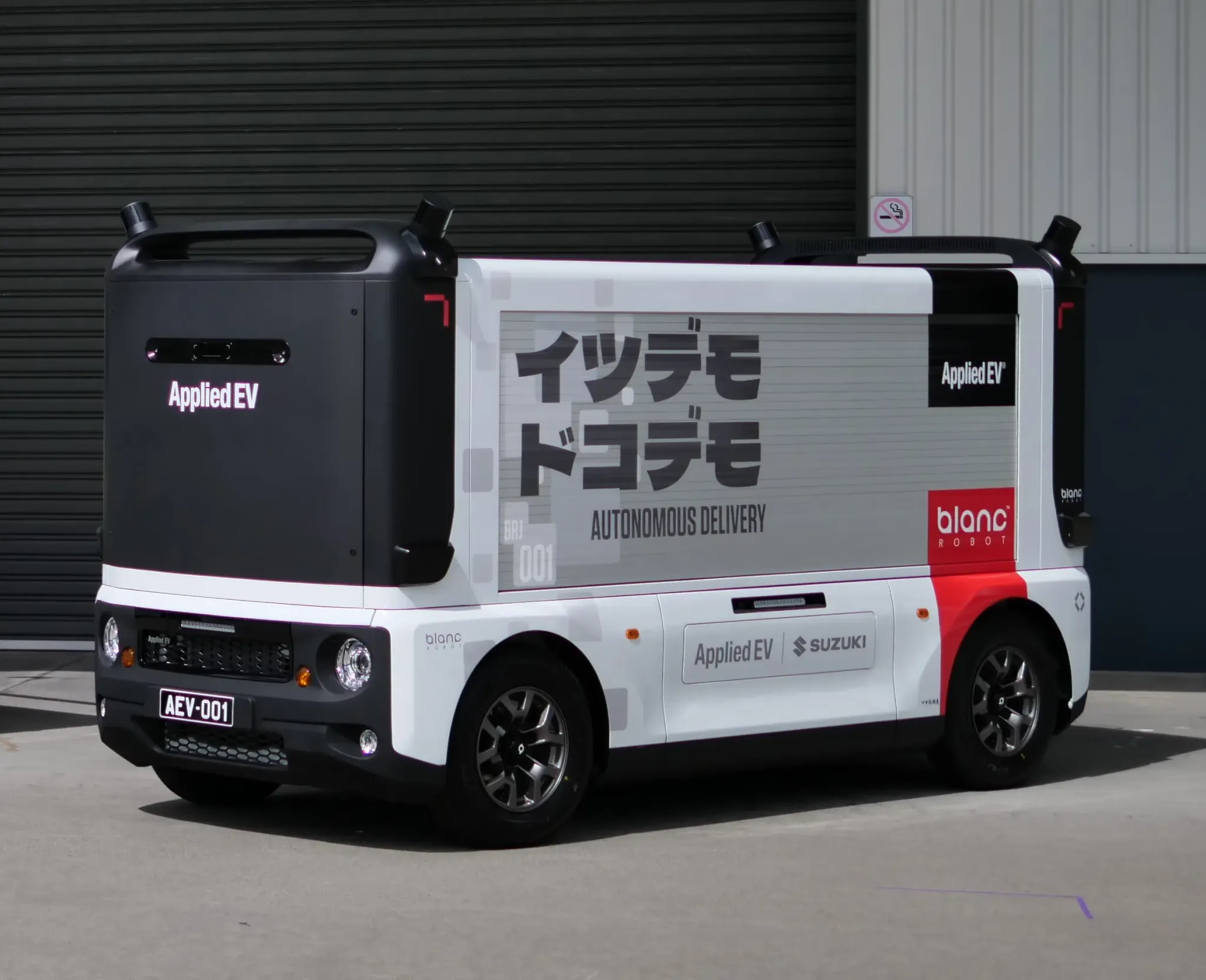 Applied EV investor Japan Post. Photo courtesy Applied EV.
“It’s what I would call a megatrend-size challenge. But the first steps are quite small. It involves a lot of stakeholders.” Applied EV has recently established a partnership with Japan Post Capital to solve logistics challenges in hundreds of cities in rural areas of Japan, aiding the economic growth of these areas.
“When traditional automotive manufacturing left Australia, we saw an opportunity, tapping into the wealth of local engineering talent and building something truly innovative from the ground up,” explains Broadbent. Applied EV traces its roots to a Melbourne garage in 2015. Back then, autonomous electric vehicles were hailed as the next big leap, with expectations that they would dominate roads within five years. The company has since been leveraging the proving grounds left behind after General Motors exited Australia, turning an era of retreat into a platform for innovation.
Julian Broadbent, CEO of Applied EV, started out as a senior studio engineer at Holden in Australia and later took on executive roles at General Motors’ global headquarters in Detroit.
I queried: Is Australia punching above its weight? Will this be another in a long line of failures for self-driving? I reached out to Applied EV and found them most generous in their answers to my questions.
CleanTechnica: What fossil fuelled vehicles are being replaced by the Blanc?
Applied EV: The Blanc Robot has a B-segment footprint (smaller than a typical minivan) while carrying payloads comparable to, and in some cases greater than, a mid-sized utility pick-up truck. By removing the cabin, the design achieves a high level of spatial and mechanical efficiency, reducing system complexity, part count, and overall cost, and is designed to take on many logistics tasks traditionally handled by mid-sized trucks and vans.
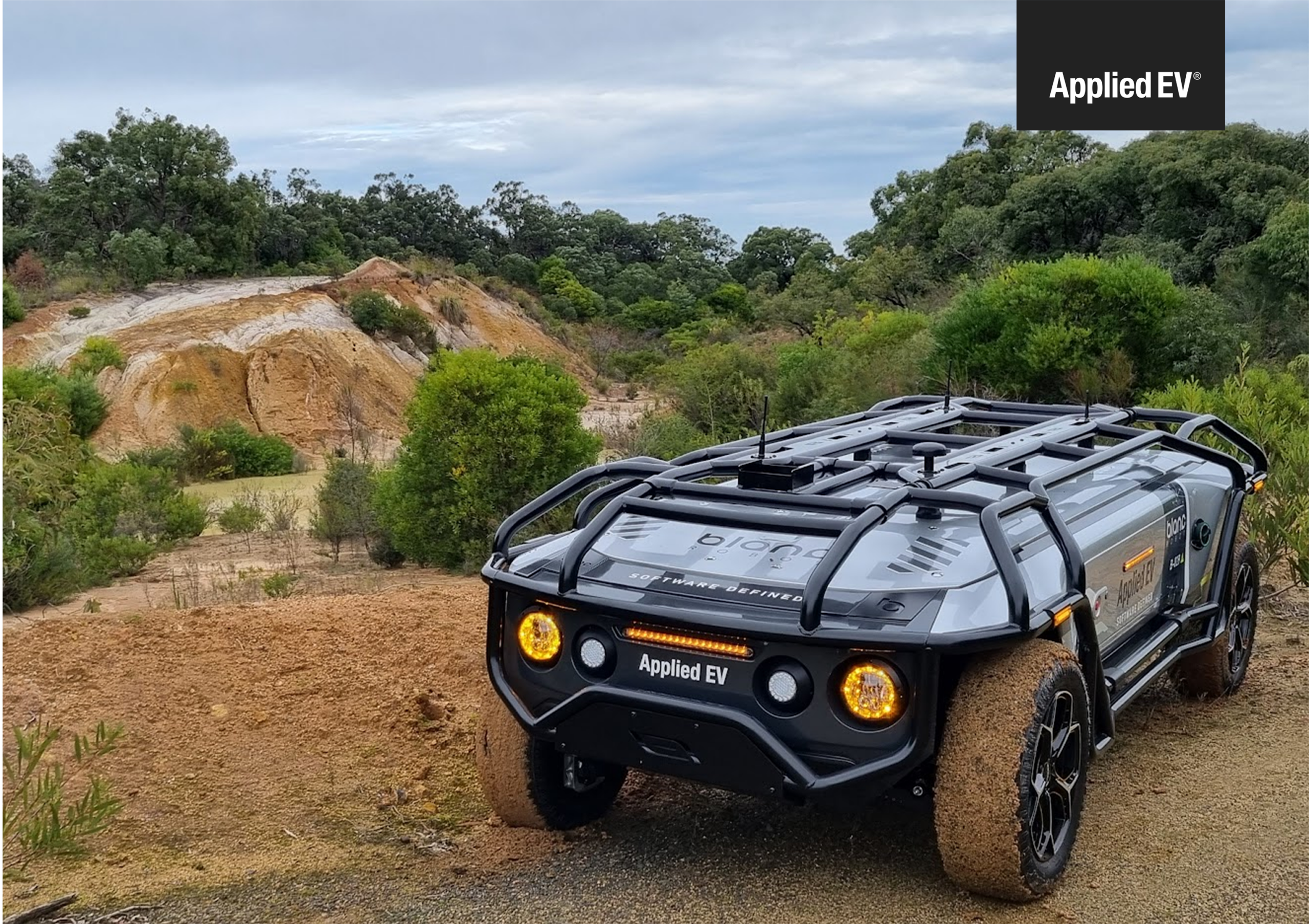 AEV G5 Off road. Photo courtesy Applied EV.
CleanTechnica: What is the relative cost difference and return on investment?
Applied EV: The Blanc Robot is a purpose-built, cabinless vehicle designed to maximise operational efficiency and reduce overall system cost, with pricing comparable to that of a conventional electric vehicle.
Operating autonomously around the clock, the Blanc Robot will deliver 20–30% cost reductions compared to current logistics operations. These benefits are expected to increase further as artificial intelligence and autonomous capabilities continue to expand into additional use cases.
In industrial and logistics environments, the adoption of electric vehicles has historically been constrained by cost. Autonomy changes this equation by enabling organisations to transition to clean, electric operations while simultaneously improving productivity and reducing total operating costs.
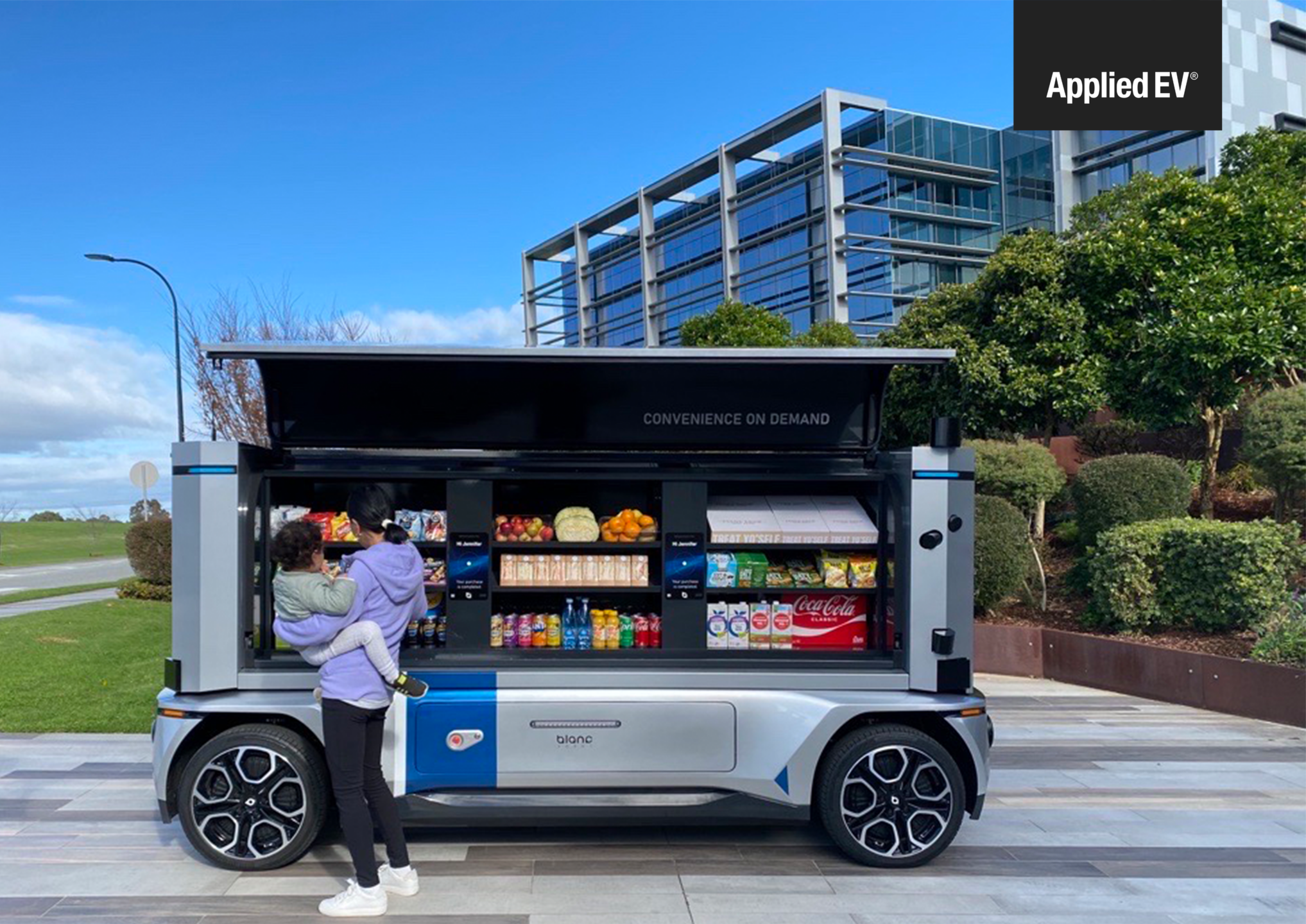 Applied EV G5 as a Convenience Store. Photo courtesy of Applied EV.
CleanTechnica: Could you compare Blanc autonomy with Tesla’s Full Self-Driving (Supervised)?
Applied EV: The Blanc Robot is driven by our safety-rated software platform. It is our “App Store” for mobility, where any autonomous system can be integrated; in other words, it is designed to be modular and autonomy-agnostic, allowing it to integrate with a wide range of autonomous driving systems, including, in principle, systems such as Tesla’s. This modular approach enables us to select the most appropriate autonomy stack for each specific use case. We provide APIs to enable straightforward integration with third-party systems. A core differentiator of the Blanc platform is its ability to deliver full software control with safety-rated motion, ensuring that autonomous driving can be implemented reliably and in compliance with industrial safety requirements.
Our strategy is to work horizontally with many autonomous providers, which differs from Tesla’s vertical approach.
CleanTechnica: How are the 20 Blanc robots already in the field being used?
Applied EV: The Blanc Robots currently deployed in the field are supporting a range of validation, testing, and early commercial activities. A notable milestone was the UK Oxa collaboration, which resulted in our first Blanc Robot vehicle to be registered for on-road use.
We work with multiple autonomous driving systems to conduct trials across different operational scenarios. Our primary focus is on controlled and semi-controlled environments and industrial applications, including agriculture, mining, factory automation, and logistics operations.
While our current deployments prioritise these environments, we are closely monitoring regulatory developments and requirements for future public-road applications.
Earlier deployments were primarily focused on system validation and performance testing. The current sixth-generation Blanc Robot marks a transition into a new phase of commercial deployment, supporting real-world operations and customer use cases at scale.
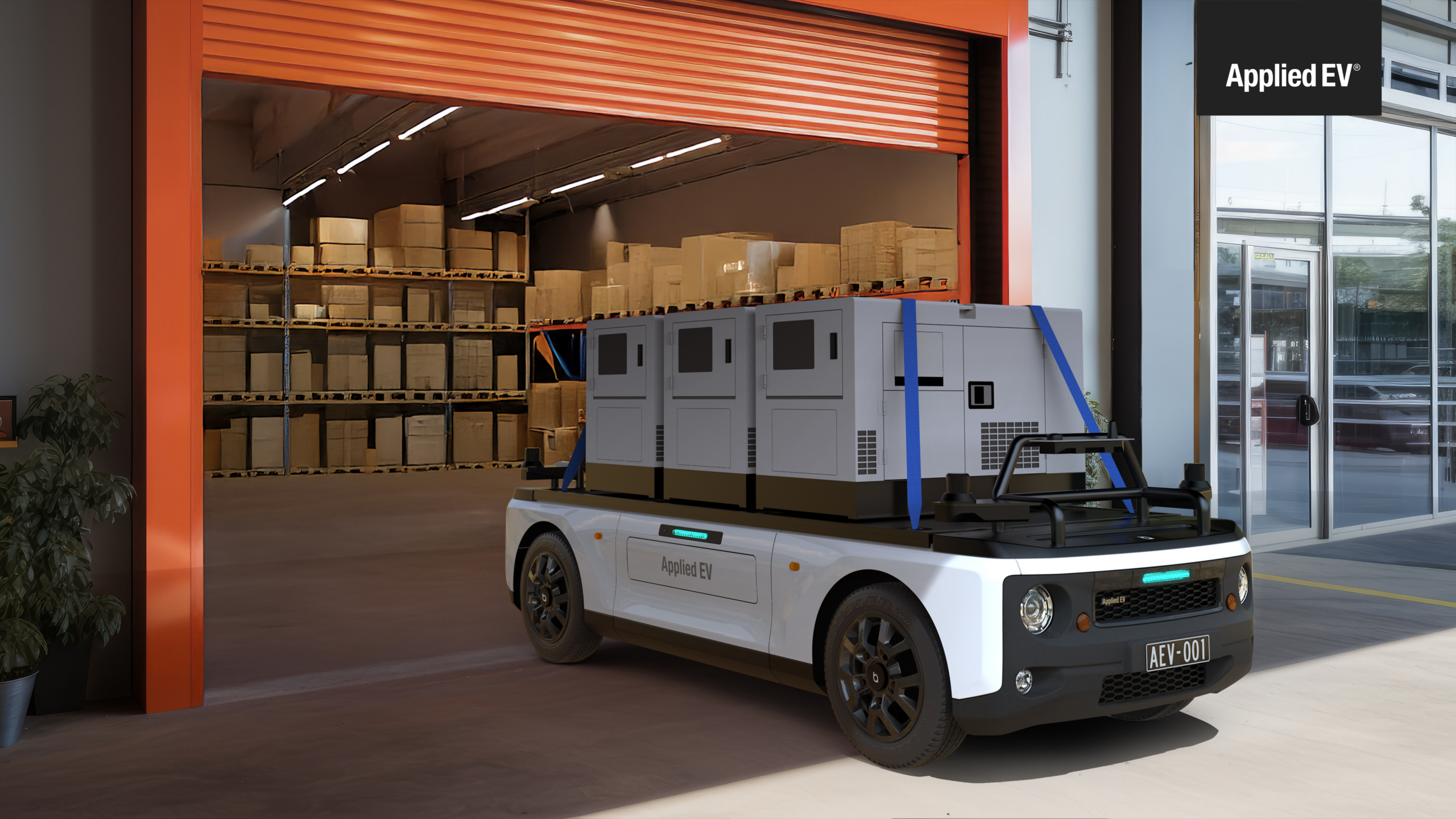 Applied EV G6 Warehouse operations. Photo courtesy Applied EV.
CleanTechnica: please elaborate on Julian’s comment about people managing the fleet. “We have to employ a lot of people to manage fleets remotely.”
Applied EV: Julian’s comment is referring to the growth of a dedicated operations and services capability — a division focused on remote fleet management, system monitoring, data analytics, and customer support.
The data generated by Blanc vehicles is a critical asset. It enables precise scheduling of tasks, predictive maintenance, continuous efficiency improvements, and better planning for customers. This is where we see a significant opportunity for workforce growth.
CleanTechnica: Do the Chinese already have this technology? Who are your competitors?
Applied EV: There’s a lot of attention on robotaxis driven by big tech companies, primarily in the US and China, and for good reason — it’s impressive and important. But it’s not the only field where autonomy can make a real difference. We’re focused on autonomous logistics, which gets far less attention but solves very real problems. Labour shortages, safety, and emissions are pressing issues in logistics.
While there’s been some progress with autonomous semi-trucks on highways, our strategy is different; we’re working in a space where not many others are, applying proven automotive safety and engineering principles to practical, deployable autonomous logistics solutions, in controlled environments, predictable routes, and with immediate impact on labour shortages and emissions.
Although we have seen similar initiatives in China, our modular, autonomy-agnostic strategy, delivered in partnership with OEMs, is uniquely positioned in the market. We are not aware of any other platform that combines this level of flexibility, integrated capability, production readiness, and automotive-grade execution.
CleanTechnica: Can you supply a little more information on the relationship between Applied EV and Australia’s defunct auto industry.
Applied EV: We are a startup, but one built on deep automotive experience. Many members of our team bring decades of expertise from Australia’s former car manufacturing industry, spanning vehicle engineering, production, quality, and safety.
We combine this foundation of automotive knowledge with advanced software control systems to create a new generation of electric, autonomous, software-defined vehicles. These vehicles are designed and built to meet automotive-grade production and safety standards, while leveraging the flexibility and intelligence of modern software.
In many ways, we see this as a continuation of Australia’s automotive engineering story. The skills, discipline, and attention to detail that once defined Australian car manufacturing are now being applied to a new challenge, building the machines needed for a more sustainable future. Rather than traditional passenger cars, we are focused on electric and autonomous systems that deliver meaningful impact in industrial and logistics applications.
CleanTechnica: Let’s get back to the garage, what more can you tell me?
Applied EV: Like many iconic technology stories, Applied EV didn’t begin in a corporate lab — it began in a garage. Our first project came from the University of Sydney —Australian Centre for Field Robotics (ACFR) — which asked us to create a vehicle that could be easily controlled by software. In working on that challenge, we identified an unmet need between modern software capabilities and legacy automotive platforms.
From there, a small team set out to build a technology company within the automotive world — a space traditionally dominated by global manufacturers. Being small, nimble, and deeply technology-focused has allowed us to move quickly, while the team’s automotive experience ensures that we do so safely and effectively.
Along the way, we came to realise that electrification and autonomy are not just exciting technologies; they can solve real, complex industrial problems with meaningful impact.
Building a company from scratch has been a significant challenge and has required real personal sacrifice. At the same time, being part of this journey brings a strong sense of purpose — a feeling that the work truly matters and that we are contributing to something bigger.
Today, we are confident in our mission: to bring autonomy to scale and apply it in ways that deliver genuine benefits to industry, society, and the world.
Thank you, Applied EV. Another niche being electrified, and a step forward for autonomous vehicles. Australia’s future continues to be electric, autonomous, and innovative. Watch this space.
Sign up for CleanTechnica’s Weekly Substack for Zach and Scott’s in-depth analyses and high level summaries, sign up for our daily newsletter, and follow us on Google News!
Advertisement
Have a tip for CleanTechnica? Want to advertise? Want to suggest a guest for our CleanTech Talk podcast? Contact us here.
Sign up for our daily newsletter for 15 new cleantech stories a day. Or sign up for our weekly one on top stories of the week if daily is too frequent.
CleanTechnica uses affiliate links. See our policy here.
CleanTechnica’s Comment Policy