Nothing has played out as expected since the UK issued its EV mandate, and industry wants to tweak the route forward. By Megan Lampinen
In December 2025, the European Commission dialled back plans to phase out internal combustion engine (ICE) vehicles by 2035, offering a more flexible approach to automotive CO2 reduction. Many players in the UK want similar concessions from the government, claiming a range of dire consequences if the existing requirements remains in place. “If the gap between electric vehicle (EV) ambition and demand remains as it is, the UK’s attractiveness not just as market but also as a manufacturing location evaporates,” warned Mike Hawes, Chief Executive of the UK’s Society of Motor Manufacturers and Traders (SMMT). “Decarbonisation could mean de-industrialisation.”
Hawes was speaking at the opening of the SMMT’s Electrified conference in London on 12 March, where industry players gathered to explore the zero-emission vehicle transition. A big focus was the looming phase-out of ICE vehicles. Under the Zero Emission Vehicle (ZEV) mandate, OEMs need to sell an increasing percentage of EVs every year, starting at 22% in 2024 and rising to 80% by 2030 and 100% by 2035. The message from the industry is that meeting these targets has become unviable in the wake of unexpected industry developments.
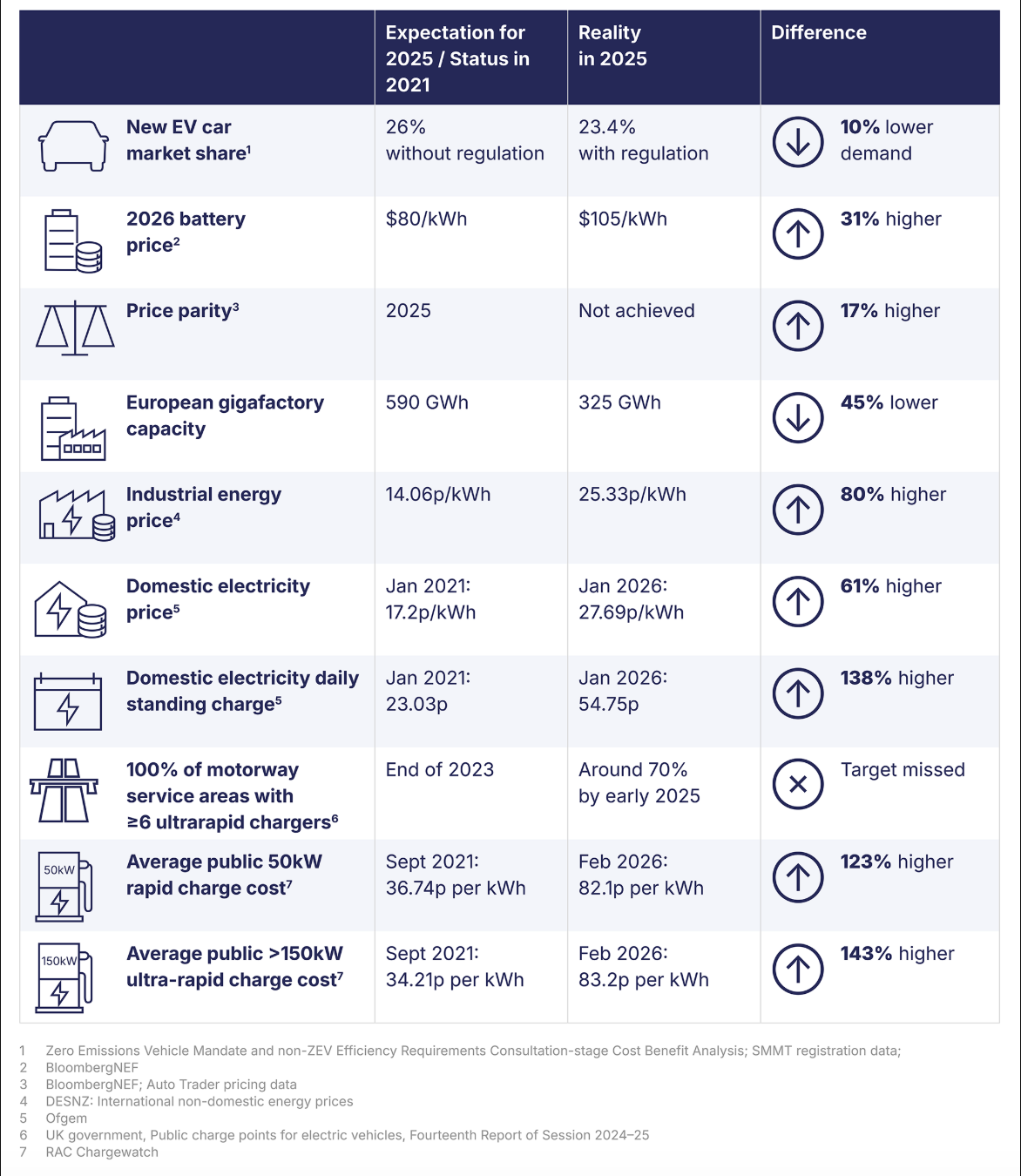
Back in 2020, then Prime Minister Boris Johnson outlined a “Ten Point Plan for a Green Industrial Revolution”, calling for an ICE phase out by 2030 and a ZEV mandate by 2035. At the time, nobody expected Russia’s invasion of Ukraine, US tariff chaos, or a war in Iran. There were also great expectations that public charging infrastructure would expand rapidly along with local gigafactory capacity, while battery and energy costs would decline. All of these factors were supposed to bolster EV demand. Needless to say, the forecasts have not panned out. The question is whether or not this now merits a change in regulation.
“This industry remains totally committed to net zero, but sometimes to reach a destination your sat nav re-routes you,” said Hawes. “When the facts change, you have to adapt.”
ZEV ambition vs reality
 Source: SMMT
The cost of compliance
Just as the SMMT and industry were convening in London, the UK Department for Transport (DfT) was releasing automaker ZEV mandate compliance data from 2024, the first year of requirements. It confirms that both the car and van markets exceeded the initial targets, primarily through the sale of EVs but also through various flexibilities like CO2 credits, borrowing allowances from future years, and CO2 conversion flexibilities from efficiency improvements in non ZEVs.
But compliance at this stage isn’t surprising. As Hawes observed: “Automakers don’t have a choice; they cannot not comply.” Technically those that don’t comply pay a fine, but what Hawes is concerned about is the cost of compliance.
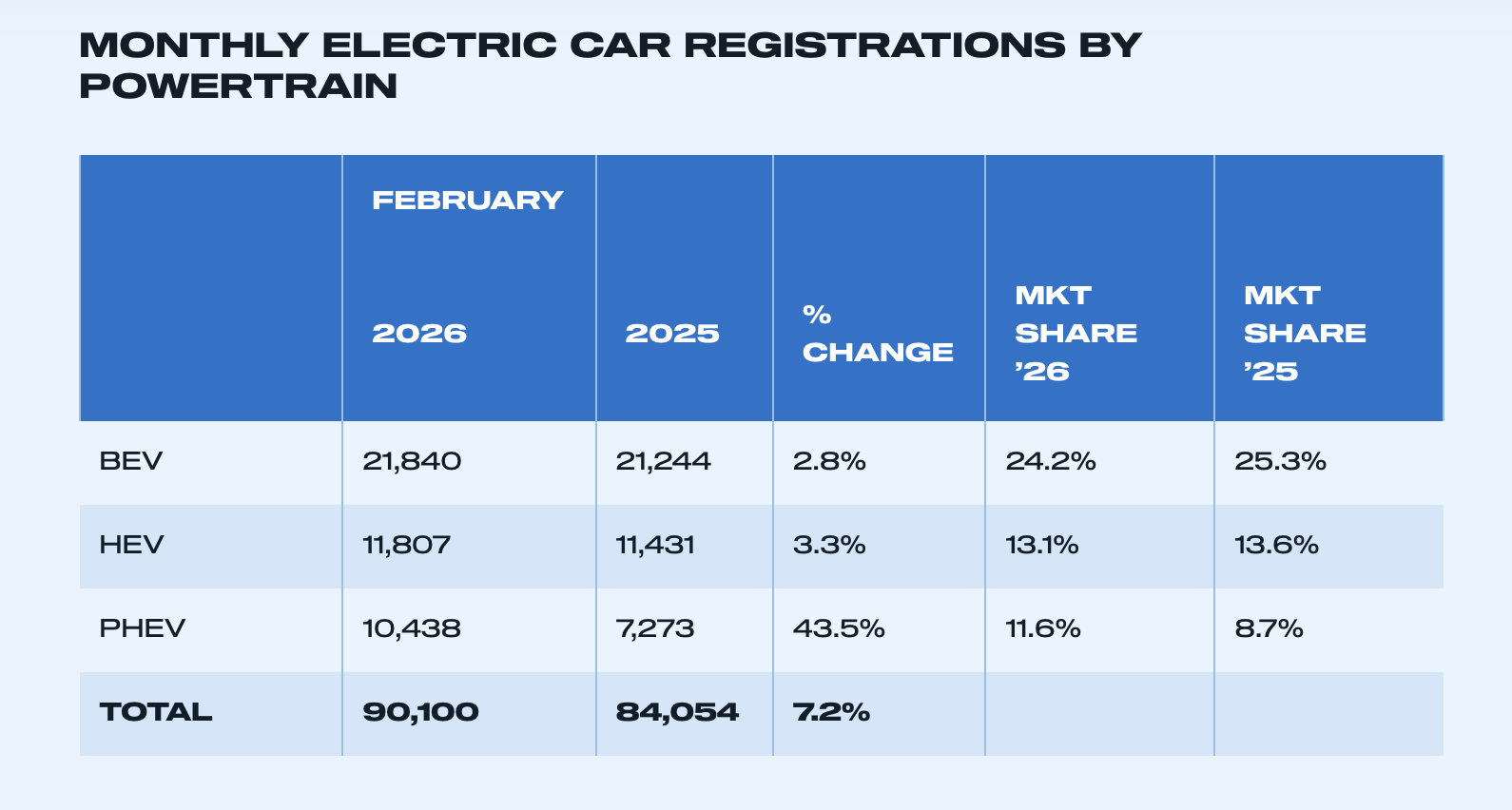
EV volumes in the UK are undoubtedly rising. Data from the SMMT shows that new EVs currently account for one-quarter of the new car market. Compared to about 6% in 2020, that could be seen as a success. However, these sales came in the wake of hefty financial incentives. In 2025, the average discount on an EV was £11,000 (US$13,200), which isn’t sustainable in the long term.
 Source: SMMT
To meet the 2028 targets, the industry needs more than double the share of EV cars and quadruple the share of EV vans. By 2029 the flexibilities for compliance will disappear. “Nobody thinks we will get to 80% electric cars or 70% electric vans by 2030,” said Hawes.
What does the industry want?
The SMMT wants the government to immediately bring forward its planned review of the mandate, currently set for 2027. But whether it ultimately wants a longer timeline for compliance or a complete rethink about mandates in general is unclear, and Hawes declined to provide any detail when pressed: “We just say, ‘Have a review. Look at the facts of where we are in terms of underlying demand, cost and infrastructure. Then determine if the regulatory and fiscal framework is fit for purpose’.” Overall, Hawes’ comments imply he would like something modelled on the more flexible approaches taken by the EU and Canada, though not the complete reversal seen in the US.
Martin Sander, Member of the Board of Management for Sales, Marketing and After Sales at Volkswagen Passenger Cars, was clearer in his message to the UK government: “Stop talking about the mandates…The language we are using to try to manage this transition is wrong. Let’s talk about EV benefits and address the real or emotional hurdles. Then it doesn’t matter if we are at 80% in 2030 or 2033. We will manage the transition successfully from both a consumer and a business perspective.”
Nicole Shaw, Managing Director at Volvo Car UK, echoed these sentiments and wants to see “more carrot than stick” in the official approach. “Nobody is talking about EVs being a better drive, a better experience, or offering more technology. We haven’t had the chance to celebrate that because we are just discounting all the time.” She suggests that instead of modelling itself on the EU, the UK should seek inspiration from Norway, where EVs now account for the majority of new car sales. “We need to look at what’s working well. Something like not having VAT is more effective at changing consumer behaviour than punitive fines.”
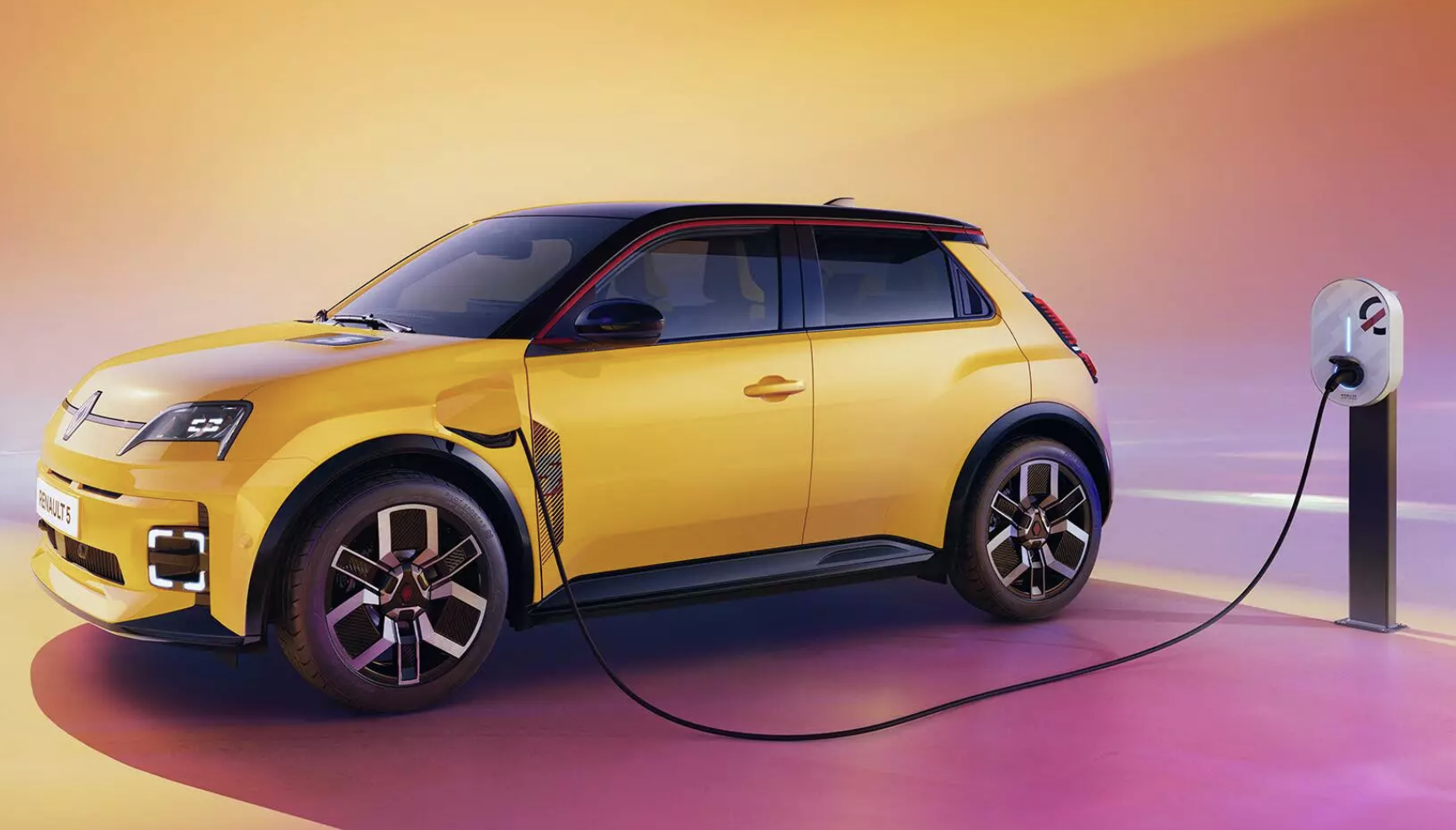 UK consumers can choose from more than 160 EV models
Opposition
Not surprisingly, environmental groups, charging infrastructure suppliers and EV-only brands are adamant that the industry needs to stay on track and stick to the plan in place.
“Drivers are already choosing electric in growing numbers because the technology and economics make sense,” commented Fiona Howarth, Founder and Director of Octopus Electric Vehicles. “The ZEV mandate provides the certainty that brings more choice and better value to drivers. Weakening this policy now would be the wrong approach. We should be doubling down on ways to power our cars and homes with energy produced here in the UK, rather than relying on imported fossil fuels. The focus now should be on building confidence and accelerating the transition, not slowing it down.”
Tanya Sinclair, Chief Executive of Electric Vehicles UK, points to the recent EV sales figures as proof that the transition is well underway. “If some manufacturers now want to weaken the targets designed to bring these vehicles to market, they are only hurting themselves,” she warns. “Asking government to slow the rollout of EVs goes against what drivers want and risks reducing choice just as demand is growing. Weakening the ZEV mandate will not stop the transition; it will only leave the companies calling for it further behind.”
The argument from these players is that today’s focus needs to be on building confidence among drivers to accelerate the transition rather than revisiting the overall direction of travel. And that is a real possibility: the UK government has already proven flexible in its environmental roadmap, previously making adjustments for hybrids. Further amendments are highly likely and could come in various forms, from outright exemptions to reductions in penalties, longer timelines for compliance, or greater flexibility in overall CO2 emissions.