The narrative surrounding the electric vehicle (EV) market for the past three years has been one of “Tesla’s eroding dominance.” As legacy automakers like Ford, GM, and Hyundai poured billions into electrification, analysts predicted that Tesla’s market share would continue its slow slide into the minority. However, the expiration of federal EV tax incentives at the end of 2025 served as a brutal “stress test” for the industry—and the results are nothing short of a landslide victory for Austin, Texas.
Tesla has performed a feat of market-share gymnastics that few thought possible, leaping from a 41% share during the height of the subsidy era to a massive 59% share of the U.S. EV market today. This recovery is a watershed moment in automotive history. It signals that while competitors were leaning on the crutch of the $7,500 federal tax credit to make their expensive-to-build EVs viable, Tesla was building a business model that didn’t need it.
This 59% share represents more than just sales numbers; it represents the “Great Decoupling” of Tesla from the rest of the pack. While major competitors are currently struggling with inventory bloat and scaling back production targets, Tesla has streamlined its operations to thrive in a truly free market.
The Anatomy of a Recovery: How Tesla Won the Post-Subsidy War
How did Tesla manage to grow while the rest of the industry withered? The answer lies in vertical integration and the “First Principles” manufacturing approach. When the subsidies vanished, the price of a Ford Mustang Mach-E or a Hyundai IONIQ 6 effectively jumped by thousands of dollars for the consumer. Competitors, already facing thin or negative margins on these vehicles, had no room to lower prices to compensate.
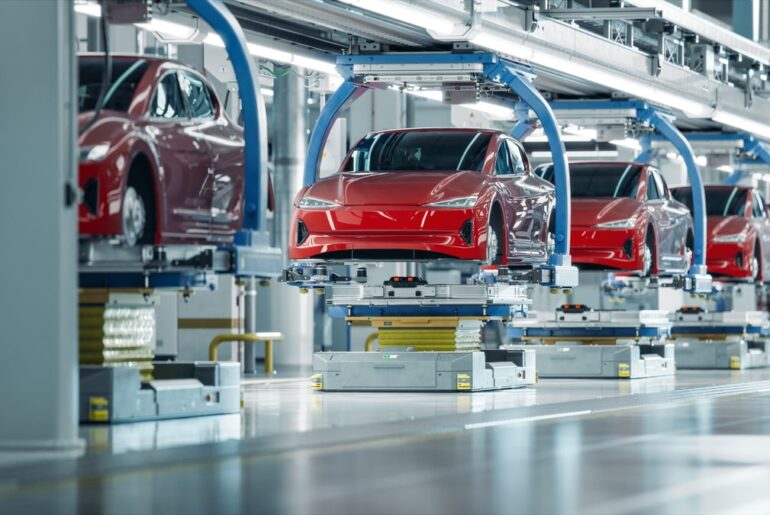
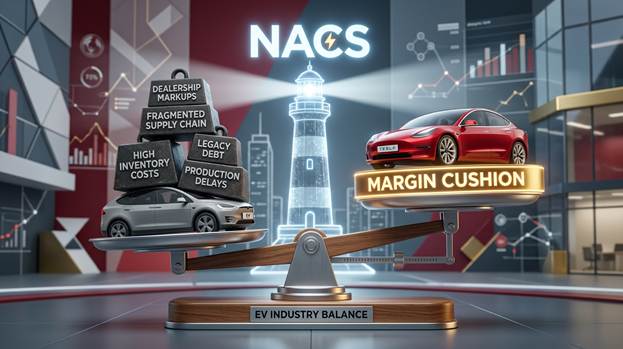
Tesla, conversely, has spent the last decade obsessing over cost-per-car. Through the use of Giga Press castings (which replace hundreds of parts with a single piece of aluminum), 4680 battery cell scaling, and a direct-to-consumer sales model that bypasses dealership markups, Tesla had the “margin cushion” to absorb the shock.
Furthermore, the “Supercharger Moat” cannot be overstated. As the North American Charging Standard (NACS) became the de facto law of the land, Tesla’s infrastructure became its greatest advertisement. When the financial “freebies” from the government ended, consumers defaulted to the brand that offered the most reliable ownership experience. Tesla didn’t just win on price; they won on the peace of mind that comes with a mature ecosystem.
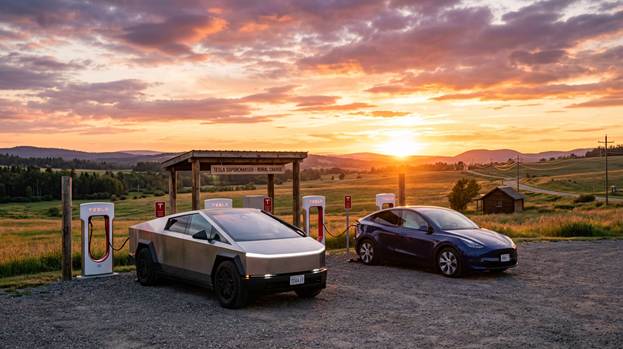
Tesla’s 2026 Performance: The State of the Union
So far this year, Tesla’s U.S. performance has been characterized by a “return to the fundamentals.” The Model Y remains the best-selling vehicle in the world, but the real story of 2026 has been the resurgence of the Model 3 “Highland” and the ramp-up of the Cybertruck.
Despite the lack of federal incentives, Tesla’s internal financing arms have stepped in to offer competitive interest rates, effectively “buying down” the cost for consumers in a way that traditional banks—wary of EV residual values—have been hesitant to do. This aggressive financial maneuvering has kept the order books full even as high interest rates cooled the broader auto market.
However, it hasn’t been without challenges. The “enthusiast” market is largely saturated. To maintain this 59% share, Tesla is now fighting for the “pragmatist” buyer—the person who doesn’t care about 0-60 times but cares deeply about whether the car will last 15 years. This year has seen Tesla pivot its marketing (or lack thereof) toward durability and low maintenance costs, a necessary shift to capture the suburban family demographic.
The Path to 70%: How to Further Improve Performance
While a 59% market share is dominant, it is not a ceiling. To push further, Tesla must address the “Model Gap.” Currently, Tesla’s lineup is heavily concentrated in the mid-size sedan and SUV segments. To truly crush the remaining competition, they need to execute on three fronts:
**The $25,000 “Model 2” Platform:** The expiration of subsidies makes the need for a truly affordable EV even more dire. If Tesla can bring a sub-$25,000 vehicle to market with a profitable margin, they will effectively end the relevance of budget ICE (Internal Combustion Engine) vehicles.
Service Center Expansion: The biggest complaint among Tesla owners remains service wait times. Scaling the service infrastructure to match the 59% market share is the only way to ensure long-term brand loyalty.
FSD (Full Self-Driving) as a Revenue Driver: As hardware margins stabilize, Tesla must convert its massive fleet into a software-recurring revenue machine. Widespread adoption of FSD version 13+ could provide the capital needed to continue aggressive price wars against lagging competitors.
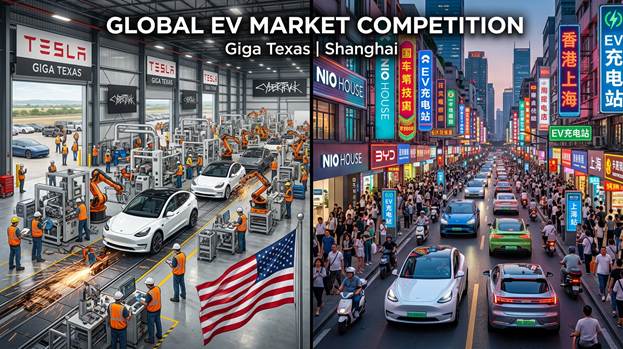
A Tale of Two Worlds: U.S. Dominance vs. Global Struggles
Tesla’s U.S. performance is a stark contrast to its standing in the rest of the world, particularly in China. In the United States, Tesla is the undisputed “Home Team,” benefiting from a brand prestige that competitors like Lucid or Rivian haven’t yet scaled to match. In America, Tesla is the EV market.
In Europe, the story is more balanced. Tesla remains a top contender, but the presence of established giants like Volkswagen Group and Stellantis—who have their own deeply entrenched supply chains—makes a 59% share nearly impossible.
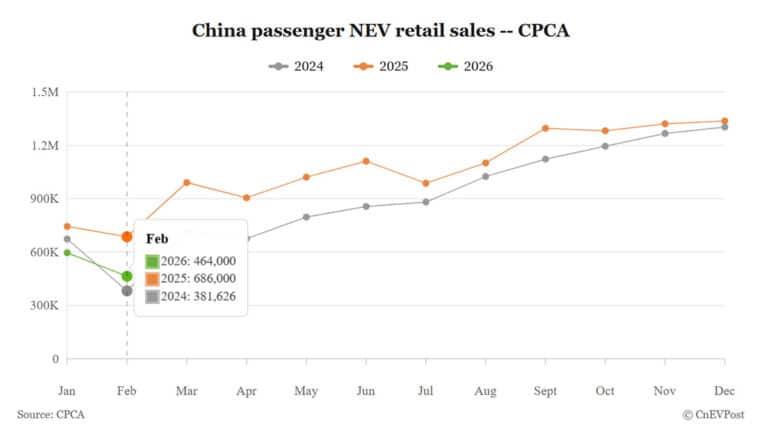
The real battlefield is China. There, Tesla faces a “war of attrition” against BYD and Xiaomi. Unlike the U.S. market, where competitors struggled without subsidies, Chinese automakers enjoy heavy state support and a hyper-efficient local supply chain. In China, Tesla is a premium player, but it does not enjoy the “monopoly-lite” status it currently holds in the U.S. This makes the U.S. recovery even more vital; the North American market is currently Tesla’s “Fortress,” providing the cash flow necessary to fight the price wars abroad.
Winning the Endurance Race
The most amazing aspect of Tesla’s 59% reclaim is what it says about the American consumer. It turns out that the “EV revolution” wasn’t just a bubble fueled by government checks. It was a technological shift that consumers were willing to pay for—provided the product was good enough.
Tesla’s competitors spent years lobbying for the extension of tax credits, arguing that the “infant industry” needed protection. Tesla spent those same years building the Giga Nevada expansion and refining its manufacturing. When the protection disappeared, the difference in preparation became clear. Tesla is no longer just an “EV company”; it is the only American car company that has successfully cracked the code of profitable, high-volume electric transportation in a post-subsidy world.
Wrapping Up
Tesla’s surge back to a 59% U.S. market share following the end of federal tax incentives is a masterclass in industrial resilience. While the “Tesla Killers” from legacy Detroit and overseas foundered without government assistance, Tesla’s focus on manufacturing efficiency and infrastructure allowed it to absorb the price shock and widen its lead. While challenges remain—specifically the need for a cheaper vehicle platform and the fierce competition in the Chinese market—Tesla enters the second half of the decade as the undisputed heavyweight champion of the American road. The subsidies are gone, the “training wheels” are off, and Tesla is riding faster than ever.
Disclosure: Images rendered by Artlist.io
Rob Enderle is a technology analyst at Torque News who covers automotive technology and battery developments. You can learn more about Rob on Wikipedia and follow his articles on TechNewsWord, TGDaily, and TechSpective.
Follow us today…