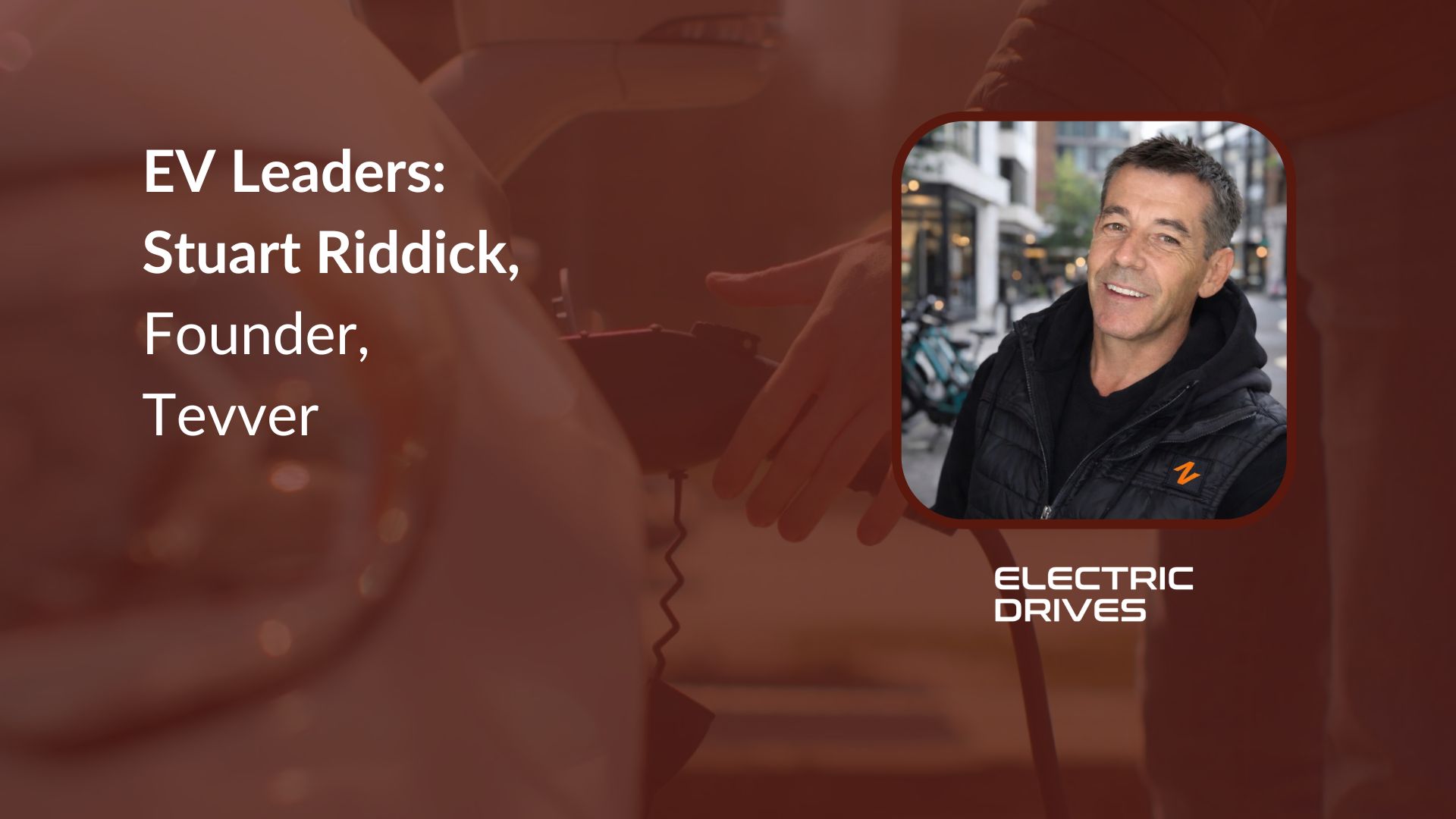
Stuart Riddick is the Founder of Tevver, a UK-based technology company pioneering a new permission and identity layer for physical infrastructure. He is the inventor behind Tevver’s patented Anchor system and the architect of VERA (Verified Execution & Responsibility Architecture) a platform designed to verify authorised interaction at the precise moment physical action takes place. Tevver’s first deployments begin with EV charging, with a broader roadmap spanning fleets, micro-mobility and next-generation urban systems.
With a background in fleet operations and electrified transport, Stuart recognised early that while digital payments were evolving rapidly, physical infrastructure governance was lagging behind. As electrification accelerates, fleet operators need certainty – certainty that the driver or rider is authorised, that entitlement rules are enforced, and that accountability is embedded at the point of action. Tevver’s permission-layer technology delivers that assurance before energy flows.
Stuart’s wider vision is to make trusted physical identity as fundamental to electrified infrastructure as digital identity has become to the internet, enabling cities and operators to move beyond rollout and toward resilient, accountable infrastructure at scale.
What convinced you that identity and authorised action, rather than just payments or connectivity, are the real missing layers in today’s EV and e-bike charging ecosystems?
“The EV industry has done an impressive job solving connectivity and payments. We can now find chargers easily, start sessions digitally, and settle transactions seamlessly. That’s a huge leap forward. But over time, I started noticing something interesting: payments authorise transactions, they don’t authorise physical action. Energy only flows because someone physically connects something.
A cable is inserted. A battery is docked. A charger is accessed. That physical moment is where responsibility and entitlement truly sit. When something goes wrong, whether that’s misuse, asset damage or ambiguity over who was meant to act, the payment log rarely tells the full story.
At its simplest, fleet operators need to know that the person driving the vehicle or riding the e-bike is actually authorised to do so and that they are entitled to use the charging infrastructure connected to it. Today, payments confirm that a transaction happened. They don’t confirm that the right person interacted with the right asset at the right time. Tevver’s permission layer verifies that physical interaction. It links the authorised driver or rider, the vehicle or bike, and the infrastructure itself, before energy flows.”
How do the trust, safety and misuse challenges in e-bike infrastructure differ from those in passenger EV charging, and where do they overlap?
“Passenger EV charging is typically lower density and privately owned. E-bikes and light electric vehicles operate in much more dynamic environments, shared fleets, public space, higher turnover, more hands touching the same hardware. It’s not that one is “riskier” than the other. It’s that micro-mobility compresses complexity.
For fleet operators, this isn’t theoretical. They need assurance that the rider plugging in a bike, or the driver connecting a vehicle, is the authorised user within their system. In shared and high-density environments, that reassurance becomes operationally important very quickly. You have more entitlement changes, more public interaction, and more distributed charging points. That makes clarity around who is allowed to do what and when more important.
The overlap is clear: both ecosystems rely on hardware integrity and accountable access. As these systems converge in cities, having a consistent permission framework across them becomes increasingly valuable.”
You’ve talked about infrastructure failures that happen “quietly”. How does this manifest in e-bike charging and micro-mobility hubs, and how can verified physical identity help?
“When I talk about “quiet” issues, I don’t mean dramatic breakdowns. I mean small mismatches that don’t immediately surface. For example: hardware used slightly outside entitlement windows, batteries docked into the wrong systems, repeated failed connection attempts that never escalate, assets accessed without clear traceability.
Individually, these are minor. At scale, they create blind spots. Verified physical identity brings clarity to those interactions. It allows operators to see not just that energy flowed, but which verified asset interacted with which verified infrastructure and whether it was entitled to do so. It turns ambiguity into accountability. Not in a punitive way but in a governance way.”
Why is offline verification particularly important for e-bike fleets and urban mobility operators?
“Urban mobility doesn’t operate in perfect connectivity environments. Underground parking, dense city cores and interference-heavy areas are common. If authorisation depends entirely on live cloud validation, you introduce unnecessary friction. Offline verification provides resilience. It allows entitlement to be validated securely at the point of action, with audit records synchronised later. For delivery riders and fleet operators, reliability is operational continuity. Embedding trust locally ensures infrastructure works consistently, even when networks fluctuate.”
How do you see trusted permission systems enabling safer deployment of on-street chargers, shared battery systems and residential charging?
“E-bikes sit at the intersection of energy, transport and public space. That makes governance more layered. Councils, housing providers and operators need confidence that infrastructure is being used as intended and that interactions are traceable. Permission systems define the rules at the point of action. They ensure that when energy is transferred or hardware is accessed, it happens within a clearly defined entitlement model. That clarity helps infrastructure scale with confidence rather than hesitation.”
What risks emerge if trust and hardware protection are treated as afterthoughts?
“As infrastructure scales, interactions multiply. Moving from hundreds to thousands of devices across public space introduces complexity that can’t be managed purely at the billing layer. If identity and entitlement aren’t clearly embedded at the physical layer, operators may struggle with visibility and lifecycle accountability.
I see this less as a “risk of failure” and more as the natural next phase of maturity. Electrified transport is becoming essential infrastructure and essential infrastructure benefits from embedded trust from the outset.”
Where do e-bikes and micro-mobility fit into Tevver’s roadmap? Could they become a fast path to adoption?
“EV charging is our first live deployment because it’s a structured environment to establish identity at the point of energy transfer. But, micro-mobility is incredibly dynamic. The density and shared usage models mean entitlement challenges surface quickly.
In that sense, e-bikes could absolutely accelerate awareness that physical identity matters.
For fleet owners, the core need is simple: confidence. Confidence that the person using the vehicle or bike is the authorised user, and that infrastructure is only accessed by those entitled to use it. Tevver’s technology provides that authorisation and reassurance at the physical layer, before action takes place.”
What signals will tell you the industry has moved from infrastructure rollout to infrastructure trust?
“We’ll know the shift has happened when identity is specified at procurement stage rather than retrofitted later. When operators ask not just “Can we bill for this?” but “Can we verify who was entitled to act?” And, when entitlement and hardware identity logs become standard governance tools.
That’s when infrastructure moves from rollout to maturity and trust becomes embedded, not assumed.”
Thanks to Stuart for taking part in our EV Leaders series.