Autoblog and Yahoo may earn commission from links in this article.
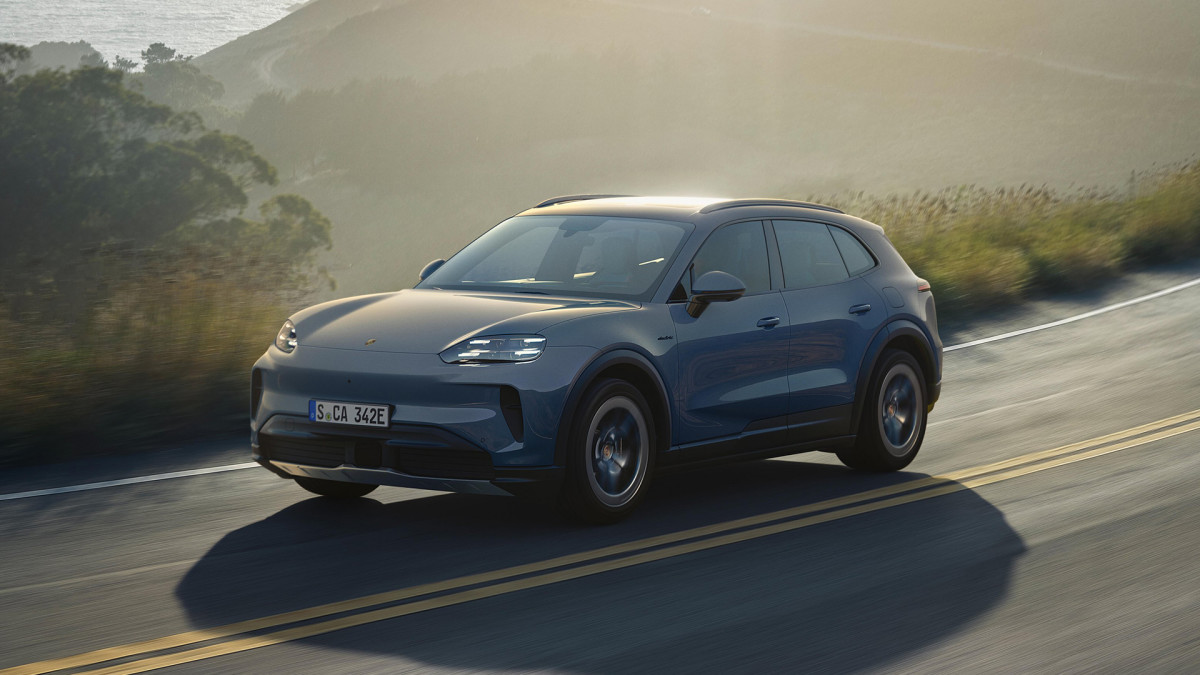
The fully electric Porsche Cayenne went into production earlier this month, and now the German automaker has revealed an even more potent version, the Cayenne S Electric. This model sits between the base Cayenne Electric (402 horsepower) and the ballistic Cayenne Turbo Electric (844 hp)—with 536 hp, the Cayenne S Electric may just be the pick of the bunch. Not only is it extremely quick, but the Cayenne S Electric benefits from the same fast charging as the other variants of the SUV. It’s also priced comfortably below the Turbo, which can exceed $250,000 when fully loaded.
Dual Motors and Equipment From The Turbo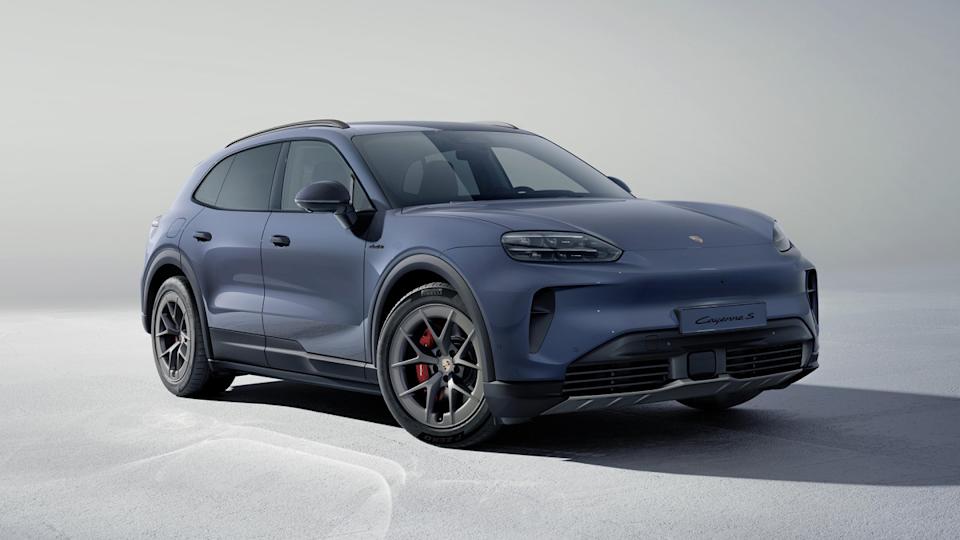
Porsche Cayenne S Electric
Porsche
View the 5 images of this gallery on the original article
Standard permanent magnet synchronous motors on each axle combine for 536 hp, but with Launch Control, the new Cayenne S Electric produces 657 hp. All-wheel drive is standard, which helps this Cayenne accelerate from 0 to 60 mph in only 3.6 seconds. That’s easily quicker than the base Cayenne Electric (4.5 seconds) but doesn’t encroach on the mighty Turbo (2.4 seconds). The top speed of the three trims is 143, 155, and 162 mph, respectively, as long as they’re equipped with summer tires.
Here’s how the three trims match up in terms of price:
Cayenne Electric: $109,000
Cayenne S Electric: $126,300
Cayenne Turbo Electric: $163,000
As with the other two trims, the Cayenne S Electric has a 113-kWh battery. It supports charging speeds of up to 400 kW, which can replenish the battery from 10 to 80% in under 16 minutes. Porsche claims a range of 653 kilometers (around 405 miles) on the WLTP cycle, which should translate into around 350 miles on the more realistic EPA cycle.
Like the Turbo, the S features direct oil cooling for the rear electric motor. It can also be fitted with equipment previously limited to the Turbo, like the Porsche Torque Vectoring Plus system. The Porsche Active Ride suspension and Porsche Ceramic Composite Brake system are also available. In case the standard 536 hp isn’t enough to overtake slower traffic, the optional Sport Chrono Package with the Push-to-Pass function releases another 120 hp in 10-second bursts.
Extensive Customization Available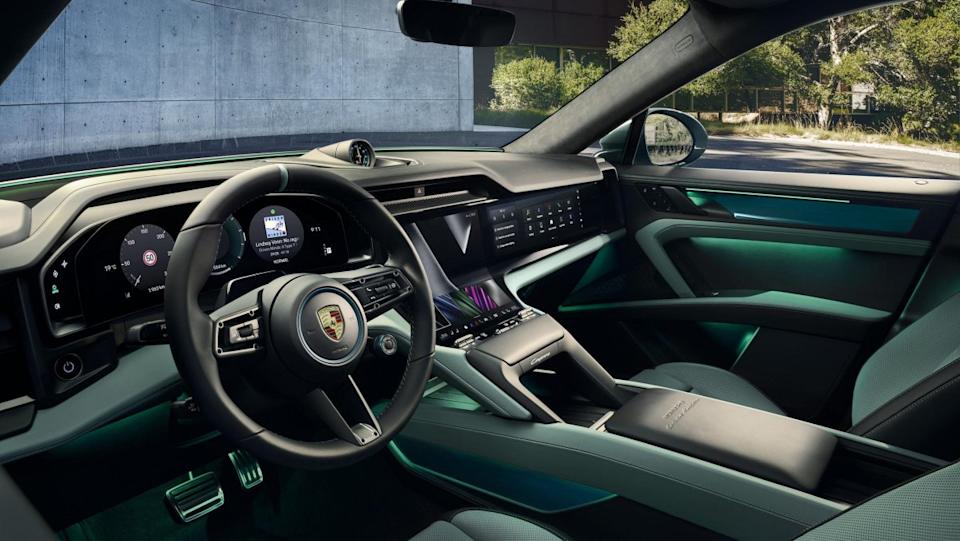
Porsche Cayenne S Electric
Porsche
View the 3 images of this gallery on the original article
As with the other two Cayenne Electric SUVs, the Cayenne S can be customized down to the smallest details. A new Interior Style Package includes two-tone leather in black/Delgada Green with deviated stitching, Comfort Seats with 14-way power adjustment, and a lot more. This option alone will cost you $13,680.
21-inch Aero Design wheels are standard, but there are a variety of wheel upgrades, including 22-inch alternatives. Porsche charges a fortune for options like ventilated front seats ($960), ceramic brakes ($9,950), and a Burmester 3D sound system ($7,380), but these prices come as no surprise.
With all the option boxes ticked, the Cayenne S will fly past the $200k mark.
Cayenne S Electric Rivals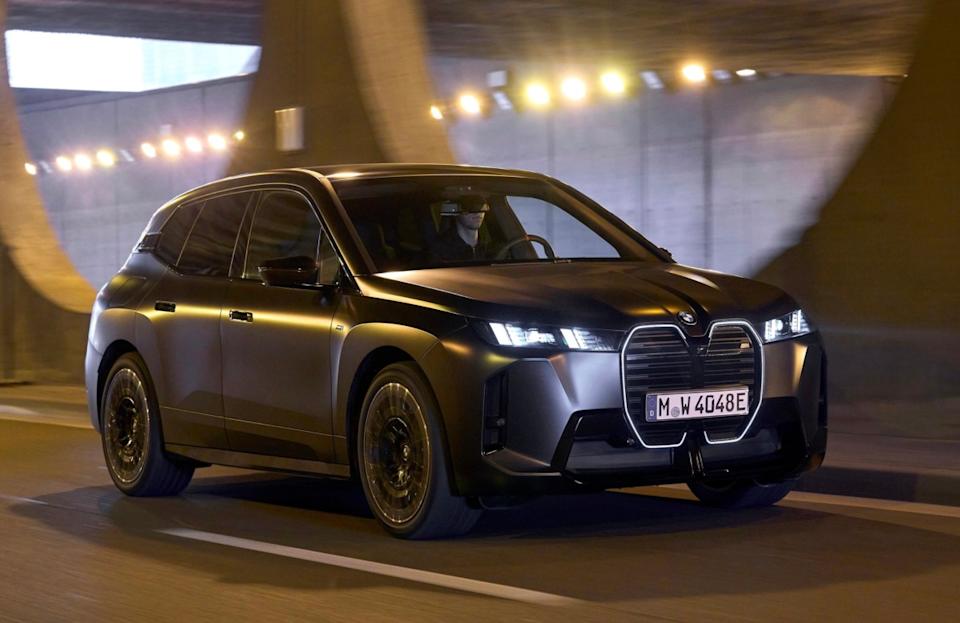
View the 2 images of this gallery on the original article
The new Porsche Cayenne S Electric is more expensive than any of its natural rivals. BMW’s iX M70 makes 650 hp and has the same 3.6-second 0-60 time, but costs only $111,500. Even with all the options ticked, it won’t get close to the Porsche’s base price. However, the range of 303 miles may fall short of the Cayenne’s EPA rating, when that information is released.
At $97,400, the Mercedes-AMG EQE SUV looks like an even bigger bargain next to the Porsche. With 617 hp, it’s quicker (0-60 in 3.4 seconds), but the all-electric range is poor at just 230 miles. As with the BMW, every Mercedes option still won’t get you close to the Porsche’s base price.
Will these cheaper rivals deter Porsche fans from the Cayenne S Electric? It’s unlikely. Followers of the brand are used to paying a premium for the elevated driving experience of its models, and the latest Cayenne S is no exception.
This story was originally published by Autoblog on Mar 10, 2026, where it first appeared in the News section. Add Autoblog as a Preferred Source by clicking here.