On the track
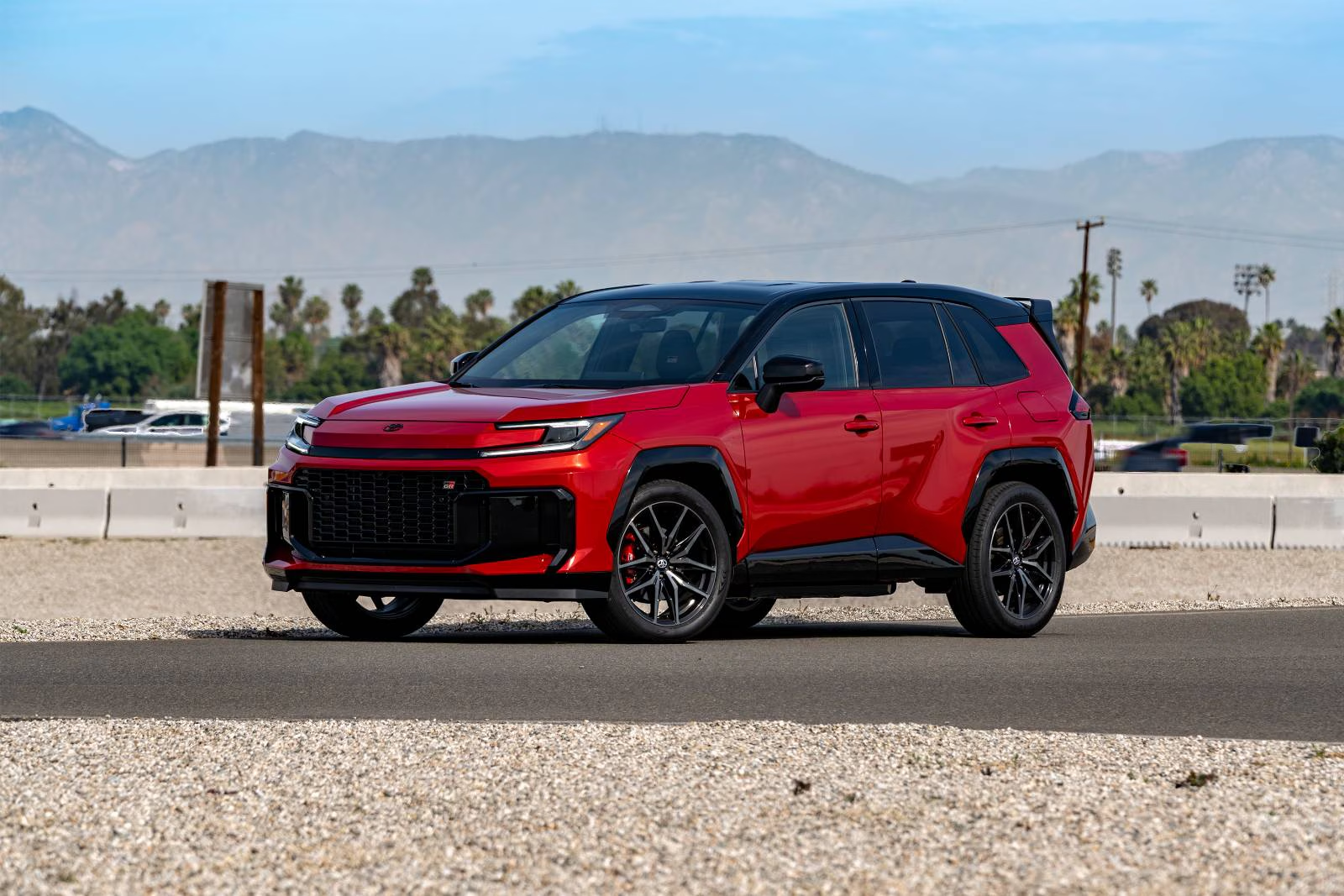
It started off promising, as the Toyota quickly built up speed on the front straight. But by only the third corner, my mood was souring. It’s a wide swinging right-hander that leads onto the back straightaway, so it’s important to carry as much speed as you can to give yourself a good run. And it’s a wide part of the track (and on camber), so there’s room to let the vehicle settle before you turn it in.
The RAV4 saw all that room and took it as an invitation to try to understeer right through it. The Toyota’s nose loves to push, and the abundant body roll doesn’t help things either. And if you try to stay in the power to get it to rotate a bit and rebalance, using the power out of its electric motor at the rear axle, the stability control (which you can’t deactivate) intervenes.
I understand why there would be some body roll; you can’t spring this thing super tightly, or it’d be pretty uncomfortable on the road, and that wouldn’t be good either. But with the suspension upgrades, I was hoping for more body control; perhaps something like an adaptive suspension would have done the trick and allowed the GR Sport to thrive in more environments.
Under braking, the RAV4 is pretty stable, but usually after braking comes a turn, so you only get to enjoy that for so long. The steering rack does feel a touch quicker, but it’s almost completely devoid of feel. There’s no comparison between driving the GR Sport and something like a Volkswagen GTI, or even Toyota’s own GR Corolla. Those cars love to be pushed not only on a track, but on a canyon or mountain road too. The RAV4 doesn’t; it’s most comfortable cruising around doing everyday things, and that’s disappointing given the two initials in its name.