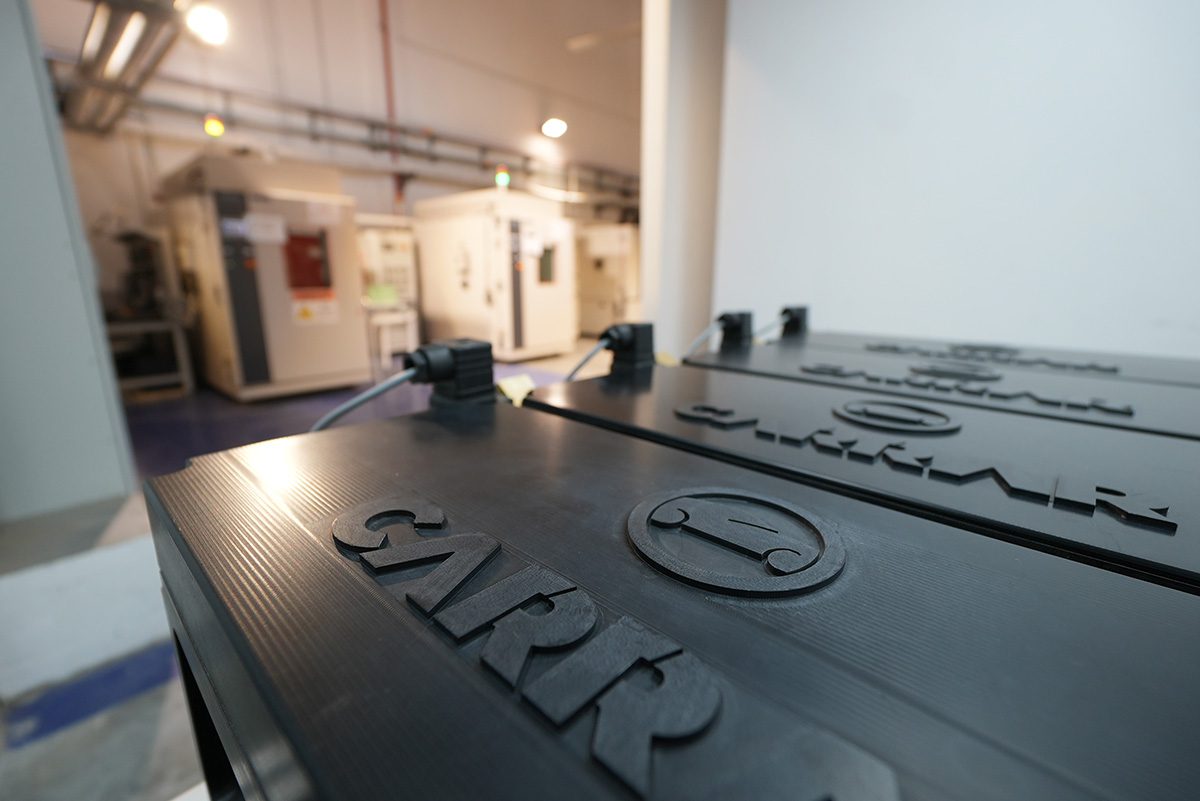
Carrar says testing at its R&D lab showed its Two-Phase Immersion Architecture can prevent thermal propagation between high-energy NMC pouch cells even under extreme failure conditions. In the test, a 72 Ah pouch cell was driven into thermal failure with a temperature rise exceeding 15 °C per second, and the triggered cell rose above 800 °C, while an adjacent cell remained at about 50 °C, according to the company.
The company says the result demonstrates complete prevention of cascade failure—a major safety hurdle for both battery energy storage systems and EV packs. Carrar’s approach submerges battery modules in a dielectric fluid engineered to boil at specific temperatures. Under normal operation, the company says the phase-change cooling keeps cell temperatures uniform and avoids hotspots; under failure conditions, the fluid’s latent heat absorption is meant to soak up thermal spikes quickly enough to stop propagation.
Carrar is also tying the result to tightening safety standards. The company says its architecture exceeds the requirements of China’s GB 38031-2025 standard, which will require zero fire and zero explosion for two hours following thermal runaway, as well as the direction of UL9540A:2025 for stationary storage. Carrar says its system does this passively, without requiring sensors, suppression systems or other active intervention.
“We’re seeing the triggered cell hit catastrophic temperatures while adjacent cells remain near ambient,” said VP Product Bar Ben Horin. CEO Eitam Friedman said the company expects its BESS systems to be commercially ready by the end of 2026 and that it is already working with automotive partners on multi-year programs.
Source: Carrar