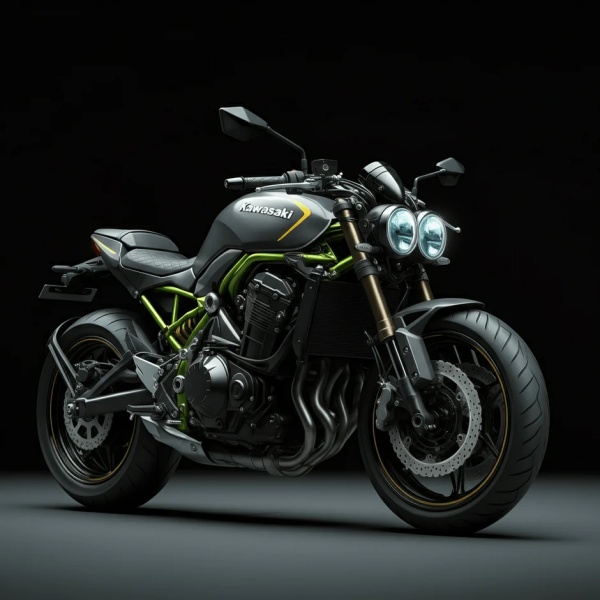
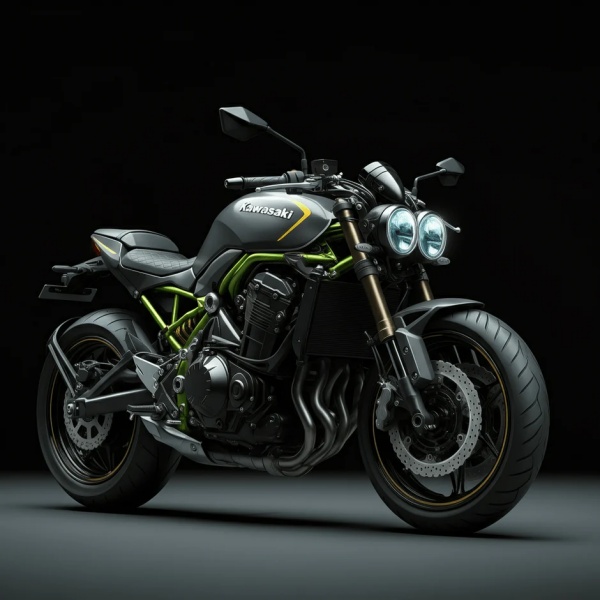
Kawasaki’s modular electric motorcycle design signals a new shift in the electrification market. [Photo: Kawasaki]
[DigitalToday reporter Jinju Hong (홍진주)] Japanese heavy industry company Kawasaki has disclosed a patent for a new electric motorcycle design that can mount several types of electric motors on a single frame.
On March 9, electric vehicle outlet Electrek reported that electric motorcycles are often designed around the powertrain. The motor and battery serve as part of the vehicle structure, and the frame is built to match a specific motor configuration. This structure helps secure performance and rigidity, but it has the drawback of limited flexibility when applying different motors or developing various models.
Kawasaki’s recently disclosed patent presents a modular design aimed at addressing those limits. The core is a modular mounting system that allows different electric motors to be installed on one main frame.
The basic structure is based on a steel trellis frame similar to Kawasaki’s existing Z e-1 and Kawasaki Ninja e-1 electric motorcycle models. A removable battery pack sits between the frame rails, and the motor is positioned near the swingarm pivot.
The biggest difference in the patent is that the motor is not fixed directly to the frame. Instead, the motor and transmission unit are mounted on a separate subframe, which is then connected to the main frame.
The subframe consists of an upper and a lower segment. It is designed so it can be replaced or modified depending on the motor configuration. That means different motor units can be installed by changing only the subframe without making major changes to the main frame.
This modular platform is expected to help boost production efficiency and expand parts sharing by enabling the same frame to be used across multiple electric motorcycle models. It also has the advantage of reducing costs and time generated during development.
Electric motorcycles have been criticised for being less price-competitive than internal combustion motorcycles because of battery and electric powertrain costs. The industry also sees Kawasaki’s modular design as potentially lowering production costs and contributing to lower electric motorcycle prices in the future.
It is not yet confirmed whether Kawasaki will apply the design to an actual mass-production model, but it is seen as a strategy to secure flexibility early in the development of an electric motorcycle platform.