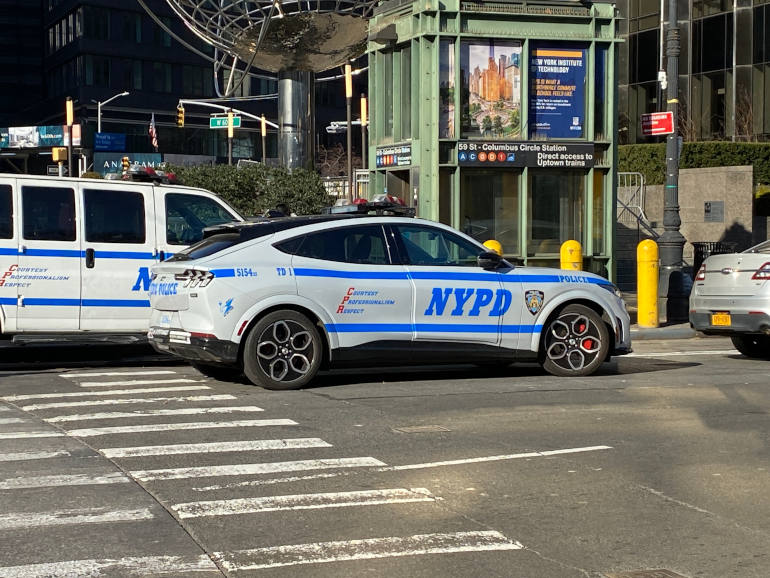
New York City continues to set the pace on low-emission fleet adoption, with new reporting showing record fuel economy results and significant growth in electric vehicle use across its non-emergency fleet.
According to the DCAS Report on the Use-Based Fuel Economy of Light and Medium Duty Non-Emergency Vehicles in the City Fleet (Fiscal Year 2025) local-law-77-use-based-fuel-eco…, the city is not just procuring alternative fuel vehicles — it is using them at scale in real-world conditions.
Over 10,000 Low-Emission Vehicles in Operation
As outlined in the February 19, 2026 NYC Fleet Newsletter nyc-fleet-newsletter-524-2026-0…, the city now operates more than 10,000 electric (BEV), plug-in hybrid (PHEV) and hybrid electric (HEV) vehicles. These vehicles deliver services across all boroughs every day.
The Local Law 75 reporting framework requires DCAS to move beyond laboratory EPA figures and report “use-based” fuel economy — capturing the impact of traffic congestion, weather, idling, air-conditioning use, towing and other operational factors.
For Fleet Managers, that distinction is important. This is not brochure data. It reflects actual performance.
Record Light-Duty Fuel Economy in FY25
In FY25, NYC reported on 8,334 non-emergency light and medium-duty units. For light-duty vehicles:
5,697 units
32.65 million miles travelled
39.63 MPG average use-based fuel economy
That 39.63 MPG result is the highest recorded under Local Law 75 reporting and represents a significant improvement over the 36.00 MPG achieved in FY24.
Across the full light and medium-duty fleet combined, overall use-based fuel economy improved from 20.66 MPG in FY24 to 22.04 MPG in FY25.
Electric Miles Continue to Surge
The most striking result is the rapid growth in electric vehicle utilisation. In FY22, NYC reported 2.3 million electric miles across 1,333 BEVs. In FY25, that figure has grown to:
2,156 all-electric vehicles
Over 10.4 million electric miles
That’s more than four times the electric mileage reported just three years earlier.
When plug-in hybrids and conventional hybrids are included:
1,496 plug-in hybrids delivered over 9.6 million miles
1,609 hybrids delivered 9.7 million miles
Together, these electrified platforms accounted for over 30 million miles of service in FY25.
Real-World Fuel Economy Differences
The use-based data clearly shows the performance gap between technologies in operational conditions.
For light-duty units in FY25:
Gasoline: 18.25 MPG
Hybrid: 27.17 MPG
Plug-in Hybrid: 39.56 MPG
Plug-in hybrids delivered more than double the fuel economy of petrol units and significantly outperformed conventional hybrids. All-electric vehicles, of course, recorded no fuel consumption.
The data reinforces a key operational point: the technology pathway matters, and incremental electrification delivers measurable gains.
Renewable Diesel Without Fuel Penalty
For medium-duty diesel units, NYC implemented one of the largest renewable diesel programs on the US east coast.
In FY25:
1,108 diesel/bio units
5.45 million miles
11.31 MPG
Fuel economy remained steady or improved compared to previous fossil diesel years, with no evidence of reduced fuel energy performance. That result will be of interest to fleets evaluating renewable diesel as a near-term emissions strategy.
Charging Discipline Remains Critical
The report also highlights a common issue seen in large fleets: plug-in hybrids only deliver full benefits when consistently charged.
While PHEVs achieved strong fuel economy results, DCAS noted that improved charging compliance is needed to maximise fuel and maintenance savings. Monitoring and behaviour management are now part of the sustainability program.
For fleets in Australia and New Zealand dealing with similar challenges around PHEV utilisation, this mirrors local experience — technology alone does not guarantee savings without operational discipline.
Procurement Strategy Driving Results
NYC’s Corporate Average Fuel Economy (CAFE) equivalent for new light-duty vehicles reached 102 MPG in FY25 — the seventh time in eight years the city exceeded 100 MPG.
That performance is driven by procurement policy. Under its Clean Fleet Plan, DCAS prioritises battery electric vehicles first, followed by hybrids, with petrol used only where operationally required.
Importantly, NYC buys from the same global manufacturers available to all fleets. The results demonstrate what is achievable through structured procurement settings and strong policy alignment.
For Fleet Managers, the NYC experience offers several practical takeaways:
Real-world telematics-based reporting provides far better insight than brochure data.
Electrification scale matters — utilisation growth is as important as vehicle count.
Renewable diesel can support emissions reduction without compromising performance.
Charging compliance is critical for PHEV value realisation.
Procurement policy drives measurable long-term efficiency outcomes.
The full FY25 Local Law 75 report provides detailed breakdowns by agency and vehicle class for those wanting to benchmark further.