March 9, 2026
By Karan Singh
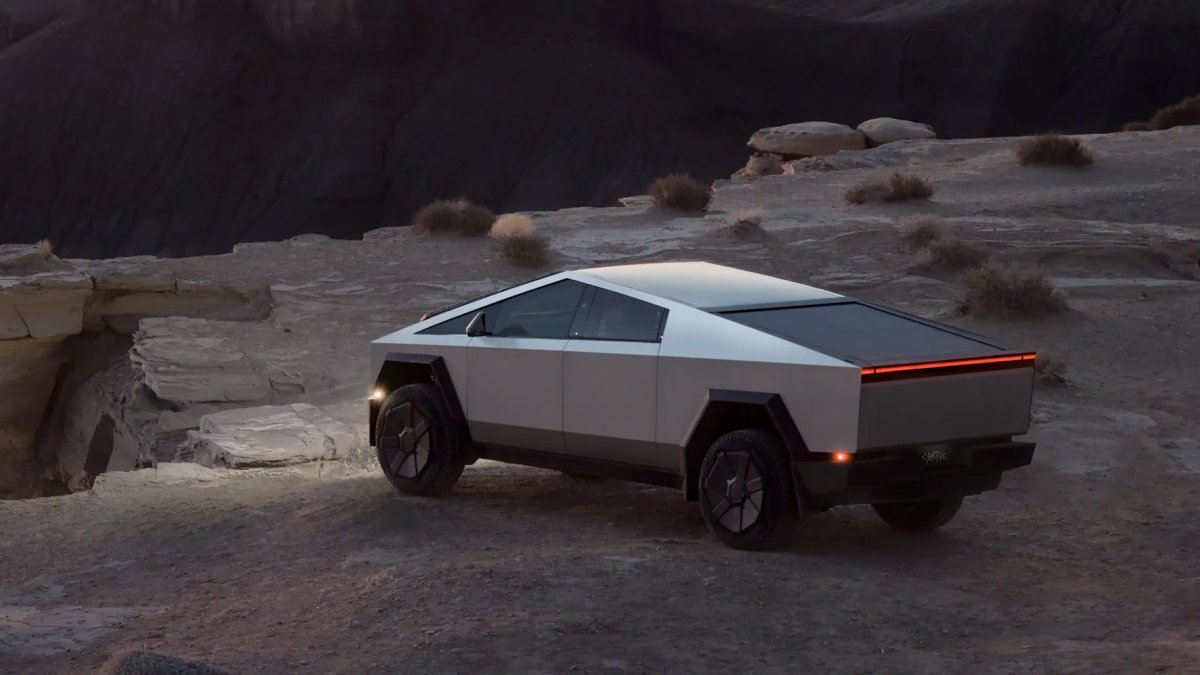
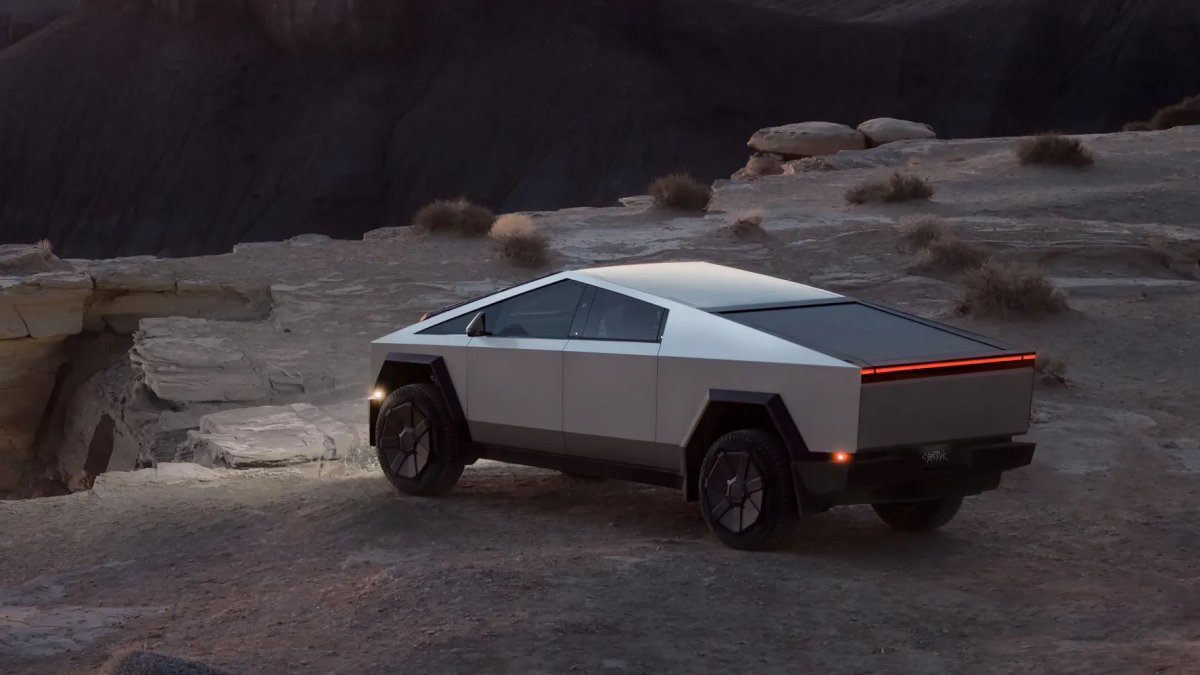
Tesla has officially issued a physical hardware recall for a specific batch of early-production 2024 Cybertrucks. According to a newly published National Highway Traffic Safety Administration (NHTSA) report (Campaign 24V-832), a critical fault in the vehicle’s drive inverter can cause a complete and sudden loss of propulsion.
This official recall comes after months of community reports regarding sudden power failures and AC charging issues, tied directly to the broader Power Conversion System (PCS) and inverter issues that have left some early Cybertruck adopters stranded on the side of the road.
MOSFET Failure
The root of the issue lies in the metal-oxide-semiconductor field-effect transistors (MOSFET) located within the drive inverters. According to Tesla’s defect report, a fault in these specific MOSFET components (part number 1530063-2A-B) can cause the inverter to suddenly stop producing torque.
If this happens while driving, the driver will completely lose the ability to apply torque via the accelerator pedal, resulting in an immediate loss of propulsion and increasing the risk of a collision. Tesla notes that there is no warning before the failure.
However, once the torque is lost, the vehicle’s UI will immediately flash a visual alert instructing the driver to safely pull over and contact Roadside Assistance. Tesla began investigating the issue on August 5, 2024, after an owner reported a sudden loss of propulsion. By late October 2024, the engineering teams had identified five warranty claims related to the defect, though thankfully, no collisions or injuries had been reported.
Early Signs
If you have 48A charging installed at your home and your Cybertruck is no longer able to charge at 48A (and shows ~24A or less), you are likely experiencing a drive inverter or wider PCS failure. We recommend reaching out to Tesla to schedule an appointment immediately and driving directly to the service center, as your vehicle could get shut down on the road.
Physical Hardware Swap
Unlike the vast majority of Tesla’s recalls that are solved with a simple over-the-air (OTA) software update, this issue requires a physical hardware replacement.
Tesla Service Centers will replace the affected drive inverters. In some cases, the entire drive unit will be replaced with components featuring properly functioning MOSFETs.
Depending on the specific vehicle’s configuration (Dual-Motor vs. Cyberbeast), the official service bulletin outlines that technicians may need to replace the rear inverter(s), the front inverter, or a combination of both.
The repair is estimated to take approximately three hours and will be performed at no cost. If you have Cybertruck Terrestrial Armor installed, the repair time will be extended to approximately 8 hours to accommodate the removal and reinstallation of the underbody shield.
Who is Impacted?
Fortunately, this issue was caught and corrected relatively early in the Cybertruck’s production ramp. The recall affects a limited population of 2,431 Cybertrucks manufactured between November 6, 2023, and July 30, 2024.
Tesla officially introduced the updated, functional MOSFET components into production on July 30, 2024. If your Cybertruck was built after that date, you already have the upgraded hardware and are not impacted by this recall. Tesla mailed notification letters to affected owners in early January.
VINs above ~40,000 are not impacted by this recall, but you can check at Tesla’s VIN Recall Service. Copy the VIN from your Tesla app (tap and hold the VIN), and then paste it on Tesla’s website. It will show any open recalls for your vehicle.
Subscribe to our newsletter to stay up to date on the latest Tesla news, upcoming features and software updates.
March 9, 2026
By Karan Singh
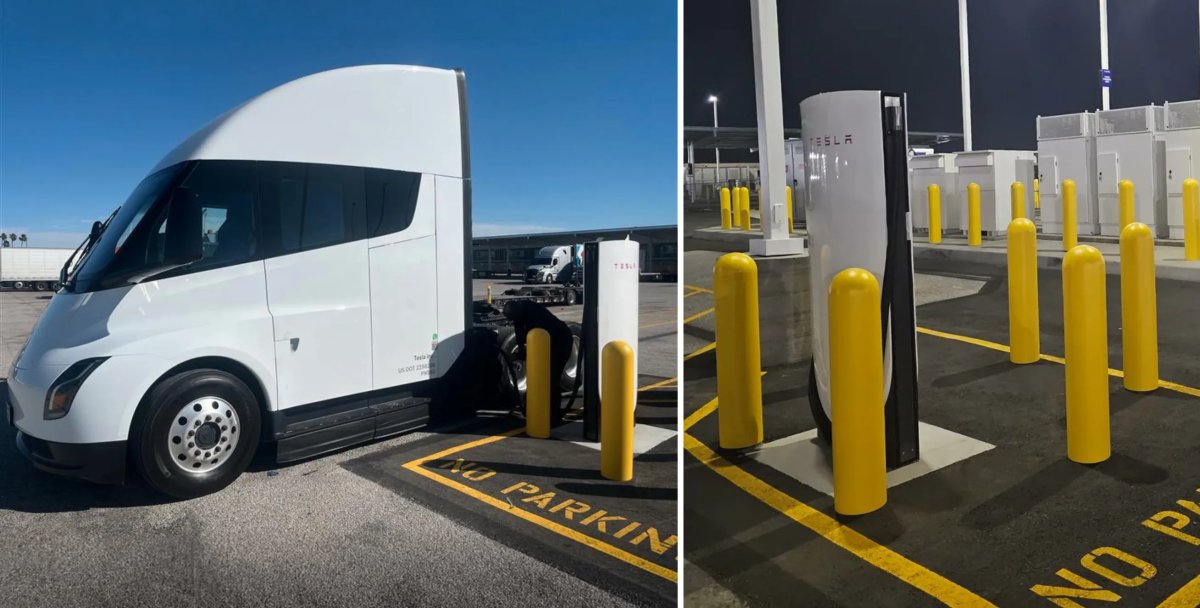
Tesla just took another step toward commercializing heavy-duty electric trucking in the United States. Tesla Energy has officially brought its first public Semi Supercharger, the Megawatt Charging System (MCS) station online in the Greater Los Angeles area, and it’s now officially open for Tesla Semi customers. These new MCS stations look similar to V4 Superchargers, but feature the MCS connector, which is exclusive to the Tesla Semi.
Located in Ontario, California, this new public charging hub is a major operational milestone for the Tesla Semi program. Up until now, Tesla Semis have been charged at private, closed-loop routes.
First Public Pull-Through Hub
According to the official listing on Tesla’s charging map, the new Megacharger site is located at 4265 E Guasti Rd in Ontario, close to the airport. The site can deliver up to 750 kW of power to Semis plugging in at the site.
This 750 kW output matches the charging hardware currently installed at private, early-adopter facilities like PepsiCo’s Sacramento depot. At those speeds, the Semi is able to be topped up in under 45 minutes, which drastically reduces downtime for fleet operators.
 The BP Pulse Partnership
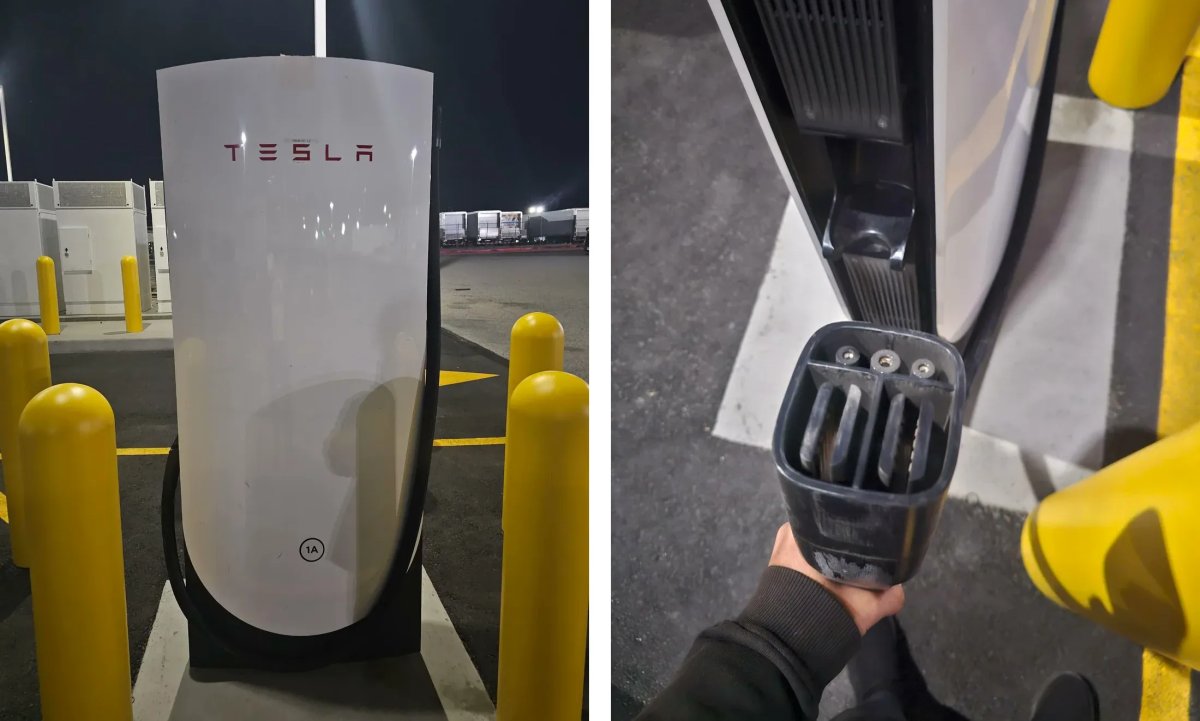
Interestingly, this first public Semi charger isn’t a standalone, Tesla-branded Supercharger lot. The Megachargers are actually located at BP Pulse’s brand-new, ultra-fast electric truck charging depot.
The site serves as a multi-platform commercial charging hub for Southern California logistics routes. According to BP Pulse, the Ontario location features two 750 kW Tesla MCS pull-through bays exclusively for the Semi, installed alongside four 400 kW CCS pull-through bays designed to service other electric heavy-duty trucks from legacy automakers.
The MCS sites are currently exclusively for Semi, but will eventually open to other brands. Tesla’s Semi is not equipped with CCS ports, and there is currently no CCS to MCS adapter, so it is unable to use those legacy charging bays.
Another Milestone for Semi
Until today, the Tesla Semi has essentially been tethered to private infrastructure. The only active Megachargers were located behind closed gates at corporate customer facilities, or at Tesla’s own factory locations in Nevada and Lathrop.
By finally deploying public, highway-adjacent Megachargers, Tesla is laying the groundwork for the Semi to handle long-haul, interstate trucking. With volume production of the Semi targeted for 2026 at the newly expanded Giga Nevada facility, the rapid deployment of this public MCS network will be the critical deciding factor in whether major fleet operators are willing to adopt the truck en masse.
March 9, 2026
By Karan Singh
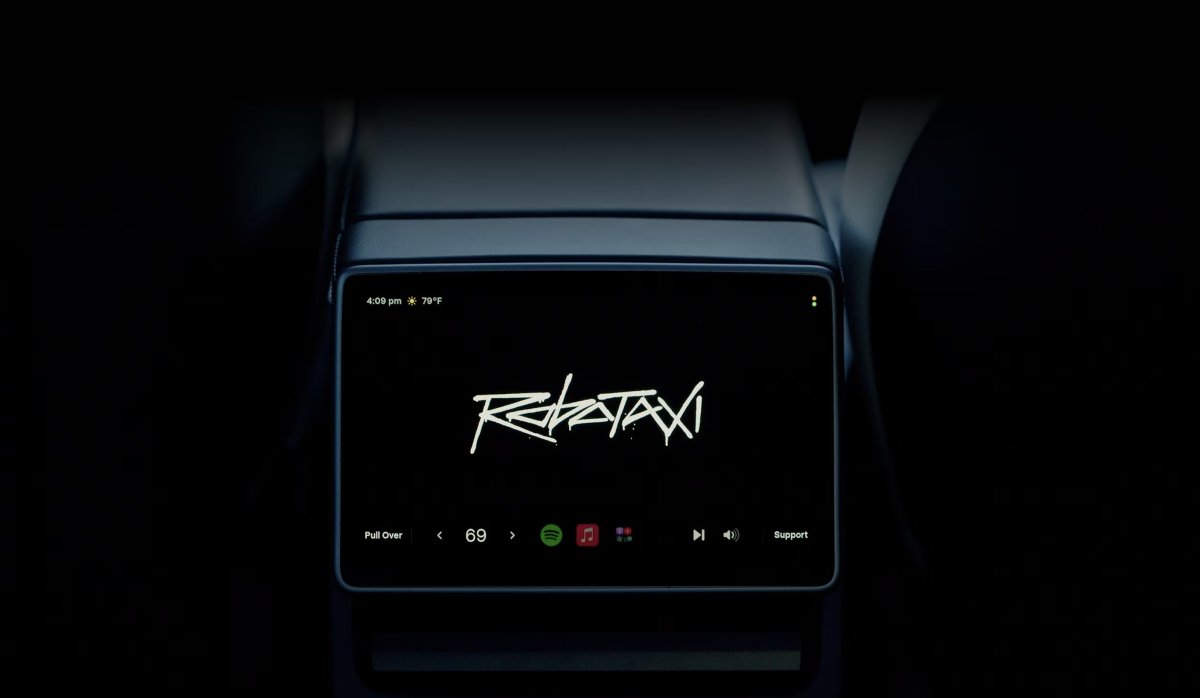
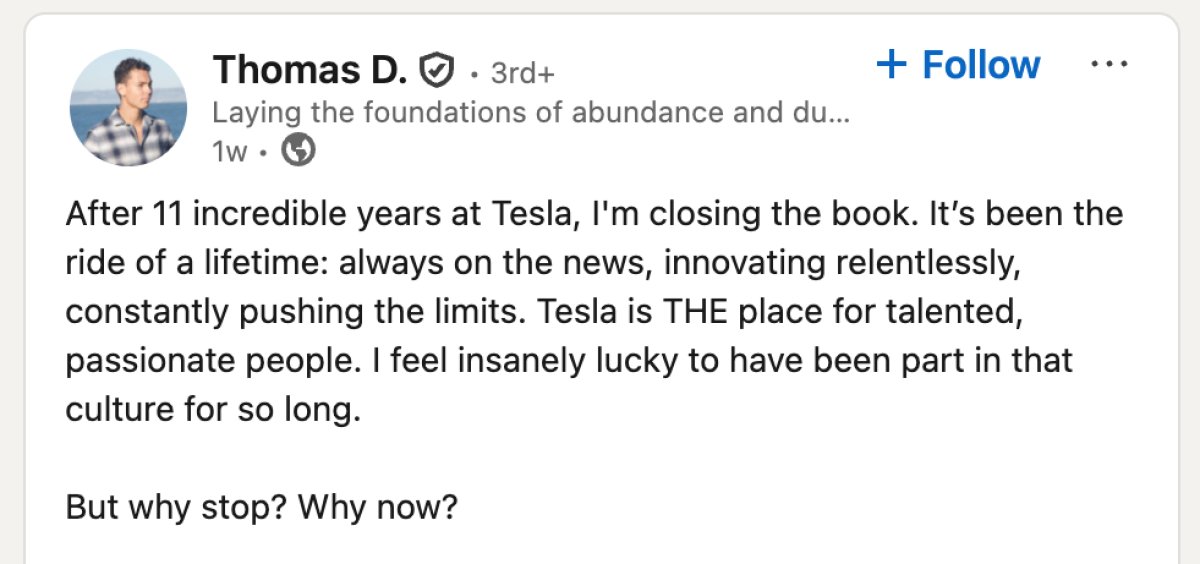
Tesla has lost another long-time engineering veteran. Thomas Dmytryk, a director who played a foundational role in building the company’s over-the-air (OTA) infrastructure and the newly launched Robotaxi ride-hailing service, has officially announced his departure from Tesla.
Dmytryk leaves the company after an impressive 11 years. While his exact title for the past seven months was simply “Director,” his previous role was Senior Software Engineering Manager.
From Niche to 10 Million
In a heartfelt farewell post on LinkedIn, Dmytryk reflected on just how drastically Tesla has scaled since he first joined the engineering team in early 2015 — back when Tesla only had the Model S and Model X.
“When I joined, Tesla was a niche luxury automaker with only 50K cars delivered and lots of ambitions,” Dmytryk wrote. “My 5-person team owned OTA, connectivity, and commands running on a very simple stack. My ambitions at the time were simple: Automate everything. Pioneer software-defined vehicles. Modernize apps and infra.”
Under his leadership, that original 5-person team expanded and scaled its architecture to support a fleet that is now rapidly approaching 10 million vehicles globally. If you have ever used your Tesla app to send a command to your car or downloaded an OTA software update, you have interacted directly with the infrastructure Dmytryk’s team helped pioneer.
 The Ride Hailing Moonshot
Perhaps Dmytryk’s most significant contribution to Tesla’s current valuation came in the latter half of his tenure, when his team was tasked with building the software backbone for the Robotaxi network.
“Then came our moonshot: create ride-hailing capability and bring it to the world in a way that has never been seen before,” he wrote. “Quickly, we evolved from proof of concept to a full-blown production-ready solution, bringing in more and more teams in the picture until we finally released it to the world.”
His departure comes at a fascinating time, as the very ride-hailing network he helped build is currently expanding and calibrating its pricing model in early markets like Austin.
Retirement
Despite writing that Tesla’s future is extremely bright and that Tesla is just getting started, Dmytryk noted that he is stepping away from the relentless pace of Tesla’s engineering culture to focus on his family, rather than take up a new position elsewhere.
“Human life’s always been my North Star, right now I need to be with mines [sic],” he explained.
He closed his announcement by praising the tenacity, brilliance, and devotion of the frontline engineers at Tesla, stating that he will be cheering them on from the sidelines as they push Tesla even further into the world of AI and robotics.