

 9 min read
Riding a bike is a great way to improve fitness, reduce automobile use, or get outside and enjoy the nice weather. However, riding a typical bicycle can be challenging if your daily commutes or errands involve carrying bulky things or transporting kids. That’s where cargo bikes come in handy. These specialty bikes are now found on streets, paths, and bike lanes all across the country.
Cargo bikes are broadly defined as any bicycle purpose-built to carry passengers or extra gear, such as packages, bags, or boxes. These bikes typically feature reinforced frames, include racks or mounting points, and have higher payload capacities than traditional commuter, city, or townie bikes. Plus, thanks to e-bike motor technology, cargo bikes are easy to ride and use for virtually every rider.
We’re big fans of e-cargo bikes and regularly use them for our daily commutes, running errands, dropping kids at school, and family rides. Like other types of bicycles, cargo bikes come in all shapes and sizes—and there‘s almost certainly one that’s perfect for you.
The Best Cargo Bikes
Browsing for more bikes? Check our picks for the best folding electric bikes, fat bikes, and hybrid bikes.
Our Favorite Cargo Bikes
Some cargo bikes are loaded with features but cost too much, while others are low-priced but don’t ride well. However, the Aventon Abound LR is the rare $2,000 electric cargo bike that doesn’t feel like a compromise—And that’s why it’s our Best Overall pick.
The Abound LR is built to tackle the tasks of daily life—daycare drop-offs and pickups, grocery runs, and commuting—without the premium pricetag of its competitors. Plus, it rides with more polish than some bikes costing twice its price. This makes it a great option for families and utility‑minded riders. The LR can handle kids, panniers, and weekly shopping trips without stretching the budget. It’s ideal for those who value comfort and stability over top‑end speed. If you’re comparing this Aventon to other electric cargo bikes, it feels more polished than budget longtails like the Lectric Xpedition 2.0 and Rad Power’s Rad Wagon 5. Yet, the Abound LR costs far less than premium mid‑drive cargo rigs from Tern, Cannondale, and Trek.
Many riders are attracted to the XPedition’s very appealing price. Currently priced at $1,399 for the single-battery model, it’s one of the most affordable electric cargo bikes around. Plus, the dual-battery model ($1,799) boasts an incredible 120-mile range and a top speed of 28 miles per hour. This makes the XPedition a good option for riders seeking an excellent deal on an e-cargo bike.
“The XPedition’s capability surprised me”, said Test Editor Dan Chabanov. “Combined with the Lectric XL panniers ($150) and the Essentials package ($120), I comfortably carried several days of groceries for a family of three or one adult passenger.”
However, to reach a price like this, concessions have to be made somewhere. This results in a somewhat cheap feeling to the bike. Most of the XPedition’s parts are bottom-tier—with the notable exception of the brakes. The pedal-assist motor is powerful off the line, but at times, it feels erratic. The XPedition is adequate if you live in a very flat area or don’t need to carry kids or an adult passenger. Despite these faults, if you’re on a budget and looking to ditch the car for errands and trips around town, the XPedition is the cheapest e-cargo bike we recommend buying.
Tern’s Quick Haul Long is enticing because it delivers the core functionality of the pricier GSD series at a lower price. While the Quick Haul Long’s frame isn’t as sleek as the GSD and lacks a suspension fork, the bike still packs everything needed to be a true car replacement.
The Quick Haul features include hydraulic disc brakes, a robust double kickstand, a built-in frame lock, trailer attachment points, and an impressive maximum weight limit of 419 pounds. Tern also offers a wide range of accessories for customizing the bike to your individual needs. Even when loaded with two kids and a trailer full of groceries, the Bosch Cargo Line motor handles the load with ease. However, don’t expect a speedy ride when fully laden. The bike can handle the load, and you’ll get where you want to go, but it won’t zip you up to its maximum pedal-assist speed of 20 mph when weighed down.
 trevor raab
Cargo bikes can haul almost anything.
7 More Cargo Bikes We Like
The Specialized Globe Haul ST packs 419 pounds of cargo capacity into a surprisingly compact frame. With powerful brakes, dialed geometry, and well-thought-out features, it’s ready to tackle commuting, grocery getting, neighborhood errands, or getting a child to daycare. Without active suspension, the Haul relies on massive 3.5-inch tires for its ride comfort, which work well on all but the roughest roads.
My partner, Julia, purchased a Haul ST after reading the Bike of the Year review. She uses it for commuting in Boston and describes the Haul as zippy. She said, “The power levels are flexible, and I can easily adjust them to how I want to ride or tackle hills.” She also likes the cargo configurations for carrying groceries and running errands. Another feature Julia likes is the Haul’s geometry; “It’s nice to ride upright, and it gives me more visibility.”
 Pros
Pros Zippy ride feel.440 lb. total bike capacity.
If you like the look, features, and price of Aventon’s Abound LR but want a smaller package, the SR is the bike for you. It features the same 440-pound carrying capacity and 60-mile range as its longtail sibling, but packed into a shorter wheelbase package. This makes it ideal for users with space constraints (such as apartments and RVs) or anyone seeking a quick ride around town.
 ProsPowerful motor.Excellent ride quality.Cons
 Not as many accessory options as other bikes.
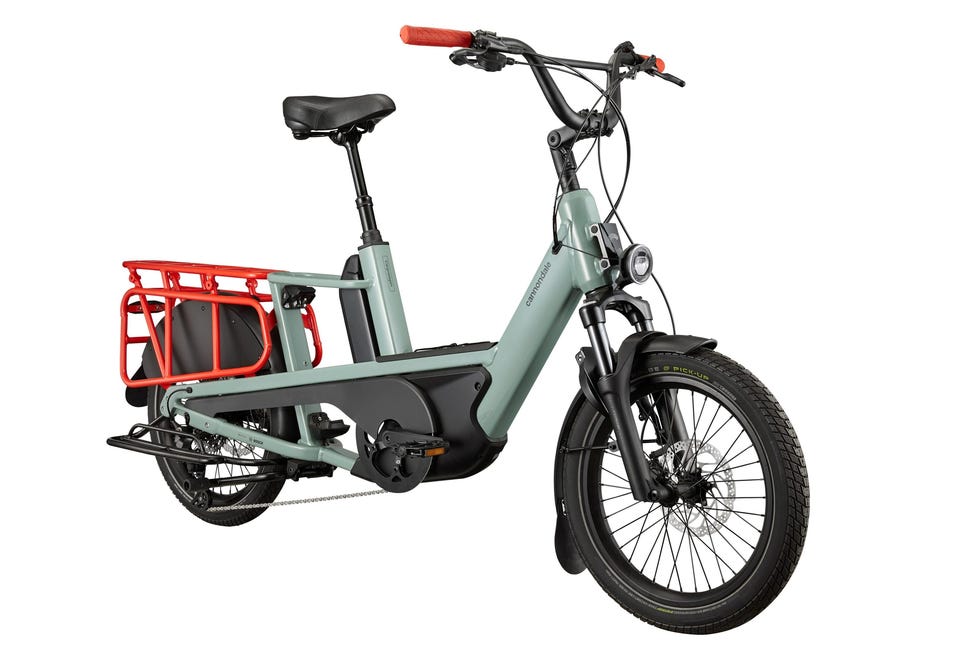
On the surface, the Cannondale Cargowagon Neo and the Tern GSD appear very similar: long-tail design, a Bosch mid-drive motor, 85Nm torque, virtually identical cargo capacity, and 20-inch wheels. But the details separate these two excellent cargo bikes.
The Cargowagen Neo features a Class 3 Bosch Performance Speed mid-drive motor with pedal-assistance up to 28mph. However, in practice, it’s a 21-23 mph bike, since you need to work hard to hit the motor cut-off speed. The Cannondale slightly beats the Tern’s total carrying capacity; however, the Cargowagen doesn’t have a folding bar, a telescoping seatpost, and other premium features only found on the GSD.
Instead, Cannondale equips the Cargowagen with a handlebar-actuated dropper seatpost and an adjustable stem on a conventional steer tube. We love the dropper post and wish more cargo bikes came with that feature. The ride experience of the Cargowagen Neo is as dialed and pleasant as the Tern GSD, which is a big compliment to Cannondale. Overall, this bike delivers much of what you’d expect from a premium bike at a lower price.
Related Story
The Tern GSD redefines what a car-replacement bike can be. It’s easy to picture running errands on a cargo bike if you live in a city or a town with great cycling infrastructure. However, many people live in suburbs or other areas not exactly designed for bike commuting. Situations like these are where the GSD’s Class 3 Bosch pedal-assist motor, massive cargo capacity, and a battery range that makes long hauls realistic, even for riders who live miles from town.
Thanks to quick-release adjustments on the seatpost and handlebar, riders from 5 feet to 6’6” can share the same bike. The bar can even rotate forward for tall riders who want extra reach. The bike also features premium touches you won’t find on low-cost cargo bikes—like a suspension fork, Magura 4-piston hydraulic brakes, an integrated lock, and a suspension seatpost. Practical design details make storage and transport surprisingly manageable: the handlebar folds at the headset, the seat drops quickly, and the whole bike can be tipped upright to rest on its rear rack—perfect for tight garage corners. However, be aware that the GSD’s extra weight can make loading it into a vehicle a two-person task.
 ProsClassic design and looks.Shimano motor, drivetrain, and brakes.ConsIn-store pickup only.
Yuba has been in the cargo bike game longer than most other brands, and its electric bike models (particularly the Spicy Curry) are seen in every city in the U.S. Yuba’s Kombi is straightforward; it’s a compact-style design (rolling on 24-inch wheels) without gimmicks. It features a steel frame with an integrated rack, a swept back bar, and a full complement of Shimano parts—a STEPS motor, hydraulic brakes, and 9-speed drivetrain. If you’re looking for a no-frills cargo bike, this is a solid option.
 ProsFast and fun ride feel.Excellent braking power.ConsCosts $1,100 more than the ST version.
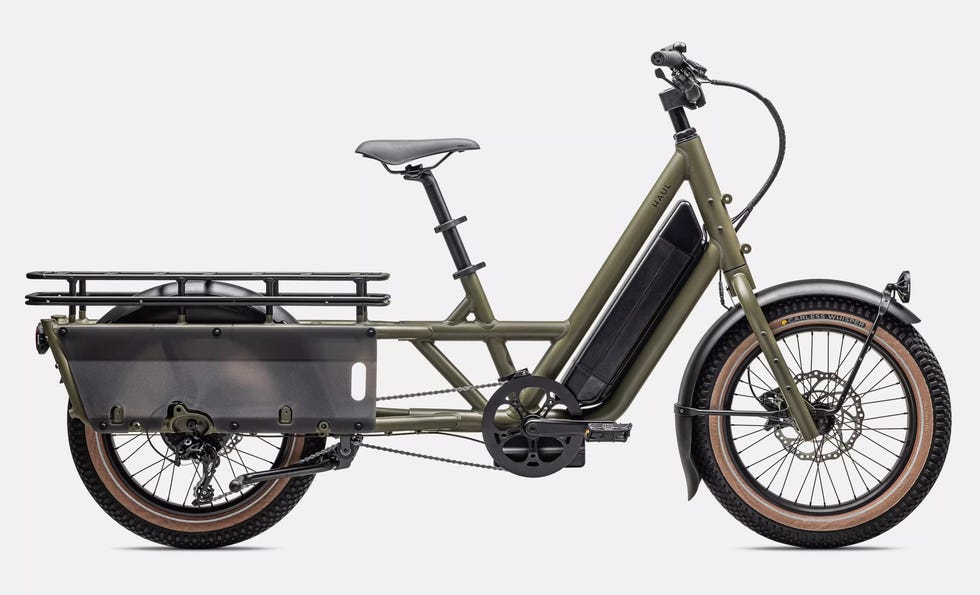
Similar to Aventon offering SR and LR versions of its popular Abound cargo bike, Specialized also builds a longtail variant of its excellent Globe Haul LT. This model features all of the zippiness and ride feel of the shorter wheelbase Haul ST, along with the ability to carry two passengers. In addition to the extended wheelbase, the LT has a higher-capacity rack (up to 176 lb.) and a shroud on the rear to keep little feet and fingers out of the rear wheel. The only downside to the Haul LT is the price—It costs $1,100 more than the ST.
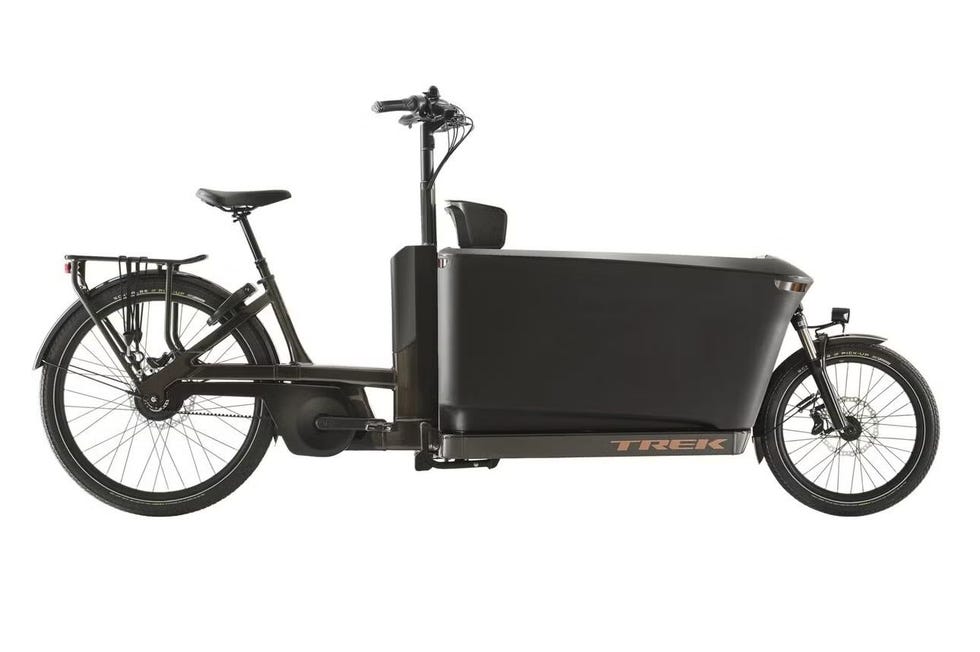
The Fetch+ 4 is Trek’s take on the classic Dutch bakfiets. This bike is essentially the minivan of bikes, and carries up to four kids. It comes equipped with two child seats, but you can add different accessories to make passengers more comfortable. These include a full cover for the basket to keep everyone out of the wind and rain. Trek uses Bosch’s BES3 system with a Bosch Cargo Drive motor on the Fetch. It delivers power via a Gates Carbon belt drive for virtually maintenance-free operation.
What to Know Before You Buy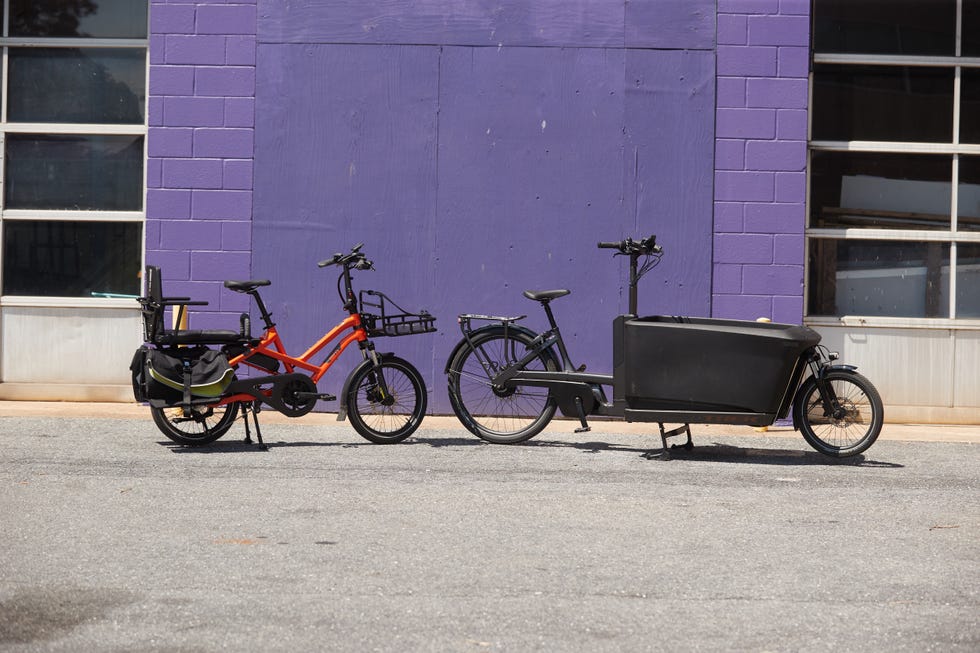 trevor raab
Short-tail (left) vs. bakfiet (right): Cargo bikes come in several shapes and sizes.
Cargo Bike Layouts
Domestic and international cargo bike popularity has exploded in the past decade, says Xtracycles founder and longtail cargo bike pioneer Ross Evans. There are generally four main styles of cargo bikes: longtail, short-tail, front loader, and the bakfiet (a Dutch term that translates to ‘box bike’). There are also trike varieties for riders needing to transport heavy loads or more than two children.
➡️ Longtail cargo bikes are the most agile and lightweight design. They transport cargo or passengers on an extended tail section behind the rider.
➡️ Short-tail cargo bikes are a variant of longtail bikes, but with a shorter rear extension that makes them more compact and better suited for those tight on space.
➡️ Front loader bikes place the payload in front of the rider, generally on a low-slung platform adaptable to suit many needs.
➡️ Bakfiet-style bikes feature a large basket (typically in front of the rider) for carrying cargo or transporting multiple passengers.
Electric or Analog?
Moving hundreds of pounds on a bike without a motor is great if you’re looking for a workout. But most riders and families don’t want that stress or extra work. That’s why the cargo bikes we recommend are equipped with electric motors. “Electricity and cargo bikes go together like PB&J,” Evans says. E-cargo bikes feature pedal-assist electric motors that can deliver more than 50 miles of range. This makes cargo bikes more accessible to riders who want the convenience of a car in a bike-sized package.
However, the tech comes at a price: Electric cargo bikes are pricier than their non-electric counterparts. Unless you live somewhere completely flat—and even if you do—we think an e-cargo bike is the best way to go. Electric motors vastly improved a cargo bike’s usability and can save you money in the long run by making it a more effective car substitute.
Accessorize to Fit Your Needs
Once you’ve purchased a cargo bike, you’ll want the right accessories to maximize its utility. Start on the manufacturer’s website: Many brands sell panniers, racks, and child seats to match their cargo bikes. Alternatively, if your style is more “dump it and go,” bakfiets use a single spacious box—typically upfront—that’ll fit all your stuff (there are still seat belts for your kids). The best way to determine which style or bike you prefer is by getting out for a test ride.
Approach an e-cargo bike and accessory purchase the same way you would if buying a car. Try and test as many options as possible. Prioritize your most common cargo needs. While it can be fun to think in aspirational terms, getting a bike suited to your daily needs will mean that you use it more often.
How We Test Cargo Bikes
These bikes are thoroughly put through their paces by the Bicycling test team. We don’t only test them—we live with them. We haul groceries, drop kids off at school, and squeeze in as many rides as possible to see if these e-cargo bikes can truly replace our cars for daily life. Test Editor Dan Chabanov puts them through the ultimate car-replacement experiment on the streets of his hometown of Philadelphia, and Deputy Editor Tara Seplavy tests them on her daily commute to the office. At our Easton, Pennsylvania headquarters, the rest of the team gives these bikes a daily beating, using them to run errands around town (because let’s be honest—e-cargo bikes are just plain fun to ride). We also speak with the product managers behind the designs to understand their choices, and compare each model to its closest competitors to see how they stack up. Bottom line: we test these bikes like we’d use them in real life—because we actually did.
Get Exclusive Training Programs and Digital Issues


As Deputy Editor, Tara Seplavy leads Bicycling’s product test team; after having previously led product development and sourcing for multiple bike brands, run World Championship winning mountain bike teams, wrenched at renowned bicycle shops in Brooklyn, raced everything from criteriums to downhill, and ridden bikes on six different continents (landing herself in hospital emergency rooms in four countries and counting). Based in Easton, Pennsylvania, Tara spends tons of time on the road and trail testing products. A familiar face at cyclocross races, crits, and bike parks in the Mid Atlantic and New England, on weekends she can often be found racing for the New York City-based CRCA/KruisCX team. When not riding a bike, or talking about them, Tara listens to a lot of ska, punk, and emo music, and consumes too much social media.