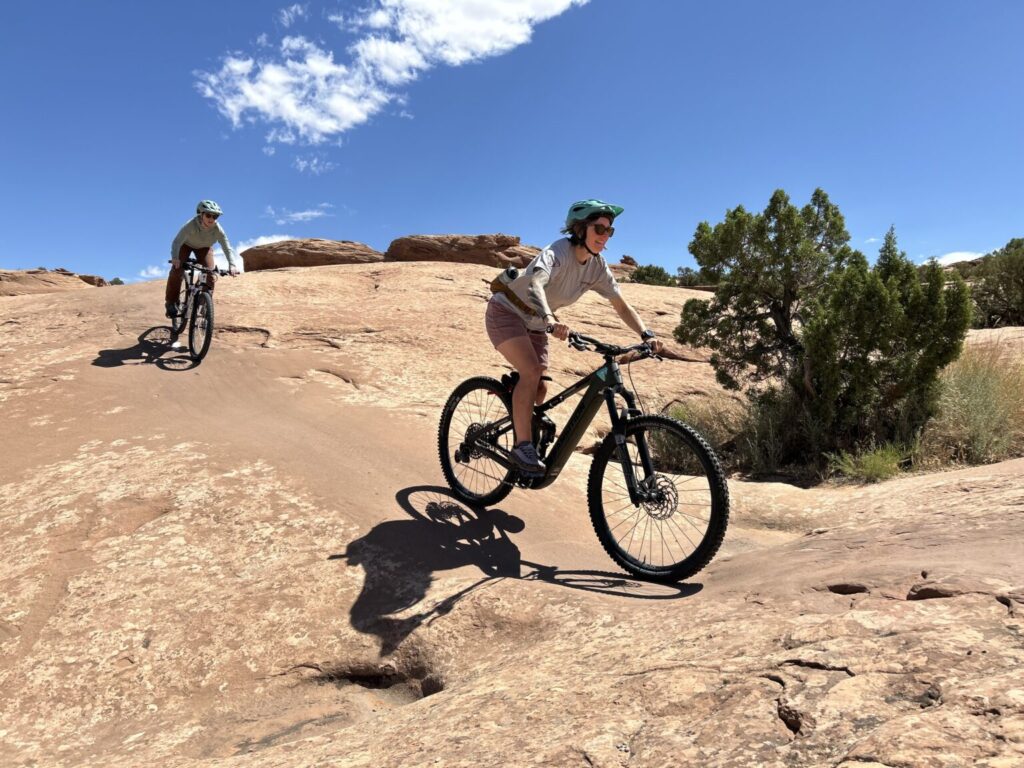
Class 1 e-bikes are now allowed on about 190 miles of non-motorized singletrack managed by the Bureau of Land Management Moab Field Office after the authorization took effect March 1.
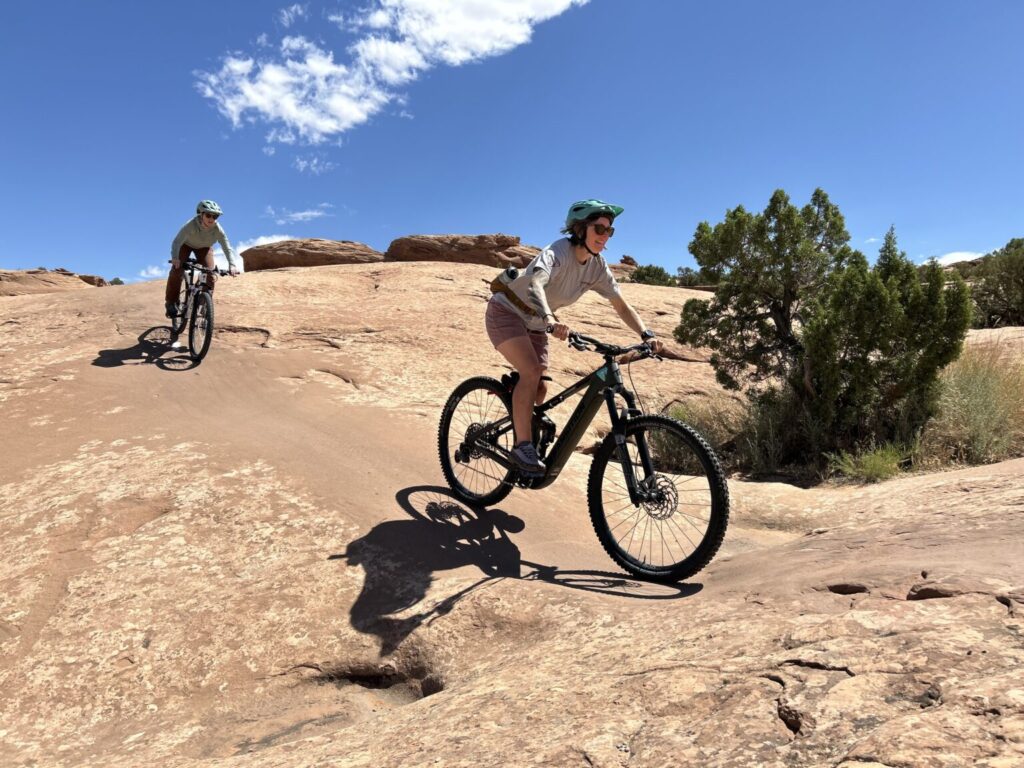 A mountain biker and e-bike user descend the Slickrock Trail in the Sand Flats Recreation Area near Moab. Class 1 e-bikes are allowed on this motorized route and, as of March 1, on about 190 miles of non-motorized singletrack managed by the Bureau of Land Management Moab Field Office. Photo courtesy of the BLM
The decision, finalized last September following a yearlong environmental review that included public comment, opens multiple mountain bike trail systems around Moab to those pedal-assist bikes.
Class 1 e-bikes provide motor assistance only while riders are pedaling and stop assisting once the bicycle reaches 20 miles per hour. Motors are limited to 750 watts.
“In recent years, Class-1 e-bike technology has increased access to the world-class trails and recreation opportunities for people of varied physical ability,” Moab Field Office Manager Dave Pals said in a written statement. “We are excited to open some of our trails to a more inclusive form of recreation.”
Trails open to Class 1 e-bikes include Athena, Horsethief, Navajo Rocks, Gemini Bridges, 7-Up, Gold Bar Rim, Portal, Klondike Bluffs, Baby Steps, Klonzo, Moab Brands, Amasa Back, Jackson, Hunter Canyon Rim and Pipe Dream, along with the Raptor Route segments Hawks Glide, Falcon Flow and Kestrel Run and a 1.7-mile section of non-motorized singletrack on the Kokopelli Trail.
Several trails remain closed to Class 1 e-bikes, including Lower Porcupine Singletrack, Eagle Eye, Porcupine Rim Singletrack, Fisher Mesa, Mill Creek Rim/Old Mail Trail, Hidden Valley and Zephyr.Other types of e-bikes remain restricted on non-motorized trails. Class 2 models with throttles and Class 3 e-bikes capable of assisting up to 28 miles per hour remain prohibited on those routes, though all e-bike classes remain allowed on motorized trails.
BLM rangers are installing stickers on trail signage across trails managed by the Moab Field Office to help riders identify routes open to Class 1 e-bikes. Riders can also check the Moab e-bike webpage at blm.gov/e-bikes-moab-field-office and an interactive trail map to see where e-bikes are permitted.
 Bikers can look for these stickers to help identify trails open to Class 1 e-bike use. Image courtesy of the BLM
The BLM encourages riders to plan ahead and follow standard trail etiquette, including yielding to hikers and equestrians and giving right-of-way to riders traveling uphill.
A BLM spokesperson also said studies indicate Class 1 e-bikes affect trails similarly to traditional mountain bikes.
The agency delayed implementation until March to allow staff to collect baseline data on trail conditions, update maps and signs, prepare education and enforcement and launch a monitoring program focused on safety, visitor experience and resource impacts.
The BLM has said it plans at least two years of adaptive management and could add education efforts, directional travel changes, trail design adjustments or targeted restrictions if issues related to e-bike use emerge.
The proposal prompted extensive local discussion during the review process, with supporters citing increased accessibility and recreation opportunities while some trail users and advisory groups raised concerns about crowding, user conflicts and how broadly e-bike access should be expanded on non-motorized trails.
Local e-bike shops welcomed the decision when it was announced last fall, saying expanded trail access could attract riders who want to experience Moab’s trail system with pedal-assist support.