
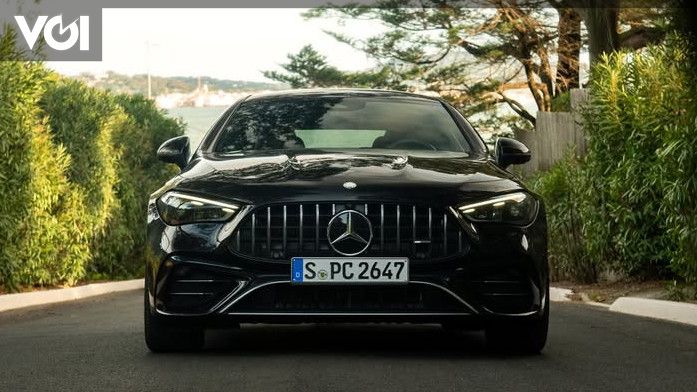
JAKARTA – Luxury carmaker Mercedes-Benz, which has been known for more than 130 years for building premium vehicles, took a surprising step when it partnered with a Chinese manufacturer to design the next generation of electric cars.
This move marks a major change for the company, which has been known for keeping its technology secrets in Germany. As reported by ArenaEV, Friday, March 6.
In its latest project, Mercedes-Benz is preparing a new compact electric car platform that still uses the code name Phoenix. To realize it, the German manufacturer is working with Chinese automotive company Geely.
In this collaboration, Mercedes will utilize Geely’s electronic and electrical architecture known as GEEA 4.0. This technology serves as the brain of the vehicle because it manages various important systems, ranging from battery management to in-cabin display.
The decision to use technology from Chinese partners is not without reason, one of the main factors is cost efficiency. The development of electric vehicles requires large investments, while Geely is considered to have successfully created a more economical production method.
Even a number of Mercedes-Benz executives reportedly visited Geely’s research center to study their technology in depth, including dismantling vehicles developed by the company. From there they saw the potential to reduce production costs without sacrificing the quality that has long been the identity of Mercedes.
This collaboration also brought changes in the structure of Mercedes-Benz vehicle development. For the first time, the company gave a leading role to the engineering team outside Germany in a global project.
Mercedes-Benz China’s research and development center in Beijing is now designated as the global headquarters for the development of compact cars. Around 2,000 employees at the facility will handle the design process to the development of new models.
The Phoenix platform will later become the foundation for a number of popular Mercedes-Benz models of the next generation, including the A-Class, B-Class, and CLA. The company targets these platform-based vehicles to start being mass-produced around 2030 and to be marketed globally, not only in China.
This step is also inseparable from the tight competition in the Chinese automotive market. In recent years, local brands such as Nio and Aito have become increasingly aggressive in presenting premium electric cars.
This condition makes foreign manufacturers have to adapt faster. Mercedes-Benz sales in China even recorded a decline of around 19 percent last year to around 550,000 units.
The figure is almost the same as sales a decade ago, indicating stagnant growth. By utilizing technology and supply chains from China, Mercedes hopes to regain consumer interest.
Mercedes-Benz’s cooperation with Geely also reflects a new trend in the global automotive industry. Several other major manufacturers have begun to collaborate with electric vehicle technology companies from China.
Volkswagen, for example, is working with XPeng, while Stellantis has invested in Leapmotor. This step was taken because China is now considered one of the world’s centers of battery and electric vehicle technology development.
Despite partnering with technology from China, Mercedes-Benz insists that the distinctive character of their cars remains maintained. The company says this project aims to combine typical German engineering with innovation from China.
If it goes according to plan, the Phoenix project, which is targeted to be present in 2030, will be proof of whether this cross-country collaboration strategy is able to keep Mercedes-Benz competitive in the era of electric vehicles.
The English, Chinese, Japanese, Arabic, and French versions are automatically generated by the AI. So there may still be inaccuracies in translating, please always see Indonesian as our main language.
(system supported by DigitalSiber.id)


