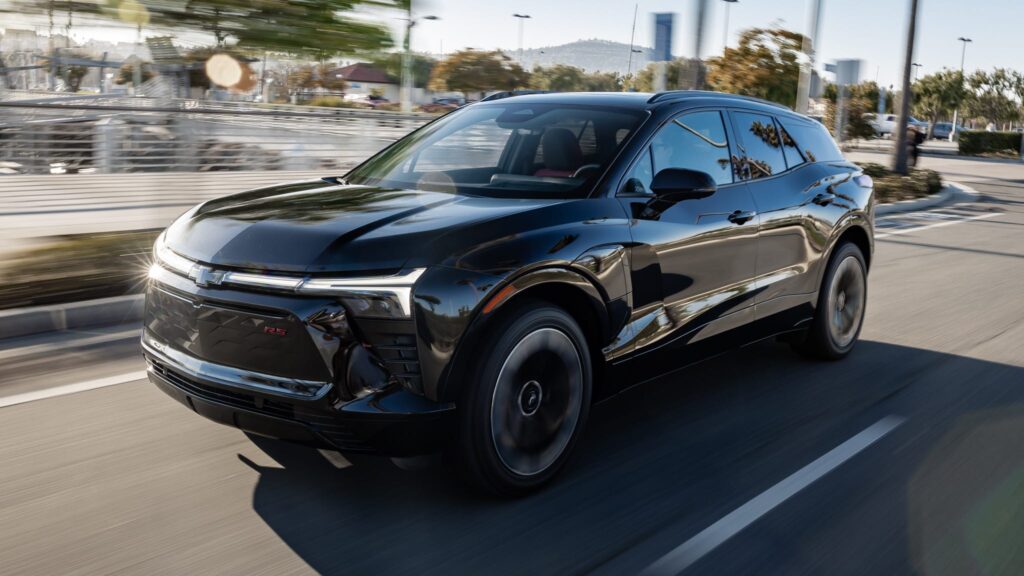
We thoroughly vet every vehicle we test during our awards programs, but no amount of instrumented testing, evaluations at proving grounds, and test driving in the real world can capture the experience of living with a car every single day. That’s why we added our 2024 SUV of the Year, specifically the 2025 Chevrolet Blazer EV RS RWD, to our fleet of yearlong review vehicles. Would it still feel like a winner one year later?
RS Is for “Really Solid”
When colleagues, friends, or family asked how much I liked the long-term Blazer EV, I started using the MotorTrend Ultimate Car Rankings score to succinctly explain my feelings. With a score of 8.4 out of a possible 10 points, the Blazer EV is a good SUV with some caveats. Let’s start with the positives, because there’s a lot to like about our SUV of the Year winner and long-termer.
ADVERTISEMENT – CONTINUE READING BELOW
At the onset of our loan, we were most concerned about reliability and software stability. Chevrolet had just put the Blazer EV back into production after a stop of sale, and we were concerned that some of the past brake, motor, battery, charging, and body control systems issues would make themselves known. Infotainment system dependability was another point of uncertainty.
As it turned out, we didn’t experience anything of the sort. As far as daily use was concerned, our 2025 Chevrolet Blazer EV RS RWD was as reliable as modern cars come. The Google built-in infotainment system (based on Android Automotive OS) performed well and never crashed over the course of the year. We were only alerted about one recall over the course of our long-term loan: Chevrolet addressed a defect in the rear parking brake’s wiring harness by inspecting, taping, and repositioning the component during a quick service appointment.
ADVERTISEMENT – CONTINUE READING BELOW
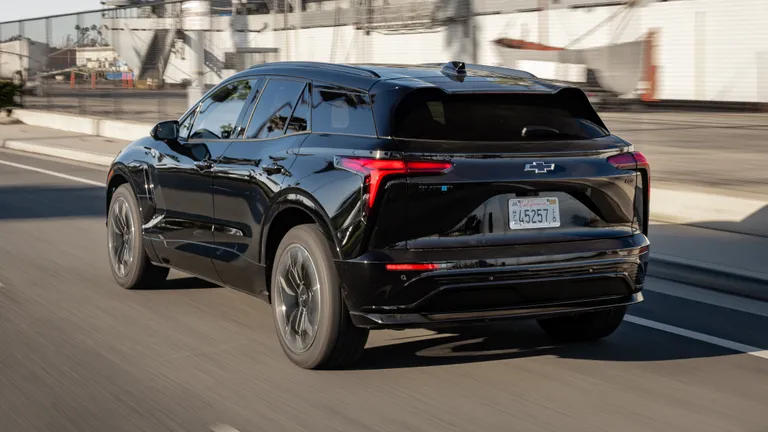
The Blazer EV was something of a sleeper, too, meaning its acceleration far outstripped its stealthy looks. Decked out in black paint and black exterior accents, our Blazer EV may as well have been in the employ of the Secret Service. It was a great getaway car, too. With a tested 0–60-mph time of 5.7 seconds, zipping ahead of traffic from a stoplight was an easy feat thanks to its high-output motor driving the rear wheels with 365 hp and 325 lb-ft of torque. Passing power always felt plentiful; its 45–60 mph time of 2.4 seconds is slower than a current-generation RWD Tesla Model Y’s time of 1.9 seconds but far quicker than the likes of mainstream SUVs like the 2026 Toyota RAV4 Limited, which needs 3.8 seconds to get going.
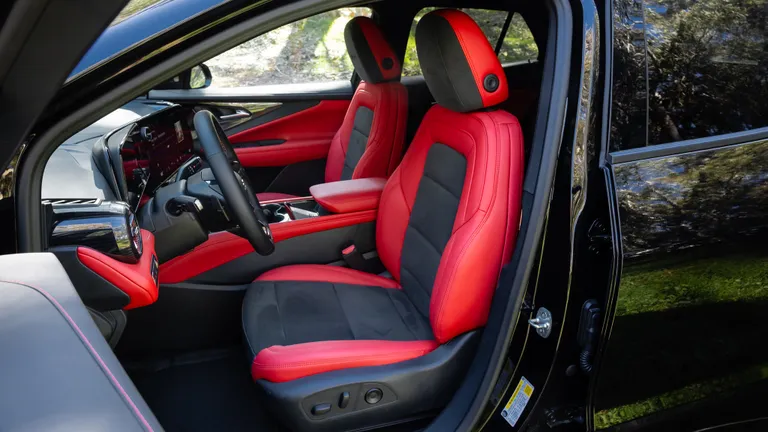
My wife took to calling our long-term Blazer EV “the mullet of cars” because although its black exterior was all business, its Adrenaline Red interior was the life of party. First-time passengers couldn’t help but comment on how fun the synthetic Evotex trim was. The contrasting black accents helped balance things out, and the perforated suede seating inserts allowed for seat ventilation for the front row. The cabin could get toasty in the sun, so having the extra cooling to assist the air conditioning was a welcome addition.
ADVERTISEMENT – CONTINUE READING BELOW
Our Blazer EV was an elite highway hauler. Its compliant suspension made for comfortable cruising, and back-seat passengers could stretch their legs in the generous second row. For a midsize family-friendly SUV, body control was commendable, allowing us to have some fun on the sweeping curves of mountain passes. Chevy’s 102-kWh battery pack enabled long stints on the open road. Typically charging the battery to an average of 75 percent capacity, we’d frequently log more than 200 miles between charges. If the battery was topped off, we’d comfortably cross the 250-mile mark without worrying about needing to plug in. We never got close to the Blazer EV’s EPA rating of 334 miles, however. We managed 275 miles of range per full charge in our 70-mph range test, which turned out to be a more realistic figure in the real world.
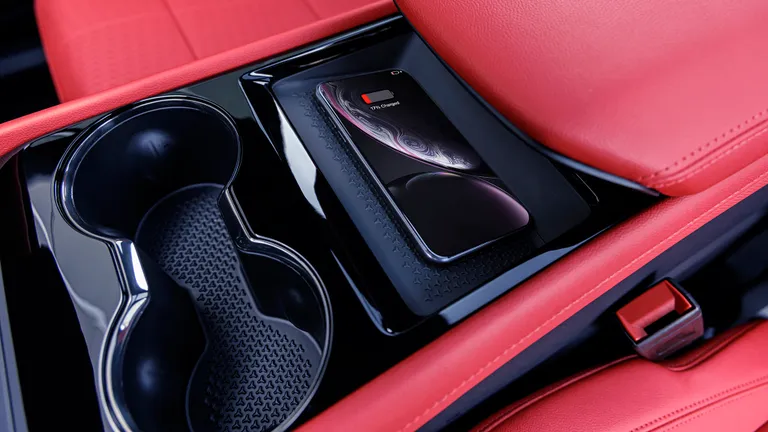
Clever features further enhanced our time with the Blazer EV. There were tons of storage solutions like the dual center console bins and the deep underfloor cargo hold in the trunk. I made frequent use of the wireless charging pad situated above the cupholders, and the shelf under the infotainment screen was the perfect size for holding a phone plugged into one of the two front-row USB-C ports for fast charging.
ADVERTISEMENT – CONTINUE READING BELOW
Then, there was our Blazer EV’s rearview mirror camera system, which demonstrated its utility in the last month of our stewardship. On a family trip to Disneyland, with a second row full of passengers and a trunk piled with luggage, we used our Blazer EV’s rearview mirror camera to “see through” people and things. The camera’s feed was cropped a little too close for our liking, however, giving the impression that the vehicle following our Chevy was tailgating us even when it was keeping a healthy gap. Still, the closeup view was better than seeing nothing.
All of this is to say that at an as-tested price of $59,200, our 2025 Chevrolet Blazer EV RS RWD was exceedingly well equipped. On cold mornings, the heated steering wheel and all-around heated seats kept everyone warm. The panoramic sunroof allowed rear-seat passengers to gaze at the stars at night or admire the beauty of the high-rises in MotorTrend’s native Los Angeles. I especially loved the 360-degree camera, which offered views of the front or rear wheels for lining up with a curb. For those keeping score, not even Tesla offers this level of detail with its current products. Nor is the Model Y available with a head-up display, but our long-termer impressed with its colored graphics and legible icons. If the Blazer EV was meant to be Chevy’s foray into the future, we felt sufficiently equipped to take on the challenges of the modern world.