The shift toward electric vehicles in the United States is hampered by obstacles, but in East Africa the market for electric motorcycles continues to grow rapidly as several startups seek their niche in this developing region.
Zeno announced a $25 million Series A round to expand its battery-swapping network through a mobile app and to scale up production of the Emara motorcycles.
More than half of the amount, about $20.5 million, was raised as equity funding led by Congruent Ventures with participation from Active Impact and Lowercarbon Ventures. The remaining $4.5 million was provided via a credit line from Camber Road and Trifecta Capital.
Prior to that, Zeno raised $9.5 million in a seed round led by Lowercarbon Ventures and Toyota Ventures.
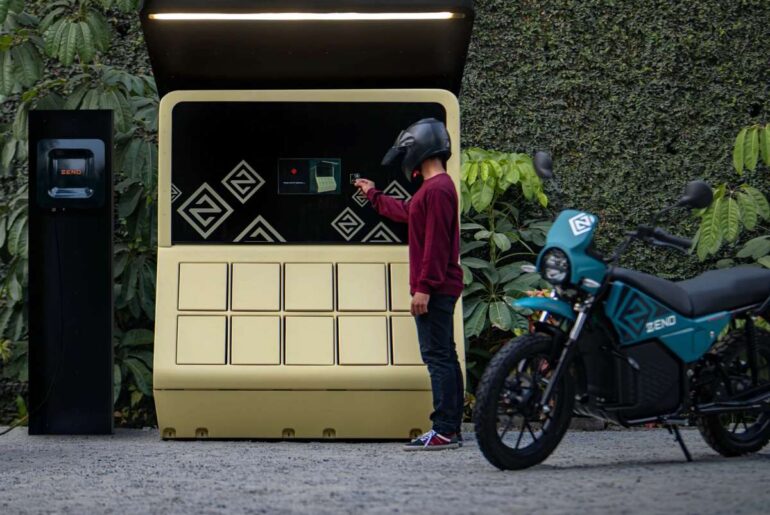
Since coming out of stealth a year and a half ago, the company has released more than 800 Emara motorcycles and built a network of over 150 charging locations across four East African countries.
Market changes and Zeno’s focus
The Emara has a long seat that allows carrying passengers and cargo, making it suitable for both urban and longer-distance transport.
The motorcycle is a cornerstone of transport in the region, and Zeno aims to attract drivers by offering operating costs 50% lower than internal combustion engines. The company reports that more than 25,000 retail and corporate customers are eagerly awaiting Emara, and production is about 70–80 motorcycles per week. The new round of funding will be used to meet this demand.
Emara can travel about 100 kilometers on a single charge and carry up to 250 kilograms. The price is about $1,300 without a battery and about $2,000 with a battery.
Customers who opt out of the battery at purchase can choose a monthly subscription or pay-as-you-go. The passenger and cargo models can be charged at home or at Zeno’s battery-swapping stations.
Just like Slate Auto in the U.S., Zeno sells a range of accessories and wraps so customers can personalize their rides.
To strengthen the deal, Zeno plans to launch a battery dock that will be used at home and in business to power lights and household appliances. The dock is currently in prototyping, and about a dozen customers are testing it.
If Zeno successfully brings the battery dock to market, it could strengthen the company’s position in the region’s energy infrastructure. A large portion of East Africa’s electricity supply needs modernization, creating opportunities for more modular power sources. Some companies are helping develop mini- and micro-distribution networks, while others, like Zeno, are counting on portable, modular batteries that can secure a permanent place in the market.
When Spencer founded the company, he drew inspiration from his former employer – Tesla – and its first large-scale master plan for spreading electric vehicles and clean energy. The idea, he said in 2024, “has more potential and more room to grow with lower barriers in developing markets.”
has more potential and more room to grow with lower barriers in developing markets.
– Tim de Chant
In summary, Zeno continues to build a battery-swapping ecosystem and strengthen access to affordable, flexible electricity in East Africa, attracting investors and partners to accelerate the adoption of electric transportation.