March 5, 2026
By Nehal Malik
Tesla is continuing to prove that its mission goes far beyond just building fast cars. The automaker has officially secured the top spot in the 2026 Lead the Charge automotive supply chain leaderboard, marking its second consecutive year as the industry leader in sustainability.
The report evaluates 18 of the world’s leading automakers on their efforts to eliminate emissions, environmental harms, and human rights violations from their supply chains. Ford came in second place, trailing behind Tesla. According to the study, “Tesla increased its overall score by 6 percentage points and Ford only managed 2 percentage points. The gap between the two companies has widened: Tesla is now almost 5 percentage points ahead of Ford.”
Reclaiming the Lead in Battery Sustainability
A major factor in Tesla’s victory this year was its massive improvement in battery supply chain transparency. Tesla reclaimed the top position in the battery section with a 20 percentage point score increase, becoming the first company to score over 50% in this specific category.
Tesla is also the first automaker to fully meet the battery emissions disclosure indicator. This was achieved by disclosing the individual contributions of cell production and key materials — including lithium, nickel, cobalt, and graphite — to its overall battery supply chain emissions. This level of detail is crucial because EVs are inherently more environmentally friendly than gas cars, especially when using LFP batteries, which are better for the planet and more durable for long-term use.
A Commitment to Recycled Materials
Tesla’s sustainability efforts aren’t just about batteries; the company is also making huge strides in greening its use of metals. The report highlighted a new offtake agreement for low-carbon aluminum in North America with an emission intensity below 2kg of CO2e per kg of aluminum. This impressive figure is achieved commercially through the usage of post-consumer recycled scrap aluminum.
This penchant for recycling actually extends beyond the assembly line. Tesla recently confirmed that its first Tesla Diner in Hollywood was constructed using recycled stainless steel from Cybertruck production. By finding ways to reuse materials like aluminum and steel, Tesla is moving closer to a “circular” manufacturing model where very little goes to waste.
Leading the Charge for an Equitable Future
The Lead the Charge Leaderboard assesses companies against over 80 indicators, splitting the score between environmentally sustainable supply chains and human rights. While Tesla leads with an overall score of 49%, the report shows there is still room for the entire industry to grow toward the 100% mark.
Tesla’s ability to outpace traditional giants like Ford and Volvo suggests that a focus on vertical integration — where a company controls more of its own supply chain and production — is a massive competitive advantage in the modern era. As consumers become more aware of how their products are made, having a transparent and clean supply chain is becoming just as important as the car’s 0-60 mph time.
Subscribe to our newsletter to stay up to date on the latest Tesla news, upcoming features and software updates.
March 5, 2026
By Nehal Malik
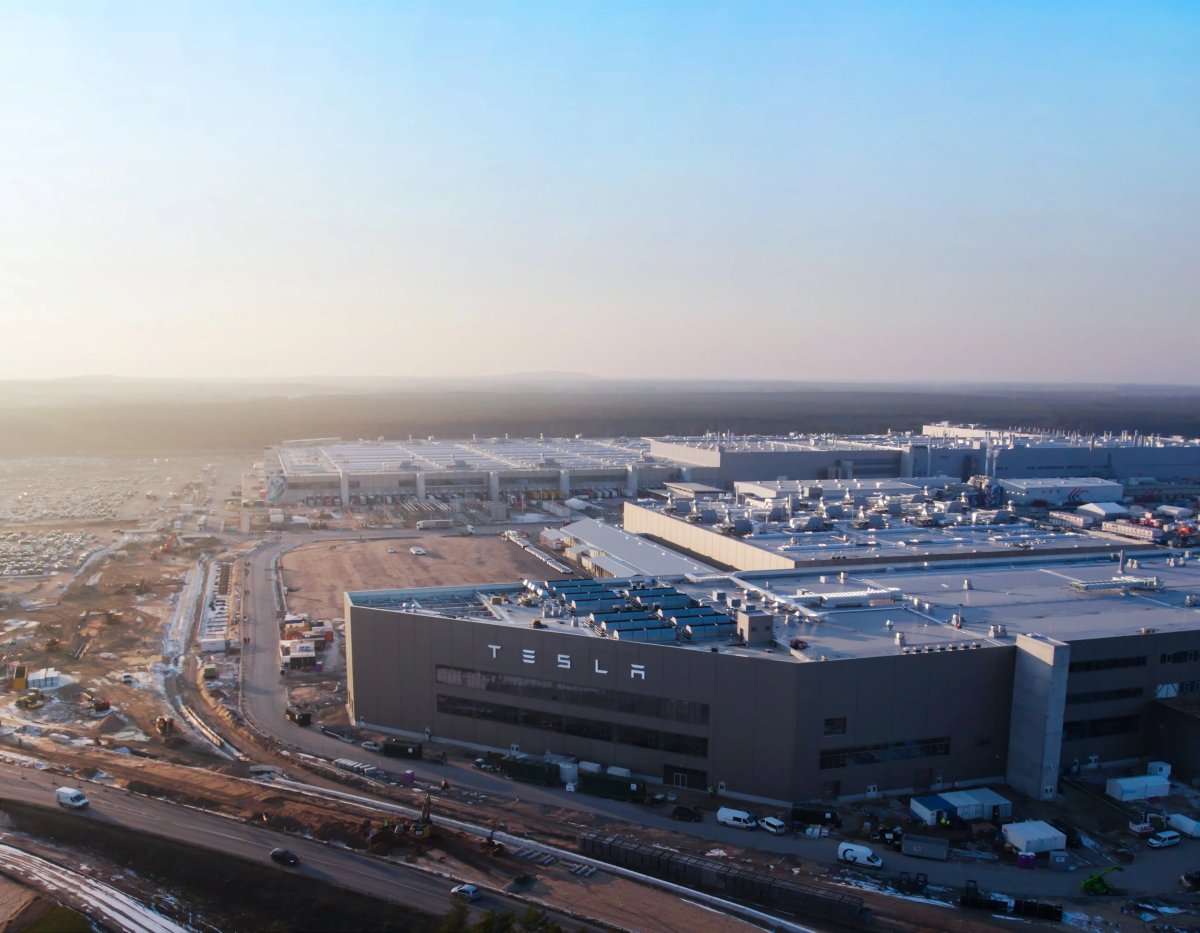
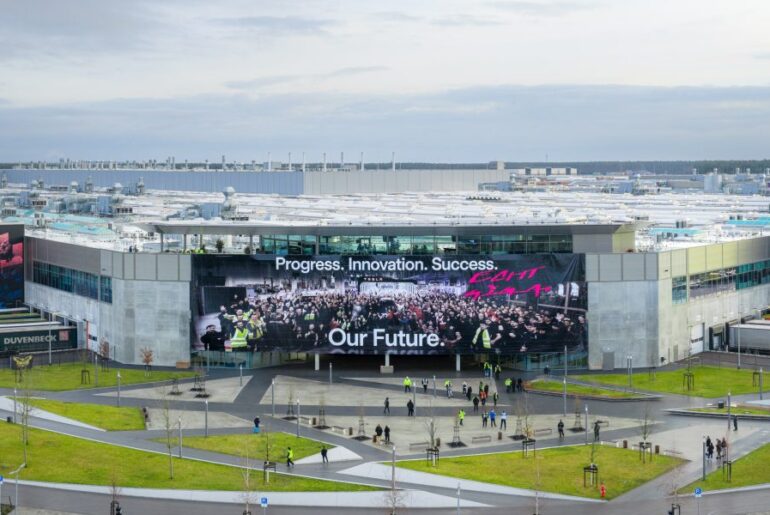
Tesla’s European headquarters has reached a major turning point after a high-stakes showdown between the company and organized labor. In a decisive works council election held at Gigafactory Berlin this week, the German metalworkers’ union, IG Metall, failed to secure a majority, clearing the way for Tesla to proceed with its ambitious local growth plans.
The results were shared by André Thierig, the Senior Director of Manufacturing at Gigafactory Berlin, who characterized the outcome as a “clear defeat” for the union. According to Thierig, IG Metall saw its share of the vote drop from nearly 40% in 2024 to just 31% today. Meanwhile, the “Giga United” list, led by current chairwoman Michaela Schmitz, emerged as the largest group in the 37-member council with almost 41% of the vote.
Tesla vs. IG Metall
For years, Giga Berlin has been the site of an intense culture war. On one side is Tesla’s fast-moving, non-unionized American tech culture, which prioritizes agility and direct communication. On the other hand is the deeply entrenched German tradition of labor unions and “co-determination,” where workers have a legal say in company decisions.
IG Metall has long sought to unionize the facility, previously holding the largest faction on the council despite lacking an outright majority. This latest election was seen as a final stand for the union’s influence at the plant. Notably, Tesla remains embroiled in a separate labor dispute in Sweden with the union IF Metall, highlighting the company’s ongoing friction with European labor organizations.
Musk’s One Condition for Expansion
The election took on even greater importance following a recent pre-recorded address by CEO Elon Musk. Musk set out a massive expansion plan for Giga Berlin that includes reaching 8 GWh of battery production capacity by 2027 and bringing production of the Tesla Semi, the Cybercab, and even the Optimus humanoid robot to the factory.
However, Musk attached a strict condition: these projects would only move forward if the factory remained free of “external influences”. He warned that operations would become “significantly more difficult” if external organizations attempted to steer Tesla in the wrong direction — a thinly veiled shot at IG Metall. By offering the workforce a chance to build the future of robotics and autonomy, Musk played his strongest hand to keep the union at bay.
Days before the election, Thierig also took to social media to call out local media publication Handelsblatt for spreading “false information” about Giga Berlin’s production numbers to extend IG Metall’s agenda.
What the Election Results Mean for the Future
With a voter turnout of nearly 90%, Giga Berlin employees have sent a clear message in favor of independent co-determination. Thierig interpreted the result as a “clear sign from our workforce, which has spoken out in favor of union-independent co-determination for the next 4 years!”
The defeat of IG Metall means that “Giga Berlin remains free to accelerate the future,” Thierig said. With the union’s influence significantly reduced, Tesla is now expected to move forward with the promised expansions. We may already be seeing signs of that, with a recent job listing for Giga Berlin hinting at Tesla bringing Robotaxi production to the facility.
For now, the “Tesla way” has won out in Germany. As Giga Berlin prepares for its next phase of growth, all eyes will be on how quickly the company can turn these massive promises into reality.
March 5, 2026
By Nehal Malik
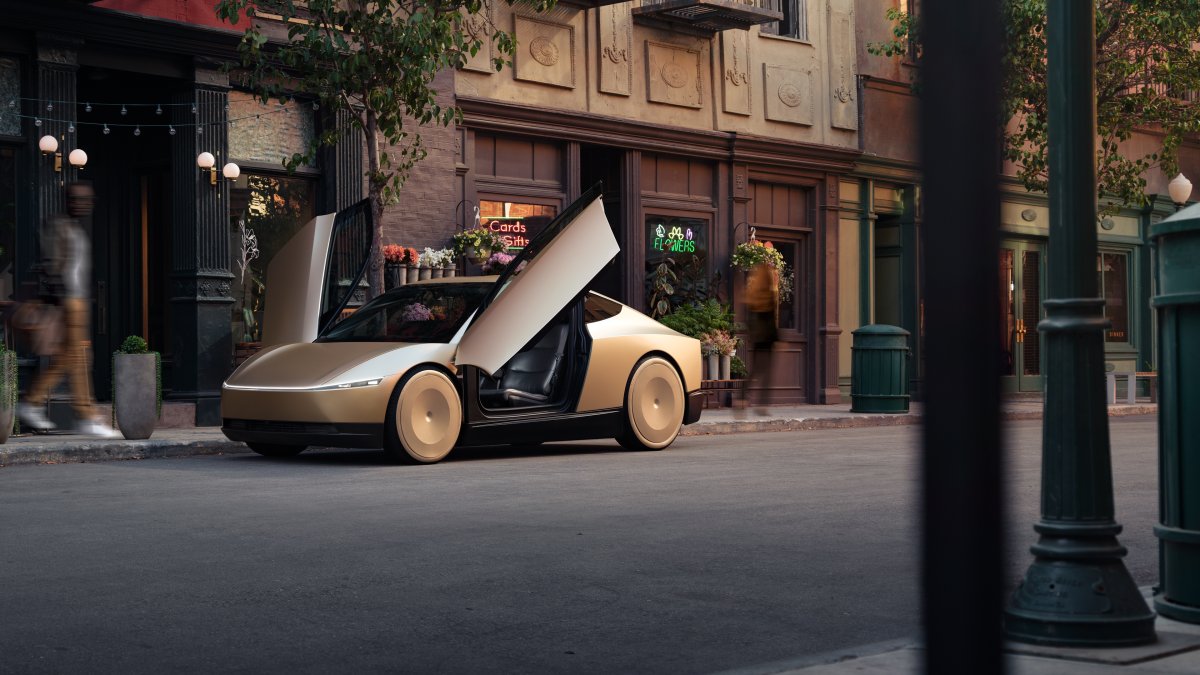
Tesla’s ambitions for its autonomous future appear to be expanding across the Atlantic. A new job listing spotted on Tesla’s website reveals that the company is looking to hire a Senior Electrical Design Engineer for its Robotaxi program at Gigafactory Berlin. The move suggests that Tesla is already laying the groundwork to bring its next-generation autonomous vehicle production to Europe.
The listing was first highlighted by X user @EFIEBER_ANDRE, who questioned if Robotaxi production would be arriving soon at the German facility. According to the job description, the successful candidate will join the Low Voltage Hardware team, which “designs circuit boards which control hundreds of devices (motors, actuators, sensors, LEDs, etc) across all electrical systems (steering, seats, doors, HVAC, safety, chassis, lighting, etc) in Tesla’s autonomous robotaxi vehicles.”
The Path to Giga Berlin Expansion
This hiring push comes at a pivotal time for Tesla’s only European manufacturing hub. The factory is currently busy ramping up Model Y production for local markets and exports to Canada, but much larger plans are on the horizon. Tesla is aiming for a massive expansion that includes reaching 8 GWh of battery production capacity by 2027 and eventually producing the Tesla Semi, Cybercab, and even Optimus robots on-site.
However, CEO Elon Musk recently made it clear that this growth comes with a condition. During a recent address to employees, Musk explained that the path to expansion hinges on the factory remaining free of “external influences”. Specifically, he urged the workforce to vote against giving the German labor union IG Metall a majority in the upcoming works council elections, implying that Tesla’s most futuristic projects would only come to Berlin if the company can maintain its fast-moving, non-unionized culture.
The Cybercab: Tesla’s Robotaxi Moonshot
The Cybercab is the dedicated two-seat, all-electric autonomous vehicle designed to serve as the backbone of Tesla’s Robotaxi network. Unlike the Model 3 or Model Y, this vehicle is built specifically for driverless ride-hailing and features no steering wheel or pedals.
While the first production units have already begun rolling off the line at Gigafactory Texas, mass production is not slated to begin until April. Texas will be the primary hub for the initial ramp-up, but this new Berlin job listing is a strong hint that Tesla intends to globalize Cybercab manufacturing much sooner than many expected.
By hiring engineers in Germany to design the complex circuit boards required for “fail-safe redundancy,” Tesla is ensuring that its autonomous fleet is ready for European roads and regulations as soon as it gets the go-ahead from authorities. If the expansion moves forward as planned, Giga Berlin could soon become a powerhouse for both mass-market EVs and the future of robotic mobility.