A surge in demand for gas-powered vehicles and a tipping point in autonomous technology are causing Bank of America to bet big on the US auto industry in 2026.
The bank expects automakers to outperform expectations this year, as trucks, SUVs, and robotaxis drive both profits and innovation.
Bank of America has reiterated coverage on several automakers but singled out Tesla Inc (NASDAQ:TSLA), General Motors Company (NYSE:GM) and Ford Motor Company (NYSE:F) as its top picks.
“Automakers are now seeing alternative profit streams such as robotaxis, energy generation and storage, and even humanoid robots become meaningful contributors to future growth,” Bank of America analysts said in a note.
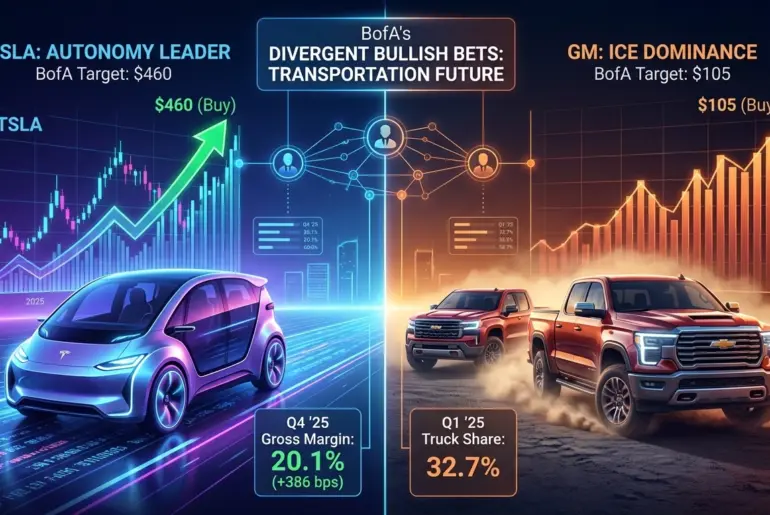
Tesla’s leadership in consumer autonomy and ability to scale robotaxi operations more profitably than rivals sets it apart from its peers, according to analysts. Bank of America set a price target of $460, based on a sum-of-the-parts valuation that incorporates Tesla’s automotive business, Full Self-Driving software, robotaxis, Optimus humanoid robots, and energy generation and storage units.
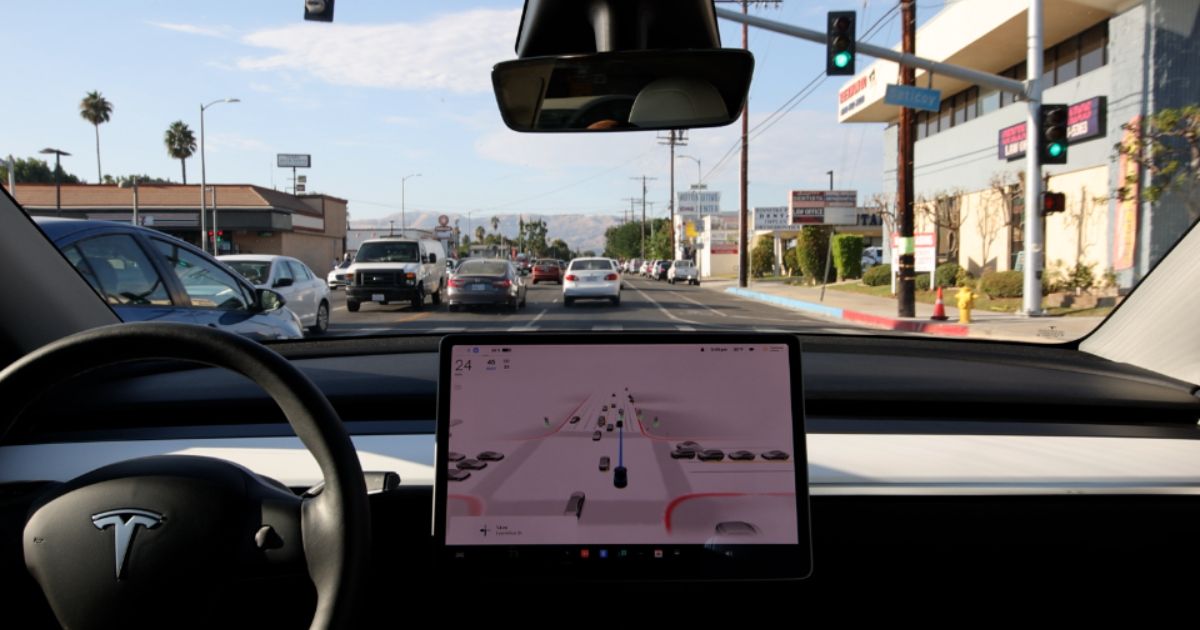
The analysts noted that Tesla’s point-to-point FSD software is the most advanced consumer-level solution, while competition in the robotaxi market is heating up. “The technology has crossed from ‘can it work?’ to ‘how fast can it scale?’,” they wrote.
General Motors (GM) and Ford (F) are also top picks. Favorable regulatory changes, including the removal of emissions penalties, allow both companies to prioritize high-margin trucks and SUVs while scaling back lower-margin EV models.
Bank of America sees upside for US sales and North American production, citing pent-up demand, slowly improving vehicle affordability, and an aging fleet. EV sales, by contrast, are expected to decline more than 20% in 2026, as consumer incentives phase out and automakers cancel or delay a significant portion of EV programs.
The bank calls 2026 “the year of the pickup,” with internal combustion vehicles driving near-term profitability. At the same time, autonomous technology, robotaxis, and energy-related businesses are emerging as the defining forces of the next era of mobility—what Bank of America terms “Auto 2.0.”
While gas-powered trucks and SUVs remain the profit backbone, Tesla, GM, and Ford are also investing in the technologies that will shape the future of transportation, from self-driving cars to energy storage solutions, offering investors both near-term stability and long-term growth potential.