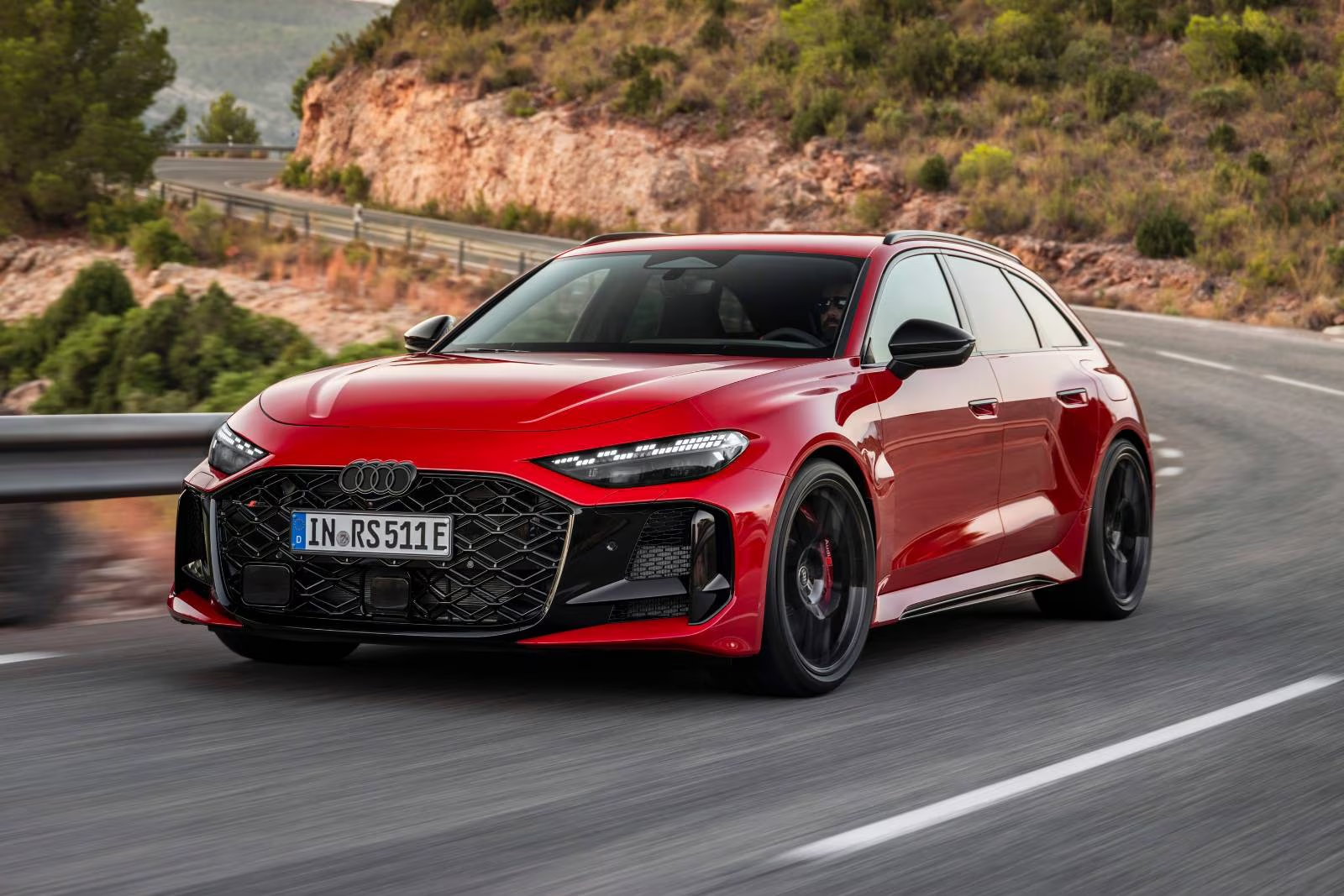
Non-plug-in RS 5 was considered, but PHEV’s performance edge was the clincher
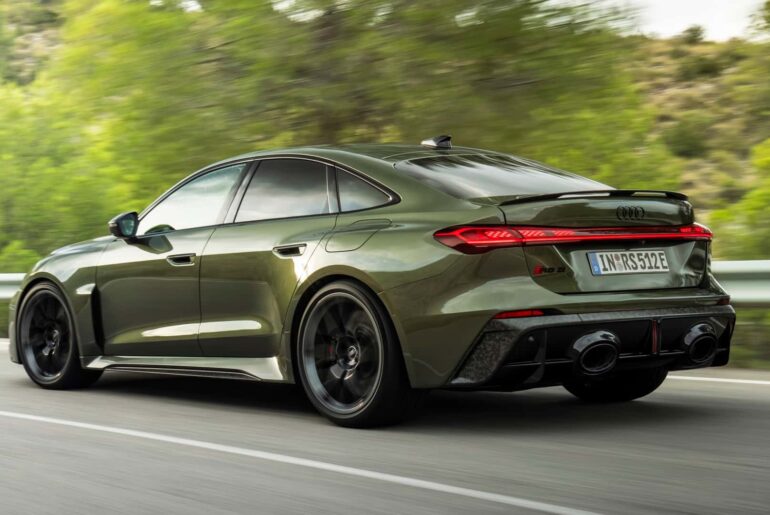
Bamberger said Audi briefly experimented with a non-plug-in RS 5 hybrid with a smaller battery and nominal electric range, but its weight was not far off the 5,200-pound spec of the production RS 5 PHEV.
“In the really early phase [of the RS 5’s development], we had discussions about whether it was better to come back to a HEV [hybrid] system,” Bamberger said. “At the end of the day, we decided that the HEV system is only one side of the coin.”
Michl agreed, telling Edmunds that the regular hybrid RS 5 concept “was quite a compromise.” Even without the PHEV system, the RS 5 still had to be at least a mild hybrid to pass emissions regulations and that still involved a jump in weight.
“The [extra] weight without the range benefit was not the way we wanted to go,” Bamberger said. “The HEV system [weight] can be up to 330 pounds, so it is quite huge, and in my personal opinion, a 6-mile range was not a realistic offer for the customer.”
Development drives of the PHEV concept sealed the deal for plug-in power. The RS 5’s 400-volt system boosts acceleration but it also feeds a smaller electric motor on the rear axle that drives the RS 5’s Dynamic Torque Control system that sends 85% of torque rearward for sensational, sustained drifting.