
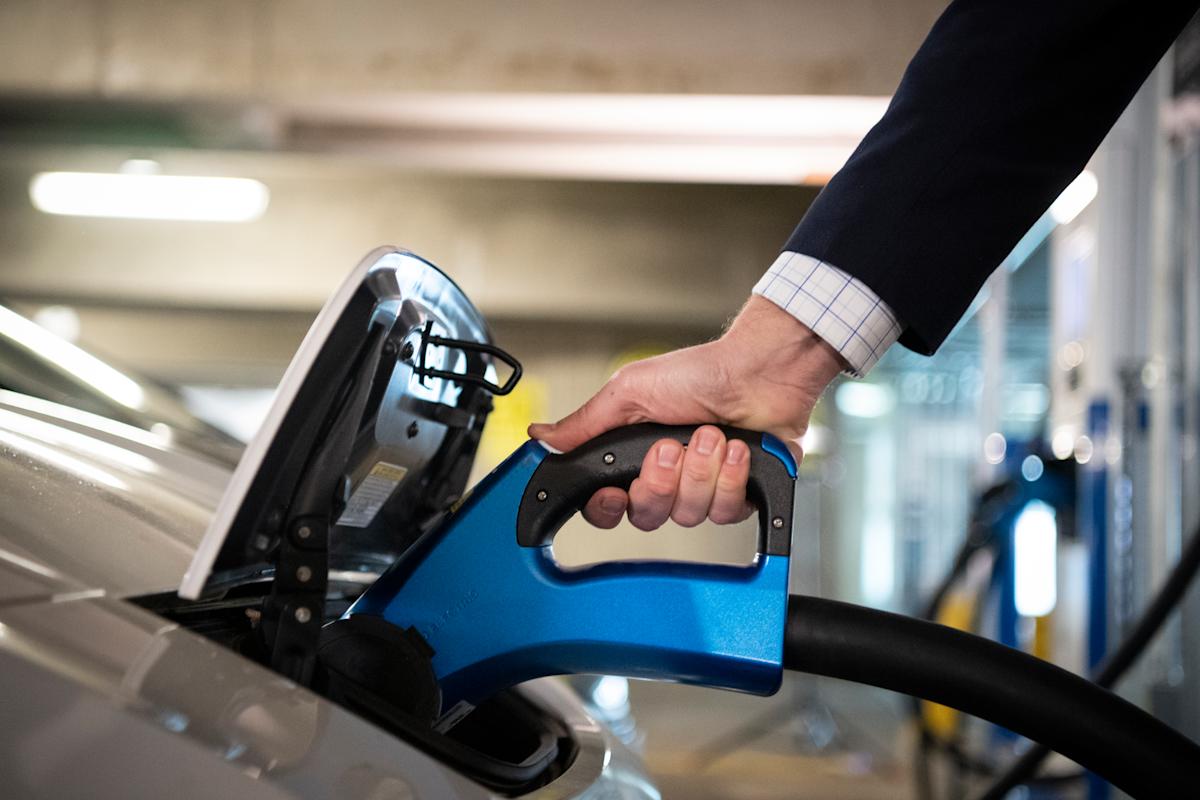
Charging company EVgo (EVGO) is bucking the trend of slowing EV sales with strong results.
The company posted adjusted EBITDA of $12 million in 2025, the first yearly profit for the company, with the fourth quarter representing $24 million of that. Revenue jumped 75% in Q4 to $118.4 million, with gross margin surging 2350 basis points to 38%.
Network throughput (total energy deployed) increased, as did charger utilization.
Yet, in the US at least, EV sales in the fourth quarter shrank after the federal government withdrew the EV tax credit.
EVgo CEO Badar Khan says that’s only one part of the story.
“We are putting in charging stations where people are, where people are running errands. They’re going grocery shopping, they go to work. That’s where we put our charging stations, and so as a result, people are using our machines,” Khan said in an interview with Yahoo Finance. “It’s a six-fold increase [in utilization] on a personal basis.”
Read more: Buying an electric car? What to know about EV insurance costs.
Utilization is key to profitability, Khan said. EVgo is one of the three biggest charging companies in the industry, along with Tesla (TSLA) and Electrify America, and EVgo’s demand per stall is about five times higher than any other player aside from those two. Khan added that EVgo’s utilization is even higher than the average of those top three companies (Tesla, Electrify America, and EVgo).
The company has also built out faster DC chargers, coveted by EV owners on the road. EVgo said DC fast chargers now represent 62% of its network, with total stalls in operation rising 25% to 5,100.
But building charging locations (and DC fast chargers) costs a lot of money, and a challenge is how EVgo can build on its operational profitability as it grows its network.
Khan says it’s a mixture of focusing on charger efficiency, usage, and reliability, so the network spends less time idling and more time charging. There’s also the accounting side of the equation.
“There is a depreciation and amortization charge associated with that level of growth, and so if we’re going to grow quickly, which we think our customers want us to do, we’re going to be incurring that depreciation and amortization for a number of years,” which boosts EBITDA but also lowers EVgo’s tax bill, he said.
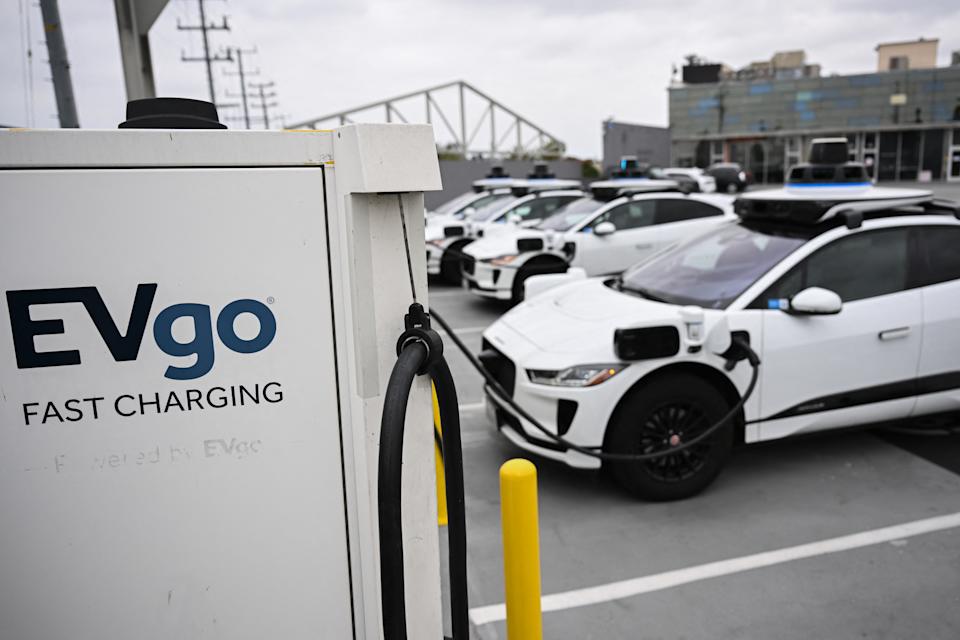 A Waymo autonomous self-driving Jaguar electric vehicle sits parked at an EVgo charging station in Los Angeles, California, on May 15, 2024. (PATRICK T. FALLON/AFP via Getty Images) · PATRICK T. FALLON via Getty Images
While some level of financial engineering helps all companies, EVgo is still betting on a rise in the use of electric vehicles by everyday drivers, fleet operators, and rideshare companies.

![BYD unveils stunning flagship EV SUV for the first time [Images]](https://www.evshift.com/wp-content/uploads/2026/03/1772556943_BYD-flagship-electric-SUV-770x515.jpeg "BYD unveils stunning flagship EV SUV for the first time [Images]")