Mega Motor Company, BYD‘s official partner in Pakistan, has signed a financing agreement with British International Investment — the UK government’s development finance institution.
The firm will back the construction of Pakistan’s first purpose-built new energy vehicle (NEV) manufacturing plant, according to Pakistani newspaper The News.
Under the deal, BII will provide long-term foreign currency financing covering 25% of the total project cost, which has previously been reported at approximately $150 million.
The facility, located near Karachi, is scheduled to begin operations in the second half of this year and is expected to create more than 1,100 jobs.
The deal represents one of the earliest green energy-linked financing arrangements in the country’s automotive sector.
MMC CEO Aly Khan said Pakistan was at a critical inflection point where clean mobility had become central to long-term economic and energy objectives. He added that the investment would help build a value chain capable of creating jobs and enabling technology transfer.
BII’s Stephen Priestley, managing director and head of financial services group and industries, technology and services, said the funding aligned with the institution’s focus on supporting sustainable industrial transformation and climate action.
In addition to the financing, MMC said it was implementing a comprehensive environmental, social and governance framework in collaboration with BII, covering labor standards, workplace health and safety, stakeholder engagement and responsible supply chain practices.
Expansion to Pakistan
BYD entered Pakistan in August 2024 through a partnership with MMC, a subsidiary of Hub Power Company, the country’s largest private electricity producer.
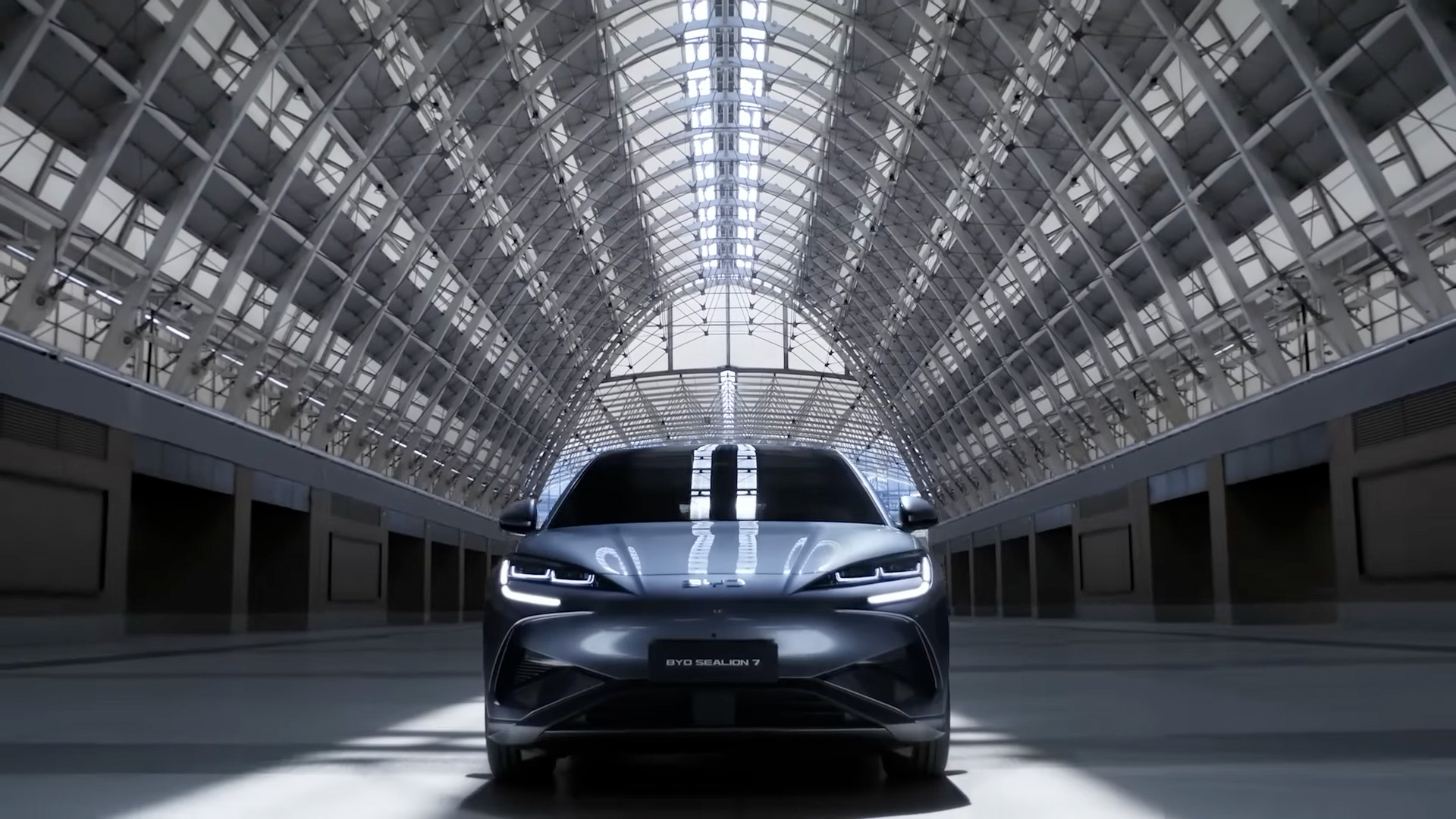
Customer deliveries of its first three models — the Atto 3, Seal and Sealion 6 — began in early 2025. The company has since added the Shark 6 pickup truck, the Atto 2 and the Sealion 7 to its local lineup.
Danish Khaliq, BYD Pakistan’s vice president of sales and strategy, said last July that early sales of several hundred vehicles had exceeded internal targets by 30%.
He said at the time that the plant would initially have an annual capacity of 25,000 vehicles on a double-shift schedule, assembling imported components while producing some non-electric parts locally.
Vehicles would first serve the domestic market, with potential exports to right-hand-drive countries in the region depending on freight costs and demand.
Other Plants
The financing deal adds to BYD‘s rapidly expanding global manufacturing footprint.
The company already operates a plant in Thailand and began assembling vehicles in Brazil in July 2025.
It has also started trial production at its Hungary facility in January, and is building factories in Turkey as it pushes assembly closer to overseas markets amid rising tariffs on Chinese EV exports in Europe and the United States.
Separately, Bloomberg reported in January that BYD was considering setting up local assembly operations in India through semi-knocked-down kits, seeking to bypass the country’s high import tariffs after being largely blocked from direct investment under restrictions on Chinese companies.
![BYD unveils stunning flagship EV SUV for the first time [Images]](https://www.evshift.com/wp-content/uploads/2026/03/1772556943_BYD-flagship-electric-SUV-770x515.jpeg "BYD unveils stunning flagship EV SUV for the first time [Images]")