February was Tesla’s best month for European sales in a while, but is it really a sign of longer-term recovery? By Stewart Burnett
After more than a year of prolonged sales struggles, Tesla has posted its first meaningful European sales rebound: February registrations were up 75.6% year-on-year in Norway (1,375% month-on-month), 55% in France and 74% in Spain. Norway delivered the most impressive result: Tesla reclaimed the country’s best-selling brand position with 1,210 registrations and a 16.6% market share, led by 1,073 Model Y units.
To be sure, not all markets followed the recovery trend. Indeed, some continued to worsen, with Denmark falling by an additional 18% and the Netherlands by 45%. It should also be noted that January in Norway was particularly weak after VAT changes prompted purchases to be pulled forward into late 2025—in much the same fashion as in the US during September 2025. This left registrations at just 83 units, a 90% drop that saw Tesla at its lowest point locally in three years.
February’s rebound, while genuine, is being measured in part against this artificially depressed and unusually low floor. The improved numbers are also due partly to product refreshes: Tesla launched cheaper Model Y and Model 3 variants in Europe late last year — the Model Y Standard from NOK 389,990 (US$40,900) — and added a seven-seat Model Y L configuration across the region in late February.
Financing incentives and a 0% APR offer on premium trims are also in play through the end of March, creating incentives for users to go ahead and make purchases now rather than waiting. It is likely, then, that the sales increases may persist through March. Anything beyond this, however, is uncertain.
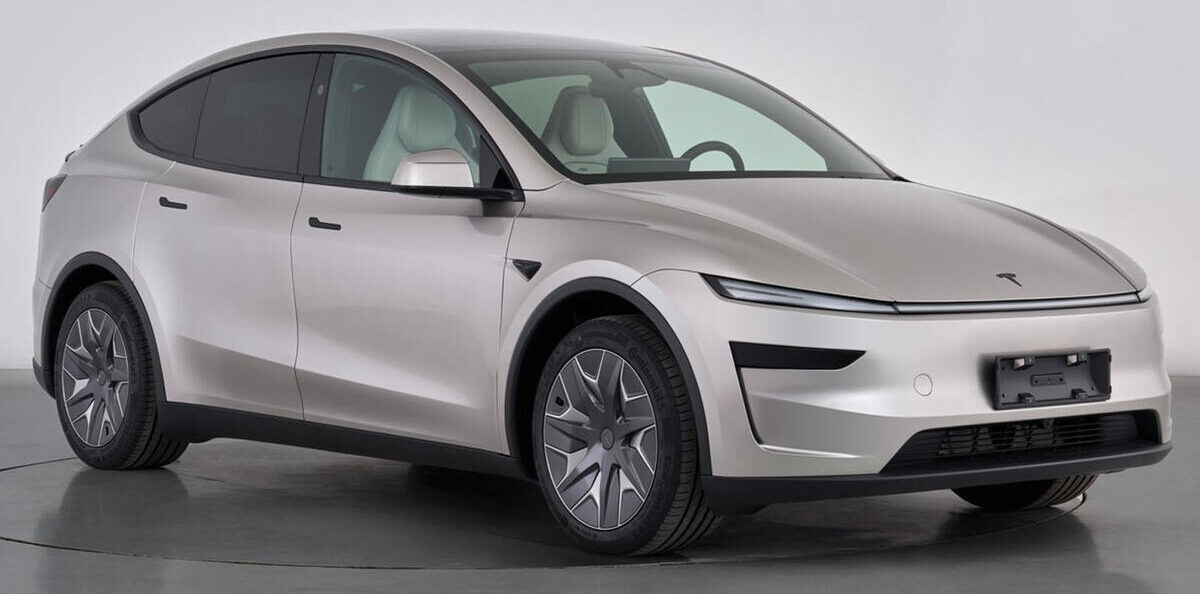 Tesla first launched the seven-seater Model Y L in China before bringing it to Europe
Tesla was once the de-facto brand for electric vehicles, but now finds itself as just one more player in a sea of options. Volkswagen handily outsold Tesla in Europe’s EV market in 2025 at 274,278 units against 236,257. Chinese automakers are also gaining ground quickly, capturing fully 6.1% of Europe’s passenger vehicle market across all powertrain types in 2025. The year before, its automakers cumulatively accounted for 3.1%,
This trend is set to continue throughout 2026: BYD registered 18,242 vehicles across Europe in January—up 165% YoY—taking a 1.9% regional market share against Tesla’s 0.8%. In comments to CNBC, ING Senior Sector Economist for Transport and Logistics, Rico Luman, noted: “Tesla’s image has deteriorated in Europe last year and people have much more choice now with the range of new affordable EVs (including those of BYD and others like MG and ZEEKR) entering the market, while Tesla lacks in models.”
The elephant in the room for some analysts, however, continues to be Chief Executive Elon Musk himself, whose volatile behaviour and enthusiastic endorsements and affiliations with far-right political figures like the UK’s Tommy Robinson and the US Trump administration continue to repel Tesla’s historically more progressive consumer base. Tesla’s board, for their part, have framed his comments as “free speech” and zero interest in replacing him.
February’s data is an improvement on a prolonged decline, but the structural picture does not appear to have materially changed. Brand damage linked to Musk’s political antics, an ageing model lineup, and intensifying Chinese competition were the defining forces weighing on Tesla during 2025. Unfortunately for Tesla, none of these have been resolved. Sales may improve marginally against last year, but a full recovery is likely off the table entirely.