Tesla stock  TSLA opened lower on Monday, but a quiet regulatory deadline on March 9 is shaping up as the next hard checkpoint for the stock’s most polarising story: whether Full Self-Driving can credibly scale into a robotaxi business.
The National Highway Traffic Safety Administration (NHTSA) has given Tesla until March 9 to hand over detailed crash-related materials tied to its Full Self-Driving (FSD) traffic-violation investigation, after the company secured a second extension.
The catalyse seem to be closer to a “show your work” moment, and for investors, it could either defuse or inflame the regulatory risk premium now sitting on Tesla’s autonomy narrative.
What’s actually due on March 9
The March 9 deadline stems from an NHTSA information request inside a formal inquiry focused on traffic-safety violations linked to vehicles operating with FSD.
The agency granted Tesla a second extension that pushes delivery of “critical crash data,” including video, event data recorder (EDR) files, and CAN bus files, to March 9, 2026.
The scope is not just a headline count of incidents.
NHTSA is asking for highly granular context: timelines around each event, what software version was running, whether warnings were issued, and what happened after any initial traffic violation.
In plain language, regulators aren’t only asking, “Did it crash?” They are asking, “What exactly did the system do, what did the driver do, and did the car give enough time for a human to intervene?”
The timeline shows why this deadline matters.
NHTSA opened a preliminary evaluation in October 2025 after linking 58 incidents to vehicles operating with FSD, including claims that cars ran red lights or crossed into opposing lanes, and that the probe covers roughly 2.88 million Tesla vehicles.
Tesla’s filing details how the original response deadline of January 19 was first extended to February 23, and is now extended again to March 9 for key materials.
Buy Tesla stock instantly on Plus500 now
Why ’14 crashes’ may not be the whole story
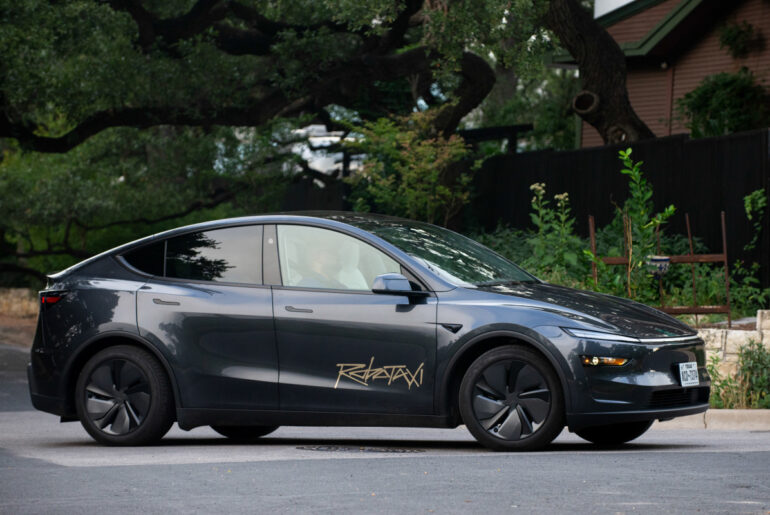
The crash number investors keep seeing: 14 incidents involving Tesla’s robotaxi fleet in Austin is real, but it’s also incomplete without denominators like miles driven and the type of driving environment.
Tesla’s robotaxis have been involved in 14 crashes since the service launched in Austin in June 2025, citing data disclosed to federal safety regulators.
The five most recent incidents occurred in December and January with no injuries reported in those five, and that the incidents involved property damage such as collisions with another vehicle or a fixed object.
Two other incidents in July and October resulted in minor injuries as per NHTSA data.
The nuance for investors is that NHTSA’s deeper file set (video, EDR, CAN bus) can change how serious each event looks- for example, whether the system was clearly at fault, whether a human intervened, and whether the situation was a low-speed scrape or something more concerning.
Also Read: Tesla registrations tumble in EU as battery EV share climbs
What investors should actually watch for
For the market, the March 9 submission is less about “good news” and more about “nothing to see here.”
A filing that looks orderly, complete, and consistent supports the bull argument that robotaxi is still a viable growth lever at a time when Tesla’s core EV story is facing heavier competition and slower growth.
A messy filing does the opposite.
If the data reveals repeatable patterns, regulators gain leverage to slow expansion or force changes, which would hit the timeline investors have penciled in for autonomy revenue.